Tomato
America
Understanding : Tomato
INTRODUCTION
It's impossible to talk about African cuisine without mentioning the tomato. A fruit of the sun, an emblem of color and taste, the tomato is at the heart of countless recipes on the continent. A symbol of agricultural modernity from America in the 16th century, the tomato has established itself in African cooking pots and now punctuates daily culinary life, from Senegalese red sauces to Beninese stews, Moroccan salads to Nigerian fried dishes. Why this passion for tomatoes, when many ancestral dishes did not use them? The answer is multifaceted: adaptation to contemporary tastes, nutritional richness, accessibility, ability to transform the texture and color of dishes. The tomato is no longer just a fruit-vegetable: it is a pillar of family, festive, and popular cuisine across the entire African continent.
Where to find it
Look for the exact food-grade form required by the recipe at markets and specialist shops. Check the product name, ingredients, condition and storage instructions.
Explore further: Cooking tips · Food hygiene and safety advice.
History and uses
HISTORY AND SPREAD OF THE TOMATO IN AFRICA
Contrary to some misconceptions, the tomato is not native to Africa, but to the South American continent, where pre-Columbian peoples cultivated it for millennia. Arriving in Europe in the 16th century with the Spanish conquistadors, it quickly reached the Mediterranean basin, then established itself in colonial territories, particularly in North Africa (Morocco, Algeria, Egypt), before moving south to sub-Saharan Africa through trade and colonization networks. Until the 19th century, the tomato remained sometimes a decorative or medicinal plant; it was only later that it truly became widespread in the diet of local populations, as recipes spread and agricultural and food practices evolved. Due to its adaptability to hot climates and high yield, the tomato has become a major crop in many African countries: Morocco, Egypt, Nigeria, Senegal, Ghana, South Africa, Tanzania compete in local production and sometimes European export.
BOTANY AND AFRICAN VARIETIES
The tomato belongs to the Solanaceae family (like potato, eggplant, chili pepper). The plant measures between 30 centimeters and 2.50 m in height depending on the variety, and produces spherical or oblong fruits, mostly red but sometimes yellow, green, or black. In Africa, both are cultivated: • Local varieties: “country” cherry tomatoes, small tangy and very aromatic tomatoes (very popular in Senegal or Benin), African “Roma” tomatoes, fleshier, suitable for sauces and preservation. • Imported/hybrid varieties: often chosen for their productivity or resistance to drought and diseases. They sometimes have less flavor, which leads enthusiasts to prefer traditional varieties in local markets. • Seasonal/rainy season tomatoes and off-season tomatoes: African tomatoes follow two main cycles, with immense abundance in the rainy season (especially in Sahelian areas) and scarcity/high prices at the end of the dry season.
CULINARY USES OF TOMATO IN AFRICAN CUISINE
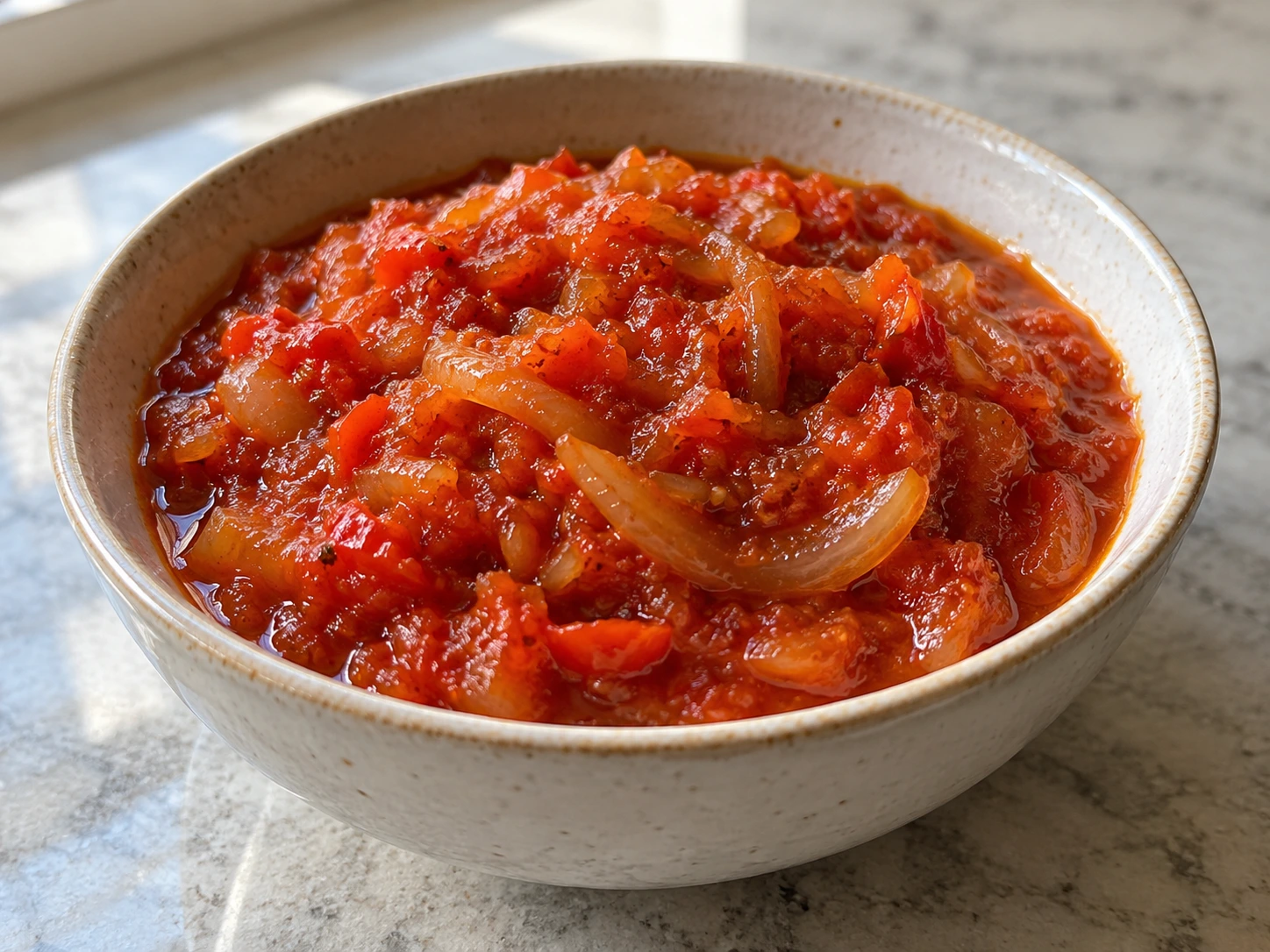
- Base for red sauces The tomato is the pillar of the “red sauce,” found from Dakar to Lomé, from Cairo to Kinshasa. It is found: • Cooked slowly in peanut or palm oil, with onion, garlic, chili, sometimes okra, soumbala (fermented African locust bean), root vegetables... • Thickened with concentrate to enhance color and flavor • As a base for rice (thiéboudienne, jollof rice, riz gras), couscous or fonio, pasta or potatoes. African mothers start their day at the market, negotiating for ripe, shiny tomatoes, destined for these sauces that require long cooking, so that the water evaporates and “the oil rises to the top,” a sign of a successful sauce.
- Soups and stews Tomato and onion soup, fish soup (Senegalese fish soup), Senegalese mafé, Ivorian leaf sauce… In stews, the tomato softens the sometimes very strong flavors of smoked fish, soumbala, or chili, and brings roundness and a velvety texture to the sauce.
- Raw or salad accompaniment In North Africa, tomatoes are eaten in simple salads (Moroccan chermoula salad, Algerian salad), in tabbouleh with parsley and bulgur, or as mezze (Tunisian Salata meshwiya, Moroccan bdir salad). In sub-Saharan Africa, raw tomatoes garnish plates of attiéké (cassava couscous) or rice, in slices or cubes, often with onion, vinegar/lime, peanut oil, salt, and pepper.
- Condiment sauces and chutneys At the market, you can find “spicy tomato sauce” to accompany grilled fish, yassa chicken, or millet bread. These sauces also serve as a base for sandwiches, accompaniment for yams, fried bananas, or akara. Dishes are enhanced with chili peppers and spices, but also with candied, dried, crushed tomatoes, or prepared as purée or artisanal ketchup.
- Stuffings, fried dishes, and festive preparations Tomatoes are hollowed out and then stuffed with meat, fish, or rice in some regions (Mediterranean influence). Pancakes, omelets (Sahelian tomato omelet), or fritters (sometimes made from green tomatoes) are also prepared.
- Industrial use and preserves Industrial tomato: concentrate sold in cans or sachets, imported or locally produced (Senegal, Egypt, Morocco…). It allows for a sauce base out of season, but is often perceived as less aromatic than fresh tomatoes.
In my books

Continue exploring the continent’s cuisines with Africa at the Table — 54 countries, 54 iconic dishes, by Alioune FALL. This book is in English.
Explore further
NUTRITIONAL VALUE AND HEALTH BENEFITS
The tomato is a low-calorie fruit, rich in: • Vitamins: vitamin C (antioxidant), vitamin A (beta-carotene), vitamin E, B group • Minerals: potassium (heart health), magnesium, iron • Dietary fiber: beneficial for intestinal transit • Lycopene: powerful red antioxidant pigment, known for its protective effects against certain cancers and cellular aging In African cuisine, the tomato base enriches the vegetable intake, and long cooking promotes the release of lycopene, which is better absorbed when combined with oil (peanut or olive).
SOCIAL, CULTURAL, AND SYMBOLIC DIMENSION OF THE TOMATO IN AFRICA
A symbol of agricultural modernity The introduction and rise of the tomato often coincide with the “agrarian revolution”: from a simple market commodity, it becomes an issue of autonomy and food sovereignty. Many African agricultural cooperatives rely on its cultivation, promoting resistant local varieties and non-imported supply. In season, the abundance of tomatoes floods markets and popular kitchens: the olfactory power of an African market perfumed with simmering tomato sauce is unforgettable. The tomato at the center of the domestic economy Many women grow or sell tomatoes to support their households. The tomato is a circular product: when there is a surplus, it is dried, candied, or artisanally concentrated to preserve it during the dry season. Emblematic tomato dishes Among others: • Senegalese thiéboudienne (rice with fish) – where the red color of the tomato is a marker • Jollof rice (West African oily rice), whose battle over the best recipe pits the countries of the region against each other • Mafé (peanut sauce), whose red version includes tomato • Cameroonian chicken DG, with its spicy tomato sauce • Yassa chicken with tomato, Ivorian and Burkinabe tomato sauces
MODERN ISSUES: CHALLENGES AND FUTURE OF THE AFRICAN TOMATO
- Dependence on imports Despite strong local production, African markets are often flooded with imported tomato concentrates (from Italy, China…), leading to losses for local farmers. Many programs now support artisanal processing closer to production sites.
- Surplus management and preservation During periods of surplus, preservation becomes a social and food issue: tomatoes are pasteurized, concentrated, sun-dried, or smoked to retain their benefits and save for the dry season.
- Culinary innovation The new African gastronomic scene reinvents the tomato: finely prepared as carpaccio, juice, mousse, dehydrated or fermented, it crosses the boundaries of tradition, honoring local knowledge while exploring new horizons.
CONCLUSION: THE TOMATO, FIDELITY AND CREATIVITY
The tomato has established itself as a cornerstone of African cuisine: it colors, perfumes, softens, and enriches the majority of dishes that make the continent's heart beat. If its import was the fruit of history, its total adoption testifies to African culinary innovation capacity. From the small family garden to large farms, from the skilled hand of the cook to that of the Michelin-starred chef, the tomato is celebrated, shared, cooked a thousand times, always with love. The tomato is the red of African generosity in every dish, and the promise of a vibrant and universal cuisine.
In the kitchen : Tomato
Recipes from the site to put your knowledge into practice:
Discover these cuisines at a restaurant
Explore our restaurant and caterer directories. Choose your destination and check the establishment’s menu to confirm which dishes are offered and available.
Continue exploring
Enjoy discovering ingredients and African cuisines? Join our newsletter. The illustrated PDF 10 sauces africaines incontournables is in French and is offered after confirming a subscription to the French or bilingual edition.