Merguez
Maghreb
Understanding : Merguez
INTRODUCTION
In the fragrant swirls of Maghreb markets, in the sizzling of street grills, at family tables or during grand celebrations, merguez holds a prominent and passionate place in African cuisine, particularly in North Africa, but also throughout the diaspora and increasingly in sub-Saharan Africa. More than just a sausage, merguez is a living testament to conviviality, culinary generosity, and the mixed identity of the continent's peoples. Thin and elongated, with an intense red color, aromatic, spicy, and meltingly tender, merguez captivates with its deceptive simplicity. Behind each bite lie centuries of history, expertise passed down through generations, and a palette of spices that evoke the desert, oases, and the richness of African cultural exchanges. Let's discover together the fascinating world of this emblematic dish, a pillar of Maghrebi gastronomy and a true ambassador of gourmet Africa.
Where to find it
Look for the exact food-grade form required by the recipe at markets and specialist shops. Check the product name, ingredients, condition and storage instructions.
Explore further: Cooking tips · Food hygiene and safety advice.
History and uses
DESCRIPTION AND PREPARATION OF MERGUEZ
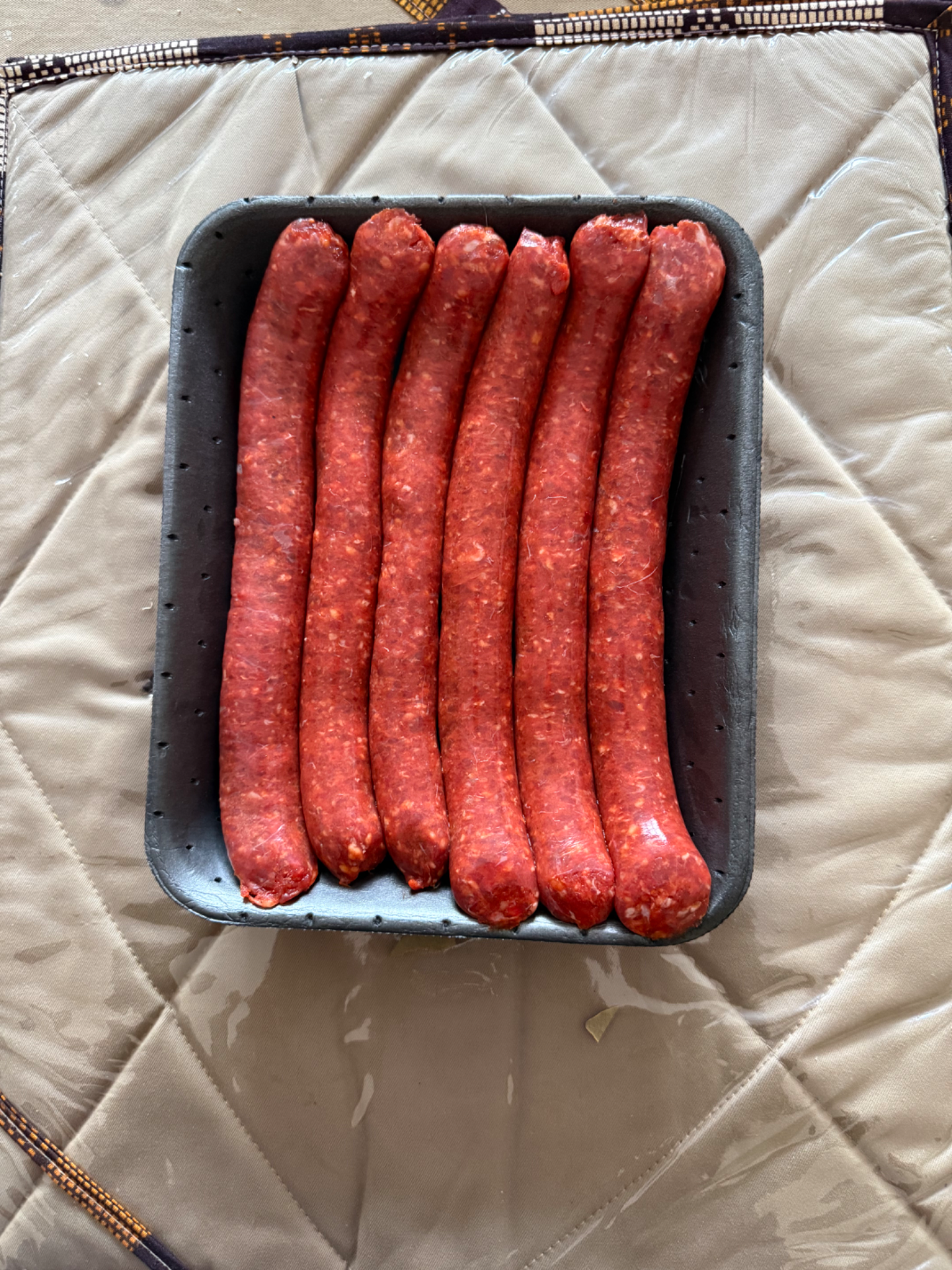
Merguez is a fresh sausage traditionally prepared from minced beef, lamb, or a mixture of both, generously seasoned with spices and condiments. Its particularity compared to other sausages lies in the use of warm spices (paprika, hot pepper, cumin, coriander, fennel, garlic…), which give it not only its warm red color but also its unique and pungent flavor. Typical ingredients • Meat: Beef, lamb, or a mixture, sometimes with added fat (suet or lamb fat) for creaminess and taste. • Casing: Most often natural lamb casing (to maintain the sausage's fineness and flexibility). • Spices and condiments: Hot pepper powder, paprika, ground cumin, coriander, fresh or dried garlic, black pepper, salt, fennel seeds, smoked paprika depending on the region, sometimes dried mint. • Optional: Harissa, chopped parsley, grated onion, caraway, sumac, or others according to family customs. Preparation method Preparation begins with mincing the meat (coarse or fine according to taste), adding the spices and condiments so that the meat absorbs the flavors, then everything is mixed thoroughly by hand. The resulting stuffing is then introduced into natural casings, then tied or twisted every 8 to 12 centimeters, thus creating long, thin sausages. Merguez is never smoked or pre-cooked: it owes its flavor to its freshness and the spices integrated into the meat. It can be grilled over coals, pan-fried, or even cooked in sauces.
HISTORICAL ROOTS AND SPREAD IN AFRICA
Merguez has its roots in a very long tradition of livestock farming and butchery in the Maghreb, where lamb holds a central place both nutritionally and religiously (especially for the Eid al-Adha festival). Its name is said to come, according to sources, from the Berber term “amergaz” or the Arabic “mirqaz,” meaning “spicy sausage.” Already attested in the form of an “oriental sausage” since the Middle Ages, merguez has evolved with Berber, Arab, Jewish, and Andalusian influences. Its fame quickly spread: first throughout North Africa (Morocco, Algeria, Tunisia, Libya…), then to the Mediterranean during migrations and conquests, and finally to many sub-Saharan African countries thanks to the mobility of peoples, cultural mixing, and the Maghrebi diaspora. In Black Africa, the word “merguez” is now part of the gastronomic vocabulary, especially in large cities and restaurants, brought by globalization, urban diversity, and the growing influence of Maghrebi cuisine.
PLACE IN AFRICAN CUISINES AND RITUALS
- Merguez, a pillar of sharing In the Maghreb, merguez is the queen of communal grilling: it brings families together for Sunday lunches, is part of “méchouis” (spit-roasted meat grills) and adorns the tables of great celebrations (weddings, births, Eid, departures on journeys…). It is enjoyed during communal meals, in the tradition of sharing and hospitality dear to Africa.
- In couscous and sauces Merguez emblematically accompanies couscous, the national dish par excellence. Served on top of semolina couscous, mixed with vegetables, it brings color, strength, and flavor to the entire dish. It is also integrated into tagines, tomato or pepper sauces – the famous “merguez sauce” – very popular in North African snack bars and within the diaspora.
- Street food, modern catering, and fusion In large African cities, merguez is a street food star: in sandwiches, on street grills, or in Maghrebi fast-food restaurants. It attracts a young urban clientele, eager for spicy and convivial flavors. In French-speaking sub-Saharan countries, merguez adapts to local tastes: it is sometimes found accompanied by “alloco” (fried plantains), baguette bread, or as a topping for mixed pizzas.
In my books

Continue exploring the continent’s cuisines with Africa at the Table — 54 countries, 54 iconic dishes, by Alioune FALL. This book is in English.
Explore further
SYMBOLIC AND RITUAL VALUE
Merguez embodies celebration and generosity. In Arab and Berber culture, eating merguez is synonymous with sharing and success. The abundance of merguez on a host's table is a sign of respect for guests. Merguez also plays a role during lamb ceremonies (Eid), where the cutting of the meat leads to the making of sausages for the whole family, which are frozen or used in the following weeks. It then symbolizes the transmission of knowledge, the union of generations, and the refusal of waste, typical of Maghrebi gastronomy.
REGIONAL VARIATIONS AND ADAPTATIONS
Algeria It is in Algeria that merguez is undoubtedly the most popular. An authentic, well-spiced recipe is cultivated there, with a lot of cumin and coriander, sometimes garnished with a little bell pepper or dried mint. Butcher shops proudly display their “homemade merguez” and each family holds its secret spice blend. Tunisia In Tunisia, merguez is often thinner and even spicier, notably due to a high dose of harissa. It is used in Tunisian couscous, “ojja” (scrambled egg dish with tomato and merguez) or served in sandwiches. Morocco In Morocco, merguez is milder, well-flavored with cumin and paprika, sometimes enhanced with sweet pepper and fresh herbs. It is abundantly grilled during picnics and family celebrations. Sub-Saharan Africa and diaspora In large cities like Dakar, Abidjan, Bamako, or Nouakchott, merguez is penetrating local street food: sometimes revisited with other meats (poultry, beef alone for non-Muslim communities), it is accompanied by local vegetables, African condiments, or used to create new mixed dishes.
ECONOMIC AND ARTISANAL DIMENSIONS
The artisanal butchery of merguez allows for the maintenance of traditional trades (butchers, casing preparers) and encourages short supply chains. It is a significant source of employment. In exporting countries (especially the Maghreb), pre-packaged merguez finds a large market in the African diaspora in Europe, North America, and on the African continent itself, in supermarkets or specialized restaurants.
NUTRITIONAL CONTRIBUTIONS
Merguez is an important source of animal protein, essential in African diets often based on cereals. It also provides iron, zinc, phosphorus, and vitamins (especially B12). The spices used (cumin, chili, coriander) contribute to digestive stimulation and the supply of natural antioxidants. However, it should be consumed in moderation: its fat content can be high (often 20-25%) and an excess of cured meats, as in all cuisines worldwide, is not recommended daily for cardiovascular health.
ANECDOTES, CUSTOMS, AND TRANSMISSION
In many families, the making of merguez for big celebrations is a key moment in collective life. In the medina of Algiers, it is customary to buy meat early in the morning, choose the best spices in the market, and transform the family kitchen into a real artisanal workshop. The secret of merguez, it is often said in Africa, lies as much in the quality of the spices as in the hand of the person who prepares it. The know-how is passed down from mother to daughter or from father to son, a promise that merguez will cross generations and remain a symbol of identity.
CONCLUSION
A fusion of simplicity, taste, and authenticity, merguez makes the hearts and taste buds of millions of Africans vibrate. It tells the story of conviviality, celebration, and the art of sharing — cardinal values on the continent. From the medina to the bustling streets of big cities, from family couscous to urban sandwich shops, merguez embodies a gourmet, vibrant, indigenous, and universal Africa all at once. Timeless, adaptable, and generous, it is at once memory, pleasure, and the promise of a cuisine that constantly reinvents itself without ever betraying its roots.
In the kitchen : Merguez
Recipes from the site to put your knowledge into practice:
Discover these cuisines at a restaurant
Explore our restaurant and caterer directories. Choose your destination and check the establishment’s menu to confirm which dishes are offered and available.
Continue exploring
Enjoy discovering ingredients and African cuisines? Join our newsletter. The illustrated PDF 10 sauces africaines incontournables is in French and is offered after confirming a subscription to the French or bilingual edition.