Bissap (karkadé)
Africa, Southeast Asia
Understanding : Bissap (karkadé)
INTRODUCTION
Among the iconic drinks of the African continent, bissap stands out as a must-have, celebrated as much for its vibrant and refreshing flavors as for its cultural, medicinal, and social importance. Behind this melodious name—bissap—lies a dazzling magenta beverage, infused from dried hibiscus calyces, delicately flavored with spicy, fruity, and sweet notes. Bissap is not just a drink: it is a celebration, a tradition that connects generations, a national and continental pride, a marker of daily highlights as well as major festivities. Its popularity extends far beyond Senegal, where it is elevated to a national drink: from West Africa (Senegal, Mali, Ivory Coast, Guinea, Burkina Faso, Niger) to Central Africa and even the Caribbean, its renown largely transcends borders. Discovering bissap means tasting the quintessence of African hospitality, the rituals of conviviality, and understanding how a flower can become the emblem of a continent.
Where to find it
Look for dried food-grade hibiscus calyces in African grocery shops or the herbal tea aisle. Check the ingredients and distinguish them from ornamental plants.
Explore further: Cooking tips · Food hygiene and safety advice.
History and uses
ORIGINS, HISTORY, AND SPREAD OF BISSAP
Ancestral Roots Bissap is prepared from the deep red calyces of Hibiscus sabdariffa, also known as roselle, karkadé (Sudan, Egypt), dabileni (Mali, Burkina Faso), wonjo (Gambia), sobri (Ivory Coast, Benin), or sorrel (Caribbean and Jamaica). Originating from tropical Africa and Southeast Asia, hibiscus quickly spread along ancient trans-Saharan trade routes, then through the slave trade and colonial trade, finding an ideal adopted land in the warm and humid climates of Africa. In Sudan, Egypt, and Nigeria, traces of bissap consumption and medicinal use of hibiscus have been found for centuries. It was served during ceremonies, weddings, and funerals, appreciated for its festive color, refreshing virtues, and medicinal properties. Expansion in Senegal and West Africa In Senegal, bissap became the national drink, inseparable from daily life. Bissap is drunk during gatherings with friends, at weddings, baptisms, religious or family celebrations, after ceremonies, and to welcome distinguished guests. Similarly, the drink spread through Mali (dabileni), Guinea, Nigeria, and many other countries, with each region adopting the recipe, adapting the aromas, serving methods, and symbolism. The colonial era, followed by modern urbanization, contributed to popularizing bissap: it became industrialized, sold in bottles, and even exported to Europe and America where the African diaspora proudly introduced it.
CULTURAL CONTEXT AND SYMBOLISM
Drink of Togetherness Bissap is above all a strong marker of West African hospitality. Traditionally, when a visitor arrives at a home, they are quickly offered a glass of cold bissap, sometimes accompanied by small cakes (peanut sugar, thiacri) or fruits. It is a welcome drink, which seals friendship and acceptance into the family or community circle. At weddings and baptisms, bissap flows freely, often poured from large transparent dispensers, distributed to each guest. It is synonymous with sharing, abundance, and pleasure under the sign of color and taste. Ritual of Conviviality In the streets of Dakar, Ouagadougou, or Bamako, street vendors offer glasses of bissap from midday sun to nightfall. Many children first discover the taste of bissap in public spaces, on their way to school or near markets. Bissap thus rhymes with social life, encounters, gourmet breaks, and impromptu celebrations. Heritage Drink In Senegal, bissap is elevated to national pride, just like thiéboudienne, yassa, or Touba coffee. It is found in school textbooks, cooking shows, and cooking competitions: it is an integral part of collective memory.
COMPOSITION, INGREDIENTS, AND PREPARATION TECHNIQUES
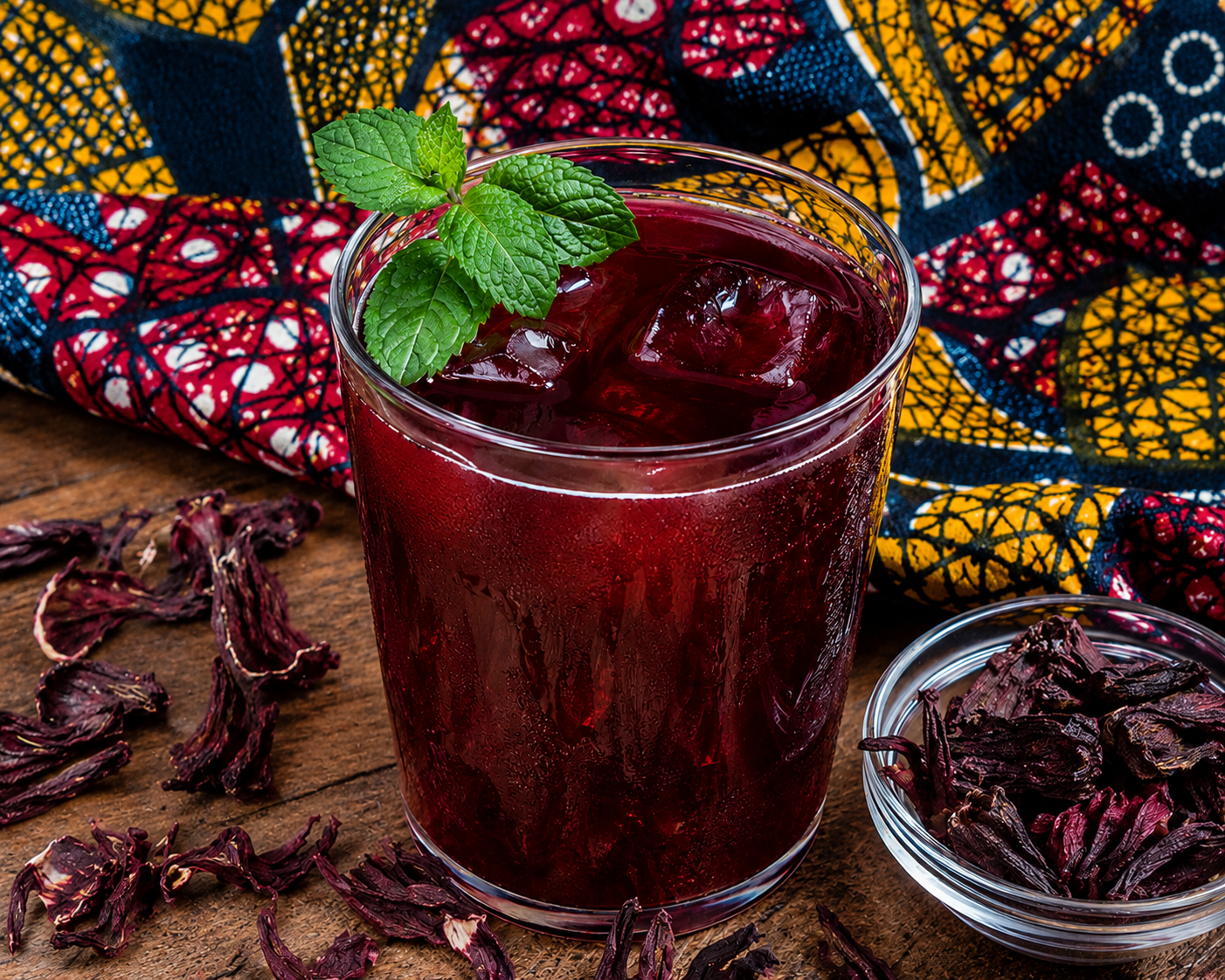
Basic Ingredients • Dried calyces of Hibiscus sabdariffa, red or purple (about 20g for one liter of water) • Water (1 to 2 liters depending on desired concentration) • Granulated sugar or honey • Sometimes: fresh mint, vanilla extract, ginger, orange, lemon, African basil leaves, cloves, berries, etc. Traditional Techniques
- Rinsing: The hibiscus calyces are first carefully rinsed with clear water to remove any impurities.
- Infusion: The flowers are placed in a pot of boiling water and left to infuse for 10 to 20 minutes, until a very colorful drink is obtained. Some variations prefer cold maceration for a milder, less acidic flavor.
- Filtering: The drink is filtered using a clean cloth or a fine sieve to remove all flower residues.
- Flavoring: Depending on the recipe, mint, lemon or orange zest or juice, grated or sliced ginger, vanilla, cinnamon, or cloves are added and infused.
- Sweetening: Sugar, honey, or even baobab syrup are incorporated according to taste and family tradition.
- Cooling: The drink is chilled or served over ice cubes, sometimes garnished with mint leaves or lemon slices. It is in Senegal, Burkina Faso, or Ivory Coast that the aromatic variations are most numerous, with each family having its “secret” for a unique bissap.
In my books
Explore Senegalese cooking with Le Sénégal à table, my collection of 150 recipes, stories and traditions to share. This book is in French, by Alioune FALL.
Explore further
FLAVORS AND REGIONAL VARIATIONS
Red Bissap and White Bissap • Red Bissap: The most common, intense, and tart, prepared from red calyces. It is distinguished by a slight astringency and a frank taste. • White Bissap: Made from a variety of hibiscus with pale yellow calyces. Milder, sometimes used for flavor pairings, cocktails, or children's drinks. Taste Variations • Bissap-Ginger: Addition of fresh grated ginger, very popular in Gambia, Nigeria, and Guinea for its tonic and spicy side. • Bissap-Mint: Traditionally in Senegal, mint refreshes and softens the overall flavor. • Bissap-Vanilla/Lemon: Combination of aromas for a gourmet and festive note. • Bissap-Spices: Cloves, cinnamon, nutmeg, or even pepper to enhance and vary the flavors. Carbonated and Modern Bissap In African capitals or among diaspora caterers, carbonated bissap (bissap soda), pasteurized bissap, or even bissap syrup to dilute can now be found. It is gradually conquering supermarket shelves in Europe and North America, a testament to its global success.
ROLE IN AFRICAN CUISINE
Companion to Meals and Celebrations Bissap accompanies: • Major Senegalese dishes (thiéboudienne, maffé, yassa): it “cleanses” the palate, tempers the heat of chili, and balances the creaminess of rice or peanut sauce. • Local desserts: thiacri, lakh, millet fritters, pastels, Ramadan sweets. • Festive meals, picnics, baptism ceremonies, children's snacks, association or mosque gatherings. In this, bissap is both an everyday drink and a drink for special occasions. Economy and Transmission Hibiscus, easy to cultivate, also signifies rural development. Women constitute the vast majority of producers, processors, and traders. The bissap trade (bulk, sachets, bottles) represents a source of income, especially for the “nana-bissap” in urban markets. The recipe and preparation of bissap are passed down from generation to generation: each mother teaches her daughter the art of balancing acidity and sugar, choosing the best infusions, and flavoring just right.
NUTRITIONAL AND MEDICINAL VIRTUES
Bissap is not just a treat for the taste buds: it is also praised for its many health benefits. Traditional Medicinal Properties • Powerful antioxidant: rich in polyphenols and vitamin C, it helps fight oxidative stress and cellular aging. • Hypotensive effect: scientifically recognized for helping to reduce blood pressure. • Promotes digestion: natural acidity stimulates appetite and aids digestion, which is why it is served after or during hearty meals. • Diuretic effect: used to eliminate toxins and prevent water retention. • Anti-inflammatory properties: in traditional pharmacopoeia, hibiscus is used to relieve sore throats, calm coughs, and reduce fever. • Rehydrating: a valuable drink during hot seasons and after exertion. Nutritional Composition (estimates per 200 ml unsweetened): • Calories: approximately 10 kcal • Vitamin C: 27 mg • Polyphenols: high content • Carbohydrates: trace, unless sugar is added • Zero fat, zero cholesterol Precautions In large quantities, bissap can increase diuresis or lower blood pressure. It is therefore not recommended in excess for people suffering from severe hypotension, or should be moderately dosed for children.
BISSAP IN MODERNITY
The drink has adapted to the globalized world: • Bottled bissap, soda, cocktails: it adds an African touch to modern mixology. • Flavored or processed: in jams, ice cubes, jellies, pastries. • Symbol of identity: the diaspora uses it as a rallying sign in restaurants, cultural events, and world festivals.
SYMBOLISM, ANECDOTES, AND TRANSMISSION
Bissap is not just a gustatory pleasure; it is also a color, a scent of Africa. It evokes the generosity of grandmothers, the wisdom of mothers, the noisy joy of children. Prepared at home, it impresses strangers, encourages children to return home, and reassures those who are absent. Grand occasions cannot be conceived without bissap. It is said in Senegal that no “thiéboudienne” is complete without a large carafe of iced bissap.
CONCLUSION
A pleasure drink, a health drink, a symbolic drink, bissap embodies the creativity, hospitality, celebration, and memory of Africa. Its simplicity of preparation, its infinite adaptability, its beauty, and its virtues place it at the very heart of daily life and major moments on the continent. By raising a glass of bissap, we toast to the vitality, diversity, and warmth of the entire African people.
© Photo credit: recettesafricaines.com. All rights reserved.
Practical notes and Senegalese terminology
Bissap uses the calyces of Hibiscus sabdariffa, not the petals of just any ornamental hibiscus. The word may also refer to the plant in other culinary uses. For a clean-tasting drink, sort and rinse the calyces, strain the infusion, then adjust the sugar after cooling. Mint or ginger are flavour variations, not compulsory ingredients.
In the kitchen : Bissap (karkadé)
Three recipes from the site to put your knowledge into practice:
Discover these cuisines at a restaurant
Explore our restaurant and caterer directories. Choose your destination and check the establishment’s menu to confirm which dishes are offered and available.
Continue exploring
Enjoy discovering ingredients and African cuisines? Join our newsletter. The illustrated PDF 10 sauces africaines incontournables is in French and is offered after confirming a subscription to the French or bilingual edition.