Mango
East Africa
Understanding : Mango
INTRODUCTION
As soon as spring's first warmth arrives, African markets, alleys, and villages light up with the shimmering colors of the mango. This fleshy, fragrant, sweet, juicy, and colorful fruit is much more than a simple culinary delight: it is one of the most powerful emblems of the diversity and richness of African terroirs. In Africa, the mango transcends its function as a fruit: it is at once collective memory, agricultural heritage, an economic pillar, a central ingredient in many culinary preparations, a traditional remedy, and a recurring motif in literature and popular imagination. Whether enjoyed raw on the edge of a field, incorporated into salads, jams, juices, sauces, or desserts, the mango holds a central place in the continent's diet, celebrations, and economy. This description invites you to discover the African mango in all its dimensions: botanical, cultural, agricultural, gastronomic, symbolic, and health-related.
Where to find it
Look for the exact food-grade form required by the recipe at markets and specialist shops. Check the product name, ingredients, condition and storage instructions.
Explore further: Cooking tips · Food hygiene and safety advice.
History and uses
BOTANICAL DESCRIPTION AND DIVERSITY OF AFRICAN MANGOS
The mango, fruit of the mango tree (Mangifera indica), originated in the Indian subcontinent but perfectly acclimatized, from pre-colonial times, to African tropical and subtropical climates. Cultivated today from Senegal to Madagascar, from Benin to South Africa, passing through Nigeria, Burkina Faso, Ivory Coast, or Kenya, it populates African courtyards, orchards, countryside, and savannas. The mango tree is a large, vigorous tree, capable of reaching 15 to 30 meters in height, with a rounded and dense crown and shiny leaves. Mangos themselves can display a thousand guises: oval, round, kidney-shaped or heart-shaped, smooth or rough skin, green, yellow, orange, scarlet red, sizes varying from a small egg to a large melon. Their orange or yellow flesh is renowned for its balance of sweetness, acidity, fragrance, and texture, ranging from crisp to melting. In Africa, numerous local and introduced varieties are distinguished: • American mangoes ("Amélie", "Kent", "Keitt", "Tommy Atkins"): large, juicy, often intended for export. • Small local mangoes ("Dabshé", "Sierra Leone", "Yaourt", "Fasankoy"): variable in shape, often more fibrous but with a pronounced aroma. • Wild mangoes: found in the bush or forests, often processed into juice or dried. Each has its devotees and its moment of glory throughout the mango season, which runs from April to September depending on the country.
MANGO: HISTORY, SPREAD, AND ECONOMIC IMPACT IN AFRICA
History and spread Imported during the great periods of oriental trade, the mango is attested in the 16th century on the Swahili coast, then massively planted in French-speaking and English-speaking areas, particularly during the colonial period with the development of a commercial sector. Today, it is an integral part of the African agricultural landscape. It has transformed entire regions into export hubs: Burkina Faso, Mali, Ivory Coast, and Senegal annually ship tens of thousands of tons of mangoes to Europe, taking advantage of harvest windows offset from those in Latin America or Asia. Economic impact • Agricultural income: The mango is an essential source of income for millions of small producers, particularly women's groups, cooperatives, and rural families. • Local market: Its price is affordable; it delights all social strata. • Agri-food industry: Processing into juices, compotes, jams, dried fruits, or even pulp for the cosmetic industry. • Circular economy: The pits serve as animal feed, some artisans transform skins and pits into games or objects. Its trade structures the dry season, a period when few fruits are available and the mango becomes queen.
THE PLACE OF MANGO IN AFRICAN CUISINE
While mango is primarily eaten raw, peeled with a knife and savored with delight, it plays multiple roles in cooking: beverage, condiment, dessert, central element of sweet and savory dishes, a festive ally as well as for ordinary days. Varied uses of mango
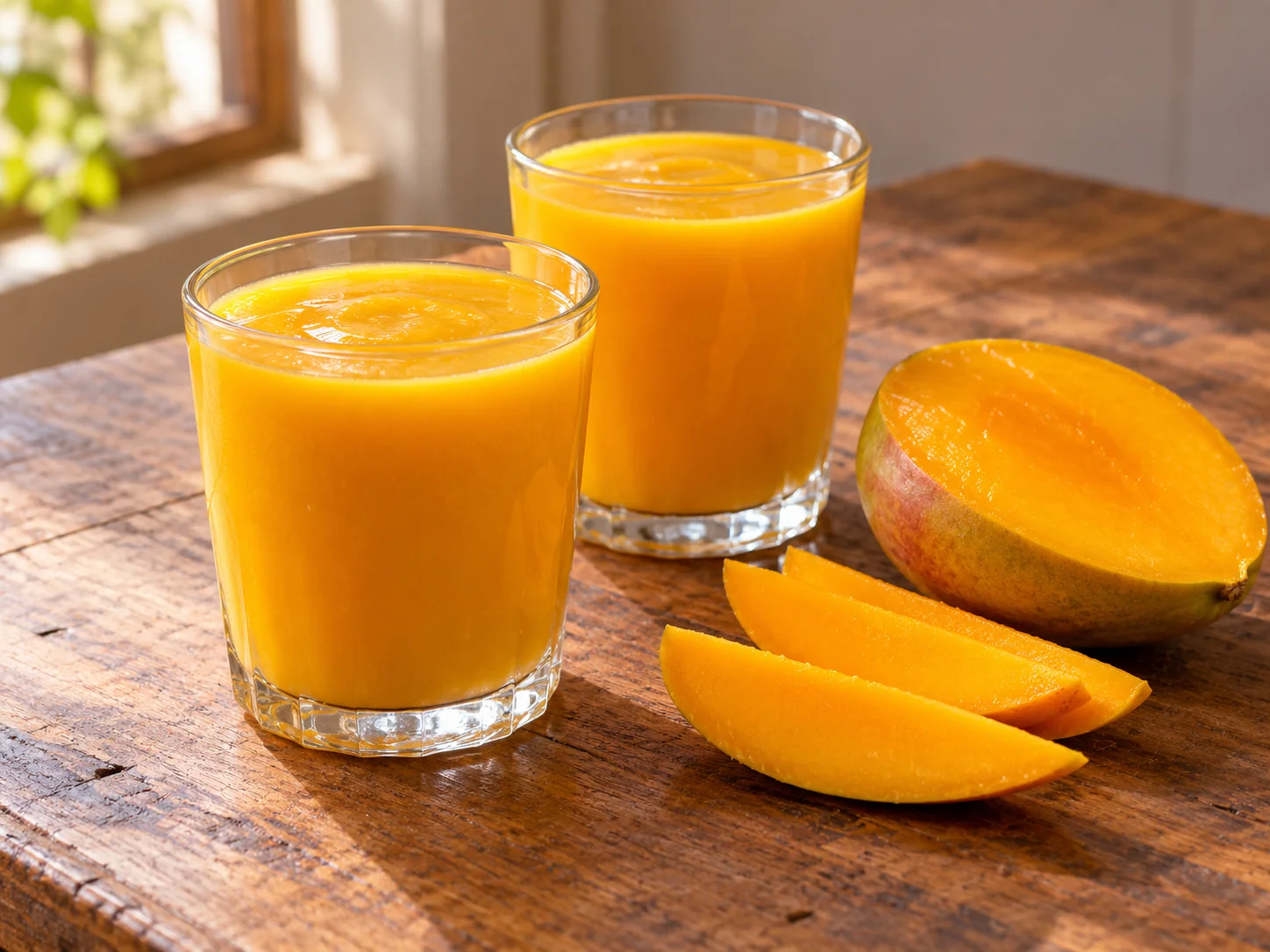
- Juices, nectars, and beverages Mango drink is, from Dakar to Abidjan, a true ritual: thick, creamy, naturally sweet, served chilled, it is bought in markets and from street vendors. Mango juice accompanies Senegalese thiéboudienne (a fish and rice dish), fish dishes, children's snacks, or family ceremonies. Cocktails combine it with ginger, lemon, bissap (hibiscus drink), bouye (baobab fruit), or pineapple, very fresh, emblematic of African mixology expertise.
- Preserves, condiments, and pickles In many countries, especially in East and Southern Africa, green mango is cut and processed into achards (pickled vegetables), spicy pickles, or vinegared condiments. It is grated with pepper, salt, chili, vegetable oil, then accompanies grilled fish, stews, or meats. This tangy and spicy taste balances the heat of spices and enhances the simplicity of a rice or couscous dish.
- Salads and appetizers Mixed with papaya, pineapple, watermelon, or cucumber, mango is used in African fruit salads, sweet or sweet and savory. In Senegal, Mali, Ghana, Ivory Coast, salads of ripe or green mangoes are garnished with roasted peanuts, cilantro, red onions, or mint for incomparable freshness.
- Desserts and pastries In African tradition, mango serves as the base for artisanal ice creams, sorbets, tarts, and cakes. Some chefs of the new African wave incorporate it into cheesecakes, mousses, crumbles, and even revisited desserts like mango-bissap or mango-coconut.
- Savory and sweet-savory dishes Rarer but increasingly present in African fusion cuisine, mango accompanies meats (mango chicken, duck, lamb), grilled fish, or shrimp, entering into the composition of sweet and sour sauces and marinades. In Northern Mozambique or Nigeria, some ancestral dishes combine onions, chilies, green mango, and palm oil for a dense sauce.
- Dried or processed Dried mango is highly appreciated as a snack, but also as an ingredient in cereals, African granolas, or energy bars. It testifies to African ingenuity in preserving and valorizing harvest surpluses, limiting post-harvest loss.
In my books

Continue exploring the continent’s cuisines with Africa at the Table — 54 countries, 54 iconic dishes, by Alioune FALL. This book is in English.
Explore further
MANGO IN IMAGINATION, CELEBRATION, AND TRADITION
Symbol of abundance and relief The mango is first and foremost the promise of sunshine, abundance, and a good season. Awaited by children, it announces the end of the lean season, that difficult time between two harvests. It saves from hunger, quenches thirst, provides comfort and energy. For many families, mango picked from under the tree or given as a gift by a neighbor is a guarantee of solidarity and sharing. Place in ceremonies and popular culture No wedding, baptism, Tabaski (Eid al-Adha) celebration, or large family gathering is complete without platters of mangoes, juices, and fruit salads. Children compete in skill to climb branches and pick the most beautiful ones. Oral literature abounds with tales where mango transcends mere food: a magical remedy, a lover's fruit, a prize to offer for peace or prosperity. In some villages in Mali or Ivory Coast, it is still said: “He who shares his mango will have rain for his field.” In Burkina Faso, mango is used in ritual offerings to ask for the protection of ancestors.
NUTRITIONAL AND MEDICINAL PROPERTIES
Nutritional composition (per 100g of fresh mango) • Calories: 60 kcal • Water: 83 % • Natural sugars: 14 g • Fiber: 1.6 g • Vitamin C: 36.4 mg (60 % of DRIs) • Pro-Vitamin A (beta-carotene), vitamins B1, B2, B6, E, K • Potassium, magnesium, iron, copper • Rich in antioxidants (mangiferin, gallotannins, polyphenols) Health benefits • Boosts immunity (vitamin C, beta-carotene) • Protects eyesight (vitamin A) • Facilitates digestion (soluble fiber, enzymes, especially in green mango which contains more amylases) • Hydrating and remineralizing (perfect for combating heat and fatigue) • Moderate satiating effect • Used in pharmacopoeia to treat constipation, heatstroke, mild fever (decoctions of bark, leaves, or pits in traditional African medicine) Precautions Excellent for everyone, mango should nevertheless be limited in diabetics (high sugar content). Green mango, consumed in excess, can irritate the intestines or mouth in sensitive individuals.
TRANSMISSION, CONSERVATION, AND BIODIVERSITY
Each region cultivates and protects its own varieties, perpetuating valuable know-how: organic farming, open-air drying, artisanal processing. Modern campaigns encourage the planting of mango trees to combat desertification, promote biodiversity, and provide income for rural women. Conservation remains a challenge: the overabundance of mangoes during the season necessitates drying, processing, or preserving in jars, practices passed down from mother to daughter.
MANGO AND MODERNITY: INNOVATION
Today, mango inspires the new generation of African chefs: mango carpaccio, African sushi, mousses combining mango and spices, smoothies, fruity-spicy sauces to accompany meats and fish. It graces small and large tables, a symbol of a contemporary, creative, open Africa. Mango serves as a vector of identity and diplomacy: offered to foreign visitors, it seals hospitality. Exported, it carries the name of Africa abroad.
CONCLUSION
In gourmet Africa, mango is much more than a fruit: it is a symbol of the nurturing land, celebration, conviviality, and beauty. With its golden flesh, it radiates into cuisine and daily life, from breakfast to dessert, from the bush market to sumptuous banquets. From Dakar to Nairobi, it unites people, nourishes bodies, and soothes hearts. Tasting African mango is celebrating a living heritage, an art of sharing, and the promise of sunshine in every bite.
In the kitchen : Mango
Recipes from the site to put your knowledge into practice:
Discover these cuisines at a restaurant
Explore our restaurant and caterer directories. Choose your destination and check the establishment’s menu to confirm which dishes are offered and available.
Continue exploring
Enjoy discovering ingredients and African cuisines? Join our newsletter. The illustrated PDF 10 sauces africaines incontournables is in French and is offered after confirming a subscription to the French or bilingual edition.