Sweet Potato
Central and South America
Understanding : Sweet Potato
INTRODUCTION
The sweet potato, with its golden, orange, white, or purple flesh, has held an exceptional place in African diets for centuries. It is not just an energetic root vegetable: it embodies the resilience, diversity, and joy of African cuisines, from the Cape to the Maghreb, from the Malagasy valleys to the Nigerian plains. Sizzling in markets, deeply rooted in the nourishing earth, they are eaten boiled by hand, roasted in embers, mashed, in fritters, or as fries, but also in soups, cakes, breads, couscous, or desserts. This “treasure beneath the earth” is a pillar of food security and a symbol of celebration, childhood, innovation, and connection to the land. Long perceived as “the poor man’s bread,” the sweet potato is now experiencing renewed interest, driven by its nutritional qualities, culinary creativity, agroecology, and its valorization in modern agriculture and gastronomy. Let's delve into the fascinating world of the African sweet potato: its botany, varieties, history, economy, uses, virtues, and symbolism.
Where to find it
Look for the exact food-grade form required by the recipe at markets and specialist shops. Check the product name, ingredients, condition and storage instructions.
Explore further: Cooking tips · Food hygiene and safety advice.
History and uses
BOTANY, DIVERSITY, AND HISTORY
Origins and African introduction The sweet potato (Ipomoea batatas) belongs to the Convolvulaceae family, originating from Central and South America. It arrived in Africa as early as the 16th century, brought by Portuguese maritime trade along the West African coast, then firmly established itself thanks to its adaptability to poor soils, drought, and its rapid growth. Very quickly, it integrated into traditional agrarian systems, often in rotation with millet, sorghum, cassava, or maize. In West, Central, East, and Southern Africa, the sweet potato supplants or complements other tubers in daily diets, especially during lean seasons, famine, or drought. Varietal diversity The African sweet potato comes in all colors and textures depending on the terroir: • Orange-fleshed: very rich in beta-carotene, sweet, watery, melting. • White or pale yellow-fleshed: firmer, sweet, or sometimes floury depending on the variety. • Purple-fleshed: rich in anthocyanins, slightly sweet, a little less common but increasingly valued. • Smooth, rough, red, yellow, brown skins: reflecting African agro-biodiversity. In each village, sweet potato varieties are distinguished by their cooking adaptability, sweetness, early maturity, or resistance to drought and insects.
PLACE IN RURAL ECONOMY AND FOOD SECURITY
The sweet potato is a vital pillar of African food security, particularly for Sudano-Sahelian zones and densely populated peri-urban regions: • Cultivation flexibility: It grows quickly (3 to 5 months), can be harvested progressively, and tolerates poor soils, allowing for several harvests per year. • Support in times of crisis: During periods of famine, lean seasons, conflict, or cereal shortages, the sweet potato provides nourishment, from Togo to Madagascar. It is nicknamed “the root that saves.” • Additional income: Marketing in urban and rural markets, artisanal processing (chips, flour, fritters) generate autonomous income, especially for women. • Nutritional benefits for children: Public policies encourage its production in the fight against malnutrition (vitamin A richness of orange varieties). Research centers and NGOs are multiplying programs for the redistribution of selected plants and the valorization of the sector.
CULINARY USES: A THOUSAND AND ONE SWEET POTATOES
African sweet potato cuisine shines with its diversity and inventiveness, depending on the region, season, tradition, or inspiration of the moment.
- Eaten plain: boiled, braised, or cooked in water • Braised in embers: sold in the morning or evening around markets, popular with children and workers, a sweet scent of celebration and conviviality. • Boiled: cut into pieces, served by hand or with a spoon with a spicy sauce, fish, legumes, green leaves for breakfast, lunch, or snack. • Steamed/boiled: The simplest and most common method, especially in Nigeria, Ghana, Cameroon, Madagascar.
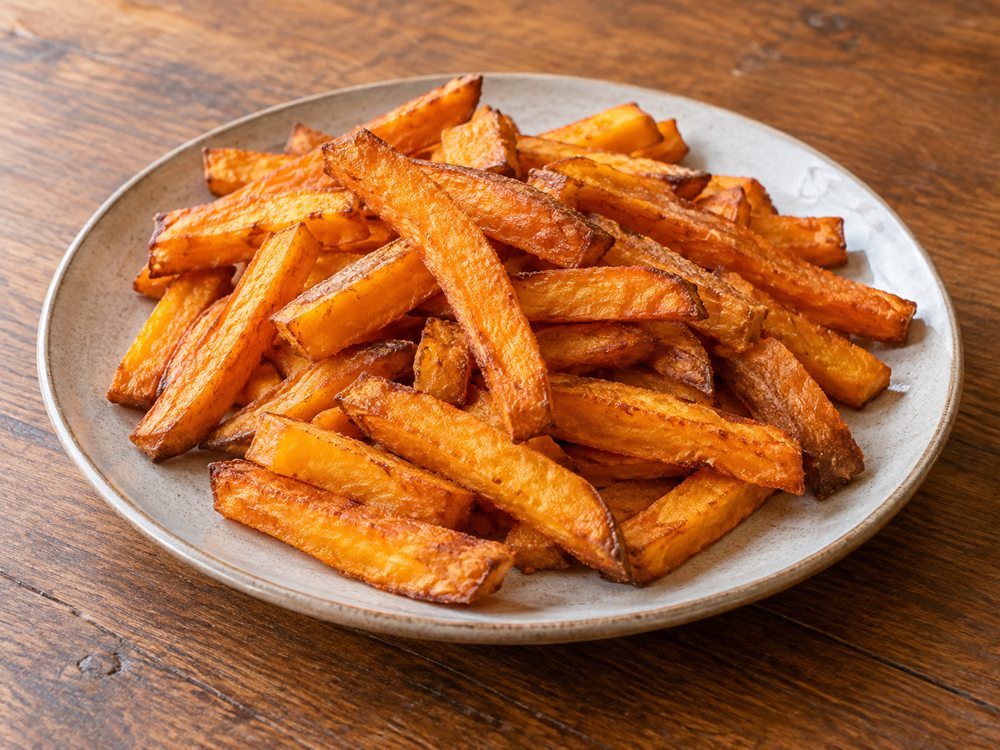
- Fries, fritters, chips • Sweet potato fries: a popular alternative to potato in street food restaurants or during festivities. Golden, crispy, to be enjoyed with spicy salad or local sauces (chili, tomato, peanut). • Fritters and pancakes: grated, mixed with flour, eggs, spices, it offers soft and nourishing fritters, consumed at any time. • Artisanal chips: often sold in bags by women in markets, sweet and savory, salty, or spicy.
- Main dishes • Stews and soups: In cubes in tomato, peanut, leafy vegetable sauces (ndolé, saka saka (a dish made from cassava leaves)). It thickens, sweetens, provides binding and a satiny texture. • Couscous and “tiéboudienne” (a Senegalese fish and rice dish): In Senegal, sweet potato is often among the vegetables in the mythical fish and rice dish. • Purees: Served with grilled fish or chicken, or integrated into festive dishes like “fufu” (a pounded paste from Central Africa). • Spicy potatoes: Cameroonian recipe of sweet potato sautéed with onions, tomatoes, chili, garlic: an economical and tasty main dish.
- Porridges, desserts, cakes • Baby porridges: Rich in energy and digestible, sweet potato puree or porridge enriched with its flour is recommended in maternal health centers. • Cakes, puddings, crepes: Potato-sweet potato mix (Uganda, Rwanda), soft puddings and cakes with spices or coconut (Southern Africa and African Antilles). • Jams and sweet purees: Cooked sweet potato, mashed with sugar, ginger, lemon: a popular spread in Malagasy, Cameroonian, Beninese families.
In my books

Continue exploring the continent’s cuisines with Africa at the Table — 54 countries, 54 iconic dishes, by Alioune FALL. This book is in English.
Explore further
SYMBOLISM, TRADITIONAL USES AND TRANSMISSION
• Initiation and sharing ritual: In many villages, the first sweet potato harvest is accompanied by festivities, offerings to ancestors, and community sharing. • Food of peace and spiritual medication: Sweet potato roots, braided, are offered at weddings, during reconciliations, or during prayer ceremonies for rain. • Culinary transmission: The sweet potato is often the “first dish” a child learns to cook, as its preparation is easy, quick, and benevolent.
NUTRITIONAL VALUES AND HEALTH BENEFITS
The sweet potato stands out for its exceptional nutritional qualities: • Rich in carbohydrates (complex sugars) and fiber: provides healthy energy, prolongs satiety, regulates transit. • Abundant vitamin A (orange varieties): fights childhood blindness and strengthens immunity. • Rich in B vitamins, C, potassium, manganese, calcium, iron. • Antioxidant power (beta-carotene, anthocyanins): protects cells, slows aging. • Low glycemic load compared to other starches: interesting for diabetes control. • High digestibility: suitable for children, the elderly, pregnant women, convalescents. Various African studies show that introducing sweet potato (especially orange) into children's diets reduces malnutrition, anemia, and improves collective immunity.
ECONOMY, ECOLOGY AND INNOVATIONS
• Valorization of the entire chain: leaves used as leafy vegetables (saka saka, green sauces), stems as fodder for livestock, “ugly” tubers processed into flour, chips, purees, artisanal alcohols. • Agroecology: Low in inputs, the sweet potato fights erosion, improves soil structure, and integrates harmoniously into mixed cropping (palms, beans, peas…). • Culinary modernization: New African chefs sublimate it in stuffed gnocchi, verrines, ice creams, savory or sweet mousses, vegan dishes, gourmet street food. • International market: export “sweet potato” is growing (South Africa, Egypt, Ghana), driven by the “superfood” trend.
ANECDOTES, FESTIVALS AND TRANSMISSION
• Sweet potato festival: in Nigeria, Ghana or Madagascar, some villages celebrate each new season with a festival: competition for the largest root, traditional recipes, shows, dances. • Street food: “sweet potato suya” (Nigeria), “brown fritters” (Ivory Coast, Burkina Faso), sweet potato mini-burgers (urban markets): popular culture continues to innovate. • Family transmission: Mothers initiate children to recognizing ripe tubers, the art of perfect braising, and making morning purees or afternoon snack chips.
CONCLUSION
The sweet potato accompanies the birth, growth, old age, and celebration of the African people. Nourishing, accessible, resilient, tasty, it is found on all tables, in all stories, in all hands. Whether peeled, grated, pounded, grilled, or sweetened, it remains a discreet but central heroine of African cuisine. A synonym for sharing, resilience, health, and generosity, the sweet potato has embraced every soil, every family, every “palate” on the continent. Today valued as a superfood, it remains, for every African, a golden root — living memory, shared hope, a promise for tomorrow.
In the kitchen : Sweet Potato
Recipes from the site to put your knowledge into practice:
Discover these cuisines at a restaurant
Explore our restaurant and caterer directories. Choose your destination and check the establishment’s menu to confirm which dishes are offered and available.
Continue exploring
Enjoy discovering ingredients and African cuisines? Join our newsletter. The illustrated PDF 10 sauces africaines incontournables is in French and is offered after confirming a subscription to the French or bilingual edition.