Papaya
Central and South America
Understanding : Papaya
INTRODUCTION
Papaya (Carica papaya), with its fleshy, orange-pink, fragrant, and sweet fruit, stands across the African continent as a symbol of freshness, benefits, and nature's generosity. Rarely has a fruit tree embodied exoticism, simplicity, and diversity of uses, from harvesting in the family garden to sophisticated recipes in contemporary African gastronomy. Prized for its nutritional as well as taste qualities, papaya holds a special place, particularly in sub-Saharan Africa and on the islands of the Indian Ocean, but also in North Africa thanks to its modern dissemination. Its history, its roots in rural life, its dietary, medicinal, and social roles, its influence on culinary modernity, papaya in Africa is a treasure that is part of daily life and the collective imagination.
Where to find it
Look for the exact food-grade form required by the recipe at markets and specialist shops. Check the product name, ingredients, condition and storage instructions.
Explore further: Cooking tips · Food hygiene and safety advice.
History and uses
ORIGINS, BOTANY AND DIVERSITY
Originally from Central and South America, papaya was introduced to Africa during the great maritime and commercial circulations of the 15th and 16th centuries (especially by the Portuguese), first on the coasts of Guinea, then in the islands (Madagascar, Reunion, Mauritius, Comoros), the Gulf of Guinea, then West, Central, and Southern Africa. The papaya tree is a giant herb (and not strictly speaking a tree) that can reach 2 to 10 meters in height. Its hollow trunk bears large palmate leaves at its top. The fruits grow in clusters on the trunk: they are large elongated berries, which can reach 30 cm, often weighing 1 to 3 kilos. Depending on the variety and terroir, the skin can be green, yellow, orange; the flesh ranges from pale yellow to bright orange, sometimes salmon, red or pink. Its texture, fragrance and sweetness vary depending on climatic conditions, soils, and the age of the fruit. We distinguish in particular: • “Solo” papaya: small, very sweet, popular in East, West Africa and Madagascar. • “Hawaiian” or “Maradol” papaya: large, with thick orange flesh, perfect for juices and jams. • Local or “wild” papayas: adapted cultivars, generally consumed green. To date, Africa is among the largest producers of papaya in the world (Nigeria, Ghana, Ivory Coast, Uganda, Kenya, DRC, Madagascar, Comoros).
AGRICULTURAL, ECONOMIC AND SOCIAL ROLE
Production and sector Papaya is cultivated from Morocco to the great forests of the Congo Basin, in the valleys of the Niger, Sudan, East Africa, and on all tropical and subtropical islands. A hardy tree, resistant to drought, growing quickly (production possible from the first year), it adapts to intensive cultivation as well as small-scale subsistence and family farming. Economic weight: • Source of income: the sale of fresh papaya in urban markets, roads and shopping centers is a pillar for many farmers, especially women. • Artisanal and industrial processing: juices, jams, dried fruits, compotes, syrups, and export to Europe or the Maghreb. • Agroecology: papaya, integrated into garden-apiaries or agroforestry, creates shade and improves local biodiversity. Social place Papaya weaves the rural-urban link: • Symbolic gift from families to guests or from students to their teacher. • Offering during celebrations (wedding, baptism, Ramadan, Christmas). • Food or medicine, beneficial and reassuring (digestion, convalescence, leaf infusion against malarial fevers).
PAPAYA IN AFRICAN CUISINE: VERSATILITY AND CREATION
Papaya is consumed in all its forms, green or ripe, raw or cooked, savory or sweet: a burst of freshness on rural tables, an ingredient of gastronomic sophistication among contemporary chefs, a base for street food, provisions for babies and seniors.
- Raw papaya, fruit of simplicity Plain papaya: Sliced, peeled, eaten by hand in the streets of Dakar, Douala, Bamako, Nairobi. Breakfast, snack, goûter (afternoon snack): Papaya advantageously replaces banana or pineapple, added to millet porridge, rice pudding, or toast. Fruit salads: Mixed with mango, pineapple, citrus fruits, watermelon, papaya sits at the center of colorful African salads, sometimes enhanced with a squeeze of lime, mint or even sweet chili. Accompaniment: In large meals, papaya accompanies thiéboudienne (a Senegalese dish of fish and rice), rice with tomato sauce, or even grilled meats, for its refreshing effect.
- Green papaya, savory and seasoned Green papaya, grated or julienned, is very popular in African cuisine: Seasoned with salt, chili, lemon, peanut or palm oil, it makes a fresh, crunchy, often “spicy” salad served as an aperitif or starter. In Benin, Togo, Ivory Coast: thinly sliced green papaya, salt, garlic, vinegar, chili — popular appetizers. Pickles or achards de papaye (papaya pickles) (Madagascar, Mauritius, Reunion, Comoros): Green papaya cut into strips, marinated with carrot, cabbage, vinegar, oil, mustard, turmeric, garlic, ginger, anise, sometimes candied lemon or West Indian chili. They accompany meats, rice, samosas, gratins, grilled meats… In hot sauce: in some countries (Ghana, Cameroon…), green papaya is cooked as a vegetable, mixed with onion, tomato, chili and meat. Dried or fermented green papaya: used to thicken certain porridges or to add umami to village soups (Cameroon, Nigeria).
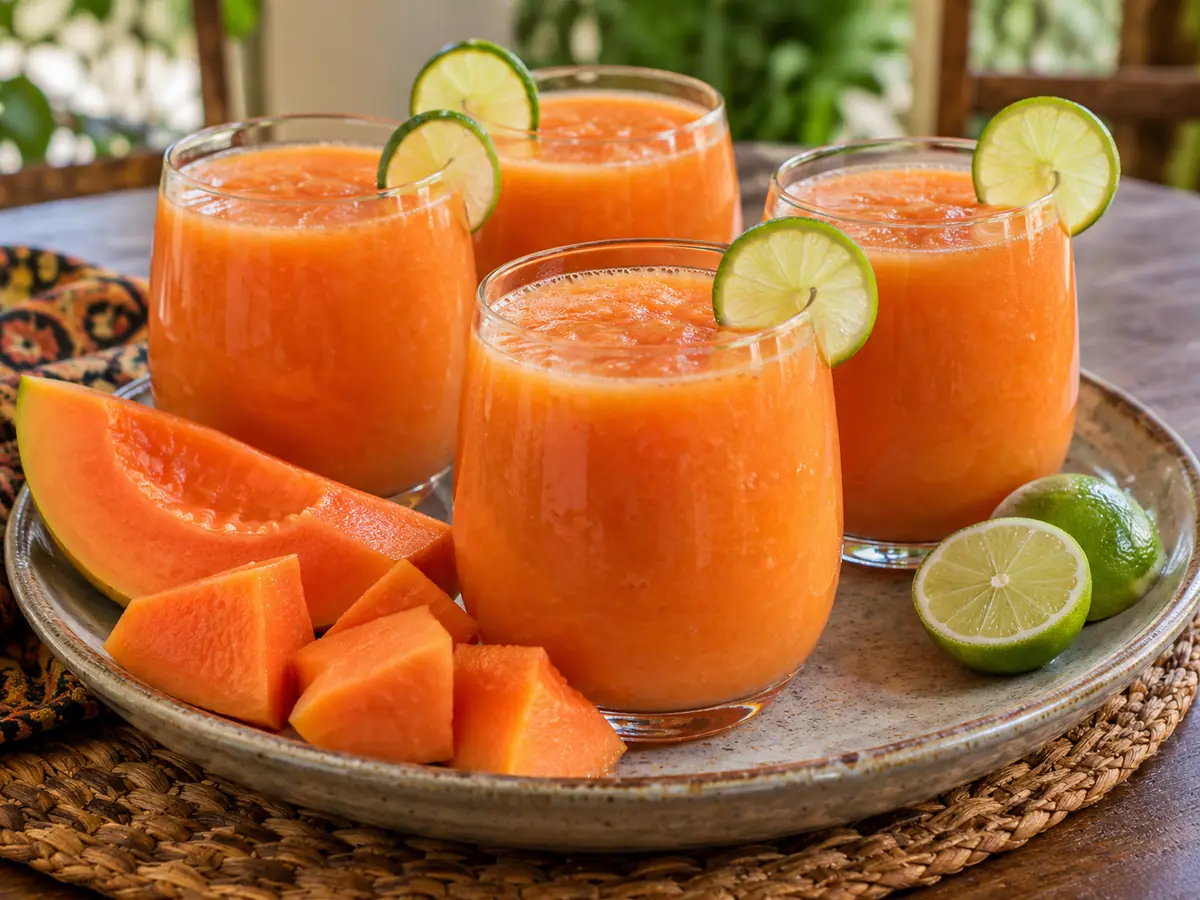
- Juices, drinks and sweets Plain papaya juice, creamy, sometimes flavored with ginger, lime or pineapple: a delightful drink in markets or family restaurants. Smoothies and milkshakes combined with coconut, banana, mango, or curdled milk for an energetic drink during the hot season. Homemade jams: papaya jam (sometimes with lemon, ginger, vanilla) recalls childhood snacks, especially in Madagascar, Mauritius, Ivory Coast. Revisited raw vegetables and desserts: • Papaya, sweetened condensed milk, biscuit crumbs: popular urban dessert • Papaya-honey, papaya with curdled milk, grilled papaya skewers, artisanal papaya sorbets.
- Main dishes and innovations Fresh shrimp and green papaya soups (Mozambique, Tanzania) Papaya carpaccio and fish marinated in lime, fresh herbs (inspired by ceviche, adapted to the African coastal terroir). Roasted papaya with spices, accompaniment to white meats, lamb or kid (Southern Africa, Reunion, Comoros). Green papaya curries accompanying fragrant rice, an Indian heritage reinterpreted locally.
In my books

Continue exploring the continent’s cuisines with Africa at the Table — 54 countries, 54 iconic dishes, by Alioune FALL. This book is in English.
Explore further
PAPAYA, CULTURE AND TRANSMISSION
Papaya, the “village” tree, punctuates African social life: • Community distribution: During harvests, it is shared with neighbors, neighborhood children, guests. • Knowledge transmission: Children learn to pick with a pole (or climb, sometimes dangerously), to cut, to transform into green salad, juice, jam. • Sensory education: Elders teach how to recognize a ripe papaya by touch, smell, color. • Feminine symbolism: Many women manage family plantations, distribution, and sale of whole, cut, or processed papayas.
PAPAYA AND HEALTH: NUTRITIONAL AND MEDICINAL TREASURE
Nutritional values (per 100g): • Water: 88g • Calories: 39 kcal • Natural sugars: 8g • Vitamin C: 62mg (more than orange) • Pro-vitamin A (beta-carotene): 950µg (for vision, immunity) • Vitamins B, E, K • Potassium, magnesium, calcium, iron, dietary fiber Health properties: • Digestive action: papain (a specific papaya enzyme) promotes protein digestion, relieves dyspepsia, heavy stomach. • Powerful antioxidants: Vitamin C, beta-carotene, flavonoids: prevention of aging, tissue protection, anti-inflammatory action. • Detoxifying: purifies the intestine, facilitates elimination, fights constipation. • Immunostimulant action: skin and general immunity strengthened by vitamins and minerals. • Liver support: traditional use of papaya leaf, in decoction against hepatitis, malaria. • Support against anemia: rich in iron and rutin, papaya is often given to pregnant women, growing children, seniors. • Hydrating and remineralizing: in case of intense heat, fever, physical exertion. Popular remedies • Leaf decoction: against fever, malaria, gastric pain (to be used with caution) • Papaya seeds, dried, ground: reputed vermifuges, used in traditional medicine. • Leaf poultices: on wounds, insect bites, for local application.
PAPAYA, MODERNITY AND CULINARY INNOVATION
Papaya inspires the new wave of African and diaspora chefs: sweet and savory mousses, fish-papaya tartares to celebrate freshness, chilled veloutés, steamed papaya ravioli, tangy sauces, vinaigrettes, ice creams and no-bake cakes. Street food adopts it in dessert skewers, grab-and-go smoothies, brightly colored non-alcoholic cocktails, associated with pineapple, mango, lime. In pan-African haute cuisine, papaya shines in dishes where it dialogues with ginger, hibiscus, baobab or Penja pepper.
ECOLOGICAL CULTURE AND VALORIZATION
The papaya tree is an agroecology champion: grows fast, resists drought, limits erosion, fixes biodiversity, provides shade and humus. Zero waste, papaya: leaves, seeds, flesh, stems are used, composted, shared with animals. Papaya cultivation supports women: planting trees, selling in markets, artisanal processing (juices, jams). Food security programs systematically integrate papaya into the fight against child malnutrition.
CONCLUSION
Papaya is not just a tropical fruit: it is a social bond, a source of health, a treasure of simplicity and creativity, a gift from African soil to all its children. Celebrated in everyday cuisine, magnified by culinary modernity, it embodies Africa's ability to combine tradition, innovation and well-being. From leaf to flesh, from green to pink, papaya is a hymn to African sweetness, vitality and sharing.
In the kitchen : Papaya
Recipes from the site to put your knowledge into practice:
Discover these cuisines at a restaurant
Explore our restaurant and caterer directories. Choose your destination and check the establishment’s menu to confirm which dishes are offered and available.
Continue exploring
Enjoy discovering ingredients and African cuisines? Join our newsletter. The illustrated PDF 10 sauces africaines incontournables is in French and is offered after confirming a subscription to the French or bilingual edition.