Shawarma
Middle East
Understanding : Shawarma
INTRODUCTION
If there is one dish capable of crossing continents, eras, and cultural barriers to constantly reinvent itself, shawarma (or chawarma, chawerma, chwarma, depending on the transcriptions) is a living example. Born in the Middle East, heir to the spit-roasted meats of the Levant, shawarma has achieved the feat of becoming, almost everywhere on the planet, one of the symbols of street food and urban "fast food." In Africa, its adaptation is remarkable: it has not only established itself in the major metropolises of the Maghreb, West and Central Africa, but it has also integrated, and even transformed, local gastronomies, their practices, their economy, and their sociability. From Cairo to Lagos, from Rabat to Abidjan, from Dakar to Kinshasa, shawarma is now the go-to for small cravings, late-night hunger, or a quick lunch. But its role goes far beyond a simple sandwich: it tells stories of migration, cultural blending, culinary creativity, African entrepreneurship, and expresses the genius of cultural hybridization.
Prepare this speciality
Choose a detailed recipe, adjust the portions and prepare your ingredients before starting. Our cooking tips and food safety advice complement the steps described in the recipes.
Explore further: Cooking tips · Food hygiene and safety advice.
History and uses
A MILLENNIAL JOURNEY: ORIGINS AND SPREAD
The word "shawarma" originally refers to a preparation similar to Turkish "doner kebab" or Greek "gyros": seasoned meat slices, vertically skewered, slowly cooked over heat, then cut with a knife and served in a sandwich, in flatbread with various accompaniments. The technique is believed to have originated between Anatolia and the Levant (Turkey, Syria, Lebanon, Palestine) around the 19th century, then quickly conquered the Arab world, Egypt, the Mediterranean, and North Africa thanks to the intense circulation of traders, pilgrims, and diasporas. The expansion into sub-Saharan Africa intensified in the second half of the 20th century: first in cosmopolitan cities (Dakar, Lagos, Abidjan, Douala), then into medium-sized towns and small capitals, under the combined influence of globalization, the Lebanese or Syrian diaspora, and the demand for fast food.
AFRICAN SHAWARMA: PORTRAIT OF A POPULAR AND URBAN "CLASSIC"
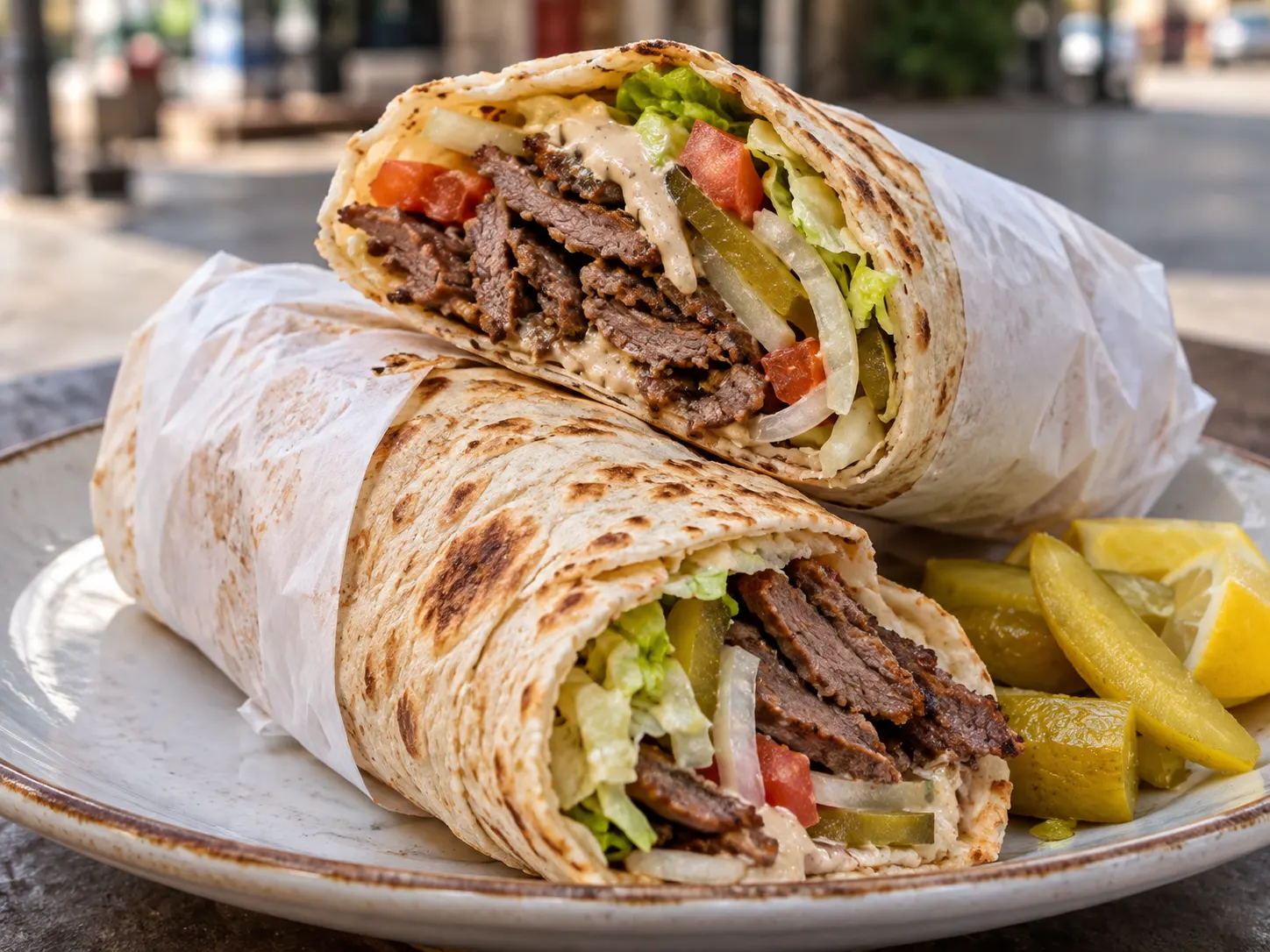
What is shawarma? In the collective African imagination, shawarma primarily evokes a generous, fragrant, ultra-fast-to-serve sandwich, endlessly adaptable. It generally consists of: • Flatbread (pita, Arabic bread, sometimes baguette or local bread) • Meat (most often chicken, but also beef, lamb, sometimes turkey or even fish or, increasingly, vegetarian options) • Spices: complex marinade based on cumin, coriander, paprika, garlic, turmeric, cinnamon, pepper, chili, ginger, yogurt or oil. • Accompaniments: salad, tomatoes, braised onions, cucumbers, cabbage, grated carrots, olives, sometimes fries or potato. • Sauces: garlic mayonnaise, hot sauce, ketchup, white yogurt sauce, sometimes African mustard/honey sauce or homemade hot sauce (harissa, pili-pili, shito, etc.). The sandwich is usually rolled, served in paper, for takeout or to eat standing in the street. From the spit to the griddle In "shawarma houses," street restaurants, small fast-food joints, the vertical spit is the "queen" of the neighborhood. Over time and through adaptations, in some more rural or less equipped areas, the meat can also be grilled over a wood fire, pan-fried, or even cooked on a griddle and then cut on the spot, demonstrating the adaptability of the concept.
SHAWARMA AND AFRICAN URBAN CULTURE
Shawarma has embraced the continent's urbanization: • Meal for busy workers, students, night owls. • Festive street food: it accompanies nightclub exits, concerts, sporting events. • Identity marker for urban youth: "cool," practical, affordable, and customizable value. • Place of diversity and encounters: the queue at the shawarma vendor brings together men, women, all social and religious backgrounds, residents and travelers alike. In many popular neighborhoods, shawarma has established itself as a marker of modernity, a place for socialization, and even a springboard for youth self-entrepreneurship. Opening a "Shawarma Express" outlet is thus an accessible dream of economic success.
AFRICAN VARIETIES AND INNOVATIONS
Maghreb In Morocco, Algeria, Tunisia, shawarma integrated into habits as early as the 1980s-90s: it competes with pizza, merguez sandwich, bricks, sometimes merging with local cuisine (addition of candied vegetables, olives, ras el hanout spices, harissa). West Africa In Dakar, shawarma is king on Blaise Diagne Avenue; in Abidjan, it competes with alocos (fried plantain pieces), kabato (a type of fried dough), and garba (fried cassava flour with fried fish); in Lagos or Accra, it is served with the essential shito (Ghanaian chili sauce) or Nigerian chili. The variety of accompaniments is a delight: fried plantains, attiéké (steamed cassava couscous), yam, grilled chicken, spicy tomato sauce or local cheese ("wagashi" in Togo). Central Africa In Cameroon, Gabon, Congo, shawarma is served in a baguette, or with local bread ("baton de manioc" (cassava stick), "bobolo" (fermented cassava bread)), often enriched with sautéed vegetables or pili-pili (African bird's eye chili) – spicy mayonnaise reigns supreme there. East Africa In Nairobi, Kampala or Dar es Salaam, the "Swahili" version of shawarma often relies on halal meat, pepper, local chili, and sometimes an Indian touch (tandoori sauce, massala, roasted onions). Street-foods and hot spots Where kebab or the "French" sandwich reign in Europe, it is the shawarma spot that personifies "urban fast food" in Africa. Local chains, informal franchises, independent vendors compete in creativity to attract young and trendy clientele.
In my books

Continue exploring the continent’s cuisines with Africa at the Table — 54 countries, 54 iconic dishes, by Alioune FALL. This book is in English.
Explore further
SYMBOLISM, ANECDOTES AND INTEGRATION INTO THE SOCIAL LANDSCAPE
Shawarma: between globalization and African identity Adopted without losing its roots, shawarma is a perfect allegory of African blending: it is imbued with spices, local flavors, embraces human warmth, Senegalese "teranga" (hospitality), Ivorian hospitality, Nigerian audacity. It is adapted for Ramadan, football matches, weddings, the pride of a neighborhood. Transmission Shawarma is often the "festive meal" one treats oneself to: with friends, family, to celebrate exam success or just the pleasure of Friday night. There are rituals: choosing the stand, the cutting ceremony, discussions about origins.
ECONOMIC ROLE AND ENTREPRENEURSHIP
Shawarma is more than a recipe: it is a model of emancipation and micro-enterprise: • Low initial investment (vertical spit, bread, local ingredients). • Quick profitability: high-volume sales, adapted to street consumption. • Urban jobs: young staff, apprentices, delivery drivers. • Local sourcing: chickens, vegetables, onions, local bread, homemade sauces. Many young graduates or "returnees" (from the diaspora) open their shawarma businesses, stimulating the informal urban economy and sometimes modernizing the codes of African fast food.
NUTRITIONAL PLACE, ADVANTAGES AND LIMITATIONS
Shawarma offers real nutritional benefits if well-balanced: • Animal proteins (lean meat, chicken: source of energy and satiety). • Fibers, vitamins, minerals: fresh vegetables, condiments, grain-rich bread depending on the recipe. • Moderate fat intake if the sauce does not overuse mayonnaise and if the meat is defatted. • Potential dangers: excess salt, industrial sauce, overly refined bread, risk of microbes in case of cold chain disruption. Local initiatives encourage the use of wholemeal bread, homemade sauces, organic or local ingredients, diversification (vegetarian shawarma, fish…).
EMBLEMATIC RECIPES AND CHEF'S SECRETS
Classic African shawarma recipe
- Meat preparation: marinade (chicken, beef, lamb) for several hours with garlic, ginger, cumin, coriander, paprika, lime, vinegar, oil, sometimes yogurt.
- Cooking: vertical spit, barbecue, or pan-fried in slices.
- Bread: pita, baguette, flatbread or local bread.
- Assembly: meat, salad, tomatoes, onion, cabbage or grated carrot, fries if desired.
- Sauce: homemade garlic mayonnaise, hot sauce, yogurt sauce, according to taste. Local tips • Add grated green mango for an Ivorian or Ghanaian twist. • Incorporate fries for the "express" version from Lagos. • Dare to use peanut sauce in Cameroon or Benin.
SHAWARMA AND MODERNITY
Today, shawarma symbolizes young, urban, connected Africa. It inspires food influencers, dominates Instagram and TikTok, and enters high-end "fusion" gastronomy (lake fish shawarma, vegan version, or shawarma revisited as trendy tapas in Casablanca or Abidjan). Local chains develop delivery concepts, healthy snacking: shawarma has become the experimental ground for African creativity.
CONCLUSION
Much more than a sandwich, African shawarma tells a story of openness, creativity, and cultural appropriation. It crosses borders, transcends generations, modernizes habits, and brings all social strata together around a shared pleasure. Between Mediterranean tradition and the genius of African street food, it symbolizes today's Africa: diverse, ingenious, warm, and always ready to invent new tastes, new paths for pleasure and living together.
In the kitchen : Shawarma
Recipes from the site to put your knowledge into practice:
Discover these cuisines at a restaurant
Explore our restaurant and caterer directories. Choose your destination and check the establishment’s menu to confirm which dishes are offered and available.
Continue exploring
Enjoy discovering ingredients and African cuisines? Join our newsletter. The illustrated PDF 10 sauces africaines incontournables is in French and is offered after confirming a subscription to the French or bilingual edition.