Cabbage
Europe
Understanding : Cabbage
INTRODUCTION
Cabbage, with its large wavy leaves and dense head, is not just a star of European or Asian markets. In Africa, it is an essential figure in the vegetable garden and daily culinary life, finding its way into ancestral pots, urban street food, and contemporary haute cuisine. Once perceived as an import, cabbage has become so well acclimatized and adopted by African peoples that it is now part of the food heritage, as much for its versatility, its nutritional virtues as for its economic and social role. From the shores of the Maghreb to the rice fields of Madagascar, from the markets of Abidjan to the mountains of Ethiopia, the multiple species of cabbage (head cabbage, kale, Chinese cabbage, cauliflower, etc.) permeate African cuisine, connecting it to the land, to celebration, to the transmission of culinary knowledge, and to modern creativity. Let's dive into this vegetable with a thousand uses and a now central presence in African food.
Where to find it
Look for the exact food-grade form required by the recipe at markets and specialist shops. Check the product name, ingredients, condition and storage instructions.
Explore further: Cooking tips · Food hygiene and safety advice.
History and uses
1. ORIGIN, BOTANY AND INTRODUCTION OF CABBAGE IN AFRICA
The term “cabbage” covers a vast botanical family, the Brassicaceae (formerly Cruciferae), the best known of which is Brassica oleracea, which comes in multiple forms (head cabbage, kale, cauliflower, broccoli, collard greens, etc.). Originating from the cool, coastal regions of Europe, cultivated since Greco-Roman antiquity, cabbage was gradually introduced to Africa through trade, maritime explorations – particularly in the Maghreb from Roman times, then into sub-Saharan Africa with Muslim gardeners, European colonists, and finally via modern agriculture and urban development. It was then acclimatized through traditional selection and modernization of agricultural practices. Thanks to its ecological plasticity, short cycle, and high yield, cabbage has gained favor in both humid and temperate Africa, from the “mountains of Cameroon” to the Beni market garden plain (DR Congo), from the Malagasy highlands to the mixed zones of West Africa. Some local or hybrid varieties have been developed to resist heat, drought, and diseases.
2. ECONOMIC, SOCIAL AND AGRICULTURAL IMPORTANCE
a. Economic weight • In West, Central, Southern, and East Africa, cabbage is grown year-round, on small and medium-sized market garden plots, often in peri-urban areas, to supply local markets where demand is constant. • It constitutes a valuable resource for small producers, especially women who dominate the sale of fresh vegetables in markets (Benin, Ivory Coast, Nigeria, Cameroon…). • Cultivated for both self-consumption and sale, cabbage structures the food economy and contributes to food security. • In regions like the Atlas Mountains, the Ethiopian highlands, or Fouta Djallon, cabbage is integrated into crop rotation with potatoes, carrots, onions, sweet potatoes, poetry, corn, etc. b. Social dimension • A vegetable for celebrations and rituals, cabbage is sometimes offered as a gift or planted to mark an event (setting up a new home, birth celebration, etc.). • It symbolizes market gardening success, a family's nourishing capacity, and marks the entry into “food modernity”.
3. DIVERSITY OF VARIETIES AND FORMS USED
Head cabbage (or common cabbage): The most universal variety, used raw or cooked. Chinese cabbage: Popular in urban or fusion cuisine, appreciated for its tenderness. Kale (or collard greens): Sometimes called “brède” (leafy greens) in Madagascar or Mauritius, a central ingredient in soups and stews. Cauliflower and broccoli: Less common but present in large city markets. “Local” cabbage: Peasant selection, sometimes smaller, rustic, more heat-tolerant.
4. TRADITIONAL, POPULAR AND MODERN CULINARY USES
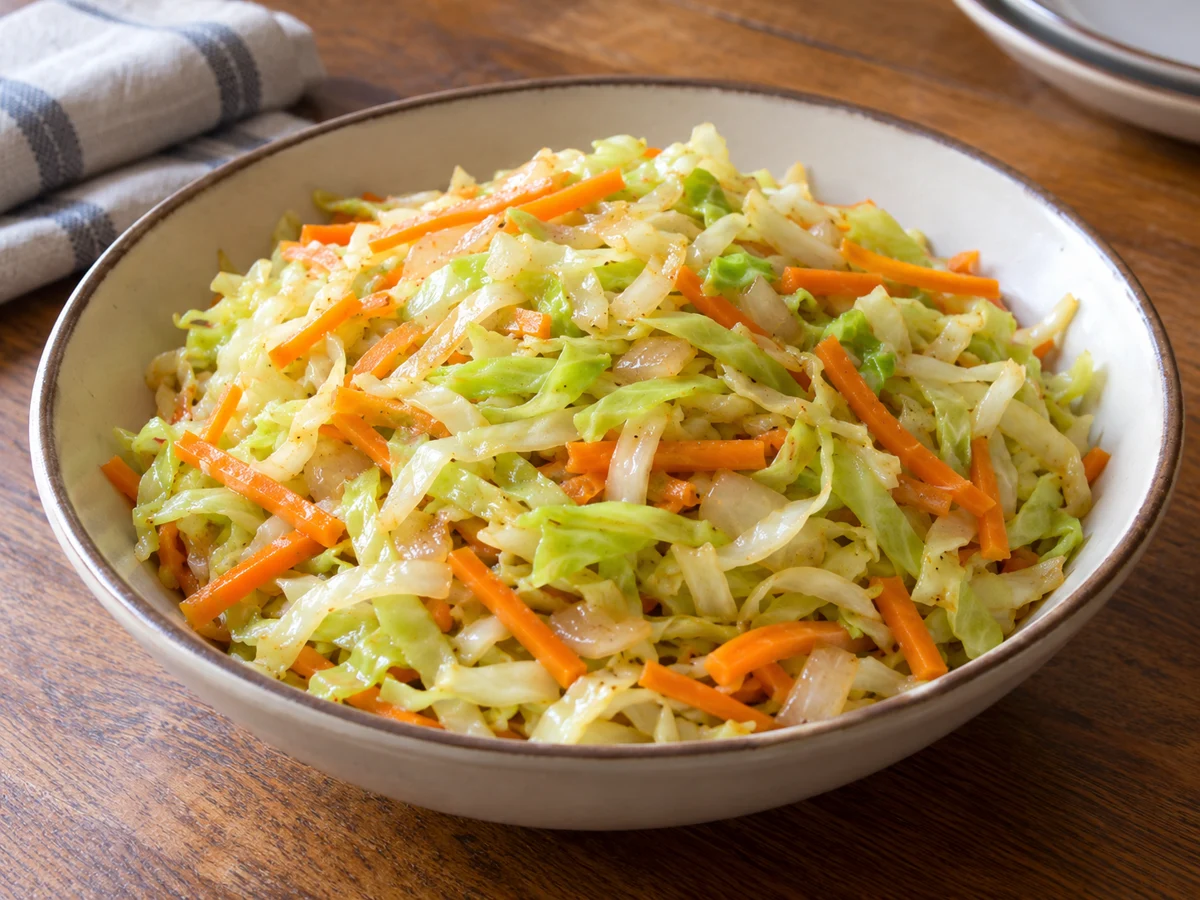
a. Traditional and daily dishes Cabbage quickly integrated into the continent's flagship recipes, thanks to its ability to absorb, enhance, or balance strong flavors (chili, smoked meat…), its tender or crispy texture, and its digestibility. West Africa • Mixed with rice, cassava, fonio (a type of grain), in a tomato-chili-onion sauce (the famous “riz sauce”), it brings consistency and sweetness. • In Senegalese thiéboudienne, it accompanies fish and root vegetables, in large steamed portions in tomato sauce. • In “leaf sauces”: sautéed with spinach, sorrel, cassava leaves or amaranth, it enriches festive dishes and daily meals. • Integrated into meat, fish or chicken stews, such as mafé, sauce graine (palm nut sauce), soupou kandja (okra stew). Central Africa • Cameroonian ndolé (a dish made from bitter leaves), a national dish based on bitter leaves, is often softened with cabbage. • In spicy soups (mgombo, nkwi), cabbage complements other leafy vegetables. • It is used in peanut sauces, pounded yam dishes, or in “boco” (African-style stuffed cabbage). East & Southern Africa • In Uganda, Kenya, Zambia, Zimbabwe… finely shredded cabbage (“sukuma wiki” or “four seasons”) accompanies ugali (a stiff porridge), matoke (steamed green bananas), or rice, simply sautéed with tomato, onion, and oil. • In Madagascar, cabbage is used in “romazava” (Malagasy pot-au-feu), brèdes (leafy greens), peasant soups, salads, and curries. Maghreb • Cabbage tagines, raw cabbage salads (karanis), soups (chorba) flavored with cumin, citrus, or mint. • Stuffed: rolled cabbage, cabbage with meat and spices for festive days. b. Street food and urban dishes Cabbage has become a pillar of modern street food: • An essential garnish for shawarmas, kebabs, “Afro-European” sandwiches (Abidjan, Dakar, Accra…). • Added to Nigerian “shwarma”, hamburgers, hot dogs, African tacos, shawarma, roasted chicken, grilled fish. • In “chicken-fries/cabbage” sold in fast markets: it is grated, vinegared, spiced, served cold to lighten the fried food. c. Contemporary cuisine and “healthy” trend Cabbage holds a prominent place in African healthy cuisine: • In raw salads: grated with carrots, beetroot, avocado, mango, coriander, lemon, peanut or sesame oil. • In green smoothies, detox juices (kale). • Fried into chips (“cabbage chips”), or simply sautéed in oil, served with seeds, nuts, lean meats for balanced plates. d. Preservation and processing Surplus cabbage is dried, fermented (African sauerkraut, Malagasy “achards” pickles), or stored in cellars. It can be incorporated into patties, pie dough, canapés, baby porridges, samosa or fataya fillings.
In my books

Continue exploring the continent’s cuisines with Africa at the Table — 54 countries, 54 iconic dishes, by Alioune FALL. This book is in English.
Explore further
5. NUTRITIONAL VIRTUES AND HEALTH BENEFITS
Cabbage is a true “superfood”: • Vitamins C, K, B6, A: strengthens immunity, growth, healing, vision, and vitality. • Soluble and insoluble fibers: regulates transit, prevents diabetes and cholesterol. • Powerful antioxidants: polyphenols, sulforaphane, flavonoids, prevents cancer and premature aging. • Minerals: potassium, magnesium, calcium, iron. • Low caloric value, high satiety value. A popular remedy for stomach ailments, chopped cabbage leaves are also used in infusion to soothe coughs and inflammations. Poultice on wounds or burns in traditional medicine. In the fight against malnutrition, African nutritionists are increasingly recommending cabbage planting in schools and rural homes.
6. SYMBOLISM, TRANSMISSION AND ECOLOGY
Symbolism • Vegetable of sharing: prepared in a large pot, it evokes conviviality, abundance, maternal care. • Symbol of renewal: cabbage planting is sometimes associated with the new agricultural year, fertility rites, and success. Transmission Cutting, grating, cooking cabbage is one of the first gestures passed on to children, often during collective cooking at celebrations. Ecology • Crop rotation: adapts and structures crop rotations, limits erosion. • Cultivated without heavy pesticides, resistant to diseases, a “friendly plant” to cassava, yam, corn.
7. MODERNITY: FROM FAMILY POT TO CHEF'S DISH
The new generation of African chefs sublimes cabbage in: • Cabbage stuffed with fish and shrimp, spicy chutneys, black salt kale chips, vegetarian tacos, “tropical” burgers… • Innovative salads where cabbage, citrus, and African cereals meet. • Valuation of old or local varieties, ecological urban gardens, anti-waste initiatives from stems and leaves usually discarded. Diaspora also exports the “cabbage attitude” to Europe and the Americas: Afro cabbages in street food, in fusion dishes, salad bars, etc.
CONCLUSION Far from being a simple side vegetable, cabbage has established itself as a discreet but powerful pillar of African cuisine. It reassures, enriches, heals, connects. Modest in appearance but endowed with astonishing taste and nutritional plasticity, it crosses social classes, borders, and eras. In the village market pot as on the table of creative restaurateurs, in a bowl of Senegalese rice as in a vegan plate in Abidjan, it symbolizes adaptation, innovation, and generosity. Cabbage is — everywhere in Africa — the promise of a hearty, warm, unifying dish: an ally of health, sharing, and pleasure.
In the kitchen : Cabbage
Recipes from the site to put your knowledge into practice:
Discover these cuisines at a restaurant
Explore our restaurant and caterer directories. Choose your destination and check the establishment’s menu to confirm which dishes are offered and available.
Continue exploring
Enjoy discovering ingredients and African cuisines? Join our newsletter. The illustrated PDF 10 sauces africaines incontournables is in French and is offered after confirming a subscription to the French or bilingual edition.