Cucumber
India
Understanding : Cucumber
INTRODUCTION
Cucumber, an elongated vegetable with green skin and juicy flesh, may seem modest at first glance. Yet, it carries unparalleled freshness, great nutritional value, and a symbolism of vitality and conviviality throughout Africa. Present in markets, village gardens, and large urban tables, cucumber has conquered African kitchens, from aperitifs to desserts, from the Maghreb to the Horn of Africa, from West African savannas to the islands of the Indian Ocean. It is appreciated for its ability to quench thirst, soothe heat, and integrate harmoniously into traditional and modern dishes. Its success is not due to chance but to the encounter between ingenious agriculture, a history of plant circulation, and the remarkable creativity of African populations in the art of eating healthily, simply, together.
Where to find it
Look for the exact food-grade form required by the recipe at markets and specialist shops. Check the product name, ingredients, condition and storage instructions.
Explore further: Cooking tips · Food hygiene and safety advice.
History and uses
ORIGIN, BOTANY AND SPREAD OF CUCUMBER IN AFRICA
Botany Cucumber (Cucumis sativus) belongs to the large Cucurbitaceae family (melons, watermelons, pumpkins, squashes). The fruit of a climbing or creeping plant, it generally comes in a cylindrical shape, but its size, skin texture, or color vary depending on the varieties: from the small spiny cucumber of village gardens to the long “English cucumber” of urban markets, from the jade-white cucumber of the Sahel to the dark green of equatorial plateaus. Its translucent green flesh is gorged with water: more than 95% of its weight. Hence a flavor that is both discreet and refreshing, with a crunchy texture, which holds seasonings well and pairs equally well with savory and sweet dishes. History and spread Cucumber is likely native to India or the southern Himalayas, domesticated more than 3,000 years ago. It reached the Nile Valley during antiquity: Egyptian hieroglyphs, more than two millennia old, already attest to cucumber cultivation in North Africa. With Greco-Roman, Arab, and then European exchanges, cucumber spread throughout the Mediterranean basin, then inland, particularly during the colonial period, when European gardens, missions, and agronomic institutes permanently introduced it to sub-Saharan Africa. Today, it is commonly cultivated in almost all African countries, whether in intensive cultivation (market garden perimeters from Casablanca to Antananarivo, from Cairo to Douala) or in family and community gardens.
ECONOMIC, AGRICULTURAL AND SOCIAL IMPORTANCE
Agriculture and rural economy Cucumber is a pillar of African horticulture, thanks to its easy cultivation, short cycle (2 to 3 months from sowing to harvest), high productivity, and the possibility of several harvests per year in warm temperate climates or with irrigation. • Small farmers: It provides quick, complementary income to families who sell it in markets or roadside. • Women market gardeners: Highly involved in cultivation, sales, processing (salads, juices, pickles), and nutritional education. Furthermore, cucumber's tolerance to heat (if well irrigated), its ability to climb or creep on mounds, makes it valuable in various sustainable agriculture or agro-ecology systems. Social role Cucumber is a symbol of sharing and hospitality, particularly during seasonal heatwaves. A fresh platter of raw vegetables, including cucumber, tomato, onion, and carrot, is often offered to guests as a sign of respect and welcome. In some regions, offering a slice of cucumber to children or during a visit is a simple gesture of generosity.
VARIETAL DIVERSITY IN AFRICA
Although cultivated cucumber is the most widespread, several varieties exist or have acclimatized in Africa: • Short, hard-skinned cucumbers: traditional varieties from the Maghreb, drought-resistant, often slightly bitter: used for salads and stews. • Long, sweet cucumbers: preferred in capitals and urban cuisine, as they are more tender and suitable for cutting into sticks or slices. • African bitter cucumber (“bitter cucumber”, Egusi melon...): related to Cucumis sativus, sometimes cultivated for its seeds, its bitter taste, used in some local pharmacopoeias. Market gardeners sometimes alternate cucumber with other cucurbits (melon, zucchini, etc.) to break the disease cycle and limit inputs.
CULINARY USES AND PLACE IN AFRICAN GASTRONOMY
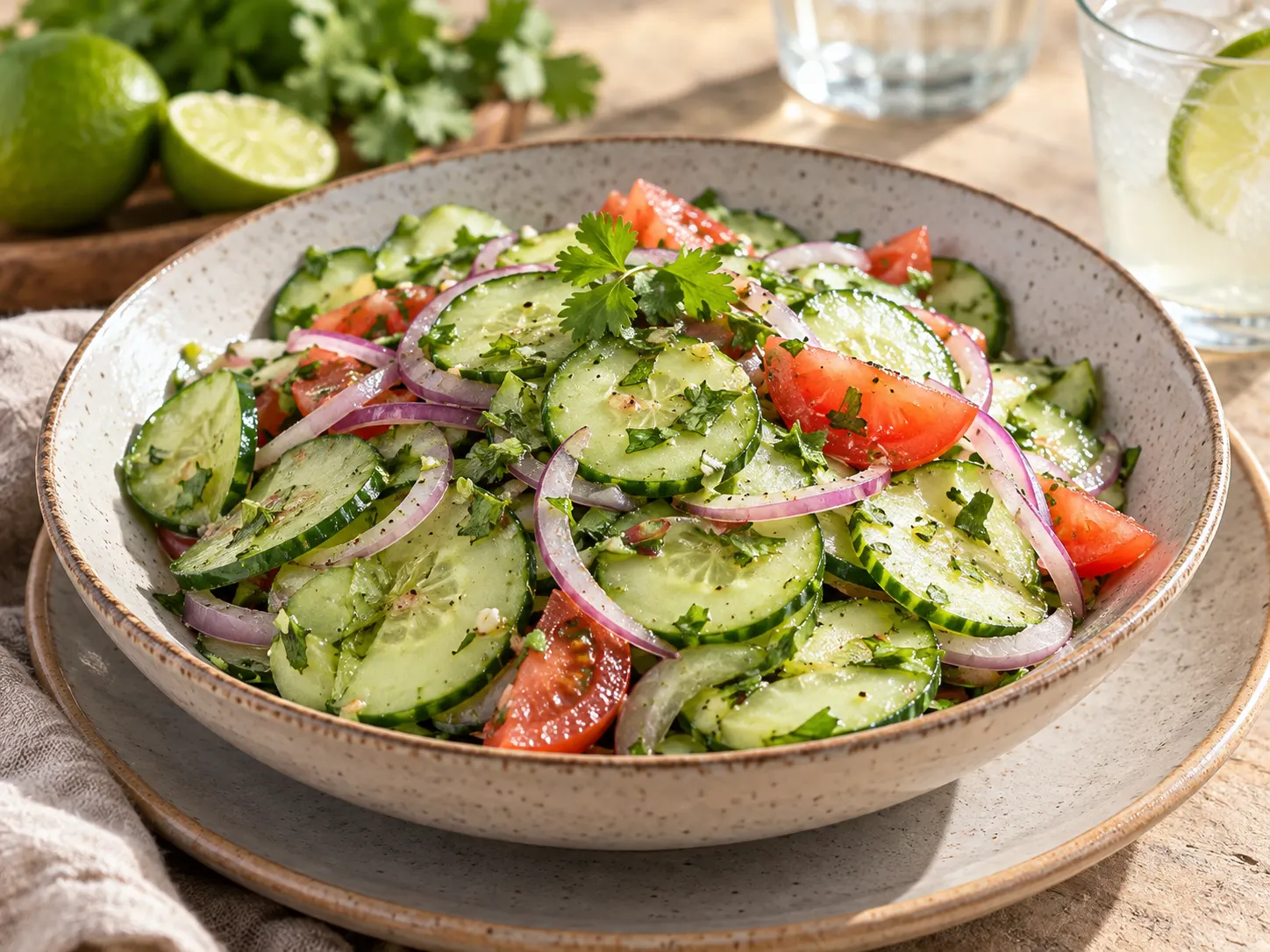
- Salads and raw vegetables: the triumph of freshness Cucumber reigns in the art of African salads, entering into a multitude of compositions: • “Classic” salad: cucumber, tomato, red onion, sometimes grated carrot, bell pepper, fresh herbs (mint, coriander, parsley), vinaigrette with peanut oil, lemon or vinegar, salt, pepper, sometimes chili or sugar. Popular in Senegal, Ivory Coast, Cameroon, Algeria, Morocco, Tunisia, Egypt… • Fatiyas, shawarmas, North African sandwiches: fresh or pickled cucumber brings crunch, freshness, balancing the richness of roasted meats, spicy sauces. • African tabboulehs: in their Maghrebi and Sahelian versions, they are enriched with small cucumber cubes for texture and moisture. • Bourek, bricks, wraps: a few slices of cucumber accompany Maghrebi, Nigerian, or Egyptian street food.
- Pickles and preserves In the Maghreb countries, East Africa, and especially in urban areas, chopped cucumber is prepared as pickles (fermented or vinegar-marinated vegetables, spices, and salt) for accompaniment: • Achards, pickles, Tunisian and Algerian salted preserves: marinated cucumber is nibbled as an appetizer, slipped into sandwiches, or accompanies couscous. • In Egypt, “torshy” (lacto-fermented vegetables) systematically includes cucumbers in its jars. • In Sudan, Madagascar, traditionally marinated cucumber accompanies rice, meat, or sauced dishes.
- Soups, stews, and cooked uses While cucumber is mostly eaten raw, several African traditions cook it: • Cold soup: blended with yogurt, mint, garlic, and bread, “tarator” (Arab and Mediterranean heritage) has adapted in large cities during hot weather. • Sautéed: in innovative cuisines, cucumber cubes sautéed in olive or peanut oil accompany fish, poultry, or vegetables. • Royal couscous, tagines: in some Maghrebi dishes, cucumber is integrated into simmered or stuffed summer vegetables. • Grilled or braised: it is sometimes found in vegetarian skewers for its ability to hold up to gentle cooking.
- Drinks, raw sauces, and desserts • Cucumber juice: very popular for quenching thirst (sometimes with lemon, lemongrass, mint, and ginger), or combined with pineapple, papaya, orange, throughout West Africa during extreme heat. • “Tzatziki”-style raw sauces: yogurt, grated cucumber, salt, garlic, pepper, lemon, oil, herbs, chili; served as a dip with grilled meats, samosas, kebabs, skewers. • Modern desserts: African chefs and pastry chefs dare to create cucumber sorbets, granitas, or mousses combining cucumber, lime, and spices to surprise.
In my books

Continue exploring the continent’s cuisines with Africa at the Table — 54 countries, 54 iconic dishes, by Alioune FALL. This book is in English.
Explore further
NUTRITION, HEALTH AND BENEFITS
Cucumber, due to its high water content (95-97%), is one of the least caloric vegetables (12 to 15 kcal/100g) and one of the most rehydrating. It is a valuable source of: • Vitamins: C, K, B6, folates • Minerals: potassium, magnesium, iron, calcium • Antioxidants (especially saponins, cucurbitacins, flavonoids) Its health benefits: • Hydration: essential in hot and dry climates, helps with body temperature regulation. • Diuretic effect: facilitates digestion and kidney function. • Digestive and purifying support: traditionally used to soothe stomach aches, digestive discomforts, refresh during fever. • Low glycemic index: suitable for diabetics or those wishing to monitor their blood sugar. • Satiating effect: good for weight management or as a healthy appetite suppressant. In popular African cosmetics, cucumber is used as a mask or lotion to “refresh” and brighten the skin, heal, and soothe sunburn.
SYMBOLISM, TRANSMISSION AND SOCIAL LIFE
• Offering a cucumber salad to a guest is a double sign of attention: welcome and a desire to keep them “fresh” despite the heat. • In some regions of the Maghreb and the Sahel, offering a garden cucumber to a neighbor signifies the end of the dry season or friendly loyalty. • Cutting cucumber, learned young from childhood, marks entry into “adult cooking” (knowing how to peel thinly, cut into lace, combine herbs…). • In the market, choosing a cucumber is a skill: the seller praises its “freshness”, its “crunch”, its “living water sting”.
MODERNITY AND CULINARY INNOVATION
The new wave of African chefs values cucumber beyond salads: • Jars of pickles to accompany tapas or accras (African fritters); • Fish or shrimp tartares with cucumber slices and fruit; • Cucumber-lemon-ginger carpaccio as a fusion starter; • Sorbets, granitas, detox cocktails based on cucumber, lime, mint. The vegetable also finds new life in urban “healthy” bentos, school lunchboxes, and dietetic fast food. The use of old or rustic varieties, and agroecology, attracts urban markets eager for products with traceability and unique flavor.
ECOLOGY, SUSTAINABILITY AND TRANSMISSION
Cultivating cucumber contributes to: • Promoting crop rotations (reduction of soil diseases, market garden diversity) • Valuing drip irrigation, intelligent shading in village gardens • Transmitting family know-how, from gardening to cooking • Reducing dependence on imported vegetables, strengthening local food sovereignty
CONCLUSION
Cucumber, both simple and prolific, discreet but irreplaceable, has established itself as a star of African cuisine. It crosses recipes, seasons, and rituals, exuding conviviality, health, and innovation. Whether it crowns colorful salads, refreshes the palate in iced juice, enhances the most popular street foods, or surprises in modern haute cuisine, it is everywhere synonymous with vitality, generosity, and the intelligence of living things. In every bite of cucumber, Africa constantly invents a way to stay “fresh” to the world.
In the kitchen : Cucumber
Recipes from the site to put your knowledge into practice:
Discover these cuisines at a restaurant
Explore our restaurant and caterer directories. Choose your destination and check the establishment’s menu to confirm which dishes are offered and available.
Continue exploring
Enjoy discovering ingredients and African cuisines? Join our newsletter. The illustrated PDF 10 sauces africaines incontournables is in French and is offered after confirming a subscription to the French or bilingual edition.