Coconut
Southeast Asia, Oceania
Understanding : Coconut
INTRODUCTION
The fruit of the coconut palm (Cocos nucifera), the coconut, simply called “coco”, evokes sun, beaches, exoticism, but also, for Africa, a nourishing, refined daily life, marking the land and identity of multiple peoples. Present in West, East, and Central Africa, and in all the islands of the Indian Ocean, from Cape Verde to Madagascar, crossing the Gulf of Guinea and the Swahili coasts, coconut is found everywhere: in morning and evening meals, in simple seasonings and haute cuisine, from popular markets to international buffets. If it fascinates so much, it is because it embodies both the spirit of African ingenuity, the fusion of influences, adaptation to varied environments (plains, coast, lagoon, forest), and the ability to utilize the tree in all its dimensions: drink, flesh, milk, oil, fiber, sugar, cosmetics… With its sweet scent, its nutritional power, its social and ritual role, the coconut thus occupies a prominent place in African cuisine and life.
Where to find it
Look for the exact food-grade form required by the recipe at markets and specialist shops. Check the product name, ingredients, condition and storage instructions.
Explore further: Cooking tips · Food hygiene and safety advice.
History and uses
1. HISTORY, BOTANY AND SPREAD
Origin and arrival in Africa The coconut palm, native to the tropical coastlines of Southeast Asia and Oceania, arrived in Africa centuries ago—perhaps as early as antiquity or during the great era of Indo-African exchanges, via Arab, Indian, Malay traders, then the Portuguese. Adapting easily to the African coasts, it spread along the Gulf of Guinea (Ivory Coast, Ghana, Nigeria), in Mozambique, Kenya, Tanzania, Somalia, and on all the islands of the Indian Ocean up to the archipelagos of Cape Verde, São Tomé and Príncipe, Madagascar, Comoros, Seychelles, Mauritius, Reunion. Today, West and East Africa and the Indian Ocean region are the main producing centers, with distinct terroirs and uses.
2. THE COCONUT PALM: A VERSATILE RESOURCE
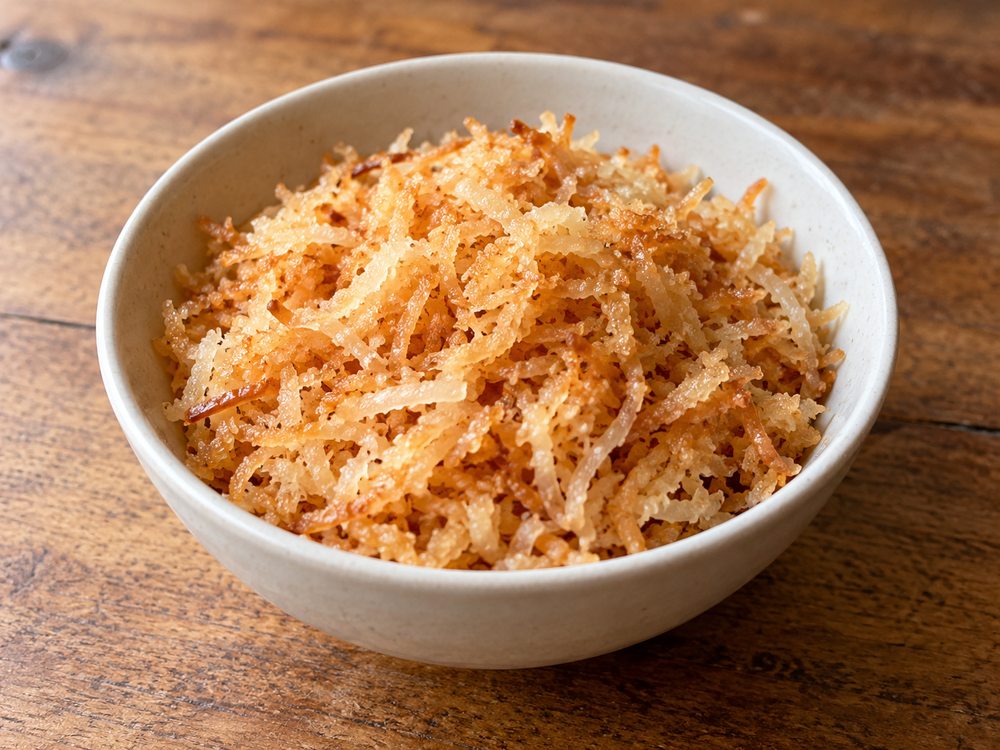
Every part of the nut or tree is exploited: • Coconut water (translucent liquid in the fresh nut), drunk plain, or fermented; • White flesh (endosperm), grated, dried (copra), grilled, processed; • Coconut milk (juice extracted from grated pulp with water), base for sauces, soups, desserts; • Coconut oil (by pressing) used in cooking, cosmetics, pharmacopoeia; • Fiber (coir) for ropes, brooms, doormats; • Shell (hard husk) for utensils, charcoal, decoration, toys, ritual offerings; • Coconut sugar from flower sap, used in drinks and confectionery. • Sometimes even young shoots (terminal bud, called “palm heart”) are integrated into fine cuisine.
3. ECONOMIC AND SOCIAL ROLE
Coconut is an essential sector: • Source of income for millions of farming families: small farmers, coastal fishermen, women processors, urban artisans. • Local food, basic products (oil, milk, flesh) and export (copra, oil, nuts, fibers). • Integrated into rituals of giving, welcoming (offering a fresh nut or a coconut dish is a sign of respect and hospitality). • Pillar of cultural events (“coconut festival” of the islands, cooking competitions, religious celebrations where coconut sanctifies wells or altars).
4. NUTRITIONAL VALUE AND BENEFITS
• Coconut water: hydrates, rich in electrolytes (potassium, sodium, magnesium); ideal drink against heat, dehydration, diarrhea. • Flesh: provides energy (MCT-type lipids—medium-chain fatty acids, digestible and energetic), fiber, iron, zinc, calcium, lauric acid (natural antibacterial), vegetable proteins (moderate), carbohydrates. • Coconut milk: creaminess, good substitute for animal milk, food security for lactose intolerant individuals. • Coconut oil: stable for cooking, cosmetic properties (skin and hair hydration), beneficial effect in small quantities on the cardiovascular system according to some ancestral uses. • Coconut sugar: natural alternative with a low glycemic index, rich in minerals, intense flavor.
5. COCONUT IN AFRICAN CUISINE: traditional and contemporary uses
a) In East and Swahili Africa Along the Kenyan, Tanzanian coasts and in the Zanzibar archipelago, coconut is omnipresent: • Wali wa nazi: rice with coconut milk, a festive and daily dish, served with spicy meat (nyama), fish, crab stews, squid or beans. • Supu ya nazi: coconut soup, sometimes with fish, shrimp, onions, coriander, ginger, chili. • Swahili curry (kuku wa nazi, chicken coconut curry), deep, creamy, mixing turmeric, tomato, ground almond or cashew nuts. • Desserts: coconut fritters (mandazi), pancakes (chapati na nazi), semolina cakes with coconut. b) In Mozambique and Southern Africa • Matapa (see dedicated text): classic dish of pounded cassava leaves, coconut milk, peanuts, shrimp or crab; symbol of Mozambican culinary identity. • Caril de camarão (shrimp coconut curry). • Rice and peas simmered in coconut milk. • Frequent use in bread, flatbreads, or to “flank” fish or smoked meat. c) Madagascar, Comoros, Indian Ocean islands • Rougail coco, cari coco: meats, fish, vegetables simmered for a long time in a sauce based on pressed grated coconut. • Mofo coco (coconut fritters, breads, pies), achards and chutneys. • Desserts: coconut candies, pudding, coconut rice pudding, sweet pies. d) West Africa • Ivorian, Beninese, Togolese festive sauces: fish or chicken with coconut sauce, coconut milk added to tomato or peanut sauces to soften and flavor. • Ivorian Garba: attiéké (cassava semolina) served with fried fish, chili… sometimes a modern coconut-chili sauce. • Cakes and dairy products: coconut is used in pastry innovations, flatbreads, kandja cakes, energy bars, homemade candies. e) In the Maghreb Its use is rare in traditional cuisine, but coconut, imported or brought from the islands and Sahelian coasts, is used in confectionery, cakes (coconut macaroons, shortbread), some festive breads or modern tagines. f) Modern cuisine and street food • Cocktails, smoothies, detox juices based on coconut water, coconut milk. • Granolas, energy balls, “vegan” coconut yogurts, spreads. • Afro-coconut pizza, coconut cassava fries, afrolocal burgers.
In my books

Continue exploring the continent’s cuisines with Africa at the Table — 54 countries, 54 iconic dishes, by Alioune FALL. This book is in English.
Explore further
6. COCONUT AND CONVIVIALITY: symbolism and rituals
• Sharing: breaking a coconut upon returning from the field, during the breaking of the fast, at Easter or Ramadan, symbolizes fertility and prosperity. • Festivities: coconut reigns at weddings, baptisms, birthdays, Malagasy New Year (Alahamady), during funeral vigils. • Beliefs: in some societies, coconut serves as an offering to bless a new building, a dugout canoe, a field. Used by healers, initiates, traditional priests. • Transmission: learning to grate the nut (with a knife, a traditional grater, a Mozambican “mbul mbul”), to extract the milk, to cook without curdling it, is a family and identity ritual.
7. COCONUT, ECONOMY AND MODERNITY
• Agro-processing: raw coconut is exported, but everywhere initiatives for local valorization are emerging: virgin oil, UHT milk, coconut flour, snacks, cosmetics. • Female entrepreneurship: processing and selling coconut milk, biscuits, jams, drinks, offers autonomy and security for thousands of African women. • Culinary tourism: “coconut” tours, tasting in eco-lodges in Zanzibar, Mozambique, Madagascar, Comoros, Cape Verde... • Cosmetic and wellness industry: oils, soaps, milks, exfoliants, creams, always based on coconut.
8. HEALTH AND ECOLOGY
• A sustainable plant, not very demanding in fertilizers or pesticides, the coconut palm enriches the soil, protects from wind, limits coastal erosion. • Its organic cultivation, its use of pulp, milk, water (zero waste), makes it a model of tropical agroecology.
9. CHALLENGES AND PERSPECTIVES
• Risks of overproduction, coconut palm diseases (African lethal yellowing, insect pests) in some countries. • Rarity of coconut palms on some urbanized or polluted coasts. • Threat of logging for wood. • Recognition and protection of local knowledge (grating, fermentation techniques, taste transmission). • Industrial development sometimes too export-oriented, to the detriment of local valorization.
CONCLUSION The coconut, a fruit launched onto African beaches by the sea or trade from afar, continues to reinvent terroirs, tables and imaginations. It unites coasts and islands, reconciles the modest and the refined, inspires modern artisans and heirs of tradition. In every bowl of matapa, every curry, every “makrout au coco” cake, every sip of fresh water, pulses a part of the African genius—that which knows how to transform nature into celebration, sharing, and wealth to transmit. Facing tomorrow's challenges, coconut will remain the ally of an inventive, gentle and supportive Africa, like the sea that carried it to its shores.
In the kitchen : Coconut
Recipes from the site to put your knowledge into practice:
Discover these cuisines at a restaurant
Explore our restaurant and caterer directories. Choose your destination and check the establishment’s menu to confirm which dishes are offered and available.
Continue exploring
Enjoy discovering ingredients and African cuisines? Join our newsletter. The illustrated PDF 10 sauces africaines incontournables is in French and is offered after confirming a subscription to the French or bilingual edition.