Coconut Milk
Southeast Asia, Oceania
Understanding : Coconut Milk
Introduction
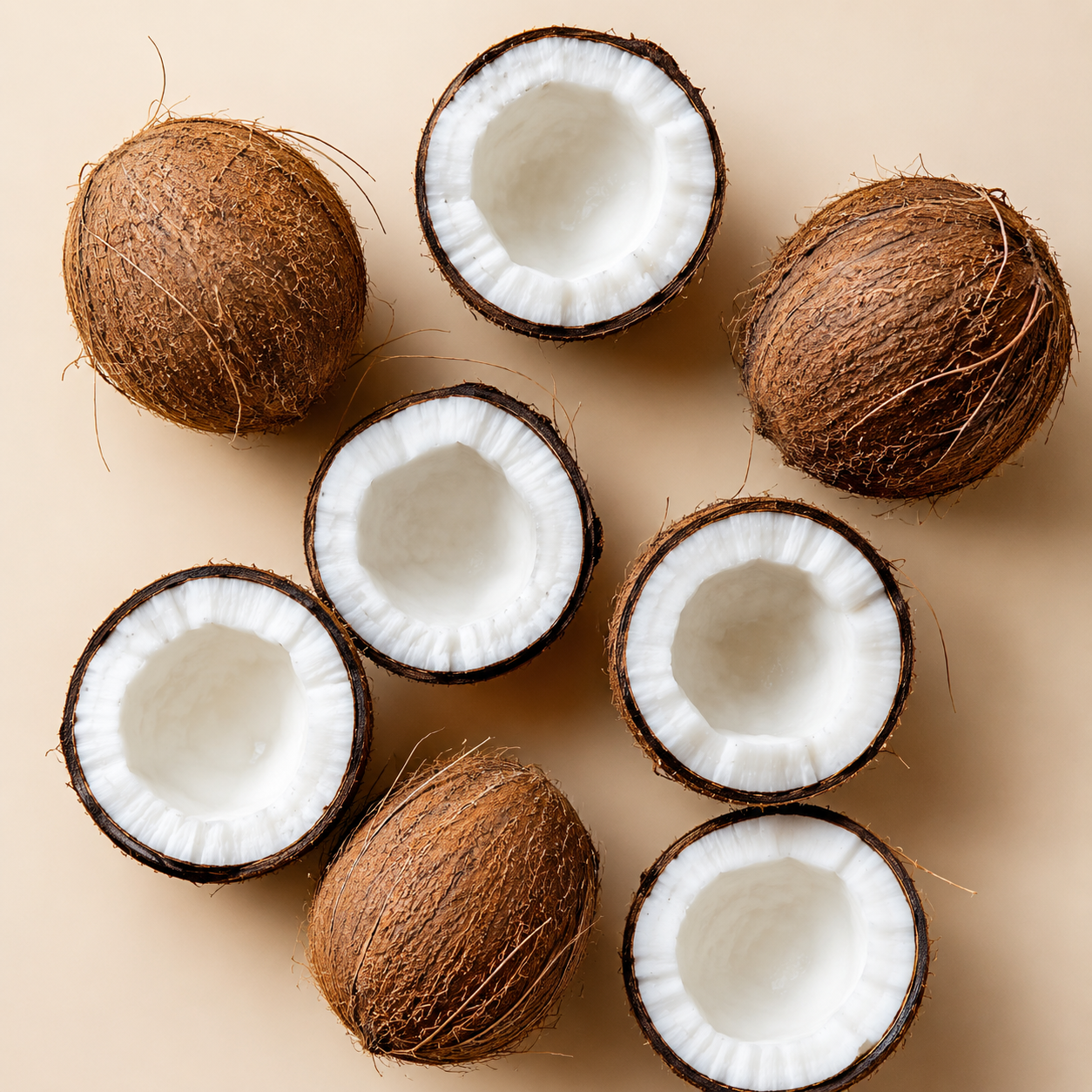
Coconut milk, a precious extract from the white pulp of the coconut (Cocos nucifera), is an essential and versatile ingredient that transcends the borders of tropical Africa, featuring in both popular dishes and haute cuisine. With its creamy texture, sweetness, nutritional richness, and ability to flavor, bind, soften, and enrich numerous dishes, coconut milk holds a place of honor in the cuisine of the Swahili Coast (Tanzania, Kenya, Mozambique), the Indian Ocean islands (Madagascar, Comoros, Seychelles, Mauritius, Reunion), as well as throughout West and Central Africa, where it has become a staple in various coastal and festive specialties. Beyond its subtle aroma, coconut milk is a true link between cultures, reflecting historical intermingling, migrations, adaptations, and African culinary innovations. From village simplicity to urban refinement, it tells the story of a continent open to the ocean, eager for sweetness, conviviality, and creativity.
Prepare this speciality
Choose a detailed recipe, adjust the portions and prepare your ingredients before starting. Our cooking tips and food safety advice complement the steps described in the recipes.
Explore further: Cooking tips · Food hygiene and safety advice.
History and uses
1. Origins, Diffusion, and Symbolism of Coconut Milk
Botany and Origin of the Coconut Palm The coconut palm, native to Southeast Asia and Oceania, has spread to all tropical coasts of the world, carried naturally by the sea and especially by human hands during the era of great trade exchanges between Africa and Asia. It quickly established itself along the entire East African coast, mangroves, islands, and lagoons, then reached the Gulf of Guinea, coastal Central Africa, Angola, and all the islands: Madagascar, Comoros, Seychelles, Mauritius, Reunion, Cape Verde, São Tomé. Cultural Significance The coconut, and thus its milk, symbolizes fertility, sharing, abundance, and a connection to the sea or ancestors. Offering a coconut or a dish made with coconut milk is a gesture of hospitality or recognition. It is also used in traditional rituals (blessings, weddings, funerals, marriage proposals, and even opening ceremonies for new homes/construction sites in many coastal societies).
2. How is Coconut Milk Obtained?
Traditional Artisanal Process • Opening the coconut: Ripe coconuts (with thick flesh) are used. • Grating the flesh: By hand or with a traditional grater, very fine strands of white pulp are obtained. • Kneading with warm water: Water is added to the grated pulp, then it is pressed, often by hand or through a cloth. This first pressing yields coconut cream (more concentrated, fatty, and potent). • Second pressing: By adding more water and pressing again, a more diluted but still flavorful milk is obtained; this corresponds to what is commonly called “coconut milk.” • Clarification: Sometimes filtered to remove fibers, boiled to thicken it, or used directly. Artisanal and Industrial Versions • In industry, coconut milk is sold in liquid form (in cartons, cans), concentrated, or powdered; this facilitates its availability everywhere, even far from producing areas. Nevertheless, the fresh artisanal version remains the benchmark.
3. Gastronomic Value and Culinary Uses in Africa
Coconut milk is incredibly versatile. It is prominent in: a) Stews, Ragouts, and Sauces Swahili Coast: • Wali wa nazi: Rice cooked in coconut milk, fragrant, shiny, and light, the heart of feasts on the coast of Kenya, Tanzania, and Zanzibar, often served with shrimp or fish curries. • Kuku wa nazi: Chicken stewed in a mild coconut milk curry, flavored with ginger, garlic, pepper, cinnamon… A Swahili classic. Mozambique: • Matapa: Pounded cassava leaves, coconut milk, peanuts, and seafood, a flagship dish of the country (see dedicated text). • Fish, shellfish, octopus in coconut milk. Madagascar, Comoros, Indian Ocean Islands: • Rougail coco or cari coco: Meats, fish, or vegetables simmered with onions, tomatoes, garlic, local aromatics, abundant coconut milk for sweetness and binding. • Chops, chicken, Cape peas, “fragrant broths” of vegetables with shrimp. Reunion, Mauritius, Seychelles: • In curries, sauces, fusion with Indian, Chinese, Creole, European cuisine. Central Africa, West Africa, Angola: • Maffé (peanut sauce) where coconut milk is sometimes added to soften and bind. • Skewers, couscous, modernized dishes. b) Soups and Broths • Vegetable soup with coconut milk: Onions, carrots, cassava, herbs, fish or meat, softened and bound at the end of cooking by the milk. • Supu ya samaki with coconut milk: Fish soup, tomatoes, garlic, coconut milk, mild spices (cinnamon, ginger). c) Side dishes and Cereals • Sweet coconut milk rice (rice pudding, dessert or breakfast), • Infant porridges, particularly in Nigeria, Ghana, Ivory Coast – addition of coconut milk to corn or millet porridge, • Enriched yam or sweet potato puree. d) Pastries and Desserts • Cakes, tarts, crepes, coconut fritters in all coastal countries: “mofo coco” (Malagasy coconut fritter), coconut candies, rice or sweet potato pancakes with coconut milk. • Ice creams, sorbets, entremets, flans, crème brûlées, often flavored with African vanilla, coconut sugar, or cinnamon. e) Drinks • Smoothies, cocktails, coconut-banana milkshakes, exotic fruit juices extended with coconut milk. • Fermented coconut milk in some cultures as a refreshing drink.
In my books

Continue exploring the continent’s cuisines with Africa at the Table — 54 countries, 54 iconic dishes, by Alioune FALL. This book is in English.
Explore further
4. Nutritional Benefits of Coconut Milk
• Rich in medium-chain fatty acids (MCTs): quick energy, easily metabolized, sometimes indicated in sports diets. • Good source of minerals: potassium, magnesium, iron, copper, manganese. • Lactose-free: suitable for lactose intolerant individuals. • Satiating power: lipid richness curbs hunger (useful in endurance dishes or for children). • Good for skin and hair: used in cosmetics, massage, aromatic baths. • Fiber (if the milk is slightly thick), good for digestion. Although quite caloric, coconut milk, combined with vegetables, cereals, and fish, is perfectly balanced. It contributes to the fight against malnutrition, dietary monotony, and the provision of flavors.
5. Cultural and Symbolic Dimensions
• Symbol of welcome, celebration: During Ramadan in Mayotte, Zanzibar, Comoros, the fast is broken with coconut milk rice. When a guest arrives, a dish based on coconut milk makes a good impression. • Family transmission: Knowing how to prepare, extract, and cook coconut milk is “mothers’ knowledge” passed down from childhood. • Women’s mutual aid circles: sales of coconut milk, local markets, women’s micro-entrepreneurship, security, and economic empowerment. • Festivities: Weddings, birthdays, religious holidays always feature “nazi” (coconut) sauce dishes.
6. Economic Impact and Innovation
• Local agro-processing: artisanal preparation, marketing of fresh milk at the market, then moving to canning or drying (powdered coconut milk) for the diaspora, hotels, schools. • Modern creativity: base for smoothies, plant-based yogurts, vegan cheeses, innovative modern African sauces, whipped creams for luxury African pastries. • Culinary tourism: coconut milk extraction workshops, culinary tours in Mozambique, Madagascar, Mayotte, Zanzibar.
7. Modernity, Diaspora, and Fusion
Coconut milk moves beyond the traditional circle: it is integrated into new African “fusion food,” serves as a base for revisited sauces, accompanies poke bowls, rotisseries, enters street food (burgers, pizzas, sandwiches with coconut milk sauce), and revisited desserts (“matcha and peanut coconut milk rice pudding,” “lemongrass coconut crème brûlée”). It is gaining popularity in sub-Saharan Africa (Burkina Faso, Senegal, Ivory Coast), attracting high schools, restaurants, and food trucks of the diaspora in Paris, London, New York, Johannesburg.
8. Challenges and Prospects
• Supply: scarcity of coconuts due to coconut tree diseases, storms, urbanization. • Cost: canned milk can become expensive for modest households; hence the importance of local transmission and valorization. • Threat of “bland” industrialization: challenge to avoid standardization at the expense of freshness, taste, and the art of extraction. • Public health: raising awareness of caloric richness, adapting to diets (offering lighter versions), dietary education.
Conclusion Coconut milk, a simple white elixir patiently extracted from the fruits of the palm tree, has become the link between the coastal peoples of Africa and the Indian Ocean. A sublimator of sauces, a guardian of childhood indulgence, the heart of festive dishes, or a secret everyday ingredient, it carries the continent’s multiple heritage—an umbilical cord between the sea, the land, human hands, and family memory. In every pot of matapa, every Swahili curry dish, every cup of fragrant soup, every slice of cake as sweet as a sunrise, a little of Africa’s light, care, patience, and inventiveness is revealed. Coconut milk reminds us that in Africa, sweetness is an art of living, a tradition to pass on, a strength for tomorrow.
In the kitchen : Coconut Milk
Recipes from the site to put your knowledge into practice:
Discover these cuisines at a restaurant
Explore our restaurant and caterer directories. Choose your destination and check the establishment’s menu to confirm which dishes are offered and available.
Continue exploring
Enjoy discovering ingredients and African cuisines? Join our newsletter. The illustrated PDF 10 sauces africaines incontournables is in French and is offered after confirming a subscription to the French or bilingual edition.