Springbok
Southern Africa
Understanding : Springbok
Introduction
The springbok (Antidorcas marsupialis), a graceful leaping antelope, is one of the great symbols of Southern Africa. Not only is it the sporting emblem of South Africa (the famous rugby team of XV called “Springboks”), it is also recognized in the fields of ecology, art, rural traditions, and regional gastronomy. In Southern African cuisine, the springbok holds a special place, combining history, ancestral knowledge, communal hunting, terroir preservation, and gastronomic refinements. Its exploitation, long reserved for rural life and bushcraft, is now experiencing a new wave: game meat is increasingly sought after and valued, not only in traditional homes or during safaris, but also in high-end South African, Namibian, and international cuisine. The springbok, through its meat, is a bridge between the Africa of wild open spaces and that of culinary renewal.
Where to find it
Look for the exact food-grade form required by the recipe at markets and specialist shops. Check the product name, ingredients, condition and storage instructions.
Explore further: Cooking tips · Food hygiene and safety advice.
History and uses
1. Description, biology, and ecological role
Morphology and biology The springbok is a medium-sized antelope: as an adult, it measures 70 to 95 cm at the shoulder and weighs 27 to 42 kg. Its fawn-brown coat, barred with a striking white lateral stripe and an immaculate rump, clearly distinguishes it. Both males and females have ringed horns. Its name comes from the Afrikaans “spring” (to jump) and “bok” (goat, antelope), in reference to its famous spectacular leaps of 2 to 4 m high, called pronking. These jumps, impressive in groups, are said to be a display, an alarm signal, and a territorial message. Habitat and ecology Living mainly in South Africa, Namibia, Botswana, and parts of Angola, the springbok inhabits wooded savannas, grasslands, semi-deserts, and the Karoo. It is particularly well adapted to drought, subsisting on tough grasses, young shoots, leaves, and can survive for long periods without drinking, extracting water from food. The springbok once had enormous populations (up to millions of heads), and some migratory herds formed immense swarms crossing the South African plains. While its numbers have decreased due to hunting and agricultural expansion, the species remains abundant thanks to protected areas and the economic valorization of game.
2. Hunting, farming, and socio-economic role
Traditional and modern hunting Springbok hunting is rooted in San (Bushmen), Nama, Khoikhoi societies, and later in European colonization. The meat, skin, and sometimes horns are used for food, clothing, decoration, and instruments (drum, ritual objects). Today, game meat is subject to strict regulations, balancing subsistence hunting, commercial safaris, and extensive farming: many South African, Namibian, or Botswanan farms raise springbok with restocking nuclei, reserves, and hunting quotas. The springbok is also a preferred “game species” for tourists, recreational hunters—under sustainable and planned control. Economy and “game meat industry” • Springbok meat is commercialized locally and for export, valued for its dietary qualities, its delicacy, and its low fat content. • The bushmeat (game meat) sector is establishing itself as an alternative to industrial livestock farming, while generating jobs, foreign currency, and tourist products (restaurants, culinary tours…). • Specific use in charcuterie, biltong (dried and spiced meat), sausages, steaks, carpaccios, pâtés.
3. Cultural and symbolic dimension
A very strong national symbol In South Africa, the springbok is the nation's totem animal: it appears on the coat of arms, coins, and gives its name and emblem to the national rugby team (Springboks), long considered a symbol of unity (and, more complexly, of post-apartheid reconciliation, through the famous triumph of 1995). It embodies vitality, beauty, resilience, and the ability to “leap towards the future,” both in popular songs and in advertising, literature, or social rites. Myths and traditions Many peoples attribute qualities of speed, grace, and endurance to the springbok, and cite it as inspiration for dances, folklore, and crafts. Among the Bushmen, stories explain the origin of pronking as a magical gesture or a sign of animal intelligence. Springbok skin is also used in transition rituals, weddings, and the inauguration of chiefs.
4. Nutritional characteristics and taste of springbok meat
• Lean meat: very low in fat (often less than 3%), rich in protein, low in cholesterol. • Taste: refined, subtle, slightly “nutty,” absence of the strong or pronounced “gamey” taste of some antelopes or wild red meats. • Color: dark red to purple, fine grain, delicate marbling. • Dietary value: suitable for low-fat, high-protein diets, sports diets, healthy eating. • Digestibility: generally easier for children, the elderly, convalescents than lamb or beef, provided it is cooked gently.
In my books

Continue exploring the continent’s cuisines with Africa at the Table — 54 countries, 54 iconic dishes, by Alioune FALL. This book is in English.
Explore further
5. Culinary uses of springbok in African cuisine
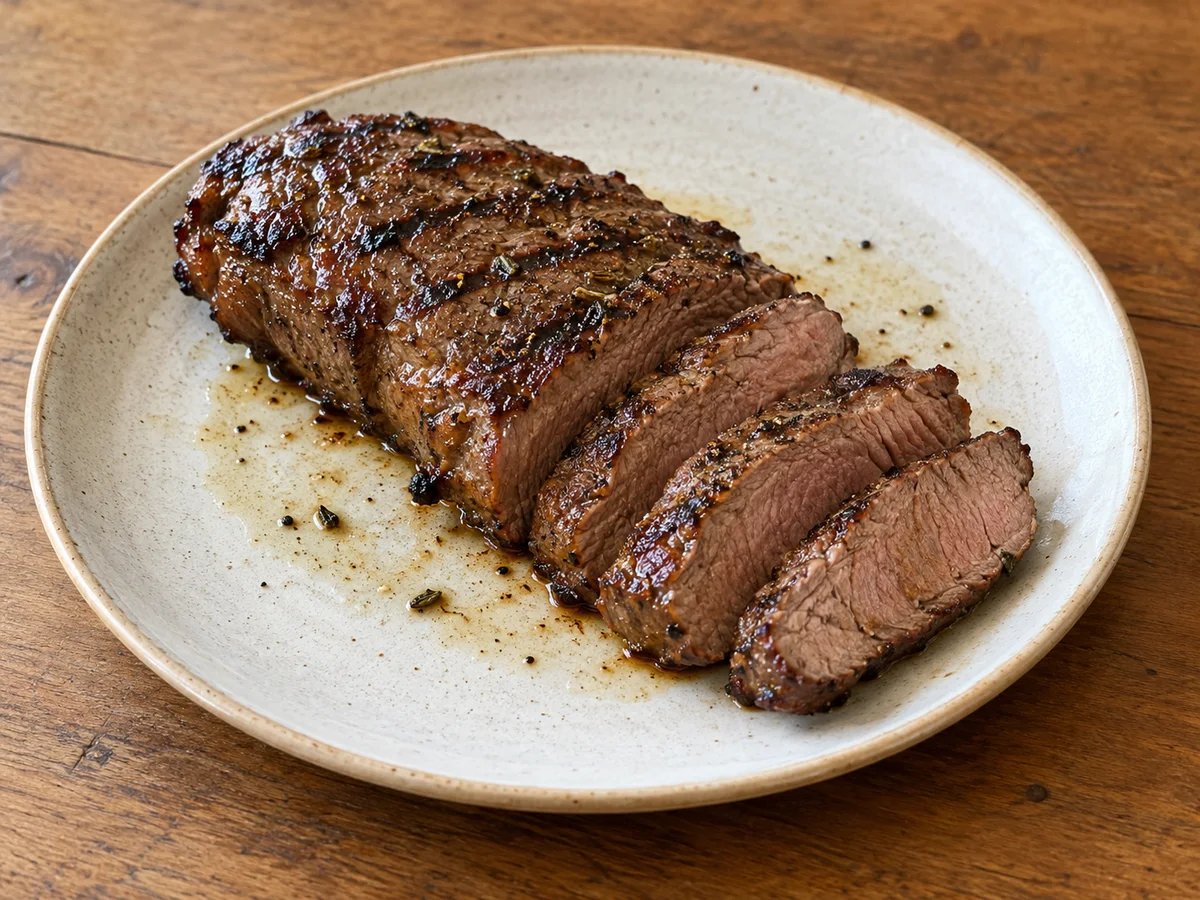
Springbok is one of the most valued “game” meats in Southern Africa, both in family, rural, street food, and fine dining. a) Roasts and grills • Springbok steak: pan-fried or barbecued (braai), simply seasoned (salt, pepper, herbs), sometimes topped with local sauces (berries, green pepper, indigenous fruit jellies). • Skewers: springbok cubes marinated (honey, spices, red wine, local herbs such as rooibos or buchu), grilled on sticks, to be enjoyed by the fire or as a tapenade. b) Stews, civets, and potjies • Potjiekos (a traditional South African stew cooked in a three-legged cast-iron pot over an open fire): meat stew cooked in a “Dutch oven” with vegetables (sweet potato, carrot, onion, green bean, butternut), red wine, aromatics, slow-cooked over embers. • Civet: pieces simmered with wine, berries, wild mushrooms, sometimes wild boar or beef bacon, local aromatics. c) Drying, biltong, charcuterie • Biltong (a form of dried, cured meat that originated in Southern African countries): dried springbok meat, marinated in vinegar, coriander, pepper, chili, garlic; an ancestral snack, loved by hikers and aperitif enthusiasts. • Droëwors (a traditional South African dried sausage): dried sausage mixed with beef or ostrich, flavored with spices and coriander. • Carpaccio: thin raw slices, lightly marinated, served with olive oil, lemon, local cheese. • Pâtés, sausages: luxury charcuterie, products offered in lodges and delicatessens. d) Fine dining and fusion cuisine • Springbok fillet in herb crust, veld berry sauce: signature dish of great South African chefs, served as part of “bush gastronomic tourism.” • Springbok Wellington: local version of beef Wellington, with puff pastry and mushrooms. • Springbok with bitter chocolate sauce, pickled beetroot: a blend of tradition and audacity. • Typical accompaniments: butternut puree, bush green beans, fruit preserves (fig, plum, pelargonium), South African wines. e) Family and rural use • Boiled meat throughout Namibia, Botswana, Northern Cape, cooked with millet, garden vegetables. • Soup extracted from the bones, highly appreciated during winter or after hunting.
6. Place of springbok in celebration and social life
• The springbok is a dish of success (family celebration, birth, circumcision passage, reunion), a meal of honor during safaris, the chief's hunt, or at the Christmas table in South Africa. • Symbol of responsible hunting and connection to the land: ritual slaughter, respect for the animal, sharing of the meal, transmission of ecological values of game management. • In many villages, the distribution of a slaughtered springbok unites the community: everyone receives their piece according to their status, children the stringy meat and liver, elders the finest fillets, women the offal, the skin reused for children or to prepare drums.
7. Challenges, conservation, and future
• Risks related to poaching, unregulated hunting. • Problem of overgrazing or competition with industrial cattle or sheep farming. • Valorization of springbok in sustainable “game farming,” with scientific, tourist, and culinary exploitation. • Awareness of wild cuisine: biltong workshops, indigenous gastronomic training, creation of value chains around local venison. • Protection of biodiversity and African culinary heritage via PDO (Protected Designation of Origin), short supply chains, “fair game” labels.
Conclusion The springbok is much more than a graceful antelope: it is the living embodiment of African heritage, of a rooted yet resolutely contemporary cuisine, of a creative rural economy, of a collective celebration that links man to the land. Through its light meat, its delicate flavor, its rich history, it tells of this subtle balance between preserved nature, the conviviality of the campfire, inventive gastronomy, and South African identity. From the biltong of the Nama shepherds to the fine dining of Cape Town, from the ritual hunting of the San to the Rugby World Cup, the springbok remains a gourmet, modern, eternal emblem: proof that in Southern Africa, nature and the table walk together towards the future.
In the kitchen : Springbok
Recipes from the site to put your knowledge into practice:
Discover these cuisines at a restaurant
Explore our restaurant and caterer directories. Choose your destination and check the establishment’s menu to confirm which dishes are offered and available.
Continue exploring
Enjoy discovering ingredients and African cuisines? Join our newsletter. The illustrated PDF 10 sauces africaines incontournables is in French and is offered after confirming a subscription to the French or bilingual edition.