Sea Bream
African Continent
Understanding : Sea Bream
Introduction
Sea bream (sometimes called "dorade" or "gilthead" in English, from origins Sparus aurata, Sparus spp., Diplodus sargus and other species of the Sparidae genus) is among the most prized fish by both African artisanal fishermen and discerning coastal gourmets. Present from the Mediterranean to Southern Africa, from the Atlantic waters of Morocco to the coastal rivers of Madagascar, sea bream inspires a wide variety of recipes and symbolizes both the democratic pleasure of markets and the refinement of festive tables. With its fine, firm and tasty flesh, its adaptability in cooking, its roots in the economy and culture of fishing communities and urban populations, sea bream embodies the richness and generosity of African oceans — but also the challenges of preservation, access and innovation for future generations.
Where to find it
Look for the exact food-grade form required by the recipe at markets and specialist shops. Check the product name, ingredients, condition and storage instructions.
Explore further: Cooking tips · Food hygiene and safety advice.
History and uses
1. Biology, species and geography of sea bream in Africa
Sea bream belongs to the Sparidae family: marine fish with an oval, silvery body, sometimes with golden reflections, large scales, and a robust mouth. Several species, all appreciated: • Gilt-head bream (Sparus aurata), the best known, prized for its delicate flavor, white and firm flesh. • Black sea bream, Spondyliosoma cantharus. • White seabream (Diplodus sargus), smaller, also widely consumed, particularly in the Mediterranean and North-West African Atlantic. • Red sea bream (Pagrus pagrus, Chrysoblephus spp.) in more southern waters (South Africa, Namibia, Mozambique…), often confused with “sea bream” in African markets. • Local species of black, striped or pink sea bream (depending on regions and dialects). Geographical distribution • North Africa (Morocco, Algeria, Tunisia, Egypt): sea bream abounds on the Mediterranean and Atlantic coasts. • West Africa (from Morocco to Senegal, Cape Verde, Mauritania, Guinea, Ivory Coast, Ghana, Benin, Togo, Nigeria): gilt-head bream and related species frequent estuaries, mangroves, lagoons. • Gulf of Guinea, Cameroon, Gabon, Congo, Angola: presence of coastal and estuarine species. • East Africa, Mozambique Channel, Indian Ocean islands: sea bream in reefs, lagoons and bays. • Southern Africa (Namibia, South Africa, Mozambique): red sea bream, “sea breams” (black bream…). Sea bream likes temperate to warm waters, lives near the bottom, feeds on mollusks, small crustaceans, fish, zooplankton, algae.
2. Fishing and economic importance
Artisanal or semi-industrial fishing • Sea bream is targeted by artisanal coastal fishing (lines, nets, longlines, traditional traps). • Outings in pirogues (dugout canoes) or light boats provide a living for thousands of families, particularly in Morocco, Senegal, Ghana, Benin, Mauritania. • It is also subject to industrial fishing in the Mediterranean, off North Africa (trawl, seine, longline). Aquaculture • Gilt-head bream aquaculture is booming in Morocco, Egypt, Tunisia: marine farms (sea cages), coastal ponds, feeding local markets and restaurants. Economic importance • Source of primary or secondary employment (fishermen, fishmongers, market vendors, restaurants…). • Exports: North African or West African sea bream lands on European markets (well known in France, Spain, Italy, Portugal). • Local food: “Sunday” or festive fish for many urban or village families. Sector challenges • Overfishing, fluctuations in wild stocks, coastal pollution. • Competition between traditional fishermen, national companies, industrialists. • Need for concerted regulations, quotas, eco-labels, protection of spawning grounds.
3. Symbolism, traditions and social role
• Festive and hospitable dish: grilled sea bream signifies respect for the guest or patriarch, rewards great academic achievements, marks engagements, baptisms, religious holidays (Ramadan, Easter, Tabaski, Christmas). • Connection to the sea: for many coastal peoples (Wolofs, N’Diago of Senegal, Sahelian fishermen, Malagasy Vezo, Mozambicans, Cape Verdeans, Zanzibaris…), offering fish (especially sea bream) is a sign of generosity and community integration. • Intergenerational transmission: learning to clean, cook, fillet, and prepare sea bream is part of the matriarchal culinary heritage and rites of passage to adulthood. • Song, proverb, story: the legendary size of the “chief’s sea bream”, the catch of the first fish, the sharing of the largest fillet during events.
4. Nutritional value
Sea bream is unanimously recognized for its food quality: • Lean protein, • Rich in omega-3 (essential fatty acids beneficial for heart, brain, joints), • Source of vitamins (D, B12, B3, B6), minerals (selenium, phosphorus, iodine, potassium, magnesium), • Low fat content • Hypoallergenic compared to some crustaceans, • High digestibility, ideal for children, the elderly, athletes, pregnant women.
In my books

Continue exploring the continent’s cuisines with Africa at the Table — 54 countries, 54 iconic dishes, by Alioune FALL. This book is in English.
Explore further
5. Culinary uses and African sea bream gastronomy
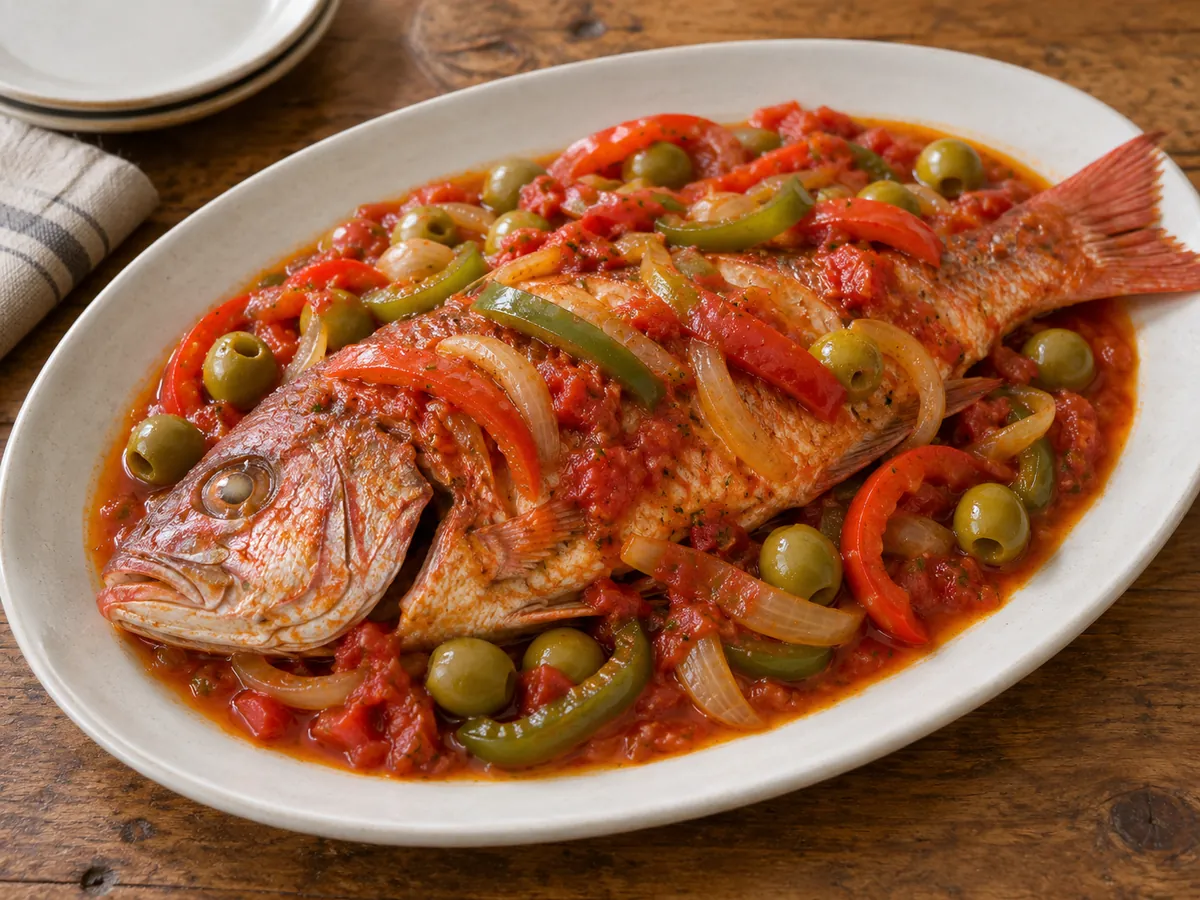
Sea bream lends itself to all cooking methods: grilled, braised, oven-roasted, boiled, steamed, stuffed, in soup or sauce, combined with local spices, vegetables or cereals. Let's explore its variations by major regions: a) Maghreb (Morocco, Algeria, Tunisia, Egypt) • Sea bream with chermoula: fish marinated in a mixture of garlic, coriander, cumin, paprika, turmeric, lemon, olive oil, then grilled whole or baked; served with vegetables, onions, olives, sometimes potatoes. • Sea bream tagine: sea bream cooked in a pot with vegetables, fish, raisins, warm spices, creamy sauce. • Seafood couscous: wheat semolina, sea bream and other fish, local vegetables, chickpeas, saffron, coriander. • Sea bream in “marmita”: fish stew, tomato, chickpeas, olives, orange zest aroma, street food or family dish. b) Atlantic West Africa • Braised sea bream (“poisson braisé”): sea bream washed, salted, incised, brushed with a mixture of spices (chilli, garlic, ginger, lime, peanut oil), grilled over charcoal, served with alloco (fried plantain), attiéké (fermented cassava semolina, Ivory Coast), jollof rice, sautéed vegetables, fresh chilli, raw onions. • Fried/spicy sea bream: sea bream cut into steaks, marinated (spices, flour, lemon), quick fried for street sale (Abidjan, Dakar, Lomé, Lagos). • Sea bream soup/“soupe kandia”: sea bream pieces with tomato broth, okra, spices, white rice. c) Gulf of Guinea • Sea bream stews: fish stews with African eggplant (“gboma”), chilli, tomato, palm oil, akpi (African breadfruit seeds), garlic, local herbs. • Sea bream “tomato sauce”: daily dish, often eaten with foufou (pounded starchy food), cassava stick or yam. d) Central Africa • Steamed sea bream/banana leaf: sea bream stuffed with herbs, cooked en papillote over a wood fire or in a “mba” (traditional oven). • Sea bream with palm oil: festive dish, with onion, garlic, tomato, spices, red oil, cassava leaves. • Sea bream fritters: shredded flesh, mixed with mashed yam, fried; chic street food. e) East Africa and Indian Ocean • Swahili sea bream curry-coconut: seared sea bream steak, simmered in coconut milk sauce, tomato, garlic, coriander, mild curry, chilli, served with pilaf rice. • Sea bream “biyaya” (Madagascar, Mozambique): coconut sauce, lemongrass, ginger, lime, onions. • Morning catch, beach brunch: sea bream simply grilled over embers, accompanied by tropical fruits, crunchy vegetables. f) Southern Africa • South African “sea bream”: grilled on the “braai” (barbecue), seasoned with a mixture of wild herbs, Cape white wine, served with pap (local polenta), chakalaka (spicy vegetables), salad. • Sea bream fish & chips: urban adaptation, used in fast food, breaded fish, fries, hot sauces. • Fish “potjiekos” (traditional South African stew cooked in a three-legged cast-iron pot): fishing pot, garden vegetables, aromatics, slowly simmered over an open fire.
6. Conviviality, sharing and social role
Sea bream is more than food: • Dish to share: on beaches, in villages, during celebrations (Tabaski, Christmas, Easter), grilled sea bream is enjoyed together, around a large dish, without fuss but with joy. • Act of hospitality: inviting someone “for sea bream” means welcoming them as a family member. • Transmission of knowledge: from parent to child, secret of marinade, filleting, perfect cooking. • Symbol of success: “Offering sea bream” is a gesture of esteem in the village, of social ascent in the city.
7. Innovation, modernity and variations
• Haute cuisine: roasted sea bream fillets with herbs, black lemon emulsion, pistachio crust, Afro-Peruvian style ceviche, sea bream-lime-cassava tartare, sea bream and local vegetable makis. • Revisited street food: sea bream burgers, fish tacos, fish balls, sea bream-ginger wok, Nigerian sushi. • Sustainable food: urban aquaculture projects, community farms, eco-regional revival (responsible fishing, local labels).
8. Contemporary challenges
• Overfishing, pollution, coastal urbanization: scarcity of catches and rising prices for modest families. • Intensive farming: issues of quality, adapted feed, animal welfare, resource management. • Distribution and cost: sea bream sometimes reserved for “festive days”, inaccessible for daily life in poor urban areas. Initiatives to democratize access through community fishing, fast food and sustainable aquaculture.
Conclusion Sea bream, initially a humble fish for dawn fishermen, has become an emblem of African terroir, joyful family banquets, prestigious cuisine and even global innovation. Fine, versatile, nutritious meat, it embodies the meeting of marine heritage, celebration, ancestral memory and the creativity of contemporary African chefs. From the pirogue to the Michelin-starred restaurant, from the beaches of Senegal to the Mozambican lagoon, every grilled sea bream tells the story of maritime Africa: generous, imaginative, supportive, looking to the future without ever denying its roots.
In the kitchen : Sea Bream
Recipes from the site to put your knowledge into practice:
Discover these cuisines at a restaurant
Explore our restaurant and caterer directories. Choose your destination and check the establishment’s menu to confirm which dishes are offered and available.
Continue exploring
Enjoy discovering ingredients and African cuisines? Join our newsletter. The illustrated PDF 10 sauces africaines incontournables is in French and is offered after confirming a subscription to the French or bilingual edition.