Mackerel
African coasts
Understanding : Mackerel
Introduction
Mackerel (generally Scomber scombrus, Scomber japonicus, Scomber colias, sometimes other species of the Scombridae family) is one of the most widespread and appreciated fish on African coasts. It is a vital food for vast populations living along the Atlantic, Indian Ocean, and Mediterranean, and in riparian countries. Affordable, versatile, and protein-rich, it graces both modest tables and feasts, from the Maghreb to Cape Verde, from Nigeria to Madagascar, from Senegal to the markets of Côte d'Ivoire, and as far as the Indian Ocean. The mackerel's flavorful and fatty flesh, its ease of preservation, and the variety of its preparations make it a pillar of African cuisine, carrying memory and conviviality. Mackerel is also a symbol of artisanal fishing, women's community trade, and African food modernity, as well as contemporary challenges.
Where to find it
Look for the exact food-grade form required by the recipe at markets and specialist shops. Check the product name, ingredients, condition and storage instructions.
Explore further: Cooking tips · Food hygiene and safety advice.
History and uses
1. Biology, species, and distribution
Mackerel is a medium-sized marine pelagic fish (30 to 50 cm on average, up to 4 kg), characterized by its iridescent blue-green striped back, silvery flanks, and pearly white belly. Fast and migratory, it moves in impressive schools in the temperate and warm waters of the East Atlantic, the Mediterranean, and the Indian Ocean, near the coast and sometimes even into lagoons. The main species consumed in Africa are: • Atlantic Mackerel (Scomber scombrus): Northwest Africa (Morocco, Mauritania, Senegal to Angola). • Spanish Mackerel (Scomber japonicus, Scomber colias, Scomber australasicus): in the tropical East Atlantic, western Indian Ocean, Southern Africa, Gulf of Guinea. • King Mackerel ("kingfish") (Scomberomorus commerson, Scomberomorus plurilineatus): Southern Africa, Madagascar, Seychelles, Mozambique.
2. Economic weight and social role
Fishing • Artisanal fishing: from Morocco to Ghana, from Mauritania to Angola, from Côte d'Ivoire to Senegal, mackerel fishing employs tens of thousands of families. Motorized canoes, gillnets, and traditional trolling or rod fishing are typical, accompanied by a lively logistics of female fishmongers, smokers, and street vendors. • Industrial fishing: Modern Moroccan, Mauritanian, South African, Cape Verdean, and Ghanaian fleets catch for canneries, export, and large domestic or regional distribution. Role in food security • Mackerel is one of the most affordable and accessible fish on the continent, crucial for providing protein, essential fatty acids, vitamins, and minerals, particularly in regions with limited access to meat or noble fish. • During the rainy season, when stocks are abundant, mackerel supplies urban and village markets, feeds schools, community canteens, and low-cost street meals ("fish of the people"). Trade, processing, and women's empowerment • The mackerel sector (fresh, dried, smoked, salted, canned) is predominantly managed by women throughout West and Central Africa: they buy, unload, process, market, and animate retail sales, structuring urban and rural microeconomies. • Networks of fishmongers and fish sellers are a social pillar, often involved in tontine systems, microcredit, children's education, and village solidarity.
3. Symbolism, rituals, and cultural role
• Fish of sharing: no baptism, wedding, or religious festival — whether Ramadan in the Maghreb or West Africa, Christian Lent in Cameroon or Congo, or even Tabaski – takes place without mackerel on the tablecloth or mat. • Friday dish: in Muslim and Christian culture, fish (mackerel in the lead) replaces meat on Fridays or during fasts. • Food for road trips, fairs, large gatherings: Grilled, smoked, or sandwich portions are omnipresent in social buffets, sports, political, and religious gatherings. • History of transmission: learning to clean, marinate, grill, or smoke mackerel is an integral part of culinary education in many African homes, a marker of mother-daughter transmission and collective memory.
4. Nutritional value
Mackerel is a superfood: • Rich in omega-3 fatty acids (EPA and DHA): excellent cardiovascular prevention, beneficial for the brain and children's growth. • High protein content (about 20 g/100 g), with all essential amino acids. • Vitamins: especially B12, B6, D, A. • Minerals: selenium, phosphorus, potassium, iodine, iron, magnesium. • Low glycemic index, no carbohydrates, moderately caloric. • Good for cognitive development, anemia, post-exertion recovery, breastfeeding, pregnancy. It is recommended, even by the WHO, to regularly consume fatty fish such as mackerel in a balanced diet.
In my books

Continue exploring the continent’s cuisines with Africa at the Table — 54 countries, 54 iconic dishes, by Alioune FALL. This book is in English.
Explore further
5. Diversity of culinary uses of mackerel in African cuisine
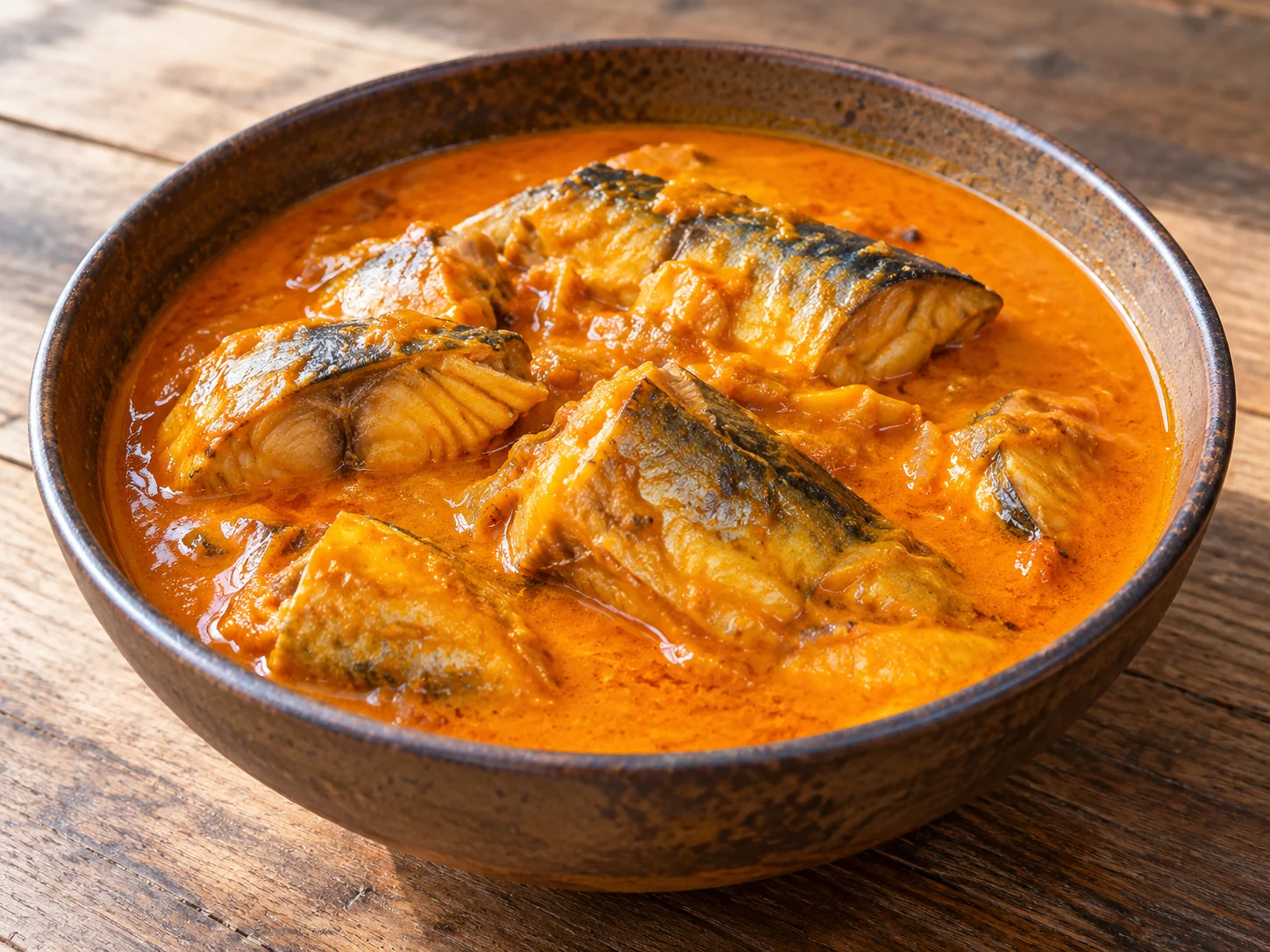
a) North Africa (Morocco, Algeria, Tunisia, Egypt) • Grilled mackerel with chermoula: marinated (garlic, coriander, cumin, paprika, lemon, olive oil), grilled over wood fire or baked. • Mackerel in tagine or en papillote: cooked with tomatoes, olives, potatoes, seasonal vegetables, mild spices. • Mackerel meatballs: crumbled cooked flesh, mixed with onion, parsley, peas, rolled, breaded, and fried. • Mackerel salad: crumbled mackerel, tomato, bell pepper, harissa, mullet or vinegar, olive oil. b) West and Central Africa • Braised fish Ivorian, Cameroonian, Beninese, or Togolese style: incised mackerel, marinated (ginger, garlic, chili, lemon, mustard, herbs), cooked over charcoal then served with attiéké (steamed cassava couscous), alloco (fried plantain), rice, salad. • Smoked mackerel: sold as is or used in pieces to enhance palm nut sauces (sauce graine), leafy green sauces (sauce feuille), tomato sauce, mafé (peanut stew), vegetable stews, soups, and broths. • Riz gras (fatty rice), jollof rice: pieces of smoked or marinated mackerel added to rice during cooking with vegetables, tomatoes, spices. • Akara/acra with mackerel: fritters or patties stuffed with mackerel flesh. • Cold or hot salads: crumbled mackerel, cucumber, tomato, onion, vinaigrette, sometimes hard-boiled eggs. c) Central Africa and Congo • Smoked mackerel in sauces: an essential element of “clear sauces”, “palm nut sauce” (sauce graine) (red palm oil), “mondongo” (tripe and fish). • Congolese fish soups: smoked or fresh mackerel, vegetables, eggplant leaves, okra, chili. d) East Africa, Islands, and Indian Ocean • Swahili mackerel: coconut milk, mild curry, tomato, green bell pepper, chili, served with pilaf rice or ugali (a stiff porridge made from cornmeal). • Fried fish in Zanzibar: whole or steak mackerel, marinated and fried, served with spicy vegetable dishes. • Beach skewers, mackerel samosas (Seychelles, Mauritius, Reunion, Madagascar): popular street food. e) Southern Africa • “Snoek” mackerel: smoked, dried, grilled, or cooked in a stew, a South African specialty. • African fish cakes: fish patties, potatoes, onions, spices, often made with mackerel or snoek. • Cape Malay seafood curries.
6. Preservation and processing
• Smoking: mackerel, due to its fat content, takes particularly well to smoking and drying, achieving a powerful flavor and long shelf life. • Salting: used for domestic markets, sold roadside. • Canned goods: mackerel fillets in tomato sauce, oil, chili, widely consumed in cities, a valuable supplement for millions of households. • Drying: rarer, but used in some Sahelian hamlets or in markets during seasons of abundance.
7. Contemporary challenges and perspectives
• Overfishing, pollution, climate change: depletion of mackerel stocks in certain areas, need for sustainable management, seasonal closures, respected quotas. • Support for artisanal fishing and small-scale female vendors: strengthen the cold chain, develop professionalization, ensure local value creation rather than raw export. • Nutritional education: combat misconceptions about fatty fish, train in new recipes (street food, protein snacks, modern city dishes). • Integration into contemporary gastronomy: refined menus, tapas based on marinated mackerel, African ceviche, mackerel burgers and pizzas.
Conclusion Mackerel is both memory and modernity: a popular fish par excellence, a solid link between the sea and the plate, it traverses daily life and celebrations, takes root on all African coasts, and invites itself, humble or majestic, into the cooking pot as well as onto the smoking embers of sharing. A guarantor of food sovereignty and the dignity of the people of the water, it remains at the heart of an Africa that invents and nourishes, solid in its traditions and anchored in the future. In African cuisine, every mackerel dish celebrates fraternity, creativity, and courage in the face of the sea.
In the kitchen : Mackerel
Recipes from the site to put your knowledge into practice:
Discover these cuisines at a restaurant
Explore our restaurant and caterer directories. Choose your destination and check the establishment’s menu to confirm which dishes are offered and available.
Continue exploring
Enjoy discovering ingredients and African cuisines? Join our newsletter. The illustrated PDF 10 sauces africaines incontournables is in French and is offered after confirming a subscription to the French or bilingual edition.