Shark
African continent
Understanding : Shark
Introduction
The shark embodies one of the most powerful symbols of the ocean: a formidable predator feared in the collective imagination, a force of nature in African legends, but also an ancient food resource, often forgotten or marginalized in modern representations. Present in all African coastal waters, from the Atlantic to the Gulf of Guinea, from the Mediterranean to Mozambique, from the Mozambique Channel to the Cape Verde Islands and the Indian Ocean, the shark is nevertheless an integral part of the culture and cuisine of many African countries. Its firm, rich, and versatile flesh has nourished generations of fishermen, sea peoples, and island communities. Once a food of necessity, sometimes prized for its rarity or prestige, today the subject of ethical and ecological debates, the shark stands at the crossroads of tradition and modernity, survival and preservation.
Where to find it
Look for the exact food-grade form required by the recipe at markets and specialist shops. Check the product name, ingredients, condition and storage instructions.
Explore further: Cooking tips · Food hygiene and safety advice.
History and uses
1. Diversity and distribution of sharks in Africa
Major families From the Mediterranean coasts to the tip of Southern Africa, over 100 species of sharks are recorded, the most common being: • Hammerhead shark (Sphyrna spp.) • Bull shark (Carcharhinus leucas) — frequent near estuaries and certain Atlantic and West African coasts • Sandbar shark (Carcharhinus plumbeus), oceanic whitetip shark, blue shark, lemon shark, ragged-tooth shark • Mako shark (Isurus oxyrinchus) — appreciated for its flesh • Nurse shark (Ginglymostoma cirratum), Tawny nurse shark, Epaulette shark • **Zebra shark, milk shark, numerous species of small benthic sharks (South African region, Namibia, Mozambique, Madagascar, Mascarene Islands) • Greater spotted dogfish, smooth-hound, reef shark, small squales (Mediterranean, North African coast) Regional distribution • West Africa: Senegal, Guinea-Bissau, Guinea, Sierra Leone, Ivory Coast, Ghana, Togo, Benin, Nigeria — significant tradition of shark fishing, particularly in the Lebou and Fanti fishing villages. • Southern and East Africa: South African, Mozambican, Namibian, Tanzanian waters are rich in sharks consumed locally and exported. • Indian Ocean, Madagascar, Comoros, Mauritius, Seychelles, Reunion: numerous species of reef sharks, lagoon sharks, nets overflowing markets and dried in the sun. • Maghreb and Mediterranean: rarer but present, locally called "saumonette" (small shark or dogfish), "raya" (ray), "requin chien" (dogfish).
2. Shark hunting, fishing, and economy
Artisanal fishing • Drift nets, longlines, fishing rods, rustic traps have been used for centuries to catch sharks throughout coastal Africa. • Fishing villages live at their own pace: shark fishing complements seasonal catches of tuna, sea bream, barracuda, mullet, mahi-mahi. • Women and children are involved, particularly in cleaning, drying, preparing the flesh, and trading in coastal markets. Industrial fishing • Often linked to mixed fishing, it is practiced mainly in Southern Africa, on the Mediterranean coast, and in the islands. • The industrialization of the sector has allowed the export of shark meat (steaks, fillets) but especially fins to the Asian market. Local economy and trade • The flesh: sold fresh, salted, or dried (konkoé, tranga, tiboundje, roussette...), it is a pillar of village food security. • Fins: although increasingly controversial, they are a major source of income for some poor fishermen, destined for export to Asia. • Skins, teeth, vertebrae: used locally for crafts, decoration, traditional medicine, jewelry, or tools.
3. Symbolism, culture, and mythology
• The shark is a totem animal in many coastal societies (Casamance, Mandingo, Swahili peoples, Sakalava, Antemoro Malagasy). • A protective figure among fishermen who dedicate offerings to it or attribute to it a role as "guardian of the seas." • In some groups, shark consumption marks a passage, attributing strength, virility, or luck in hunting or fishing. • Sometimes, the shark is taboo (worshipped or forbidden), perceived as the embodiment of an ancestor or the spirit of a river.
4. Nutritional value and health
Shark meat has long been sought after for: • Its high protein content (18-22 g/100 g), its essential amino acids. • Its high level of omega-3 fatty acids: beneficial for the cardiovascular and nervous systems. • Minerals: particularly selenium, iodine, phosphorus, calcium (in certain preparations where the spinal column is cooked). • B vitamins, some vitamin D. • Low-fat meat, rich in collagen (appreciated in very cooked or dried form). Caution: the flesh of some species may contain mercury or other toxins (especially in large predatory sharks – this is one reason for caution in frequent consumption or for pregnant women).
In my books

Continue exploring the continent’s cuisines with Africa at the Table — 54 countries, 54 iconic dishes, by Alioune FALL. This book is in English.
Explore further
5. Diversity of traditional and modern culinary uses
From North to South, West to East, shark is found in many traditional or innovative dishes. a) West Africa
- Senegalese, Ivorian, Beninese “braised” shark • Shark cut into steaks, marinated (garlic, ginger, lemon, chili, herbs), grilled over wood or charcoal fire. Served with attiéké (steamed grated cassava), rice, sweet potato, plantain.
- Maafe or clear shark sauce • Stewed with peanut sauce, vegetables (eggplant, okra, sweet potato), tomato, chili.
- Kankama/lakhou/Konkoé • In Ghana, Togo, Nigeria, smoked shark, sun-dried, incorporated into soups, stews, “pepper soup.” b) Morocco, Algeria, Tunisia, Egypt
- Dried shark “tranga” or “bouzroug” • Dogfish or small squales, salted, sun-dried, then rehydrated in vegetable stews, couscous, seafood pastillas.
- Shark tagines • Marinade with chermoula (Moroccan spice blend), cooked with vegetables, olives, preserved lemon.
- “Saumonette” fish • Small sharks breaded, fried, or cooked in tomato sauce, a Friday or Ramadan dish. c) Central Africa
- Shark broths • Smoked shark meat, boiled with roots, potato, leafy vegetables, chili, served with cassava stick or banana.
- Mangrove dried fish • Dried shark sold in markets, pounded or incorporated as flakes into sauces and catfish dishes. d) East Africa and Indian Ocean
- Shark with coconut, Swahili style • Stewed in coconut milk, lemongrass, ginger, mild curry, served with pilaf rice or chapati.
- Shark samosas and fritters • Minced, spiced meat, stuffed into pastry triangles then fried.
- “Crowned” shark slice • Sea goat (cabri de mer) in the lagoons, often boiled then grilled, served with spicy sauces. e) Southern Africa and islands
- Shark fin soup (historically, now banned or heavily restricted) • Once very present on ceremonial tables in Mauritius, Madagascar, Reunion.
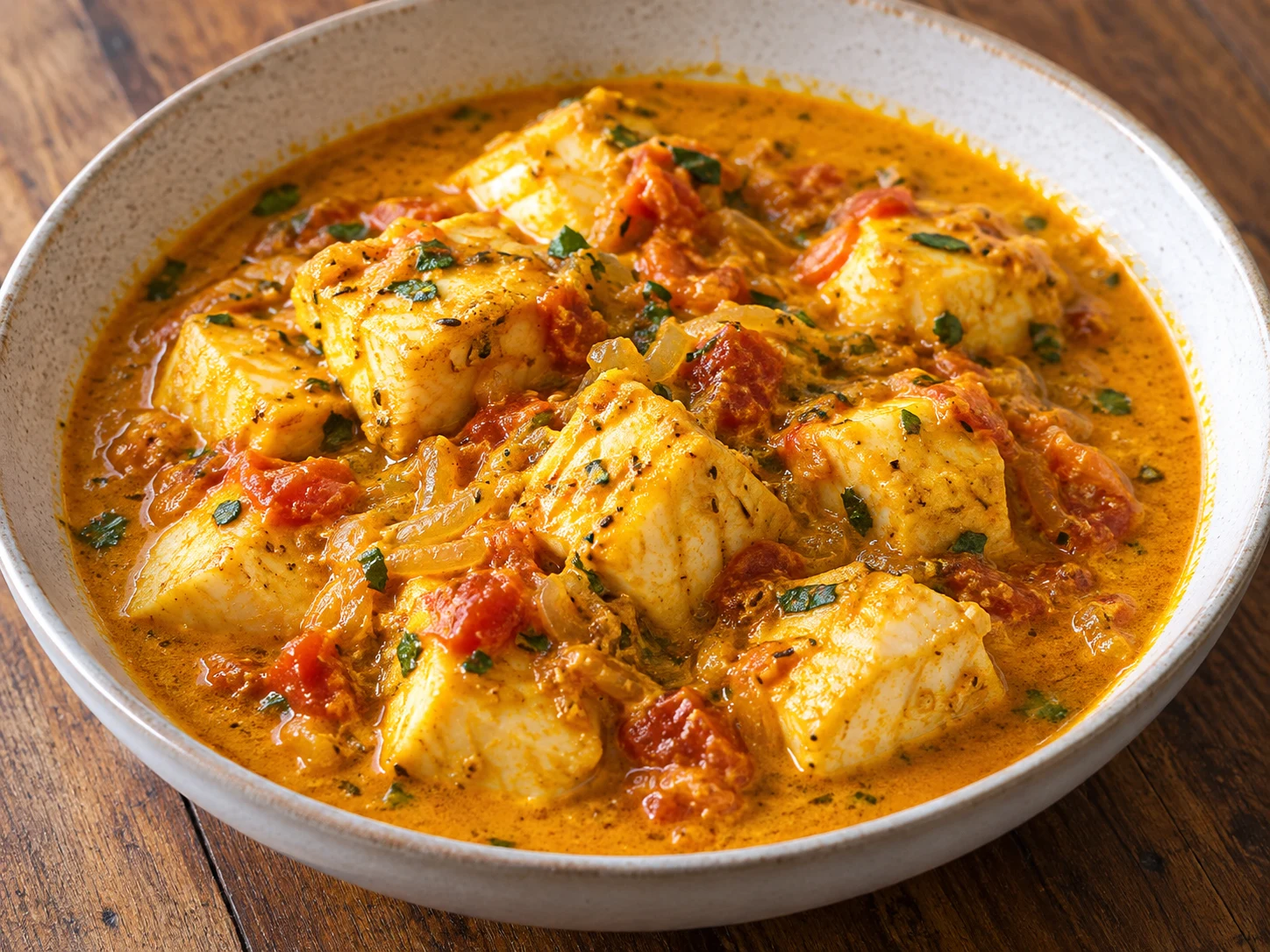
- Shark curry (“mas riha” in Seychelles, “cari zourit” in Reunion”) • Meat stewed with spices, aromatics, coconut milk, always with rice.
- Snoek and other dried fish • In South Africa, snoek (Thyrsites atun) or “shark biltong” (dried shark meat) is now a sought-after snack.
6. Preservation, conservation, and processing
Conservation is central for this fish which does not tolerate heat well: • Sun-drying and smoking: gives its inimitable flavor, extends preservation, sold in quarters, strips, flakes. • Salting: the cut meat, salted with coarse salt, pressed, then dried. • Boucanage (smoking): in some countries, shark meat smoked over a wood fire, sold in pieces in markets. • Modern preserves: canned small sharks or dogfish are offered in some countries.
7. Ecological, social, and ethical challenges
• Overfishing: o Sharks are particularly vulnerable to overexploitation due to their slow reproduction, low number of offspring, and habitat destruction. o Dramatic decline in populations on the West African coast, in the Mediterranean, and in the Mascarene Islands. o Illegal trade in fins, non-consumption of meat, waste. • Ecological role: o As top predators in the food chain, their disappearance causes an imbalance in fish, crustacean, and mollusk populations. • Public health: o Risk of mercury and other pollutants, necessity to limit consumption for children, pregnant women. • Cultural evolution: o Transformation of traditions (from shark hunting to ecotourism). o Christmas, religious holidays, and sharing with other fish meats. Positive initiatives • Education and regulation: many states (South Africa, Morocco, Seychelles, Reunion) regulate shark fishing, prohibit finning (fin cutting), promote conservation, and raise awareness in kitchens about the reasoned value of shark. • Integrated valorization: encouraging reasoned consumption of meat (vs. fins alone), the development of urban recipes and local gastronomy. • Ecological tourism: observing live sharks (“shark diving”) brings much more to local communities than fishing.
Conclusion The shark is an integral part of African food history, combining necessity, ingenuity, conviviality, and even spirituality. It has nourished generations, structured village economies, inspired rites of passage, but it also invites itself into modernity: urban dishes, street food, fusion gastronomy. Facing contemporary challenges, it embodies both the past and the future of African coastal cuisines: the art of leveraging local resources with respect, intelligence, and imagination, nourishing the memory and the table of a continent that has been in dialogue with the sea since time immemorial. Preserving the balance of the sea, rehabilitating shark recipes, and anchoring them in sustainable management is to ensure that it remains, fully, a living and flavorful link in African culinary heritage.
In the kitchen : Shark
Recipes from the site to put your knowledge into practice:
Discover these cuisines at a restaurant
Explore our restaurant and caterer directories. Choose your destination and check the establishment’s menu to confirm which dishes are offered and available.
Continue exploring
Enjoy discovering ingredients and African cuisines? Join our newsletter. The illustrated PDF 10 sauces africaines incontournables is in French and is offered after confirming a subscription to the French or bilingual edition.