Parsley
Eastern Mediterranean
Understanding : Parsley
Introduction
Parsley (Petroselinum crispum) is undoubtedly one of the most well-known and appreciated aromatic herbs in the world. Made emblematic by Mediterranean cuisine, it has for centuries been perfectly integrated and naturalized into African culinary traditions, from North Africa to the sub-Saharan savannas, from West African markets to the hillsides of East Africa, even into some Southern and insular African cuisines. Green, invigorating, versatile, it enhances, perfumes, colors, heals, and, in many situations, it is synonymous with generosity and abundance at the table. In African cuisine, parsley has taken a unique place: both an indispensable companion to many coastal and rural dishes, a marker of freshness in popular plates, an ally of well-being, conviviality, and transmission. Here is a detailed dive into its journey, its uses, and its role within the African terroir.
Where to find it
Look for the exact food-grade form required by the recipe at markets and specialist shops. Check the product name, ingredients, condition and storage instructions.
Explore further: Cooking tips · Food hygiene and safety advice.
History and uses
1. History, origins, and spread of parsley in Africa
Parsley originates from the Eastern Mediterranean region (Syria, Lebanon, Turkey, Greece, Egypt), where it has been domesticated since antiquity. Already recognized by the ancient Greeks and Romans for its aromatic and medicinal qualities, it held an important place in medieval monastic gardens, then accompanied the Arab-Andalusian and Ottoman spread. • North Africa (Maghreb and Egypt): Parsley has been attested since antiquity, cultivated in oases, urban gardens, appreciated by the Carthaginians, ancient Egyptians, then omnipresent thanks to Muslim and Andalusian agriculture. • West and Central Africa: It arrived in the medieval era through trans-Saharan trade, then during European colonization (19th-20th century), via French and Portuguese seeds. • East and Southern Africa: Via the eastern and Indian route, parsley joined urban market gardening, missionary vegetable gardens, then integrated into colonial horticulture. • Indian Ocean islands, Cape Verde, Madagascar: It is cultivated in temperate or high-altitude areas; it is incorporated into Creole, Malagasy, and Afro-Portuguese fusion cuisine.
2. Varieties and botanical aspects
Two major types of parsley are widespread:
- Flat-leaf parsley (flat-leaf) – Petroselinum crispum var. neapolitanum: The strongest in flavor, appreciated throughout the Maghreb, West Africa, and in all refined French-speaking African cuisines.
- Curly parsley (curly-leaf) – Petroselinum crispum var. crispum: Milder, sometimes used as a garnish or to subtly flavor sauces and fritters.
- Root parsley (for the root) — very rare in Africa, typical of Jewish/Eurasian recipes.
3. Symbolism, culture, social role
Symbolism • Symbol of vitality and freshness: its green color, its fragrance, its raw use make it a metaphor for youth and energy in many African proverbs. • Plant of sharing: the addition of fresh parsley “is the hand of the hostess”, a sign of hospitality and attention to detail. • Prosperity and blessing: parsley, easy to sow, often grows in popular gardens in the Maghreb and West Africa; it is given during religious festivals, weddings, baptisms. Transmission and memory • Parsley is often one of the first herbs a child learns to pick, wash, chop. • It marks the generosity of the table: the “greener” the dish, the more the cook is considered generous, attentive to health. • Female transmissions: mothers, grandmothers, aunts show the fine cut, the right dose, how to incorporate it raw or at the end of cooking.
4. Central place in African cuisine
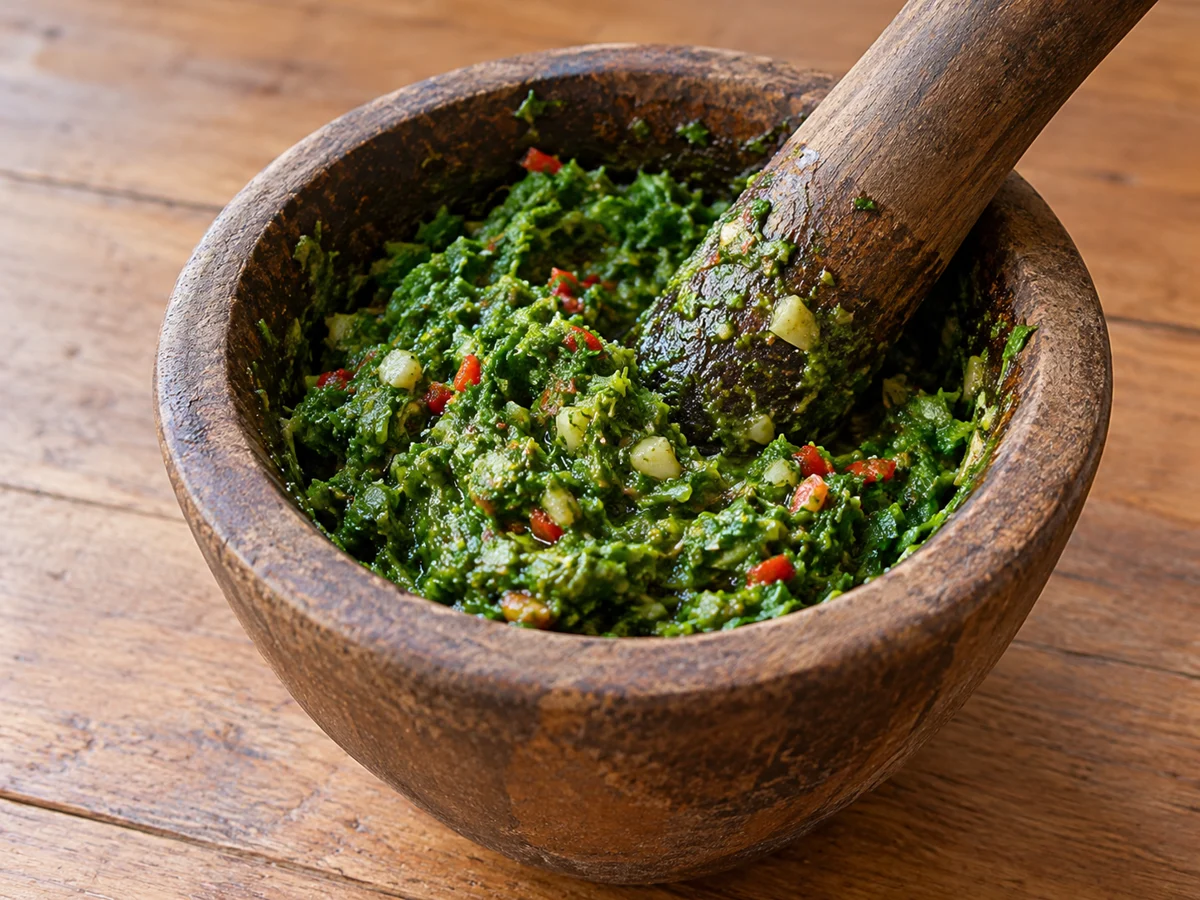
a) North Africa (Morocco, Algeria, Tunisia, Libya, Egypt) • Omnipresence of flat-leaf parsley in all Maghrebi cuisines. • Tagines, couscous, soups (chorba, harira, loubia) – Finely chopped parsley is added just before serving or in the marinade for meat, fish, or vegetables. • Mediterranean salads and mezzes: mechouia salads, zaalouk (eggplant salad), Maghrebi tabbouleh (parsley, tomato, onion base), taktouka, ftuhr, Algerian orange salad. • Bourek, bricks, fritters: the stuffing always includes a touch of fresh parsley. • Green sauces (chermoula, persillade, “daghmira”, “mhadjeb”) • Marinated and grilled fish — parsley, mixed with coriander, garlic, cumin, and olive oil, forms the traditional marinades that make Maghrebi fish famous. • Tunisian kemia (a collection of small cold dishes garnished with parsley). b) West Africa (Senegal, Ivory Coast, Mali, Guinea, Benin, Togo, Ghana, Nigeria) • Ingredient of “nokoss” (pounded mixture): garlic, onion, parsley, chili – base of all popular sauces (“mafé” (peanut stew), “yassa” (chicken or fish with onions and lemon), “thiéboudienne” (Senegalese fish and rice dish), “riz sauce” (rice with sauce)). • Senegalese grilled fish, yassa chicken, dibi (grilled meat), Ivorian kedjenou (chicken stew), riz gras (fatty rice) — pounded or chopped parsley always goes into the marinade, sauce, or as a finishing touch to the dish. • Raw salads: carrot, cucumber, tomato, red onion, always ennobled with a cloud of fresh parsley. • White bean soup, black-eyed pea soup, eggplant sauce, or okra sauce — finished with parsley. • Fish fritters, cassava cakes, meatballs — addition of parsley and mixed herbs. • Urban sandwiches, street food: garnish for African burgers, shawarmas, paninis in the streets of Dakar, Abidjan, Lomé. c) Central Africa (Cameroon, Gabon, Congo, DRC, Chad) • Mixture of local herbs and parsley in vegetable soups, fish sauces, “yellow” sauce, ndolé (bitter leaf stew), cassava dishes (“bobolo” (fermented cassava stick), “miondo” (fermented cassava stick)). • “Spicy” soups with leafy vegetables and fish — on a bed of parsley and other herbs. • Grilled meat and fish skewers: marinades based on parsley-garlic-chili-red or peanut oil. • Scented rice, omelets, quiches – parsley accompanies cooking or serves as a fresh garnish. d) East Africa, Southern Africa, and islands • Incorporation of parsley into pilau (Swahili spiced rice), light curries, sambusas, salads, fish or meat accompaniments. • Mixed fresh herbs (parsley, coriander, mint, basil) in Swahili sauces, “kachumbari” (tomato-onion-chili-parsley salad). • South Africa, Reunion, Mauritius: parsley used on “bobotie” (minced meat bake), potjiekos (stew cooked in a cast-iron pot), curries, savory pies, “chutneys”.
In my books

Continue exploring the continent’s cuisines with Africa at the Table — 54 countries, 54 iconic dishes, by Alioune FALL. This book is in English.
Explore further
5. Nutritional value and health
• Rich in vitamin C (up to 150 mg/100g fresh), more than some citrus fruits. • Important source of vitamin K and A (strengthens blood clotting, vision, immune system). • High iron and calcium content, useful for combating anemia, strengthening bones and teeth. • Antioxidants: flavonoids, luteolin, apigenin, which protect against free radicals, skin care, and cellular aging. • Depurative effect: traditionally used in decoction or juice to “cleanse” the kidneys, promote diuresis, relieve digestive disorders. • Appetite stimulant, digestive: in infusion or fresh addition. • Medicinal use: poultice against insect bites, decoctions to calm coughs, bad breath.
6. Conservation, transmission, production
• Market parsley: sold fresh, in bunches in all urban and rural markets; in the dry season, sometimes replaced by more rustic herbs (basil, purslane, sorrel, indigenous celery). • Cultivated in pots, terraces, family gardens: proof of self-production in the city as in the village, maintaining a parsley patch is a sign of independence and health. • Transmission of the “knack”: chopping very finely, adding at the last moment, avoids “burning” the fragrance. • Artisanal drying or dehydration: used for instant soups, local bouillon cubes, industrial seasonings (see the Creole, Maghrebi, Malagasy trend for “parsley cubes”).
7. Modernity, challenges, and creativity
• Expansion with “new African cuisine”: parsley in fish tartares, Afro burgers, vegetable juices, detox smoothies, pizzas with African accents. • Contemporary gastronomy: Afro “chimichurri” sauces, revisited tabboulehs, African makis, tartares, savanna parsley pestos (sometimes with peanuts/cashews instead of pine nuts). • Climate challenges: in times of drought, parsley can disappear from markets or become very expensive; incentive to promote sustainable cultivation, varietal diversity, training of market gardeners. • Research for resistant local varieties, organization of seed fairs, promotion of urban and rural permaculture.
Conclusion Parsley, a common herb for some, a treasure for others, is much more than a simple ornament of the African plate. It symbolizes hospitality, generosity, attention to the health of others, the creative vivacity of the continent's cuisines. In the Maghreb pot, the Wolof bowl, the Bamiléké sauce, the Malian salad, the Creole dish, or urban street food, it invites celebration, freshness, shared life. Preserving, transmitting, and valuing parsley in Africa means extending the taste of green in life, the link between the land and the table, respect for ancient practices, and the innovation of tomorrow. In every bunch of parsley, there is the memory of the African terroir: humble, fertile, and universal.
In the kitchen : Parsley
Recipes from the site to put your knowledge into practice:
Discover these cuisines at a restaurant
Explore our restaurant and caterer directories. Choose your destination and check the establishment’s menu to confirm which dishes are offered and available.
Continue exploring
Enjoy discovering ingredients and African cuisines? Join our newsletter. The illustrated PDF 10 sauces africaines incontournables is in French and is offered after confirming a subscription to the French or bilingual edition.