Turmeric
South Asia
Understanding : Turmeric
INTRODUCTION
Turmeric (Curcuma longa), also known as Indian saffron, “safran-pays” (country saffron) in the islands, “kourkoum” or “haldi” in some regions, is a remarkable root spice: its deep orange-yellow color, warm and slightly musky taste, mysterious fragrance, and versatility make it an essential ingredient in African cuisine. Of Asian origin, turmeric is now rooted in the cooking pot and family medicine cabinet across the continent, from Morocco to Madagascar, from the Sahel to the Creole islands. Turmeric does more than just color dishes: it shapes the identity of many cuisines, connects ancient practices with contemporary trends, and carries spiritual, medicinal, and social values. It is also a symbol of exchange, cultural blending, and gastronomic innovation. Let's explore its history, unique properties, main uses, and central place on the African table and in African health.
Where to find it
Look for the exact food-grade form required by the recipe at markets and specialist shops. Check the product name, ingredients, condition and storage instructions.
Explore further: Cooking tips · Food hygiene and safety advice.
Search Amazon.fr — affiliate link →
Check availability and delivery on Amazon.fr. Compare ingredients, packaging and sellers.
As an Amazon Associate I earn from qualifying purchases.
History and uses
1. BOTANY, ORIGINS, AND SPREAD OF TURMERIC IN AFRICA
Botanical Profile Turmeric is a plant of the Zingiberaceae family (ginger, galangal, cardamom family), which grows as a tuberous rhizome. The plant is distinguished by: • Fleshy rhizome: from which the famous golden powder is extracted • Elongated green leaves, sometimes broad, borne on dense stems • White, yellow, or pink-purple flowers depending on the variety • Bitter-sweet, warm, slightly peppery flavor Origins and Arrival in Africa Turmeric originated in South Asia (India, Malaysia, Indonesia), where it has been used as a spice, dye, cosmetic, and medicine for over 4,000 years. It entered Africa: • Via the major Arab (Maghreb and Egypt) and Indian (East Africa, Zanzibar, Madagascar, Mozambique) trade routes • By Portuguese sailing ships (Guinea, Angola, Cape Verde) • During waves of Indo-Pakistani migrations to East and Southern Africa • Through European colonization, establishing its cultivation in the islands (Reunion, Mauritius, Madagascar, Seychelles, Comoros) Today, Madagascar, Mauritius, and Tanzania are among the largest African producers, but its artisanal cultivation is also common in Senegal, Niger, Cameroon, Ivory Coast, and the Moroccan countryside.
2. ECONOMIC AND SOCIAL ROLE
• Production and family farming: Turmeric can be grown on small plots, in family gardens or community plots, generating additional income for women and local associations. • Urban and rural markets: It is sold as a root, powder, fresh, candied, or dried, in small sachets in all African markets, from Dakar to Antananarivo. • Cosmetic and health sector: Used for infusions, ointments, beauty rituals (masks, soaps), it also fuels a solidarity economy in villages.
3. SYMBOLISM AND SPIRITUALITY
• Sacred color: In many African rites, the orange-yellow of turmeric evokes wealth, purity, blessing, and sunlight. • Protection rituals: In some societies, turmeric is offered for fertility, weddings, baptisms, and house building. • Connection to the divine and healing: Incorporated into purification baths, protective powders, or thrown into the cooking pot to bless the family.
4. NUTRITIONAL AND MEDICINAL PROPERTIES
• Emblematic molecules: curcumin (powerful antioxidant and anti-inflammatory), turmerones (antimicrobial agents, liver stimulants) • Vitamins and minerals: B6, vitamin C, potassium, iron, manganese, zinc • Recognized health effects: o Relieves digestive disorders, joint pain, chronic inflammation o Promotes healing, supports liver health o Blood sugar regulation, immune support o Stimulates circulation, maintains skin (particularly prized for its “healthy glow” effect) • Popular medicinal use: balms for minor ailments, infusions for coughs and colds, anti-acne masks, “yellow gold” in playdough or traditional beauty masks
5. REGIONAL CULINARY USES OF TURMERIC IN AFRICA
a) Maghreb and North Africa • Couscous and tagines: turmeric (“kourkoum”) is included in all spice blends (“ras el-hanout”), it colors sauces, enhances the flavor of meats, fish, and vegetables. • Winter soup (hrira, chorba): based on turmeric, ginger, cinnamon, cumin, coriander. • Roast chicken, kefta, mrouzia: meat is rubbed with turmeric and spices, then roasted or stewed. • Jewish-Moroccan and Andalusian cuisine: Kehila of Casablanca, golden pastillas, meatballs, marinades. • Bourek, bricks, and fritters: golden yellow dough thanks to turmeric, combined with mint and coriander. b) West Africa • Riz gras (fatty rice) and mafé (peanut stew) from Senegal, Ivory Coast, Guinea: turmeric colors the rice, broth, and oil base for braising fish or meat. • “Yassa” with chicken or fish: sometimes, a hint of turmeric gives color and fragrance to the onion-lemon sauce. • Braises, grills, and street stews: marinades including turmeric, garlic, chili, lemon, parsley. • Urban lunches and street food: soups, quick broths, omelets, croquettes seasoned with turmeric. c) East Africa, Horn, and Swahili Coast • Pilau and Swahili biryani (Kenya, Tanzania, Zanzibar): rice flavored with cinnamon, cardamom, cumin, cloves, turmeric, saffron, nutmeg; the base of any festive meal. • Kimbosho curries (with coconut, fish, vegetables): turmeric is essential for color and spicy sweetness. • Indian shell massala, Swahili chicken tikka: fusion dishes where turmeric bridges Africa and India. • Fish soups, sauces, bread: coloring and flavor enrichment, “market gold” to enliven ordinary dishes. d) Southern Africa, Indian Ocean Islands, Madagascar • Rougail, cari (curry), massalé, biryanis, salmis (Reunion, Mauritius, Madagascar, Seychelles, Comoros): turmeric is the star of local spice blends, in every curry, roast, and marinade. • Raviravine (Malagasy dish), “brèdes” (cooked greens) sauces: powdered turmeric, sometimes fresh grated, gives fragrance and color to daily preparations. • Baba ghanoush, pickles (atchard): vegetables are preserved in oil and vinegar, with turmeric, garlic, and chili. • Bread and pancakes: turmeric colors the dough, making it more appetizing and digestible. • Festive desserts: golden milk with turmeric, puddings, pastries colored and flavored with turmeric.
In my books

Continue exploring the continent’s cuisines with Africa at the Table — 54 countries, 54 iconic dishes, by Alioune FALL. This book is in English.
Explore further
6. CONTEMPORARY CUISINE, STREET FOOD, AND INNOVATION
• Detox smoothies, “golden milk,” vitamin juices: turmeric combined with ginger, lemon, orange, pineapple, or plant-based milk, a trendy drink in urban cafes in Dakar, Casablanca, Antananarivo, Abidjan, Nairobi. • Spreadable sauces, mayonnaise, and African pestos: scent of turmeric, cashews, peanuts, fresh coriander. • Newly African burgers, tacos, kebabs: turmeric sandwiches, golden fries, “sunset” dips. • Haute cuisine: modern dish plating, yellow vegetable mousses, fluid sauces, vinaigrettes with golden flecks, edible decorative powders. • Vegan and alternative cuisine: turmeric tofu, chickpea curry, grain patties, plant-based cheeses flavored with turmeric and cashew milk. • Communal cooking pots, popular restaurants: base for omelets, pâtés, bean or sweet potato patties.
7. PRESERVATION, TRANSMISSION, AND RITUALS
• Fresh root: grated, used immediately or frozen for the year; fresh turmeric is highly sought after for care and celebrations. • Dry powder: ground with a millstone, sun-dried, and stored in jars away from light. • Small women-owned businesses: turmeric is often sold by women, who develop it into secret blends, supplementing this activity with drying, canning, distillation. • Oral transmission: the secrets of its uses — exact dosage, pairing with other spices, coloring rituals — are shared among women, mothers, aunts, grandmothers, sometimes during festive or religious cooking ceremonies. • Marriage, birth, mourning rituals: the turmeric root symbolizes passage, sometimes offered or used to bless, purify.
8. CONTEMPORARY CHALLENGES AND PERSPECTIVES
• Climatic and agricultural threats: droughts, soil depletion, competition with other crops, decline in varietal biodiversity. • Rediscovery of local varieties (Madagascar, Senegal, Reunion, Tanzania): search for ancient rhizomes, preservation of living heritage. • Organic and fair trade valorization: integration of turmeric into “fair trade” and “organic farming” channels, short rural and urban supply chains. • Culinary tourism: “spices and colors” tours, participatory cooking, workshops on processing and cooking. • Scientific research: new uses in therapeutics, natural cosmetics, functional foods.
CONCLUSION Turmeric is not just a simple spice or dye: it is the embodiment of African light and vitality, a bridge between Asian heritage and local genius, a key player in cultural transmission, well-being, and the continent's taste identity. Whether it gilds the semolina of the Maghreb, the curries of Zanzibar, Senegalese rice, the sauce of Madagascar, or the golden cup of urban organic cafes, it unites, heals, and delights. Preserving turmeric's place in Africa means honoring memory, defending health, and paving the way for new African culinary creations: sunny, rooted, universal.
In the kitchen : Turmeric
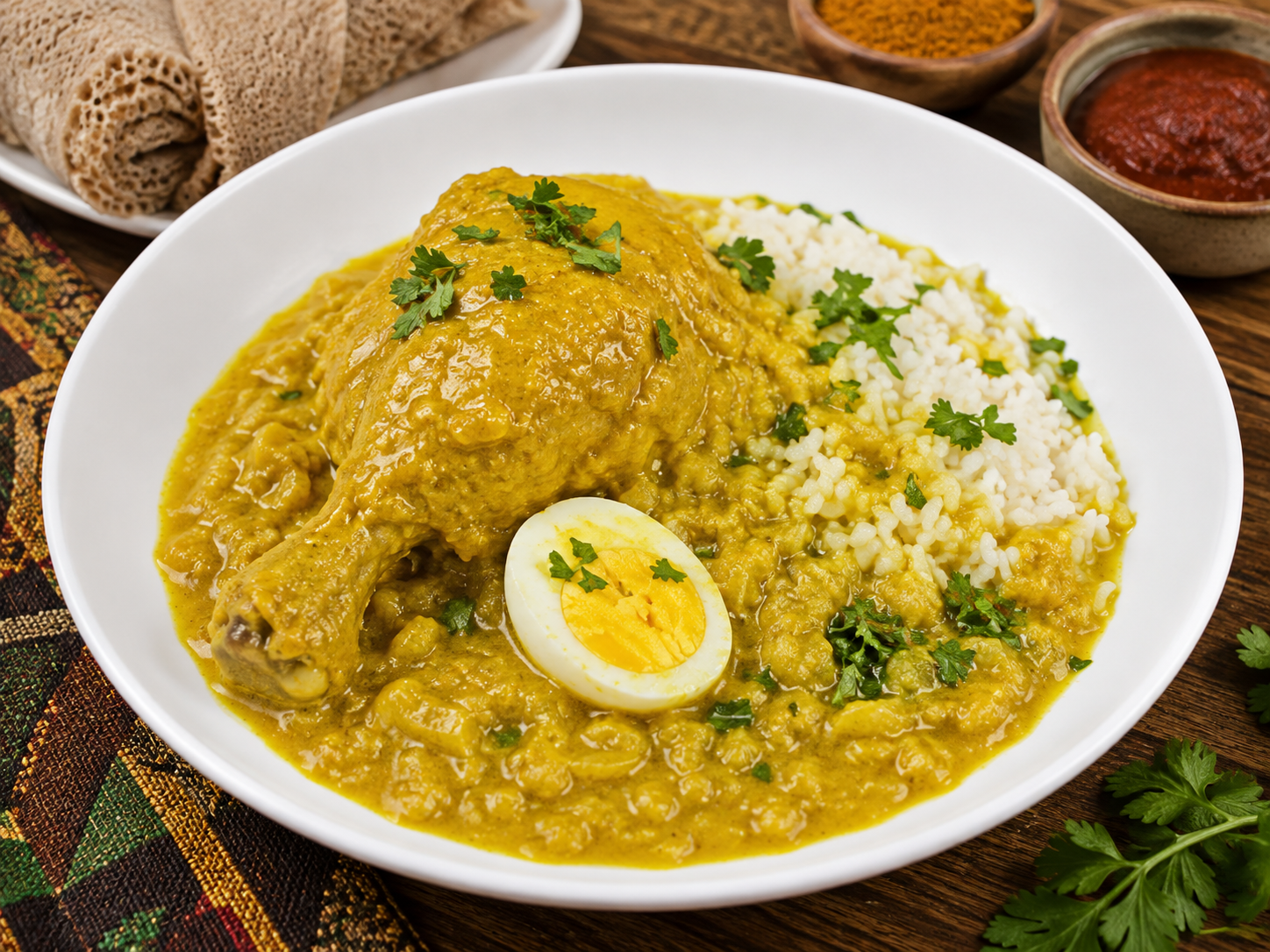
Recipes from the site to put your knowledge into practice:
Discover these cuisines at a restaurant
Explore our restaurant and caterer directories. Choose your destination and check the establishment’s menu to confirm which dishes are offered and available.
Continue exploring
Enjoy discovering ingredients and African cuisines? Join our newsletter. The illustrated PDF 10 sauces africaines incontournables is in French and is offered after confirming a subscription to the French or bilingual edition.