Olive Oil
Levant
Understanding : Olive Oil
Introduction
For millennia, olive oil has been part of the culinary soul of a large part of Africa, particularly the Maghreb, Egypt, and to an increasing extent, the Sahel regions and the diaspora. More than just a fat, it embodies the light of the Mediterranean sun, agricultural memory, the conviviality of communal meals, and a legacy of health and beauty. Green gold, a symbol of peace, longevity, and prosperity, olive oil has continuously infused the recipes, rituals, and food culture of the African continent, while today opening up to new uses and wider distribution.
Where to find it
Look for the exact food-grade form required by the recipe at markets and specialist shops. Check the product name, ingredients, condition and storage instructions.
Explore further: Cooking tips · Food hygiene and safety advice.
Search Amazon.fr — affiliate link →
Check availability and delivery on Amazon.fr. Compare ingredients, packaging and sellers.
As an Amazon Associate I earn from qualifying purchases.
History and uses
1. History, origin, and symbolism of olive oil in Africa
1.1. A multi-millennial heritage The olive tree (Olea europaea) is one of the very first plants cultivated by humans, over 6,000 years ago in the Levant. A vector of civilization, the tree ascended the banks of the Nile, crossed the Mediterranean, reached Cyrenaica, present-day Libya, Tunisia, Algeria, Morocco, and then southern Europe. The Phoenicians, Greeks, and Romans massively developed its cultivation. The Arab conquest, the Berber and Moorish dynasties, and then the Ottomans, continued and strengthened this heritage. 1.2. Deep symbolism and rituals • Peace, light, abundance: the olive tree is a symbol of peace (olive branch), victory, resilience (the millennial tree survives drought), its light illuminates temples and mosques. • Hospitality: offering bread dipped in oil, or perfumed oil to guests is part of welcoming gestures. • Spirituality: oil used for sacred lamps, for anointing (Jewish, Christian, Muslim rites), in many Maghrebi and Egyptian customs. • Calendar festivals: new oil accompanies Eid, Easter, and other festivities of the agricultural cycle.
2. Production, processing, and economy
2.1. Geography of the African olive tree • Maghreb: Tunisia (2nd largest exporter worldwide, 1st in Africa), Morocco, Algeria, Libya have tens of millions of olive trees. Each country benefits from remarkable terroirs (Tunisian Sahel, Moroccan Rif and Souss, Algerian Kabylia…). • Egypt: the Nile Valley and the Alexandria region ensure its production. • Southern, Sub-Saharan Africa: nascent, experimental cultivation, for export or family consumption, in Cape Town, in the Kenyan highlands, and in South Africa. 2.2. Harvesting and processing techniques • Manual harvesting: traditionally, olives are picked by hand or beaten (light stick) onto nets, to preserve quality (olives intended for extra-virgin oil). • Crushing: stone mills, hydraulic press, or modern centrifuge process. • Decantation, filtration: the oil rests to separate water, pulp, and sediments. A first pressing yields extra-virgin oil, pure and rich in aroma. • Cold pressing: superior quality, unheated, perfect for raw cooking and health. 2.3. Commercial types and variations • Extra-virgin olive oil: cold-pressed, low acidity, powerful aroma, most used for seasonings and fine dishes. • Virgin or refined oil: resulting from a process involving slight heating, less aromatic, better for cooking. • Local brands: each region has its labels, its recipes (Chemlali oil in Tunisia, Picholine in Morocco…), a family and cooperative heritage passed down through generations. 2.4. Economic and social weight Olive oil supports millions: • Farmers, pickers (“kabbara” in Morocco), oil producers, souk merchants. • Export: revenues from olive oil sales are one of the primary sources of foreign currency for Tunisia, Morocco, Algeria. • Village solidarity: collective mills, distribution of “yield” among douar (village) members.
3. Culinary uses of olive oil in Africa
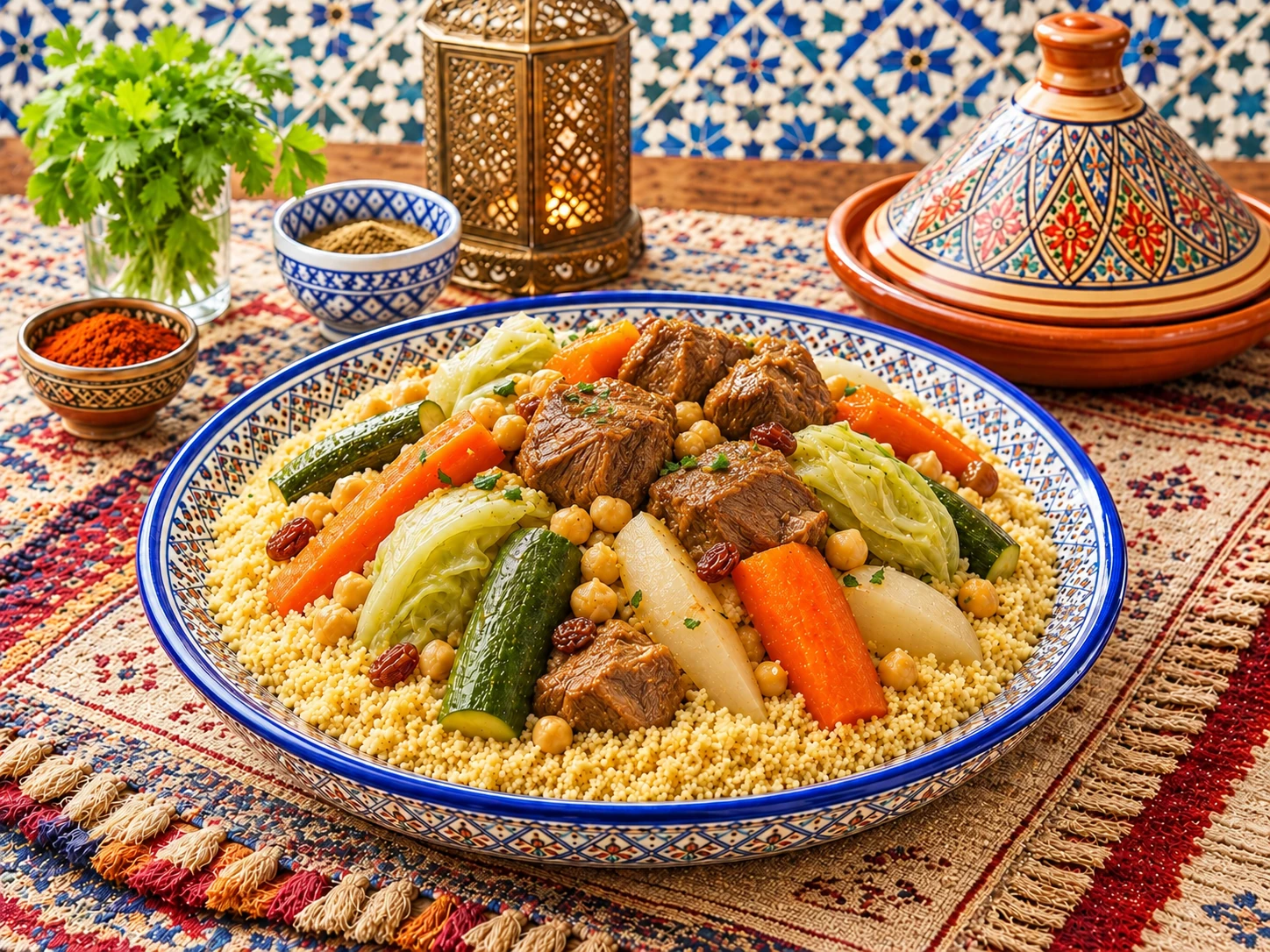
3.1. North Africa (Morocco, Algeria, Tunisia, Libya, Egypt) a) Maghrebi cuisines • Seasoning: raw olive oil accompanies all salads (mekhfia, méchouia salad, taktouka, zaalouk), briouates, fries, flatbreads (khobz), and freshly baked bread. • Tagine and couscous: the base often involves olive oil, which flavors the browning of meats, vegetables, fish. • Bissara (Morocco): fava bean or split pea puree drizzled with a generous stream of olive oil, a popular feature of rural breakfast as well as street food. • Harira, loubia, chlada (salads): the final touch of olive oil enhances the flavors. • Tlitli, rechta, m’aaqouda (Algeria): olive oil binds pasta, flavors potatoes or white beans. • Bricks, seafood tagines (Tunisia & Libya): marinades with olive oil, garlic, fresh herbs, spices. • Mixed platter: green olives, fresh cheese, herbs, and olive oil, served to the morning guest. b) Egypt • Ful medames: fava beans simmered in olive oil, garlic, lemon, spices. • Torshi (pickled vegetables marinated in olive oil), or debes, pita-type breads drizzled with oil. 3.2. Sub-Sahara and diaspora • Recent adoption: on the west coast (Senegal, Ivory Coast, Ghana), olive oil is gaining ground in urban catering, Creole salads, tapenades, fusion dishes (inspired by the Arab, European, Mediterranean diaspora). • Aliyah and Jewish, Lebanese, Syrian influence: neighborhoods in Senegal or Ghana integrate olive oil into street food like kebabs, sandwiches, mezze, and welcoming dishes. • Modern use: African chefs, urban foodies, nutritionists promote olive oil in Afro-vegetable recipes (revisited mafé, vinaigrettes, marinades, desserts). 3.3. Haute cuisine and innovation • Olive oil in desserts (orange cakes, creams, sweet breads). • Used as an emulsion, in juices, sauces, to “finish” a smoked fish dish, African tapas, savory or sweet verrines. • Highlighting indigenous flavors: olive oil and Maghrebi spices, preserved lemon, capers, coriander, mint.
In my books

Continue exploring the continent’s cuisines with Africa at the Table — 54 countries, 54 iconic dishes, by Alioune FALL. This book is in English.
Explore further
4. Nutritional value and health role
4.1. Exceptional nutritional profile • Monounsaturated fatty acids: oleic acid (up to 80%), helps lower bad cholesterol, protect the heart. • Natural antioxidants: polyphenols, vitamin E (alpha-tocopherol). • Anti-inflammatory: oleocanthal, fights degenerative and joint diseases, protects skin and eyes. • Rich in omega-9, low in omega-6: ideal balance according to dietary recommendations. • Promotes satiety, transforms fat-soluble vitamins (A, D, E, K) into assimilable nutrients. 4.2. Place in health rituals • Used in massages, poultices, to treat eczema, burns, hair, dry skin. • Incorporated into fasting cures, purification rituals, or to prepare the body for religious holidays or seasonal transitions. • Beneficial from childhood, during pregnancy, recommended for seniors for health prevention.
5. Social symbolism, sharing, and transmission
5.1. Gesture of hospitality • Bread dipped in oil, olives, and tea: an immutable welcoming ritual, in the Rif as in Kabylia, in the Atlas or in Cyrenaica. • Offering a bottle of new oil, or even a jar of olives, is a sign of hospitality and respect during weddings, funerals, or births. 5.2. Transmission and heritage • Olive growing is a family, tribal, generational affair: collective harvesting, press distribution, filtration secrets, sayings about “good oil” are part of intangible heritage. • Proverbs about the olive tree and oil (strength, patience), tips for recognizing quality (“oil that smells of leaves” or “that bites the throat, heals the heart”).
6. Contemporary challenges and perspectives
6.1. Agriculture and feminization • The olive tree facing climate change: drought, desertification, diseases reduce production, encouraging the selection of resilient varieties and agroecology. • Women olive growers: increasing number of cooperatives highlighted, alliances for exceptional oil, creation of brands promoting African terroirs. 6.2. Health, industry, and identity • Competition from sunflower, palm, rapeseed oils, often cheaper but less beneficial for health. • Importance of education on the “taste of olive oil,” fight against counterfeiting, promotion of protected designations of origin. • Growing role in culinary diplomacy: exhibitions, gastronomic competitions, export of “African olive oil.”
Conclusion Olive oil, much more than an ingredient, is a memory, a light, and a symbol for Mediterranean Africa and beyond. From dawn harvesting to the banquet table, from the souks of the Maghreb to the new kitchens of urban Africa, it is a guiding thread, a guarantor of health, a link between tradition and contemporaneity. To carry, defend, and transmit the culture of olive oil is to celebrate Africa's Mediterranean heritage and open it to the challenges and flavors of the 21st century.
In the kitchen : Olive Oil
Recipes from the site to put your knowledge into practice:
Discover these cuisines at a restaurant
Explore our restaurant and caterer directories. Choose your destination and check the establishment’s menu to confirm which dishes are offered and available.
Continue exploring
Enjoy discovering ingredients and African cuisines? Join our newsletter. The illustrated PDF 10 sauces africaines incontournables is in French and is offered after confirming a subscription to the French or bilingual edition.