Olive
Levant
Understanding : Olive
Introduction
A symbol of peace, longevity, light, and abundance, the olive is one of the most emblematic fruits of the Mediterranean basin – and has established itself over the centuries as a pillar of African culture and cuisine, particularly in the Maghreb and Egypt, but also, to a lesser extent, in modern Sub-Saharan and diaspora cuisine. Across the entire northern coast of Africa, its trees shape the landscape, its harvest structures village life, and the tasting of its fruits – in all forms – punctuates every meal, from rural breakfasts to festive banquets. We will explore the world of the olive in Africa, through its origins, production methods, culinary uses, symbolism, economic significance, and the challenges it faces in the modern era.
Where to find it
Look for the exact food-grade form required by the recipe at markets and specialist shops. Check the product name, ingredients, condition and storage instructions.
Explore further: Cooking tips · Food hygiene and safety advice.
History and uses
1. History, biology, and spread of the olive in Africa
1.1. Origins and journey of the fruit The olive tree (Olea europaea) is an ancestral plant, native to the Levant, cultivated for over 6,000 years. It reached North Africa very early: traces of olive groves are attested from ancient Egypt, then spread massively under the Phoenicians, Greeks, and Romans, who planted olive trees throughout the Maghreb, Egypt, Libya, and as far as Tunisia, Kabylia, and the Moroccan mountains. The Arab conquest – masters in the art of oil and candied fruit – further enriched this heritage. Today, the Maghreb (Tunisia, Morocco, Algeria, Libya) and Egypt are among the world's largest producers, both for table olives and oil. 1.2. A tree of light and wisdom The olive tree is much more than just a plant: • Its longevity is proverbial: many productive trees are 1,000 years old and more. • It thrives in drought, rocky terrain, gracefully embracing the slopes of the Tell, the Atlas, the Rif, and the Egyptian valleys. • It symbolizes peace and prosperity from biblical and Quranic texts and all African folklore.
2. Production, harvest, and economy of African olives
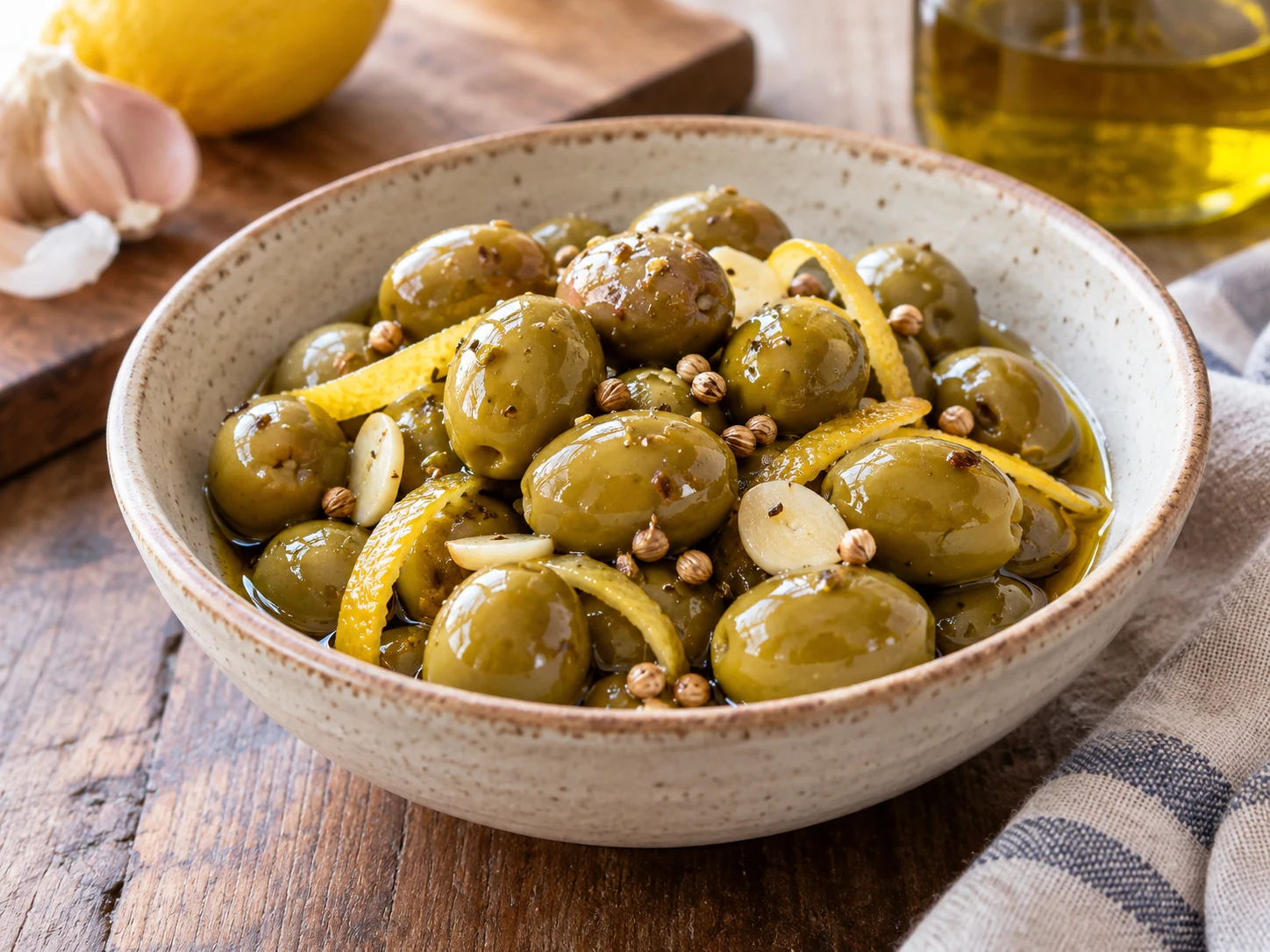
2.1. Production and varieties The Maghreb, with Tunisia leading, followed by Morocco, Algeria, Libya, and Egypt, ranks among the world's largest producers of olives (for table and oil). African varieties are renowned for their adaptability: • Chemlali (Tunisia), Picholine (Morocco), Sigoise and Azzeradj (Algeria), olives from Beja, Sfax, Meknes, Rif, Chott… • Green fruits (harvested young), black (picked ripe or by natural or accelerated oxidation), sometimes pinkish or purplish. The harvest often remains a family and community act: hand-picking, beating the branches with sticks (gaulage), collecting on nets – periods of collective joy and solidarity. 2.2. From olive to table After harvesting, olives undergo several transformations, depending on their use: • Debittering: soaking in clear water, lye, salt, or lactic fermentation, to remove the natural bitterness due to oleuropein. • Brining: preservation in a salt solution, sometimes vinegared or lemon-flavored, spiced. • Condiments and flavors: flavoring with harissa, maquis herbs, garlic, fennel, orange zest, or even “cracking” (olives cracked by hand) for more tenderness. Many families perpetuate the tradition of the “homemade” jar, with ancestral recipes, jealously guarded. 2.3. Family and national economy • The olive tree provides sustenance for millions of farmers, pickers, agricultural workers, and artisan confectioners. • Cooperatives (Tunisia, Morocco, Algeria) structure the sector; women and children are often major players in the processing, preparation, and sale of table olives in markets. • Export: African olives (especially Moroccan and Tunisian) are sold worldwide, on diaspora tables and in specialty grocery stores.
3. Culinary uses of the olive in Africa
3.1. The Maghreb: olives at every meal a) Breakfast and snack In many families, warm bread, fresh olive oil, and olives are served at the morning table: often enhanced with fresh herbs, marinated peppers, white cheese, or dates. b) Tagines, couscous, slow-cooked dishes In Moroccan, Algerian, Tunisian cuisine: • Green or purple olives are incorporated into chicken, lamb, or fish tagines: they flavor the sauce, balance acidity, add crunch, and enhance the presentation. • Tagine zitoun (olives), a Maghrebi classic, consists of meat, potatoes, and carrots simmered in a lemon sauce, enhanced with candied olives. c) Salads and appetizers • Méchouia salad (Tunisia, Morocco): black olive as a topping for grilled vegetables (peppers, tomatoes, onions, sometimes tuna). • Taktouka, zaalouk, chlada…: all invariably finish with a generous handful of pitted or whole olives. d) Festive accompaniments • Appetizer platter: spicy olives, cracked lemon olives, stuffed olives, harissa olives. • Olive bread, turnovers, m'semen or batbot (Moroccan flatbreads) garnished with olives. e) Street food and fast food • Sandwiches (egg, kefta, tuna, sardines) enriched with chopped olives. • “African” pizza (with tomato sauce and black olives). • Fritters, olive-filled crepes – often present at festivals, in markets. 3.2. Egypt: the olive in culinary heritage • Green olives with cumin and coriander, in salads, accompanying “ful medames” (stewed fava beans). • Slow-cooked dishes, stews, tagines, often garnished with flavored olives, particularly in Coptic cuisine. 3.3. Sub-Saharan Africa and the diaspora While the olive, historically absent, appeared later, it is gradually becoming popular: • In urban gastronomy (pizzas, sandwiches, “braised chicken with olives”), • In Mediterranean restaurants from Abidjan to Dakar, from Lagos to Johannesburg, • Fusion in Senegalese couscous, revisited bissara (a Moroccan fava bean soup), and the cuisine of the European or Maghrebi diaspora.
In my books

Continue exploring the continent’s cuisines with Africa at the Table — 54 countries, 54 iconic dishes, by Alioune FALL. This book is in English.
Explore further
4. Nutritional value and benefits
4.1. The virtues of the olive • Rich in monounsaturated fatty acids (oleic acid), beneficial for the heart. • Polyphenols, antioxidants, vitamin E, which protect cells and skin. • Source of minerals: calcium, iron, sodium (be careful of excess for people monitoring salt intake). • Low glycemic index, well tolerated by diabetics. 4.2. Health role in tradition • The olive is used during fasting cures, to treat stomach ailments, ensure joint flexibility, and prevent winter fatigue. • It promotes digestion, stimulates appetite, and “chewing” it is reputed to be good for teeth and mouth in rural areas.
5. Symbolism, transmission, and memory
• The olive, fruit of sharing: the Maghrebi table is inconceivable without shared bread, olive oil, and olives. • Symbol of peace, blessing, and light: many proverbs, songs, poems are dedicated to the olive tree (“olive branch”, “fruits of patience”, “green gold of the Maghreb”). • Object of family transmission: harvest from generation to generation, jealously guarded candied olive recipes, competitions for the best olive in the market or village.
6. Contemporary challenges and modernity
6.1. Agriculture, development, and climate • The olive, victim of climate change: droughts, diseases, yield reduction, encourage the development of agroecology, the selection of resistant local varieties. • Promotion of organic, short supply chains, enhancement of organoleptic and aromatic heritage. 6.2. Innovation and markets • Rise of olive-bars, “premium” street food, new culinary applications, healthy snacking (spicy olives, lemon olives…). • Integration of the olive into contemporary African gastronomy: verrines, purees, olive espuma, olives in dessert. 6.3. Safeguarding heritage • Role of women and cooperatives in harvesting, selling, processing, • Initiatives to safeguard old olive trees, olive festivals in many regions.
Conclusion A fruit of memory, light, and peace, the olive is much more than an ingredient in African cuisine: it is an agricultural anchor, social wealth, a link between tradition and modernity. On every table in the Maghreb, Egypt, and now among urban Sub-Saharan youth and the diaspora, it brings together, through its flavor, symbolism, and versatility, the strength of African land and the genius of living together. Preserving, transmitting, and innovating around the olive means protecting the vitality, authenticity, and splendor of African cuisine of yesterday, today, and tomorrow.
In the kitchen : Olive
Recipes from the site to put your knowledge into practice:
Discover these cuisines at a restaurant
Explore our restaurant and caterer directories. Choose your destination and check the establishment’s menu to confirm which dishes are offered and available.
Continue exploring
Enjoy discovering ingredients and African cuisines? Join our newsletter. The illustrated PDF 10 sauces africaines incontournables is in French and is offered after confirming a subscription to the French or bilingual edition.