Basil
African continent
Understanding : Basil
Introduction
Basil (Ocimum) embodies the scent of life, the freshness of the garden, the memory of home, and the boldness of African cooking pots. Present both in the continent's indigenous botanical heritage and transmitted since antiquity through the routes of the Mediterranean, the Arab Gulf, or colonial and diasporic contacts, basil is today an essential – and sometimes unsuspected – component of African cuisine. An ingredient in stews, sauces, broths, fritters, or drinks, it is also an ally in folk medicine, a good luck plant, a symbol of celebration and family transmission. From the Maghreb to the Gulf of Guinea, from the Horn of Africa to the Indian Ocean islands, basil (and its many local cousins) slips into dishes, herbal teas, offerings, connecting body and soul, rural and urban, tradition and contemporary creation. Let's delve into the diversity, history, and living place of this herb in the great African culinary mosaic.
Where to find it
Look for the exact food-grade form required by the recipe at markets and specialist shops. Check the product name, ingredients, condition and storage instructions.
Explore further: Cooking tips · Food hygiene and safety advice.
History and uses
1. Botanical origins, diversity, and diffusion
1.1. Basil species The genus Ocimum comprises nearly 150 species, annual or perennial, distributed mainly in tropical and warm regions. At the heart of African cuisine, we notably distinguish: • Ocimum basilicum (sweet basil or “common basil”; native to Asia, but widely cultivated in Africa, in the Maghreb as well as south of the Sahara). • Ocimum gratissimum (African basil, “clove basil”, “Efinrin” in Nigeria, “Tchayo” in Benin, “Nchanwu” in Igbo, “Ntong” in Yoruba, “Aramroro” in Togo...) : a bushy plant with large clove-scented leaves, indigenous to Africa. • Ocimum tenuiflorum / sanctum (holy basil, “Tulsi” in India, but also naturalized in East Africa). • Other local forms (lemon basil, purple basil...) enrich the African heritage. 1.2. Historical diffusion • North Africa and Mediterranean: sweet basil was established from Greco-Roman times, then Muslim (Andalusian gardens, oases, Berber vegetable gardens). • Sub-Saharan Africa: Ocimum gratissimum is native or naturalized for centuries, circulating with Bantu cultures, Yoruba, Ewe, Fon, and Bamileke traditions. • East Africa and islands: introduction of holy basil through Swahili, Indian, Arab exchanges. • European colonization and modern migrations: reintroduce or spread varieties from Europe, Asia.
2. Botany, cultivation, and economy
2.1. Robust and generous plant • Basil is easily sown, tolerates heat, relative drought, thrives in home gardens, on balconies or roadsides. • Leaves are picked regularly, encouraging regrowth: it is a culture of sharing and abundance. • Picked fresh on the plant, sold in bunches in markets, sometimes dried or processed into local pesto/condiments. 2.2. Economic weight • Small market gardeners, market vendors, “neighborhood gardeners” live (in part) from selling bunches of basil, just like parsley or mint. • Growing use in urban restaurants, street food, but also in cosmetics and artisanal pharmacopoeia (herbal teas, perfumes, essential oils).
3. Role and uses in African cuisine
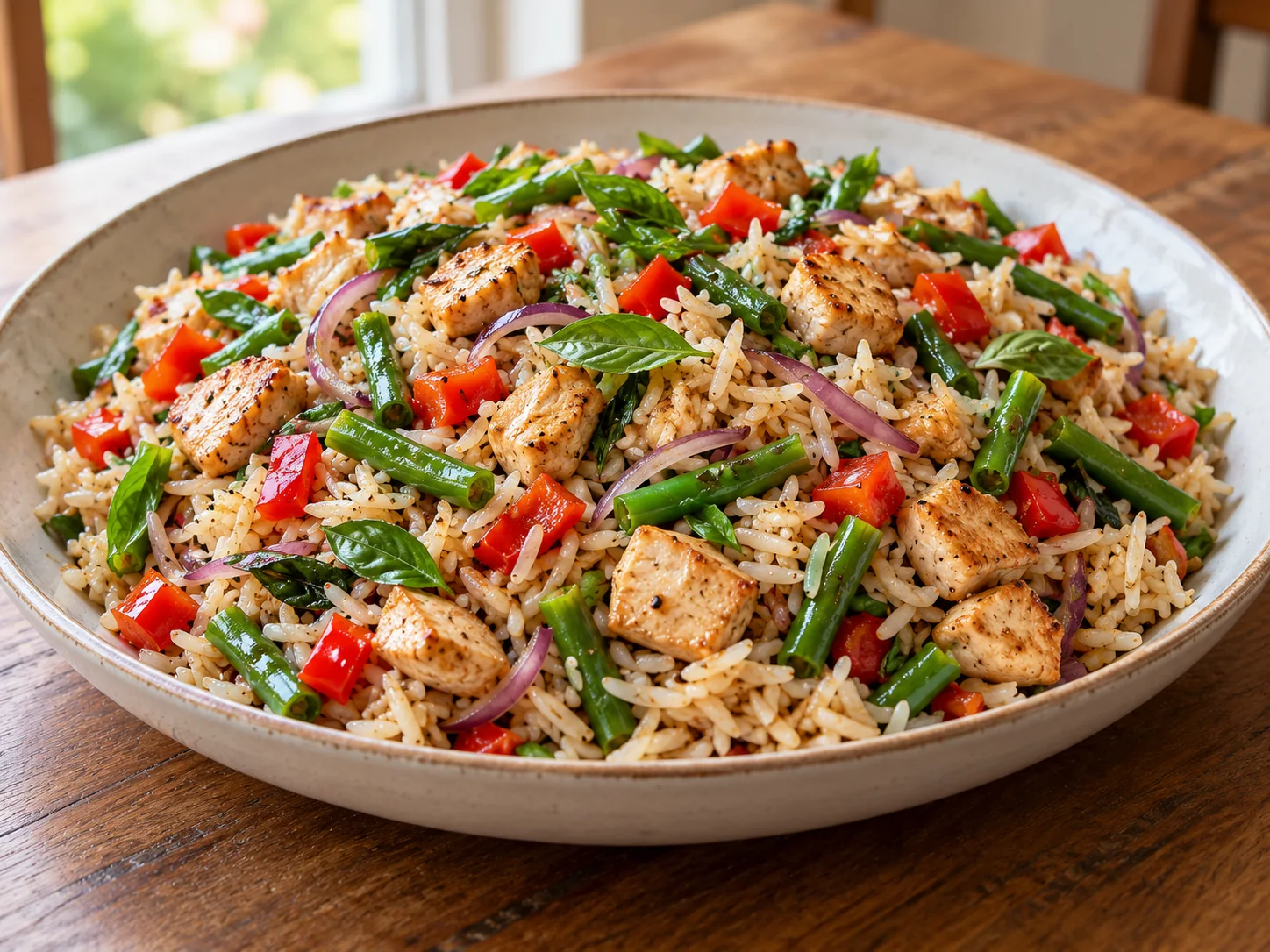
3.1. West Africa: the empire of Ocimum gratissimum • Basic soups and sauces: in Nigeria, Benin, Cameroon, Togo, Ghana, African basil (“efirin/tchayo/nchanwu”) is widely consumed in “light” soups, “pepper soup”, hoja de maní (peanut leaf) sauces, gnagnan sauces, egusi (melon seeds), ndolé, kédjénou. • Fish or meat soups: flavored broth, called “Scent leaf soup” or “nchanwu soup”. • Rice, beans, pounded yam, dumplings or fritters: addition of chopped basil to enhance the flavor. • Everyday and festive: daily cauldron dish, but also an ingredient in communal pots during funerals, weddings, baptisms. 3.2. Central and Francophone Africa • Fresh leaves in leaf sauces (cassava leaves, eru, saka-saka), sautéed or pounded with dried fish/shrimp, meat, peanuts. • Skewers, grilled fish, tomato-chili sauce: marinade enriched with basil for flavor. • Sautéed green vegetables, omelets, fried rice: a final touch of “garden basil”. 3.3. North Africa • Salads and mezze: fresh basil in tomato salads, tabbouleh, harissa or cucumber salads, molasses, brick fillings. • Tagines and couscous: spicy tomato sauce, lamb with basil, simmered summer vegetables. • Soups (harira, chorba), spreads and homemade breads. 3.4. East Africa, Madagascar and islands • Swahili curries: fresh basil in coconut milk sauces, fish dishes, pilau rice. • Malagasy and Reunion cuisine: chopped leaves in vegetable achards (pickled vegetables), “rougails” (spicy tomato-based condiments), brèdes (edible leafy greens), chicken or fish soups. • Teas, herbal teas, flavored drinks, welcome infusions (tulsi/holy basil in Tanzania, Kenya). 3.5. Street food, fusion cuisine and contemporary dining • Afro pizza, sandwiches, burgers, “urban food” salads: fresh basil or pesto. • Vegan dishes, detox smoothies, health-food sauces: basil combined with lemongrass, moringa, ginger, cucumber.
In my books

Continue exploring the continent’s cuisines with Africa at the Table — 54 countries, 54 iconic dishes, by Alioune FALL. This book is in English.
Explore further
4. Symbolism, culture and transmission
4.1. Protective and spiritual plant • Symbol of purity, peace, blessing and prosperity in many African cultures. • Hung above the threshold of the house, to ward off the evil eye, perfume the air, protect from bad luck. • Used in blessing rituals (basil water sprinkled during births, weddings, fits of anger, illnesses). • In Yoruba, Igbo, Ewe culture: element of funeral, propitiatory rituals, and weddings “to attract good luck”. • Natural incense during prayer or meditation. 4.2. Transmission rites and gastronomy • The secret of the “true” basil dish is passed down from mother to daughter, from neighborhood to neighborhood, from chef to apprentices. • Generational change: basil is presented as “the herb that never lies” – a mark of care, respect for taste.
5. Medicinal and nutritional properties
5.1. Essential nutrients • Vitamins: rich in vitamin K, C, A, folates. • Minerals: potassium, calcium, magnesium, iron. • Volatile compounds: eugenol, linalool, camphor, responsible for anti-inflammatory, antiseptic, digestive properties. 5.2. Use in traditional medicine • Leaf infusions: against colds, coughs, respiratory infections. • Digestive herbal teas: for gastric problems, bloating, colic. • Poultices: crushed fresh leaves applied to stings, small cuts or eczema. • Basil steam bath: used to purify or clear respiratory passages. 5.3. Modernity and scientific research • Growing recognition of basil as a medicinal plant integrated into African pharmacopoeia. • Use in aromatherapy, cosmetics, perfumery (soaps, oils, lotions, relaxing baths). • Interest in its anti-bacterial, anti-fungal, antioxidant properties in the fight against infections.
6. Heritage, contemporary issues and modernity
6.1. Threats and conservation methods • Disappearance of certain indigenous varieties due to agricultural standardization, pesticides or competition from imported herbs. • Oral transmission sometimes threatened, but renewed interest among urban youth for herbalism, home cooking, community gardens. 6.2. Culinary innovation • African fusion cuisine: burgers, sushi, tartares, pizzas, Afro “healthy food” dishes with basil. • Development of processed products: African pesto, organic seasoning powders, detox juices, infusions. • African diaspora: reinvention of basil in hybrid dishes in France, the United States, England, Brazil (“manjericão africano”, influence on feijoada...). 6.3. Link with environment and resilience • Basil associated with moringa, lemongrass and other medicinal plants is promoted in strategies for medicinal gardens and preventive health. • Integration into environmental education and beekeeping programs (basil attracts pollinators).
Conclusion Basil is not just a simple herb in African cuisine: it is a bridge between the visible and the invisible, a memory of the land and families, a treasure of health and taste. From daily life to great celebrations, from the rural cooking pot to modern gastronomy, it carries the vitality, uniqueness, and hospitality of the continent. To transmit, preserve and reinvent basil is to keep alive the Africa of living gardens, natural health, and generous cuisine that forgets neither its roots nor its openness to flavors from elsewhere.
In the kitchen : Basil
Recipes from the site to put your knowledge into practice:
Discover these cuisines at a restaurant
Explore our restaurant and caterer directories. Choose your destination and check the establishment’s menu to confirm which dishes are offered and available.
Continue exploring
Enjoy discovering ingredients and African cuisines? Join our newsletter. The illustrated PDF 10 sauces africaines incontournables is in French and is offered after confirming a subscription to the French or bilingual edition.