Avocado
Mexico, Central America
Understanding : Avocado
Introduction
Arriving late on the African continent, the avocado (Persea americana) has, in a few decades, become deeply rooted in the dietary habits, peasantry, and gastronomy of many regions of the continent. Renowned for its creamy texture, delicate flavor, versatility, and nutritional benefits, this “butter” fruit, originating from Central America, has adapted to African soil, inspired remarkable culinary creativity, and established itself as a strategic economic commodity in both rural daily life and trendy urban tables. Today, avocado plays a growing role in African cuisine: it accompanies salads, street food, sauces, desserts, and contributes to the modernization of the continent's food practices.
Where to find it
Look for the exact food-grade form required by the recipe at markets and specialist shops. Check the product name, ingredients, condition and storage instructions.
Explore further: Cooking tips · Food hygiene and safety advice.
History and uses
1. Origin, spread, and production of avocado in Africa
1.1. Mesoamerican origins and introduction to Africa Avocado originated in Mexico and Central America, where it was domesticated over 7,000 years ago. Its global spread is recent: it only arrived on the African continent from the 19th century onwards, first via South African colonial trading posts, then in the mountainous regions of Morocco, Algeria, East and Central Africa, and finally in West Africa in the 20th century. 1.2. Expansion of cultivation The avocado tree adapts perfectly to cool and humid altitudes, subtropical zones, and even some African coastal plains. Today, the main producing countries in Africa are: • East Africa: Kenya (Africa's largest producer and exporter), Ethiopia, Tanzania, Rwanda, Uganda, Madagascar • Southern Africa: South Africa (historical leader), Zimbabwe, Mozambique, Swaziland • North and West Africa: Morocco, Algeria, Cameroon, Ivory Coast, Ghana, Nigeria, Equatorial Guinea African avocado is exported to Europe, the Middle East, and Asia, but it also remains a valuable resource in local food. 1.3. Diversity of cultivated varieties The most common varieties in Africa: • Hass: small size, granular skin, good for export, strong taste, optimal preservation. • Fuerte: elongated, smooth green skin, highly appreciated for its creamy texture. • Nabal, Puebla, Pinkerton, Ettinger, Bacon…: local or introduced varieties, often adapted to the local terroir.
2. Biology, agricultural cycle, and economy
2.1. Biology and production • The avocado tree is an evergreen tree, sometimes living for more than 50 years, fast-growing, reaching 10–20 meters depending on the variety and maintenance. • Its fruits are harvested manually, several times a year depending on the variety and altitude, and require few pesticides or chemical inputs (“bio-friendly” cultivation in Africa). 2.2. Economic importance • Avocado provides a livelihood for tens of thousands of small producers: it provides supplementary or primary income for rural families. • Wholesale markets in Nairobi, Casablanca, Johannesburg, Abidjan, Accra, Douala experience peak attendance during avocado season. • Young African agricultural entrepreneurs are increasingly investing in processing (avocado oil, cosmetics, juice, guacamole, snacks).
3. Place of avocado in African cuisine
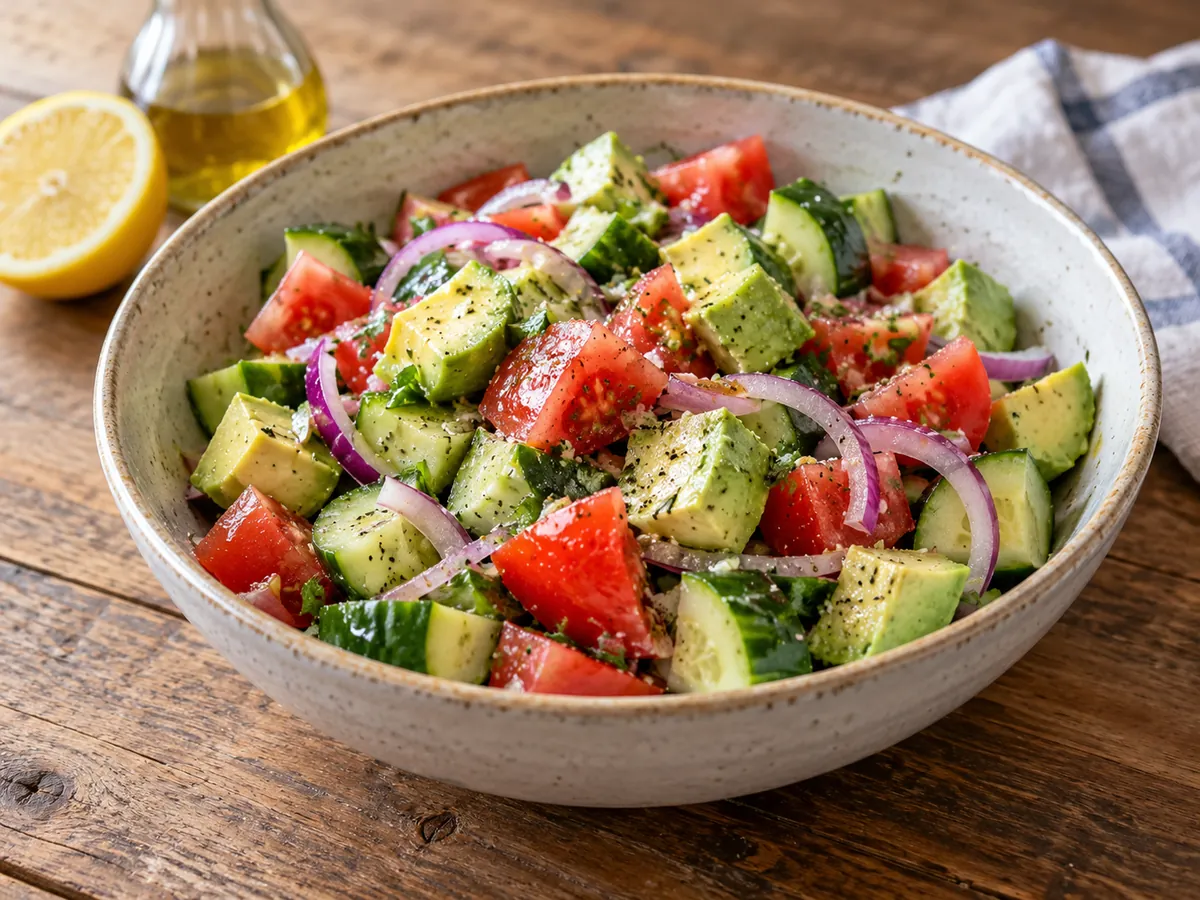
3.1. Ordinary and refined use • Avocado perfectly meets the demand for practical, quick, nutritious, and fresh foods. A ripe fruit, cut in half, salted or sweetened, constitutes a meal or snack for millions of Africans. • Its creamy texture makes it a versatile ingredient: it is incorporated into both traditional and modern dishes. 3.2. Recipes and regional uses a) East Africa (Kenya, Tanzania, Uganda, Rwanda, Ethiopia) • Peasant breakfast: avocado pieces with a pinch of salt, lemon, fresh chili, accompanied by local bread (“chapati”) or ugali (a stiff porridge made from cornmeal or other flours); sometimes mashed on toast. • “Katchumbari” salads: avocado cubes with tomatoes, onions, coriander, lemon, chili, accompanying pilau, grilled fish, or meat skewers. • Street food: avocado bread sandwiches, wraps, burgers, stuffed omelets. • Fresh juices and smoothies: avocado blended with milk, banana, sugar, or in a “juice blend” (sometimes served in restaurants or hotels). b) West Africa (Ivory Coast, Ghana, Cameroon, Nigeria, Senegal) • Avocado “Nigerian style”: accompanied by red palm oil, salt, onions, sometimes yams or gari (a granular flour from cassava). • In Ivory Coast, “avocado lunch”: ripe avocado, drizzled with lemon/lime, pinch of salt, sometimes garlic or chili, eaten with plantains or attiéké (a couscous-like dish made from cassava). • Festive salads: avocado, onion, cucumber, shrimp, sardines, tuna, corn. • “Sweet potato and avocado puree” revisited by chefs. • Avocado in street food: served in a tray with other fruits, sold by the slice in markets. c) North Africa (Morocco, Algeria, Tunisia, Egypt) • Mediterranean salads: avocado, tomato, cucumber, black olives, parsley, lemon, and olive oil – omnipresent in urban restaurants. • Sweet avocado: mashed with condensed milk, sugar, sometimes flavored with orange blossom, as a dessert or smoothie. • Avocado as a refined starter: combined with shrimp, pomegranate seeds, virgin olive oil. d) Central Africa (Cameroon, Gabon, Congo, DRC, Equatorial Guinea) • Avocado as an accompaniment to grilled fish: roasted with alloco (fried plantains), chili sauce. • Green sauces and local “dips”: avocado blended with spices and herbs as a condiment or sauce for cassava broth, fufu (a staple food made from starchy root vegetables), smoked fish. • Spreads: mashed with peanuts or cashews. • Fufu or cassava with avocado revisited by fusion cuisine. e) Indian Ocean and Southern Africa • Mauritius/Madagascar: avocado salads, cold sandwiches, used as appetizers in Creole or Franco-Mauritian cuisine. • South Africa: “avocado toast” breakfast, in vegan cuisine, Afro-Mediterranean fusion dishes. 3.3. Innovation and modern gastronomy • African guacamole: variations with moringa, lime, garlic, sweet onions, chili, often with cassava or sweet potato chips. • Afro burgers: avocado as a “vegetable steak”, healthy topping, avocado mayonnaise. • Desserts: avocado mousse, ice creams, cheesecakes, pastries. • Diaspora cuisine: “Africanized” avocado has become a brunch star in Paris, London, New York.
In my books

Continue exploring the continent’s cuisines with Africa at the Table — 54 countries, 54 iconic dishes, by Alioune FALL. This book is in English.
Explore further
4. Nutritional, medicinal, and heritage virtues
4.1. Nutritional value • Rich in “good” lipids: monounsaturated fatty acids (oleic acid, like olive oil). • Source of soluble fiber: promotes satiety, transit, cholesterol control. • High intake of vitamins E, K, B (especially B6, folic acid) and minerals (potassium, magnesium, copper). • Powerful antioxidants: carotenoids, lutein, zeaxanthin, prevention of cardiovascular diseases, cellular aging. • Low in sugar, good for diabetics. 4.2. Medicinal and customary uses • Used in African gentle medicines: pulp-based lotion for dry skin, burns, skin conditions. • Seeds ground into powder in some cultures, for digestive use or migraines (caution: some parts are toxic!). • Hypoallergenic oil extracted from avocados, prized by African organic cosmetics. 4.3. Symbolism • Avocado is often considered a fruit of luck, friendship, fertility (it is offered as a gift at births or weddings, especially in East Africa). • Represents health, modernity, “success” for the urban middle class.
5. Agricultural, economic, and cultural challenges
5.1. Agricultural challenges • Increased competition for land, soaring exploitation for export (to Europe, the Middle East). • Risks of water scarcity for intensive cultivation: need for sustainable management (agroforestry, permaculture). 5.2. Rural development and employment • Dynamic avocado sector, creating jobs for young people and women (picking, packing, transport, processing). • Growth of local markets, prices sometimes more accessible than imported butter or oil. 5.3. Modernity, heritage, and diaspora • Avocado symbolizes the modernization of African cuisine, its ability to absorb and revisit global trends (health, vegetarianism, brunch, “street-to-bistro”). • Afro-diasporic cuisines (Europe, America, Asia) use it to bridge the gap between memories of rural Africa and the audacity of the global city, marrying avocado, millet, yam, cassava, grilled fish, or plantain. 5.4. Education and public health • Awareness campaigns in several countries: fight against malnutrition, encouragement of avocado consumption among children, mothers, the elderly, or the sick. • Integration of the fruit into school menus, hospitals, nutritional centers, rural NGOs.
Conclusion Avocado has conquered African cuisine with its silky texture, versatility, and nutritional benefits, but also thanks to the imagination of countless cooks, street chefs, restaurateurs, and rural families. At the heart of a salad, a sandwich, a bowl of fufu, or in a smoothie, it tells a story of adaptation, creativity, and a link between health, pleasure, and tradition. Driven by agricultural dynamics, the enthusiasm of urban markets, and contemporary gastronomic innovation, avocado is today a link between terroirs and modernity, between rural Africa and globalized metropolises. Preserving, valuing, and cooking avocado in Africa means betting on the diversity, resilience, and future of a vibrant, nourishing, and audacious cuisine.
In the kitchen : Avocado
Recipes from the site to put your knowledge into practice:
Discover these cuisines at a restaurant
Explore our restaurant and caterer directories. Choose your destination and check the establishment’s menu to confirm which dishes are offered and available.
Continue exploring
Enjoy discovering ingredients and African cuisines? Join our newsletter. The illustrated PDF 10 sauces africaines incontournables is in French and is offered after confirming a subscription to the French or bilingual edition.