Lemongrass
Southeast Asia, India
Understanding : Lemongrass
Introduction
Fresh, vibrant, and bursting with an intense lemony fragrance, lemongrass (Cymbopogon citratus), also known as “verveine des Indes,” “lemongrass leaf,” or simply “lemongrass” in English, holds a special place in African traditions. As a fragrant plant, medicinal herb, central ingredient in cooking pots, and a symbol of conviviality, it is at the heart of multiple practices – from daily meals to festive celebrations, from body care to hospitality, from rural markets to contemporary African cuisine. Originally from Asia, but established in Africa for centuries, lemongrass synthesizes the continent's ability to welcome, adapt, and magnify foreign botanical resources, while revealing its creative genius. Let's embark on a journey into the heart of this discreet yet crucial herb for both African health and taste.
Where to find it
Look for the exact food-grade form required by the recipe at markets and specialist shops. Check the product name, ingredients, condition and storage instructions.
Explore further: Cooking tips · Food hygiene and safety advice.
History and uses
1. Origins, Botany, and Spread of Lemongrass in Africa
1.1. Origin and Taxonomy Lemongrass belongs to the genus Cymbopogon, family Poaceae (grasses). Several species are called “lemongrass” in Africa, but the most known and used in cooking is Cymbopogon citratus (true lemongrass). There are also Cymbopogon nardus (Ceylon lemongrass) and Cymbopogon winterianus (Java lemongrass, more cultivated for essential oil). Originating from Southeast Asia and India, lemongrass was introduced very early to the coasts of East Africa, then gradually spread to the center, west, Indian Ocean islands, and even to urban markets throughout West, Central, Southern Africa, and the islands. 1.2. Growing Conditions and Adaptation A robust tropical plant, lemongrass loves heat and humidity, but it tolerates drought relatively well once established. — It grows easily in home gardens, on the edges of plots, in marshes, around villages, or in pots on urban balconies. — Its propagation by clump division is within everyone's reach, explaining its wide availability, even for modest families. 1.3. Continental Spread • East Africa and Indian Ocean: Kenya, Tanzania, Uganda, Mauritius, Madagascar, Reunion, Seychelles: a strong tradition of infusion and culinary use. • West Africa: Guinea, Ivory Coast, Ghana, Nigeria, Senegal, Burkina Faso: present in markets, urban and rural gardens. • Central and Southern Africa: Angola, DRC, Cameroon, Cape Verde, Mozambique, South Africa: daily use, from family herbal tea to street food and pharmacopoeia.
2. Botanical Characteristics
• Lemongrass is a perennial clump-forming herb, reaching up to 1.5 meters in height: long, thin, sharp, lustrous green leaves; thick, bulbous stems at the base. • It emits a fresh, powerful, lemony scent, due to its content of citral, geraniol, myrcene. • The most used part in cooking is the swollen, tender base: cut stems, chopped bulb, whole or finely chopped leaves.
3. Place of Lemongrass in African Cuisine
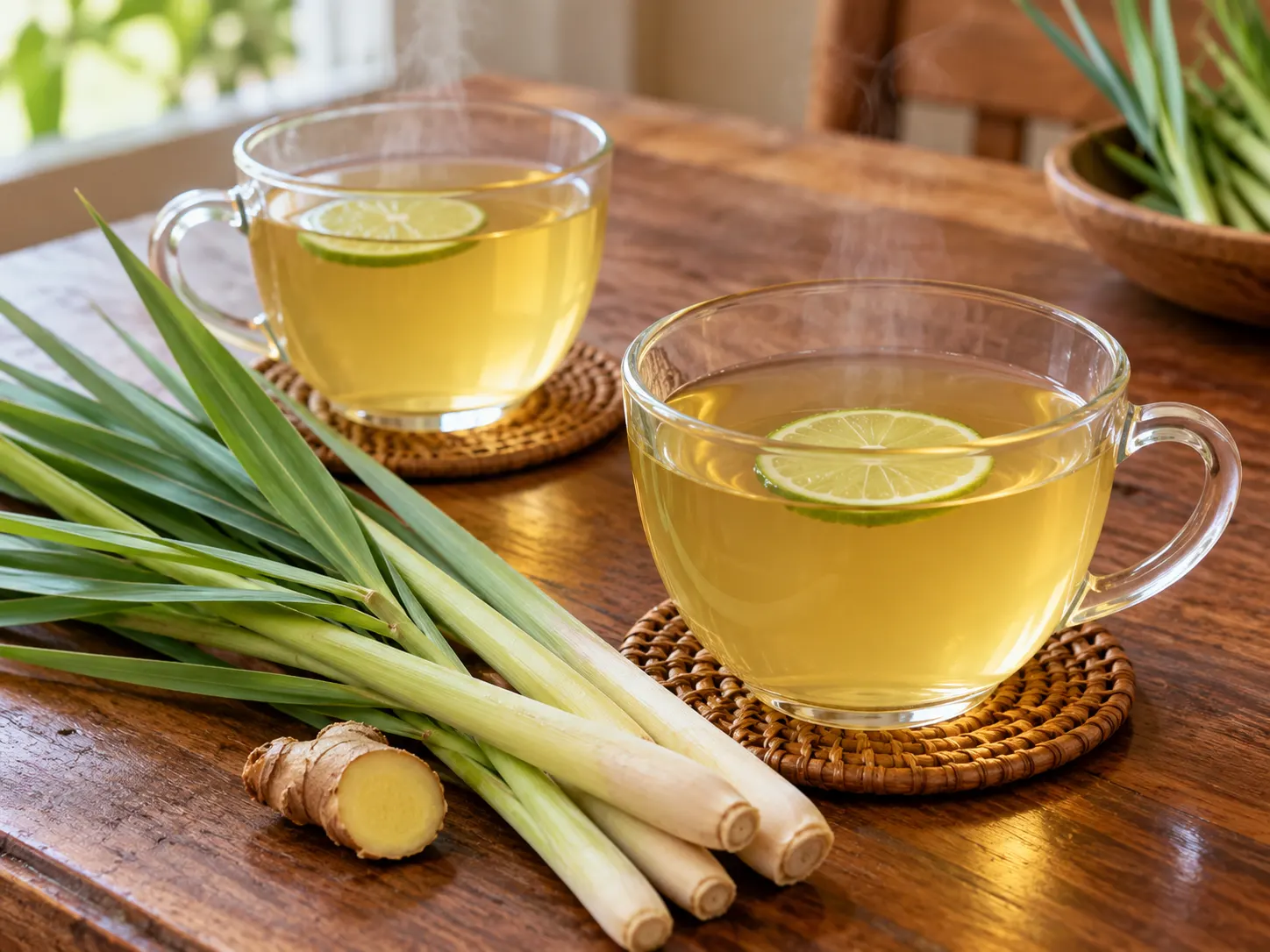
3.1. Basic Plant for Infusions and Beverages • Morning or evening herbal tea: in much of Africa, the most common drink to start or end the day remains “lemongrass herbal tea”: fresh stems or leaves cut into pieces, infused in hot water, sometimes with a hint of ginger or mint. — Infusion served to guests, a sign of welcome and health. • Revisited Bissap (hibiscus drink): throughout West Africa, lemongrass is included in the composition of hibiscus juice (“bissap”): it tempers the acidity, bringing a vegetal freshness. • “Tonic” or “detox” blends: lemongrass, ginger, lime, mint, moringa, hibiscus: an energizing drink popular with urban youth. • Street drinks: street vendors offer “lemongrass juice,” sometimes sparkling or enriched with honey, appreciated for their refreshing properties. 3.2. Marker of Broths, Soups, and Sauces • West and Central Africa: lemongrass often joins basic aromatics (onion, garlic, ginger, pepper, chili) to flavor soups, meat or fish broths, local risotto (riz gras, jollof, tchep), or “mafé” (peanut sauce). • Skewers, grilled dishes, and marinades: the chopped lemongrass bulb gives a deep and fresh flavor to meat marinades (braised chicken, grilled fish, kebabs, beef or lamb skewers). • Vegetable soups, chili sauces, local curries: introduced into the base or as a finishing touch, lemongrass gives body to the simplest dishes. • Rice and couscous: leaves placed at the bottom of the pot to flavor rice eaten alone or as an accompaniment to various sauces. 3.3. Influence on Swahili, Creole, and Island Cuisines • East Africa/Swahili: pilaf rice dishes, fish or vegetable curries, coconut soups, slow-cooked meat dishes — lemongrass completes the “ginger-chili-garlic” trio. • Mozambique, Madagascar, Comoros: Creole dishes (caris, massalés, brèdes), rougail sauce, punches, and infusions. • Street food and fusion gastronomy: lemongrass detox smoothies, sambos, revisited Thai-African soups, lemongrass fish ceviche, Afro-lemongrass burger. 3.4. Urban Modernity and Contemporary Gastronomy • African pesto, fresh lemongrass sauces for wraps, tacos, “modern street food” sandwiches. • Pastries and desserts: lemongrass crème brûlée, mango/lemongrass compotes or granitas, “Afro-healthy” fruit salad, lemongrass-flavored syringes, urban artisanal ice creams. • African cocktail bar: revisited mojitos, “fresh-press” juices, homemade lemongrass liqueur infusions for urban youth.
In my books

Continue exploring the continent’s cuisines with Africa at the Table — 54 countries, 54 iconic dishes, by Alioune FALL. This book is in English.
Explore further
4. Medicinal Virtues, Symbolism, and Transmission
4.1. Popular Medicinal Plant • Antiseptic, analgesic, digestive: lemongrass relieves digestive problems, headaches, menstrual pain, stress. • Anti-fever, anti-flu, anti-cough herbal tea: widely used in children and adults, often mixed with ginger and lemon. • Mosquito repellent: leaf decoction or essential oil are rubbed on the skin or diffused to repel insects, reinforcing malaria prevention. • Skin and hair care: “homemade” fragrant lotion based on lemongrass to treat pimples, irritations, or to strengthen the scalp. • For pregnant women: recommended (in moderation) to facilitate digestion, calm anxieties. 4.2. Symbols, Rituals, and Social Space • Symbol of welcome and friendship: offering a lemongrass infusion means opening one's home, signifying peace, care, protection (especially in the Sahel, Cameroon, Benin). • Purification ritual: used in baths, incense, in certain traditional rites to “drive away evil spirits,” soothe the home, bless a newborn. • Rites of passage and healing: lemongrass is integrated into certain spiritual bath preparations, during healing rites, mourning, or reunions. • Proverbs and tales: “He who begins with lemongrass ends beautifully,” “hot water and lemongrass never quarrel,” testifying to the place of this herb in popular imagination. 4.3. Transmission and Know-how • Grandmothers and mothers teach their children to recognize, pick, dry, preserve, and infuse lemongrass. • Daily knowledge, but also the pride of the “little extra” that transforms an ordinary dish or drink into a festive moment.
5. Economy, Production, and Contemporary Issues
5.1. Production and Local Economy • Cultivated on a small scale in family gardens, but also in community and market garden farms, increasingly exploited for export for its essential oil (Nigeria, DRC, Ghana, Cameroon, Madagascar). • Source of income for thousands of women, pickers, and small local entrepreneurs: sale of bundles, sachets, stems at the market, processing into herbal tea or artisanal oils. 5.2. Agroecology and Biodiversity • Low-maintenance plant, promotes crop rotation, protects the soil (mulching effect, erosion control), attracts pollinating insects. • Recommended in permaculture and agroforestry systems for its “natural barrier” action against certain pests and for its tolerance to water stress. 5.3. Modernity, Export, and Cosmetics • Africa is becoming a producer and exporter of pure lemongrass essential oils, prized in the cosmetic, pharmaceutical, and perfumery sectors. • Development of “organic African” brands (herbal teas, infusions, massage oils, soaps, perfumes, lemongrass creams). • Integration into urban cafes, juice bars, wellness spaces, culinary concept stores of the diaspora.
6. Living Heritage, Challenges, and Perspectives
6.1. Food and Health Resilience • Its integration into daily diets contributes to infection prevention, improved digestive health, and immune system strengthening (especially during health crises or pandemics). • Key role for rural and urban populations with limited access to medicines. 6.2. Challenges: Standardization, Biodiversity Loss, “Urban Forgetting” • Vulnerability to industrial overconsumption, impoverishment of know-how (preference for instant herbal teas at the expense of local picking and cultivation). • Need to reintegrate lemongrass into community gardens, natural health policies, rural schools. 6.3. Heritage Valorization and Innovation • Shared pride during festivals, culinary competitions, agroecological events, intergenerational transmission workshops. • African chefs, young entrepreneurs, baristas, pastry chefs highlight lemongrass in contemporary creations, from “tradi-futuristic” cocktails to “fusion” pastries.
Conclusion Lemongrass is much more than a simple herb: it is a link between medicine and gastronomy, nature and society, memory and novelty, woman and earth, family and community. From morning herbal tea to festive sauce, from village gardens to urban starred tables, it irrigates African vitality, creativity, and resilience. Preserving, cultivating, transforming, and transmitting the culture of lemongrass is to guarantee African cuisine a future fragrant with health, ingenuity, and infinite hospitality.
In the kitchen : Lemongrass
Recipes from the site to put your knowledge into practice:
Discover these cuisines at a restaurant
Explore our restaurant and caterer directories. Choose your destination and check the establishment’s menu to confirm which dishes are offered and available.
Continue exploring
Enjoy discovering ingredients and African cuisines? Join our newsletter. The illustrated PDF 10 sauces africaines incontournables is in French and is offered after confirming a subscription to the French or bilingual edition.