Curdled milk
African continent
Understanding : Curdled milk
Introduction
A symbol of purity, abundance, pastoral art, and conviviality, curdled milk (also called “fermented milk,” “traditional yogurt,” “féné,” “leben,” “amasi,” “jiǔbilo,” “ngali,” “sour milk,” “dahi,” “shubat,” depending on languages and regions) has held a central place in African culture and gastronomy for centuries. From the Fulani calabash (a type of gourd used as a container) of the Sahel to the urban stall in Senegal, from the mountains of Ethiopia to the Zulu village courtyard, from Tuareg festivals to Baoulé markets, curdled milk embodies the ingenuity of African peoples in enhancing fresh milk through fermentation, ensuring durability, nutrition, and pleasure. Much more than a drink or a dessert, curdled milk is a rite of passage, a marker of identity, a vector of sociability and transmission. It combines the art of the animal with that of microbial transformation, the delicacy of taste with dietary robustness, tradition with urban modernity. Here is a complete journey into the world of curdled milk and its dynamic place in African cuisine.
1. Origins, history, and spread of curdled milk in Africa
1.1. Pastoralism, birth of fermented milk The transformation of milk into curdled milk dates back more than 8,000 years, probably originating during the transition to pastoralism and domestic animal husbandry, when humans sought to preserve fresh milk, a perishable commodity in African climates. • Peoples concerned: Fulani, Tuareg, Maasai, Berbers, Fulanis, Oromos, Afars, Zulus, Xhosas, Bambaras, Hausas, Tutsis, Himbas, and many others. • Animals involved: cows (Zebu, Taurine or “Bos taurus”), goats, sheep, camels, buffaloes. 1.2. Traditional techniques and regional diversity Each culture has its techniques and containers: • Calabashes, clay pots, leather pouches, jars, cans: supports that are both symbolic and functional, often smoked inside to flavor and promote a good microbial strain. • “Homemade” strains: oral transmission of gestures (cleaning, smoking, adding ferments from a previous curd, patience, induction of fermentation). • Famous regions: Sahel (Mali, Niger, Burkina Faso, Senegal), Ethiopian Highlands (Ergo, Suusa), East Africa (South African Amasi), Maghreb (leben, rayeb), Horn of Africa, East Africa (yogurt, mala). 1.3. Importance of routes and influences Trans-Saharan trade routes, Muslim pilgrimage, colonization, and the mobility of African agro-pastoral peoples contribute to the spread of techniques and the diversification of tastes.
2. Production, fermentation, and science
2.1. Preparation steps • Milking: cow, zebu, goat, sheep, camel. • Filtering raw milk, sometimes boiling it for safety. • Cooling to room temperature. • Inoculation: introduction of a little previous curdled milk, or spontaneous fermentation thanks to ferments present in utensils and the environment. • Long fermentation (6 to 48h): slower in clay or wooden pots, faster in hot climates; progressive thickening, slightly tangy taste. 2.2. Variants and subtleties • Adding fresh milk during or after fermentation to adjust creaminess. • Mixing milks (goat/cow, cow/camel) to combine aromas, textures, nutritional benefits. • Skimming, beating, mixing for various textures (sometimes creamy, sometimes grainy). • Draining whey (serum) according to regional preferences (firm gel or more liquid drink). 2.3. Science of ferments Traditional curdled milk harbors an incredible diversity of lactic acid bacteria: Streptococcus thermophilus, Lactobacillus delbrueckii, Leuconostoc, Enterococcus… They transform lactose into lactic acid, lowering the pH, modifying the color, texture, and stability of the milk, while contributing to food safety (protection against pathogens).
3. Culinary uses and place in the African table
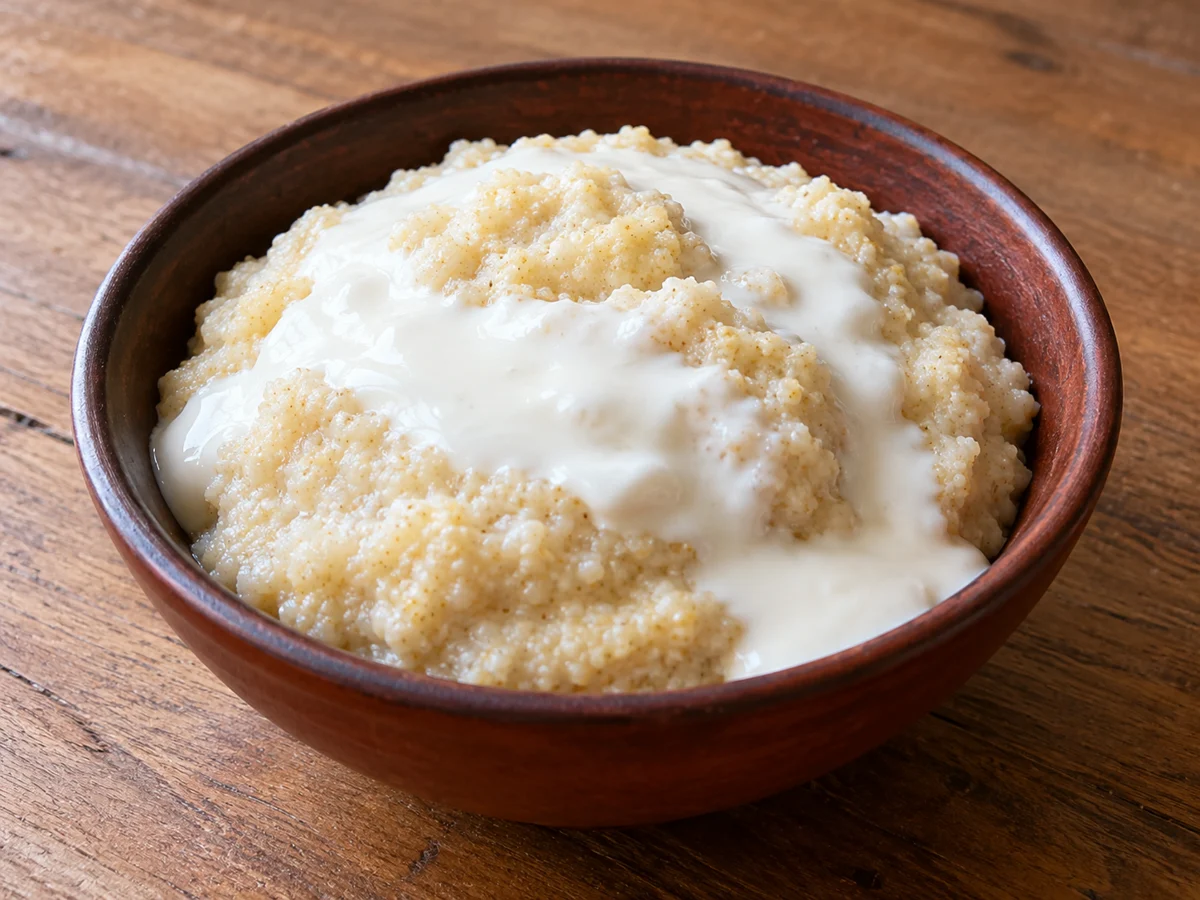
3.1. Thirst and hunger drink • Communal snack: calabash of curdled milk shared in the center of the family circle, among friends, travelers, or community members. • Breakfast: bowl of pure curdled milk or diluted with water, sometimes mixed with honey, sugar, millet, or rice. • Snack and dessert: appreciated for its freshness, tangy sweetness, and digestive lightness, especially by children and the elderly. • Main meal during times of scarcity or fasting, or to break the fast during Ramadan (Sahel, Maghreb). 3.2. Association with cereals: the key to complementarity • Millet, Sorghum, Fonio, Corn: pounded, cooked, or fermented cereals, mixed with curdled milk to make fresh sauces, porridges (“dèguè,” “latchè,” “gappal,” “ossèssè,” “kossam,” etc.), or to accompany couscous. • To, tuwo, ogi, nsima, fura, kenkey, ting: grain breads/porridges drizzled with curdled milk during major events. • Meals for Tabaski (Eid al-Adha) festival, funerals, baptisms: curdled milk is offered to guests as a sign of respect or blessing. 3.3. Ingredient in modern cuisine or catering • Sauces: thickened curdled milk transformed into sauce for rice, fonio, bread, alloco (fried plantains), salads (“Afro-yogurt” dressing, dip). • Pastries and desserts: incorporation into cakes, donuts, cheesecakes, homemade ice creams, smoothies. • Urban cuisines: yogurt bars, yogurt shops, “Afro-organic” ice creams, revisited milkshakes, substitution for industrial milk or imported yogurt. • Street food: bottles or calabashes of curdled milk circulate in markets, sold by the ladle or in sachets/cups.
4. Nutritional value and health benefits
4.1. Composition • Complete proteins, calcium, potassium, phosphorus, vitamins B and D: complete food for childhood, maternity, old age. • Natural probiotics: rich in lactic acid bacteria that strengthen intestinal flora, protect digestion, stimulate the immune system. • Low lactose: fermentation transforms lactose, making curdled milk more digestible than raw milk, even for many intolerant individuals. • Low-calorie option: curdled milk (especially goat or lean cow's milk) is low in fat, suitable for cardiovascular prevention. 4.2. Traditional medicinal properties • Traditional drink prescribed after fever, diarrhea, the dry season. • Used to accelerate recovery after childbirth or physical exertion. • Curdled milk bath in traditional cosmetology to soften skin, soothe irritations, enhanced with honey, lemongrass, or moringa. • Prevention of rickets in children, strengthening bones in the elderly (the gesture of “offering milk” during rites of passage).
5. Symbolism, society, and transmission
5.1. Identity and social symbol • Sign of abundance and hospitality: serving the calabash of curdled milk to a stranger, a friend, the head of the family, the godfather (Fulani, Tuareg, Maasai households). • Feminine symbol: the holder of know-how, the mother, the grandmother, transmits the secret of curdling, inoculation, preservation. 5.2. Place in rituals and festivals • Births, initiation, funerals: curdled milk blesses, purifies, accompanies life passages. • Muslim and Christian ceremonies: breaking the fast, sacred portion dedicated to God or ancestors. • Exchanges, dowry, marriages: offerings or payment in curdled milk, jars dedicated during the dowry, return gifts from travel. • Proverbs and tales: “purify oneself like curdled milk,” “the mother of milk never forgets her child.” 5.3. Transmission of knowledge • Recipes, gestures, timing, oral tips, the art of recognizing good fermentation, methods for obtaining curdled milk even in high heat. • Workshops, courses, “ferment” university, concern to defend heritage against ultra-processed products.
6. Economy and modernity
6.1. Rural and urban sectors • Women and young entrepreneurs: homemade production, sale of curdled milk in markets, creation of rural mini-dairies or cooperatives. • Urbanization: rise of yogurt shops, fermented product bars, home delivery of curdled milk (via mobile, motorcycle taxi: African innovation). • Export: some traditional African curdled milks (Maghrebi leben, Ethiopian kefir) are beginning to penetrate niche markets in Europe and the USA (diasporas, organic market). 6.2. Modern challenges • Hygiene and food safety: need to improve preservation, pasteurization, distribution while preserving traditional microbial diversity. • Competition from industrial milk, UHT yogurt, imported cheese: issue of food sovereignty, local nutrition, identity. • Fighting stereotypes (wrongly considered “food for the poor”): repositioning curdled milk as a premium, healthy, and ecological food.
7. Challenges, resilience, and future
• Danger of loss of microbial biodiversity (industrial standardization, disappearance of natural “smoked” supports, pressure from systematic pasteurization). • Low official recognition, lack of political support to sustain and protect traditional micro-sectors. • Need for innovation around transformation, preservation, valorization (packaging, marketing, storytelling, export).
Conclusion Curdled milk is much more than a simple food or drink: it is the living matrix of the African connection to animals, territory, community, ecological resistance, the celebration of knowledge, and the love of taste. Offering curdled milk, preparing it, selling it, consuming it, is perpetuating a way of life and a science of conviviality of which Africa holds the secret. Preserving, valuing, and promoting curdled milk means strengthening food security, public health, solidarity, sustainable economy, and enriching the continent's taste palette, proud of its traditions and open to modernity.
In Morocco: lben is more specific than generic curdled milk
Lben, also written leben, belongs to the fermented milk family already discussed here. In the traditional Moroccan process studied by Ouadghiri and colleagues, fermented milk is churned: butter is separated and the remaining liquid is reduced-fat lben. The name must not make every African curdled milk or yoghurt identical. Morocco's national tourism office also distinguishes lben served with couscous from raib. Check the purchased product's ingredients rather than infer its manufacture from its name alone.
Recipe 11773 serves cold lben with cooked, cooled-to-warm couscous, added at serving or offered alongside. Recipes 244 (Tiacri) and 251 (Lakh) verify generic fermented milk, not necessarily churned lben. Milk remains the product's allergen; wheat comes from the couscous in recipe 11773. Choose a labelled product, follow its storage instructions and keep it refrigerated. Fermentation guarantees neither lactose-free status nor a universal therapeutic or probiotic effect. This description of a traditional process is not a home raw-milk fermentation protocol.
Prepare this speciality
Choose a detailed recipe, adjust the portions and prepare your ingredients before starting. Our cooking tips and food safety advice complement the steps described in the recipes.
Explore further: Cooking tips · Food hygiene and safety advice.
In my books

Continue exploring the continent’s cuisines with Africa at the Table — 54 countries, 54 iconic dishes, by Alioune FALL. This book is in English.
In the kitchen : Curdled milk
Recipes from the site to put your knowledge into practice:
Discover these cuisines at a restaurant
Explore our restaurant and caterer directories. Choose your destination and check the establishment’s menu to confirm which dishes are offered and available.
Continue exploring
Enjoy discovering ingredients and African cuisines? Join our newsletter. The illustrated PDF 10 sauces africaines incontournables is in French and is offered after confirming a subscription to the French or bilingual edition.