Potato
South America
Understanding : Potato
Introduction
Originating from South America, the potato (Solanum tuberosum) has, in a few centuries, conquered a prominent place in African cuisine. From Morocco to Madagascar, from South Africa to the intertropical zone, it has transitioned from a "colonial novelty" food to a fundamental ingredient, both in rural households and in urban kitchens, gourmet restaurants, street food, religious festivals, and daily meals. Versatile, nutritious, and economical, it embodies the African capacity to appropriate a product from elsewhere, adapting it to local soils, seasons, needs, and culinary desires of the continent. Today, the potato can be found in North African soup, Ivorian fries, Malagasy stew, Swahili mosaic samosas, South African spiritual bread, and Sierra Leonean stew. A mirror of African diversity, it also promises a resilient and creative food future.
Where to find it
Look for the exact food-grade form required by the recipe at markets and specialist shops. Check the product name, ingredients, condition and storage instructions.
Explore further: Cooking tips · Food hygiene and safety advice.
History and uses
1. History and spread of the potato in Africa
1.1. Origins and introduction to the continent The potato has its roots in the Andes, where Amerindian peoples have cultivated and consumed it for over 7,000 years. It only arrived on the African continent in the 16th century, brought by European explorers and missionaries, and initially confined to the botanical gardens of Portuguese or Dutch trading posts, then to the fields of colonists. • In the 19th century, it spread throughout French, British, and Portuguese colonies, initially in temperate or high-altitude regions. • Its cultivation intensified in the 20th century, particularly in the mountainous areas of Algeria, Morocco, Tunisia, Rwanda, Kenya, Lesotho, and Comoros, but also on the Ethiopian, South African, Cameroonian, Malagasy plateaus, and in peri-urban regions of West Africa. 1.2. African adoption and adaptation • The potato was quickly appreciated for its productivity, quick cooking time, neutral taste, and its function as a satisfying "filler." • Its success also lies in its ability to integrate into the triple African food logic: complementing cereals, a base for sauces, and the foundation for gratins, stews, fritters, and slow-cooked dishes.
2. Production in Africa: agricultural and economic challenges
2.1. Producing countries and cultivation techniques The main producing countries are Morocco, Egypt, South Africa, Algeria, Rwanda, Kenya, Madagascar, Nigeria, Cameroon, and, to a lesser extent, Tunisia, Ethiopia, Zambia, Malawi, Angola, and Tanzania. • Mainly cool-season cultivation, but with irrigation or in certain tropical highlands, up to two annual harvests can be achieved. • Varietal diversity: adoption of European varieties, then, more recently, an increase in hybrid, rustic, drought-tolerant, or early varieties ("Spunta," "Mondial," "Desirée," "Nicola"…). • Increasingly, small producers are organizing into cooperatives, and local processing is developing (chips, frozen fries, flour, semolina, dried tubers…). 2.2. Rural and urban economy • The potato represents an extraordinary lever for autonomy for small farmers, as it is profitable and suitable for family processing. • A whole urban economy has taken root: tuber markets, street vendors of fries, "steamed potato" restaurateurs, small processing factories. • Female and young workers are massively involved, especially in the rural areas of the Maghreb or East Africa.
3. Nutritional value and health
3.1. Nutritional profile • Excellent source of starch, an energy gateway (approximately 80 kcal/100g). • Contains protein (2g/100g), fiber, vitamin C, B6, potassium, magnesium, iron, antioxidants (especially in the skin). • Gluten-free: an asset for intolerant people. • Rich in water (over 75%). • Consumed boiled, steamed, or roasted, it maintains a moderately high glycemic index; frying increases its caloric intake and GI. • Low in fat but a good base for fats (peanut, palm, or olive oil): pay attention to recipe balance. 3.2. Role in food security policies • Highly valued by anti-hunger programs (FAO, NGOs) for its rapid growth, productivity per hectare, and its ability to be stored well using traditional techniques (silos, granaries, cool cellars…). • Ideal for babies, pregnant women, the elderly, or those in convalescence: digestible, nourishing, versatile.
4. Regional culinary uses of the potato in Africa
4.1. North Africa (Morocco, Algeria, Tunisia, Egypt) • Potato tagines: slow-cooked stews with meat (lamb, chicken) and spices, onions, olives, tomato, preserved lemon. • Couscous: potato cubes sometimes integrated into the broth, especially in mountainous regions. • Bricks and briouates: pastries stuffed with mashed potatoes, egg, tuna, or meat. • Mechouia salad: potato slices, grilled vegetables, cumin, paprika, olive oil. • Bread and gratins: potato bread, baked potato gratins, North African tortilla. 4.2. West Africa • Potato fries ("alloco pomme de terre" (fried plantain with potato), "chips"): a flagship street food from Abidjan to Dakar, sold in bags or on plates, plain or with chili sauce. • Steamed or roasted potatoes, served with grilled fish or poultry, attiéké (steamed cassava couscous), rice with sauce. • Stews and red sauces: potatoes cut into pieces in mafé (peanut stew), seed sauce, tomato-chili sauce. • Fritters, pancakes, accras: grated potatoes, mixed with onion and chili, then fried. • Mixed salads: potatoes, egg, vegetables, tuna or sardine, "maggi-seasoned" vinaigrette. 4.3. Central Africa and the Great Lakes • Fries and sautéed potatoes: sold around schools, markets, a staple of urban life in Cameroon, Gabon, Rwanda (Kigali is famous for it). • Ndolé (Cameroonian bitter leaf stew), saka-saka (cassava leaf stew), stewed leafy greens: potatoes added to "stretch" the dish, enriching its texture. • Soups and veloutés: blended potatoes, flavored with garlic and Penja pepper. • Smoked fish and potato stews (Congo-Brazzaville, DRC): a dish for large families. 4.4. East Africa (Kenya, Ethiopia, Uganda) • Local pilau and biryani: potato pieces in fragrant rice, served with goat, sheep, or fish. • "Kienyeji" chips/fries: Kenyan street food, spicy fried potatoes, sometimes garnished with pili-pili sauce, masala, tomato, sold everywhere. • Samosa, chapati, and mandazi: fillings with mashed potatoes and peas, fresh herbs. • African potato soup (Karanga soup): a thick drink with a smoky taste. • Malagasy stews: potatoes in "romazava" (Malagasy national dish, a beef and greens stew), lamb, goat, or chicken dishes. 4.5. Southern Africa • "Potjiekos" (South African stew cooked in a three-legged cast-iron pot) and South African stews: potatoes combined with meat, vegetables, and local herbs, cooked over a wood fire in a "potjie." • Amasi (fermented milk) and potato bread: grated potatoes, incorporated into flour to obtain soft breads, consumed with curdled milk. • Zimbabwean or Botswanan dishes: offal, bean, and potato stews. • **Artisanal chips sold in bags in townships.
In my books

Continue exploring the continent’s cuisines with Africa at the Table — 54 countries, 54 iconic dishes, by Alioune FALL. This book is in English.
Explore further
5. Innovativeness and culinary fusions
5.1. Modern cuisine and street food • Explosion of food trucks and snack bars offering local potato burgers, bagels, and various "healthy" salads. • Sautéed potatoes, homemade spicy chips, sweet potato and potato "dips" fused with okra or moringa. • Vegan recipes and alternatives: vegetarian patties, potato and soumbala (fermented locust bean) gratins, African tacos made with fries. 5.2. African haute cuisine and bistronomy • Contemporary chefs revalorize the potato in cassava gnocchi, revisited baobab purees, fonio (a type of grain) crisps, and tuber and forgotten vegetable millefeuille. • Association with moringa, African Espelette pepper, local palm or olive oil, turmeric, coriander. 5.3. African diaspora and mixed cuisine • Africa-vibes in cosmopolitan dishes in Paris, London, New York: potato burger, Berber tacos, potato shakshuka, "Afritalian" gratin.
6. Symbolism, transmission, and culture
6.1. Social and festive place • A food of hospitality, of family gatherings: the potato takes pride of place at celebrations, ceremonies, reunion meals after the mosque or church. • He who "offers the steamed potato dish" demonstrates respect, abundance, seriousness. 6.2. Knowledge transmission • Grandmothers, mothers, and young girls learn to peel, slice, cook "just right," fry without burning, season in balance. • Recipes, anecdotes, and memories linked to great periods of scarcity, abundance, or political events where the potato "saved" entire villages.
7. Challenges and perspectives
7.1. Resilience and food security • Climate change, soil erosion, tuber diseases: need to improve varieties, defend biodiversity, support small-scale production. • Food aid: the potato is at the heart of NGO and state programs for food security in poor or disaster-stricken regions. 7.2. Risks and vigilance • Overconsumption of industrial chips and fries, nutrition problems (hyperlipidemia, childhood obesity). • Potential loss of local varieties due to global standardization. 7.3. Heritage valorization • Inventory of unique recipes, organization of best mashed potato competitions, street food contests, African fries festival. • World Potato Days, youth workshops in schools/villages.
Conclusion The potato has transcended its initial status as an "exotic" food to become a popular icon, a unifying and creative ingredient in African cuisine. Present everywhere, from the rural hut to the Michelin-starred restaurant, it symbolizes the capacity for adaptation, the genius of African culinary transformation, and the importance of sharing. Preserving, transmitting, and modernizing the culture and uses of the potato means inscribing Africa in the dynamic of food sovereignty, social well-being, and global gastronomic vitality, with a root from elsewhere now rooted in the heart of the continent.
In the kitchen : Potato
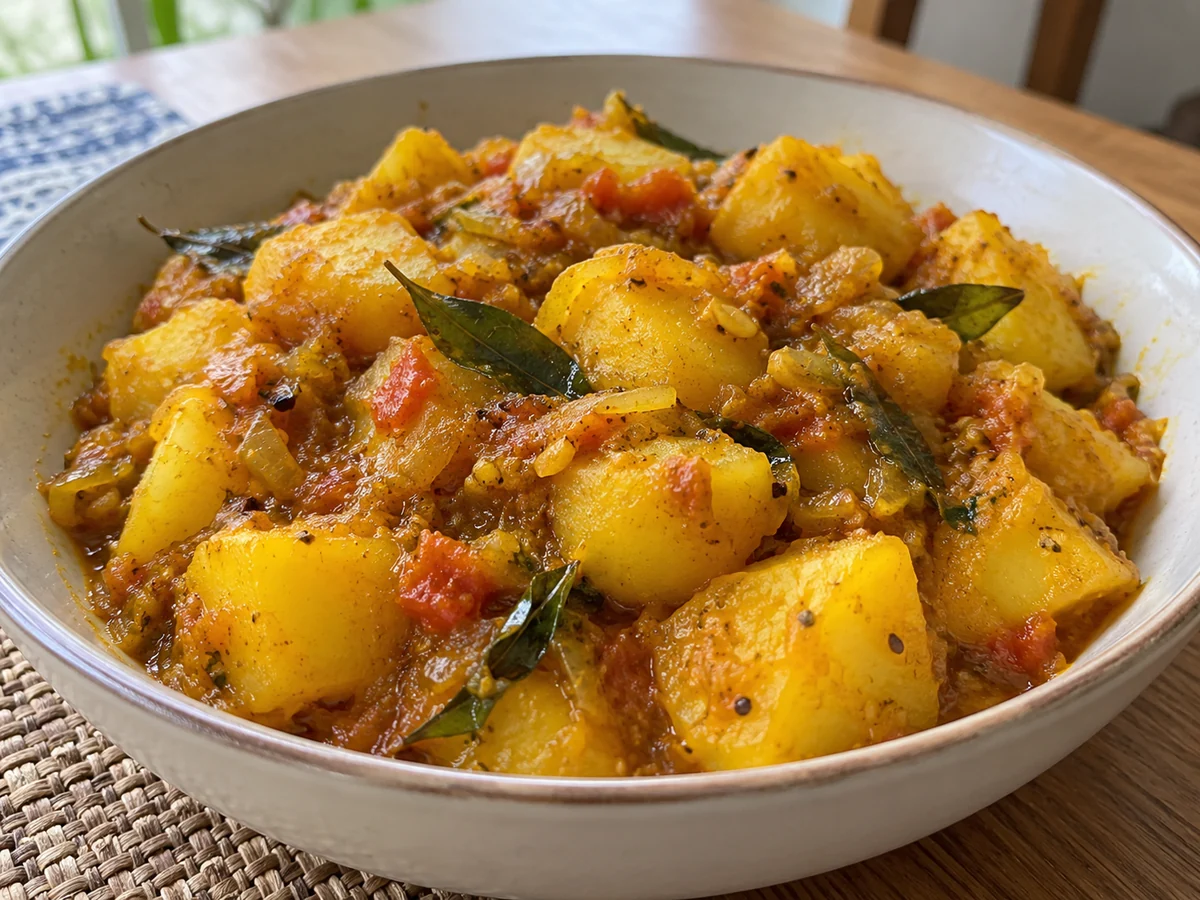
Recipes from the site to put your knowledge into practice:
Discover these cuisines at a restaurant
Explore our restaurant and caterer directories. Choose your destination and check the establishment’s menu to confirm which dishes are offered and available.
Continue exploring
Enjoy discovering ingredients and African cuisines? Join our newsletter. The illustrated PDF 10 sauces africaines incontournables is in French and is offered after confirming a subscription to the French or bilingual edition.