Turnip
Central Asia, Europe
Understanding : Turnip
Introduction
The turnip (Brassica rapa subsp. rapa), a white root with tender flesh and a delicately pungent flavor, stands as a discreet ingredient in the African food mosaic. Yet, this vegetable, originating from Eurasia, has a long history of acclimatization, integration, hybridization, and valorization across the African continent. Mistakenly considered a mere side dish or a “pot-au-feu” vegetable, it reveals an unsuspected palette of textures and tastes, serving both culinary tradition and innovation. From Berber stews to Maghrebi couscous, from Sahelian village soups to festive tagines, from urban braises to contemporary main courses, the turnip links local produce, memory, simplicity, and invention. Join me in examining the history, biology, diversity of practices, and the culinary, social, economic, and symbolic uses of the turnip in African cuisine.
Where to find it
Look for the exact food-grade form required by the recipe at markets and specialist shops. Check the product name, ingredients, condition and storage instructions.
Explore further: Cooking tips · Food hygiene and safety advice.
History and uses
1. Origins, introduction, and African spread of the turnip
1.1. Eurasian roots and journey to Africa Originating from the temperate regions of Central Asia and Europe, the turnip has been cultivated for over 4000 years. It was consumed in antiquity by Mediterranean peoples, known to Egyptians, Greeks, and Romans, who cultivated it in their gardens and fields. Its ancient arrival in the Mediterranean basin facilitated its introduction to North Africa, then its expansion to the temperate and cool high-altitude areas of the continent. Arab, Ottoman, European, and then colonial influences accelerated its spread, contributing to the establishment of multiple local varieties adapted to African terroirs. 1.2. Adaptation and diversity The turnip thrives in cool, clayey, or silty soils with good water accessibility, but also adapts to drier conditions in oases, the Maghreb mountains, the high plateaus of East Africa (Ethiopia, Kenya, Rwanda), the volcanic lands of Madagascar, or even in urban and peri-urban gardens of the Sahel and the Nile basin. Varietal diversity is manifested by white, purple, yellow, or striped turnips, spherical, ovoid, or elongated in shape, small (“boulette” turnip) or large (fodder turnip sometimes consumed young).
2. Agriculture and economics of the turnip in Africa
2.1. Cultivation cycle and production methods • Short cycle (35-75 days), sown directly, it is perfectly suited for crop succession and rotation with cereals, legumes, or leafy vegetables. • Low-maintenance plant, requires few inputs, adapts to multiple calendars (cool season, irrigation, urban agriculture). • Facilitates integration into family farming, school gardens, urban vegetable gardens, and commercial micro-agriculture. • Stem, leaves, root: everything is edible, nothing is wasted. 2.2. Socio-economic importance • Inexpensive, accessible product, cultivated by small market gardeners, women, and cooperatives, present in local markets (Maghreb, Sahelian countries, mountainous regions, cities of Madagascar, Kenya, Egypt, Rwanda…). • Can contribute to food security and nutritional diversification, thanks to its rapid adaptation and high yield without major mechanical efforts.
3. Culinary uses and place of the turnip in African cuisine
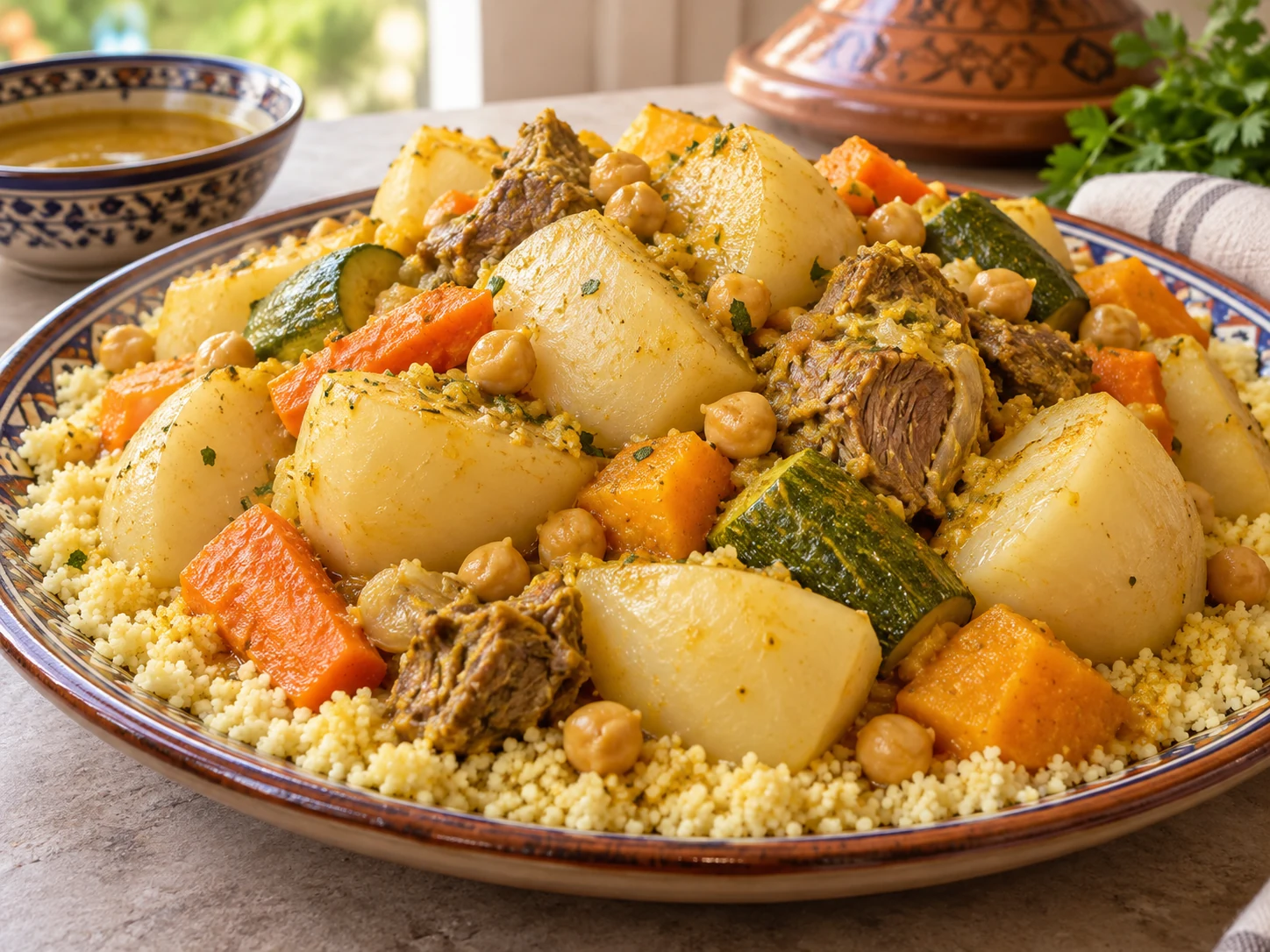
3.1. North Africa: kingdom of the turnip in stews a) Couscous, tagines, broths • Maghrebi couscous (Morocco, Algeria, Tunisia, Libya): the turnip is, along with carrots and zucchini, one of the pillars of “couscous vegetables”, cooked slowly in broth flavored with cumin, turmeric, saffron, ginger, sometimes spiced. • Tagines (Chicken, lamb, kefta, fish): pieces of golden turnip, roasted or simmered, providing a melting texture and a slightly sweet-sour taste. • Urban stews: urban garbure (ragout), popular Ramadan dishes, peasant soups with turnip, meat, herbs (“chorba”, “harira”), where the turnip softens and binds the flavors. b) Starters and salads • Grated turnip salads: with lemon, parsley, cumin, sometimes with olive and sweet pepper, used to whet the appetite or accompany grilled dishes. • Pickles or lacto-fermented turnips: preserved in vinegar, salt, sometimes beetroot for red coloring, a classic in Algerian, Tunisian, Egyptian sandwich shops. 3.2. Egypt, Sudan, Nile • “Khabes el lif” (pickled turnip): marinated turnip, preserved in vinegar and spices, served with foul (fava beans), koshari, baladi bread – a popular and refreshing snack. • Nilotic soups and stews: turnip mixed with carrots, potatoes, lamb, beef with cumin, coriander, garlic. 3.3. Sub-Saharan Africa a) West Africa • Rare but present: turnip cultivated locally in urban and mountainous areas (Guinea, Ivory Coast, Senegal, Mali), integrated into vegetable sauces, soups, sometimes steamed or fried, especially during festivities. • Urban markets: turnip sold among other vegetables, appreciated for its unusual flavor, texture, and quick cooking time. b) Central Africa • Vegetable soups, spicy broths, accompaniment to cassava, fufu (a staple food made from cassava flour), grilled fish. • Growing introduction into urban fusion cuisine: gratins, purees, chips, stews, alongside potatoes or sweet potatoes. c) East Africa • High-altitude market gardens (Kenya, Rwanda, Uganda, Burundi, Ethiopia): the turnip is integrated into local curries, meat broths, chapati (flatbread)-rolls with vegetables, fritters, restorative soups for children and convalescents. d) Southern Africa and Madagascar • South African Potjiekos (a traditional South African stew cooked in a three-legged cast-iron pot over an open fire): turnip as an ingredient among potatoes, onions, squash, and meat. • Malagasy stews (Romazava), peasant soups, pickled vegetables, rice accompaniment. 3.4. Street food, sandwich shops, modern cuisine • Turnip pickles: a signature of Maghrebi, Egyptian, or Levantine-African sandwich shops (shawarma, kebab, revisited falafel). • New urban gastronomic wave: turnip chips, carpaccio, “fusion” gratins, inclusion in pizza or wraps, vegan patties, and healthy street food.
In my books

Continue exploring the continent’s cuisines with Africa at the Table — 54 countries, 54 iconic dishes, by Alioune FALL. This book is in English.
Explore further
4. Nutritional value and health
4.1. Nutritional profile • Low in calories (18 kcal/100g), but rich in water, fiber, minerals (potassium, calcium, phosphorus, manganese), vitamins C, B6, B9. • Contains glucosinolates and antioxidants known for their protective properties (prevention of certain cancers, liver maintenance, organic detoxification). • Low glycemic index, ideal for infant, senior nutrition, diabetic, cardiac diets, and for satiety. • The leaves (“turnip greens”) are very rich in vitamins A, K, C, iron, calcium: used as brèdes (leafy greens), spinach, or side vegetables. 4.2. Role in community health • Used after illness, for dietary recovery cures, for pregnant women or weaned children, in many villages. • Rural medicine: leaf decoctions, “turnip water”, poultices for stings or skin irritations.
5. Symbolism, culture, and transmission
5.1. Vegetable of renewal, simplicity, and fraternity • In the Maghreb, it symbolizes the rainy season, agricultural renewal, the arrival of spring. • In village festivals, religious ceremonies, or collective meals, the turnip is “the vegetable that brings people together”, which allows the pot to be “stretched” to feed all guests. • Popular expression: “mettre du navet dans la marmite” (to put turnip in the pot), means “to prioritize communal sobriety over individual luxury”. 5.2. Knowledge transmission • Grandmothers teach how to wash, peel, cut, grate turnips, to recycle their leaves, to pair them with meat or fish, to incorporate them into broths, sauces, salads. • Urban markets, culinary workshops, youth food competitions promote raw, marinated uses, its ability to absorb the flavors and aromas of local produce.
6. Innovation and contemporary challenges
6.1. New African gastronomic wave • New chefs incorporate turnip into fusion gastronomy (turnip gnocchi, organic chips, veloutés with argan oil, “Ethiopian” carpaccio). • Street food: spicy sautéed, fried, tempura turnip, “sticks” for school or office snacks. • Encouragement of more rustic and colorful local varieties, patrimonial rediscovery at agricultural fairs, organic or slow food festivals. 6.2. Challenges and perspectives • Awareness of the nutritional benefits of turnip, reduction of the cliché “poor man’s vegetable” versus “modern vegetable”. • Adaptation to climate change: selection of strains adapted to drought or heat. • Development of “local organic” value chains, encouragement of leaf consumption (“leaves are worth gold”). • Integration of turnip into the fight against malnutrition, due to its richness and affordable cultivation.
Conclusion The turnip, long overshadowed among African roots, is now rehabilitated as a root of the future, an ingredient of mediation between local produce and modernity. It tells, in every fraternal pot, every festive couscous, every winter soup, the culinary intelligence of Africa, its ability to grasp simplicity, to reinvent taste, and to nourish bodies as well as imaginations. To valorize, transmit, preserve, and imagine around the turnip is, for African cuisine, to affirm the right to agricultural diversity, the dignity of the “little”, and the promise of healthy, accessible, and sustainable pleasure for all generations of the continent.
In the kitchen : Turnip
Recipes from the site to put your knowledge into practice:
Discover these cuisines at a restaurant
Explore our restaurant and caterer directories. Choose your destination and check the establishment’s menu to confirm which dishes are offered and available.
Continue exploring
Enjoy discovering ingredients and African cuisines? Join our newsletter. The illustrated PDF 10 sauces africaines incontournables is in French and is offered after confirming a subscription to the French or bilingual edition.