Cauliflower
Near East
Understanding : Cauliflower
Introduction
Cauliflower (Brassica oleracea var. botrytis) is a leafy vegetable native to the Mediterranean basin, named for the impressive structure of its inflorescence, which is immaculately white or cream, sometimes purple or golden. While it remains a staple food in European and Middle Eastern cuisine, it has, since the 19th century, gained an appreciated place in African gastronomy and agriculture, particularly north of the Sahara but also in the mountainous, temperate, or urban regions of sub-Saharan Africa. Far from being marginal, cauliflower has become synonymous with seasonality, integration into new urban diets, local agricultural innovation, and culinary modernity. From Maghrebi couscous to Moroccan and Egyptian street food, from Moroccan soups to Senegalese or Ivorian fritters, from Abidjan's “healthy” buffets to Swahili curries, cauliflower offers a thousand culinary possibilities. Its easy digestion, melting texture, and mild taste make it a preferred food for children, the sick, the elderly, but also for young urbanites at the forefront of African fusion cuisine.
Where to find it
Look for the exact food-grade form required by the recipe at markets and specialist shops. Check the product name, ingredients, condition and storage instructions.
Explore further: Cooking tips · Food hygiene and safety advice.
History and uses
1. Origins, history, and introduction of cauliflower in Africa
1.1. From the Mediterranean garden to modern Africa Cauliflower is a derived form of classic cabbage, selected in antiquity in the Near East, then popularized as a botanical curiosity by the Greeks, Romans, and Arabs. It quickly reached Andalusian gardens and then medieval Maghreb, where agriculture, irrigation, and market garden diversity were most developed. In the 19th century, colonization, the spread of improved seeds, and the rise of markets and the middle class accelerated its dissemination in the markets of North Africa (Morocco, Algeria, Tunisia, Egypt) but also on the cool highlands of Ethiopia, Rwanda, Kenya, Madagascar, South Africa, and then, by capillarity, in the urban areas of West or Central Africa. 1.2. Varietal diversity and climatic adaptation • Traditional varieties: “seasonal” cauliflowers (winter-spring), dense white heads, thick leaves enveloping the curd. • Modern/hybrid varieties: hardier cultivars, resistant to heat, drought, or diseases (Ideal, Snowball, Early Erfurt, Cheddar - with orange flower, Purple Graffiti). • Diversification in certain terroirs: purple or yellow cauliflowers cultivated in Madagascar, South Africa, coastal areas of Morocco, or volcanic regions of Ethiopia.
2. Agricultural production and economic importance
2.1. Producing countries • North Africa: Morocco (Gharb plains, peri-urban areas of Casablanca, Rabat, Agadir…), Algeria (Mitidja, Tlemcen), Tunisia, Egypt (Nile Delta, oases, valley). • Southern Africa: South Africa (Western/Eastern Cape), Zimbabwe, Lesotho. • East Africa: Ethiopian, Rwandan, Burundian, Kenyan highlands (near Lake Naivasha, Rift Valley), Madagascar (Antsirabe). • West and Central Africa: temperate zones of Cameroon, Nigeria (Jos plateaus), market gardening in Abidjan, Dakar, Lomé, Cotonou, Yaoundé, Accra… 2.2. Cultivation techniques • Cool season cultivation, sowing in nurseries then transplanting, regular watering, organic or mineral fertilization, control of flea beetles (insects) and cryptogamic diseases. • Manual harvesting, sorting of quality heads, direct marketing (market) or via cooperatives and networks. • Organic production is developing, including in peri-urban areas or with the support of NGOs promoting local food sovereignty. 2.3. Local economy and employment • Cauliflower represents a reliable source of income for many small market gardeners, women in cooperatives, young entrepreneurs. • Local market gardening, sale by piece or by bunch, artisanal processing with added value (pickles, fritters, soups, ready-to-bake gratins…). • Marketing in short circuits or export to the Mediterranean and sub-Saharan regions.
3. Nutritional value and health properties
3.1. Nutritional intake • Low in calories (approx. 25 kcal/100g), rich in water (92%). • Good content of soluble and insoluble fibers: promotes digestion, satiety. • Vitamins: very rich in vitamin C, B9 (folates), K, B5, and small amounts of provitamin A, B6. • Minerals: potassium, calcium, phosphorus, magnesium, choline. • Antioxidants: carotenoids, polyphenols, sulforaphane (“detox” anticancer compound). • Gluten-free, low in assimilable carbohydrates: suitable for diabetic, gluten-free diets, for the elderly or convalescents. 3.2. Health properties and infant nutrition • Stimulates immunity, aids growth, remineralizes bones and teeth. • Prevents digestive disorders (colopathy, constipation). • Contributes, through its folate intake, to the prevention of neural tube defects during pregnancy. • Suitable for dietary diversification in children from 8-10 months (mild purees, soup).
4. Culinary and gastronomic uses
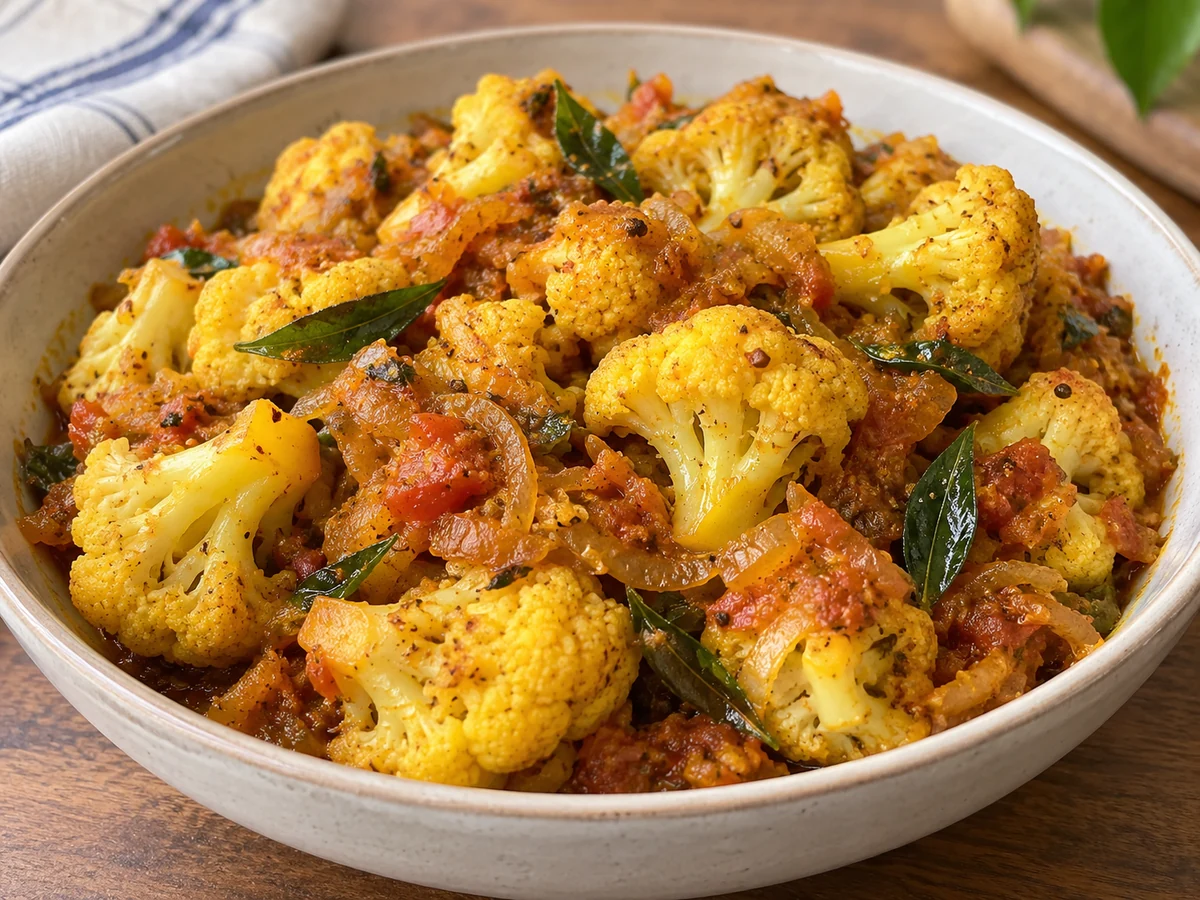
4.1. North Africa: tradition and innovation a) Traditional dishes • Winter couscous: cauliflower florets simmered in broth, absorbing spices (turmeric, ginger, cinnamon, coriander), combined with carrots, chickpeas, turnips, squash. • Cauliflower tagine: cauliflower seared in olive oil, golden grains, combined with lamb or chicken, often seasoned with preserved lemon, olives, fresh herbs, sometimes chickpeas or potatoes. • Cauliflower in “makfoul”: roasted with tomatoes, peppers, garlic, cumin, and paprika, a dish for the poor, for Ramadan, for celebrations. b) Starters and street food • Cauliflower fritters: florets dipped in a batter with cumin, coriander, parsley, fried in olive or peanut oil, served as appetizers or at the market. • Baked/gratinated cauliflower: gratin with béchamel or tomato sauce, local cheese, eggs, a dish for buffets, weddings, popular festivals. • Cauliflower salad: steamed blanched, seasoned with lemon-harissa-olive oil vinaigrette, sometimes with egg or anchovies. c) Pickles and condiments • Pickled cauliflower (torshi): sliced fermented in vinegar or brine with carrots, beetroot, spices. Very popular in Egypt, Tunisia, Morocco, but also in the Middle East. 4.2. Sub-Saharan Africa: adaptability and modernity a) Integration into local dishes • Urban stews: cauliflower florets integrated into tomato-chili sauce, simmered with potatoes, carrots, meat or smoked fish (Dakar, Abidjan, Douala, Yaoundé, Lomé). • Soups and veloutés: creamy “Afro-Western” soup, blended with onion, garlic, milk or cream, sometimes curry or ginger, sold in fast-food restaurants, hotels, schools, NGO canteens. • Gratins: cauliflower gratins revisited French style, sometimes included in Senegalese cuisine (African gratin), Ivorian, Cameroonian, Tunisian. b) Healthy street food and fast food • Cauliflower fritter/tempura: sold in markets, after school, at festivals or popular events (Abidjan, Dakar, Accra, Casablanca). • Grilled/roasted cauliflower: on skewers, marinated in lemon, oil, garlic, sweet chili, sometimes peanut powder or mild curry. c) Vegetarian and fusion cuisine • Star vegetable of “African bowls”, healthy salads, veggie burgers (cauliflower steak), Moroccan couscous with roasted vegetables. • Trendy meat substitute for urban flexitarians on the continent. 4.3. Indian Ocean, East Africa, Madagascar • Swahili curries: cauliflower braised in coconut milk, tomatoes, onion, spices (ginger, cardamom, cumin), served with pilau rice. • Malagasy achards: cauliflower marinated in mustard, chili, vinegar, carrots. • Garnish of brèdes (leafy greens), gadjacks (small fried snacks): small fried florets with chayote, potato, rougail (chili relish). 4.4. African diaspora and modernity • “Afro-European” or “Afro-American” recipes reinventing cauliflower: cauliflower-based pizza, veggie couscous, tacos, “low carb” Senegalese-style rice, etc.
In my books

Continue exploring the continent’s cuisines with Africa at the Table — 54 countries, 54 iconic dishes, by Alioune FALL. This book is in English.
Explore further
5. Social role, transmission, and symbolism
5.1. Place in family and society • “Economical”, “nutritious”, “for everyone” food. • Served during festive meals (Eid, weddings, birthdays, religious or community receptions). • Expresses hospitality, providence, sharing (family plates, communal gratins, Ramadan chorba). 5.2. Transmission of knowledge • Cauliflower preparation in the family: washing, cutting, cooking “al dente” or very tender, adapting the dish according to the season and the market. • Culinary workshops, competitions, health days, intergenerational transmission (from “grandmother’s recipes” to urban creation). 5.3. Symbolism • Symbol of “purity” because of its whiteness, of peace (shared white flowers), sometimes of fertility in certain beliefs (round shape, promise of abundance).
6. Modernity, challenges, and future
6.1. Responses to urban and nutritional demand • Thirst for “healthy vegetable”, “good for the heart and stomach”, inexpensive, easy to cook, found all year round at affordable prices in African cities. • Growing interest in its anti-diabetic, anti-inflammatory, detox virtues. 6.2. Agricultural and economic challenges • Vulnerability to frost, mildew, caterpillars; need to support small producers in accessing seeds, irrigation, agroecology. • Partial dependence on imported hybrid seeds from Europe or Asia; desired development of resistant, organic local varieties. 6.3. Promotion and creativity • Highlighting at agricultural fairs, organic markets, culinary festivals, youth events. • Reinvention by contemporary Afro chefs: cauliflower carpaccio, couscous, dips, “oil-free” fritters, fusion curry. • Valorization of leaves (rich in antioxidants and fiber) in brèdes, soups, or West Indian/Malagasy stir-fries.
Conclusion Cauliflower embodies the encounter of terroirs and the world, the African capacity to adapt, magnify, and reinvent the foreign to make it an everyday ingredient, for celebrations and health. From the family pot to starred cuisine, from the rural market to urban street food, it celebrates the diversity, innovation, transmission, and food inclusion characteristic of contemporary Africa. Preserving, valuing, and transmitting its market gardening culture and culinary diversity guarantees flavor, health, and creativity to the African table, for a cuisine that is inherited but resolutely oriented towards the future and openness.
In the kitchen : Cauliflower
Recipes from the site to put your knowledge into practice:
Discover these cuisines at a restaurant
Explore our restaurant and caterer directories. Choose your destination and check the establishment’s menu to confirm which dishes are offered and available.
Continue exploring
Enjoy discovering ingredients and African cuisines? Join our newsletter. The illustrated PDF 10 sauces africaines incontournables is in French and is offered after confirming a subscription to the French or bilingual edition.