Jollof Rice
Wolof (Jolof Empire)
Understanding : Jollof Rice
INTRODUCTION
Jollof rice is much more than a simple tomato rice dish. It is a vibrant symbol of identity, celebration, and (friendly or fierce!) competition that spans across West Africa and increasingly the rest of the continent. A true icon of contemporary African gastronomy, jollof embodies culinary creativity, shared memory, intergenerational transmission, the genius of “eating together,” and, at times, the hottest culinary debates between Nigeria, Ghana, Senegal, Gambia, Sierra Leone, Liberia, or Cameroon. Present on all tables, from wedding banquets to religious and family gombos, in urban canteens as well as trendy street food, jollof rice fascinates, satisfies, unites, and divides like no other African recipe. Behind the apparent simplicity of rice cooked in red sauce lies a millennial history, journeys and cultural blending, ingredient controversies, spice secrets, and a remarkable ability to embody the continent's living culture. This detailed description of jollof rice explores its history, evolution, ingredients, social importance, its place in the economy, nutritional benefits, family stories, and innovations in modern cuisine and the diaspora.
1. ORIGINS, HISTORY, AND SPREAD
1.1. The Senegalese-Gambian Root The history of jollof dates back to the Wolof (or Djolof) kingdom in Senegal, in the 14th-16th centuries. Thiebou dieune (fish and rice) – the ancestor of modern jollof rice – already illustrates the Senegalese ability to prepare rice in tomato sauce, vegetables, and spices, cooked in fish broth and garnished with vegetables. Over time and through exchanges (notably thanks to colonial trade, the slave trade, migrations, and the spread of Asian and American rice), this dish transformed, left the Atlantic coast, traveled through Senegambia, Sierra Leone, Liberia, Ghana, Côte d'Ivoire, Togo, Benin, Nigeria, Cameroon… Each people adapted it, integrated it, claimed it, transformed it, and made it “their” national dish. 1.2. Contemporary Rise and Rivalries Jollof rice is now claimed by entire countries (especially Nigeria and Ghana), each asserting the superiority of its recipe: this is the famous “Jollof Rice War,” which stirs social networks, festivals (Jollof Festival in Lagos, Accra, London…), the diaspora, and the continental press. It is omnipresent during national holidays (Independence Days, Sallah, Christmas, Eid), weddings, baptisms, birthdays… or simply on Sundays and during diaspora “fufu parties.”
2. KEY INGREDIENTS AND PREPARATION TECHNIQUES
2.1. Rice • Long-grain “parboiled” rice, broken rice, fragrant rice (Jasmine), Basmati, or local depending on the region • The choice of rice influences the final texture: a good jollof should be firm, never mushy (the nightmare of the African cook!). 2.2. Aromatic Base • Tomato sauce: homemade puree or concentrate, sometimes fresh tomatoes. • Onion: often in large quantities, for sweetness and depth of flavor. • Red peppers, chili peppers (scotch bonnet, bird's eye chili, or jalapeño) • Garlic, ginger, fresh herbs • Spices: thyme, bay leaf, nutmeg, black pepper, bouillon cubes, curry, paprika 2.3. Fat • Palm oil (traditional West African) or more commonly: • Vegetable oil (sunflower, peanut, sometimes butter or urban margarine, especially in festive cooking). 2.4. Liquids and Flavoring • Chicken, beef, or fish broth • Accompanying vegetables: carrots, peas, green beans, African eggplants… depending on the season and family • Sometimes, cut meat or poultry, shrimp, smoked fish for variations
Example of a “classic” recipe (Nigeria/Ghana)
- Sauté onions, peppers, chili, garlic, ginger in oil.
- Add tomato puree/concentrate and cook for a long time to remove acidity (“the sauce must fry,” a key moment for color and aroma).
- Incorporate spices and broth, taste, adjust.
- Pour in rinsed rice, stir to coat, then add broth to level.
- Cook covered (sometimes with banana leaf or aluminum foil to retain moisture), without stirring constantly.
- At the end of cooking, the rice should be dry and fragrant, never “boiled.”
- Add vegetables and proteins at the end of cooking.
3. REGIONAL VARIATIONS, ADAPTATIONS, AND INNOVATIONS
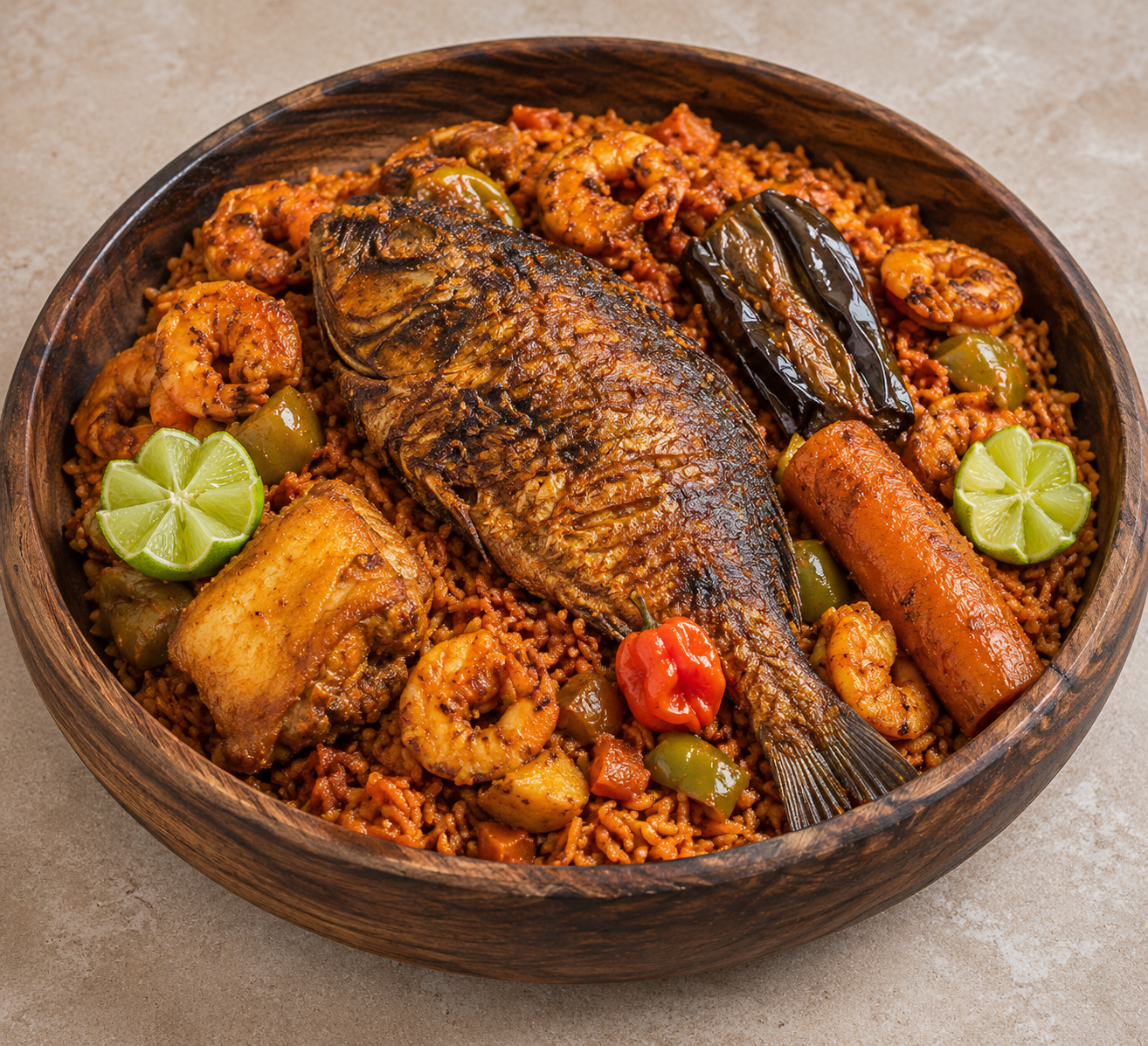
3.1. Ghana vs. Nigeria • Ghana Jollof: often more “tomatoey,” sweeter, rice generally more fragrant. Rice is cut and cooked separately, then mixed with the sauce. • Nigeria Jollof: spicier, more “fried,” rice cooked directly in the sauce (one pot), redder color, more “roasted” flavor. 3.2. “Classic” and Creative Jollof • Party Jollof (Nigeria): cooked over a wood fire, unique smoky flavor, the king dish of events. • Coconut Jollof rice: coconut milk added, modern/urban subtlety. • Jollof with fish, shrimp, chicken, “mixed meat” • Vegetarian/vegan Jollof: seasonal vegetables, tofu, beans, sweet potato. 3.3. Culinary Cousins • Thiebou djeun (Senegal): fish/rice/vegetables (the “mother” of jollof). • Benachin (Gambia) • Riz gras (Côte d’Ivoire, Burkina Faso, Benin, Mali) • Red red rice (Sierra Leone, Liberia), often cooked with red beans
4. NUTRITIONAL VALUE AND HEALTH
• Rice: complex carbohydrates, sustained energy • Tomato, onions, peppers, vegetables: vitamins A, C, B, potassium, fiber • Oils: source of essential fatty acids, but be careful with excessive oil during celebrations • Proteins: meat, fish, shrimp, or vegetarian option • Chili: vitamin C, capsaicin beneficial for circulation and digestion By varying the ingredients (whole grain rice, vegetables, moderation on oil), jollof rice can be a healthy, complete, and balanced dish.
5. SOCIAL, SYMBOLIC, AND COMMUNITY PLACE
5.1. Daily Life and Special Occasions Jollof rice transcends social classes — from popular street food to the menu of the most upscale celebrations. It symbolizes: • Hospitality (offered to distinguished guests) • Celebration (essential for weddings, baptisms, funerals, religious holidays) • Sharing (family dish placed at the center, eaten in groups) 5.2. Conviviality, Competition, and Pride The frequent debates about “the best jollof” are part of the folklore, stimulate creativity, and strengthen national identity. Jollof is an excuse to gather friends during “Jollof Wars,” to laugh, to tease — and, very seriously, to judge the talent of a cook or a chef. 5.3. Transmission and Identity The jollof recipe is generally “a mother's secret,” passed down and adapted. Children learn its importance from childhood, participate in its preparation during big occasions, and memorize the taste of “home.”
6. ECONOMY, MARKET, AND DIASPORA
6.1. Industry and Market • Jollof supports millions of families: rice farmers, market gardeners, oil producers, livestock breeders, market vendors, restaurateurs, event caterers. • Jollof festivals (Lagos, Accra, London, New York…) bring together thousands of participants and contribute to African “soft power.” 6.2. Diaspora and Gastronomy Wherever the African diaspora settles, jollof establishes itself. African restaurants from Paris to Harlem, food trucks, Afro cooking workshops, culinary blogs: jollof rice becomes an “ambassador dish.” 6.3. “Fusion” Innovations, Instagram, and Street Food • Jollof burrito, burgers, arancini, jollof sushi, jollof pizza • Bowls with vegan options, “jollof keto,” or gluten-free • Use of new condiments or superfoods • Explosion of hashtags (over 4 million posts on Instagram in 2024 for #jollofrice #jollofwars)
7. MODERNITY, ISSUES, AND CHALLENGES
7.1. Competition and Food Identity Facing globalization and the dominance of Asian rice, some countries (Nigeria, Ghana) are relaunching their local sectors, promoting sustainable agriculture and food security through jollof. 7.2. Standardization vs. Living Heritage Industrialization (prepared sauces, pre-cooked rice) facilitates urban life but sometimes threatens the transmission of gestures and regional diversity. 7.3. New Generation of Chefs Afro-descendant chefs revisit jollof in international competitions, gourmet dinners, or culinary-cultural concept stores.
CONCLUSION Jollof rice is the heart of the African feast, living proof that creativity, sharing, transmission, and adaptability punctuate West Africa's culinary culture. It is the voice, the fragrance, and the color of a continent that constantly invents and transmits — in every dish, every celebration, every childhood memory, or wedding banquet. From Dakar to Lagos, from Accra to London, tasting jollof means embracing the diversity, human warmth, and pride of a moving African heritage.
Prepare this speciality
Choose a detailed recipe, adjust the portions and prepare your ingredients before starting. Our cooking tips and food safety advice complement the steps described in the recipes.
Explore further: Cooking tips · Food hygiene and safety advice.
In my books
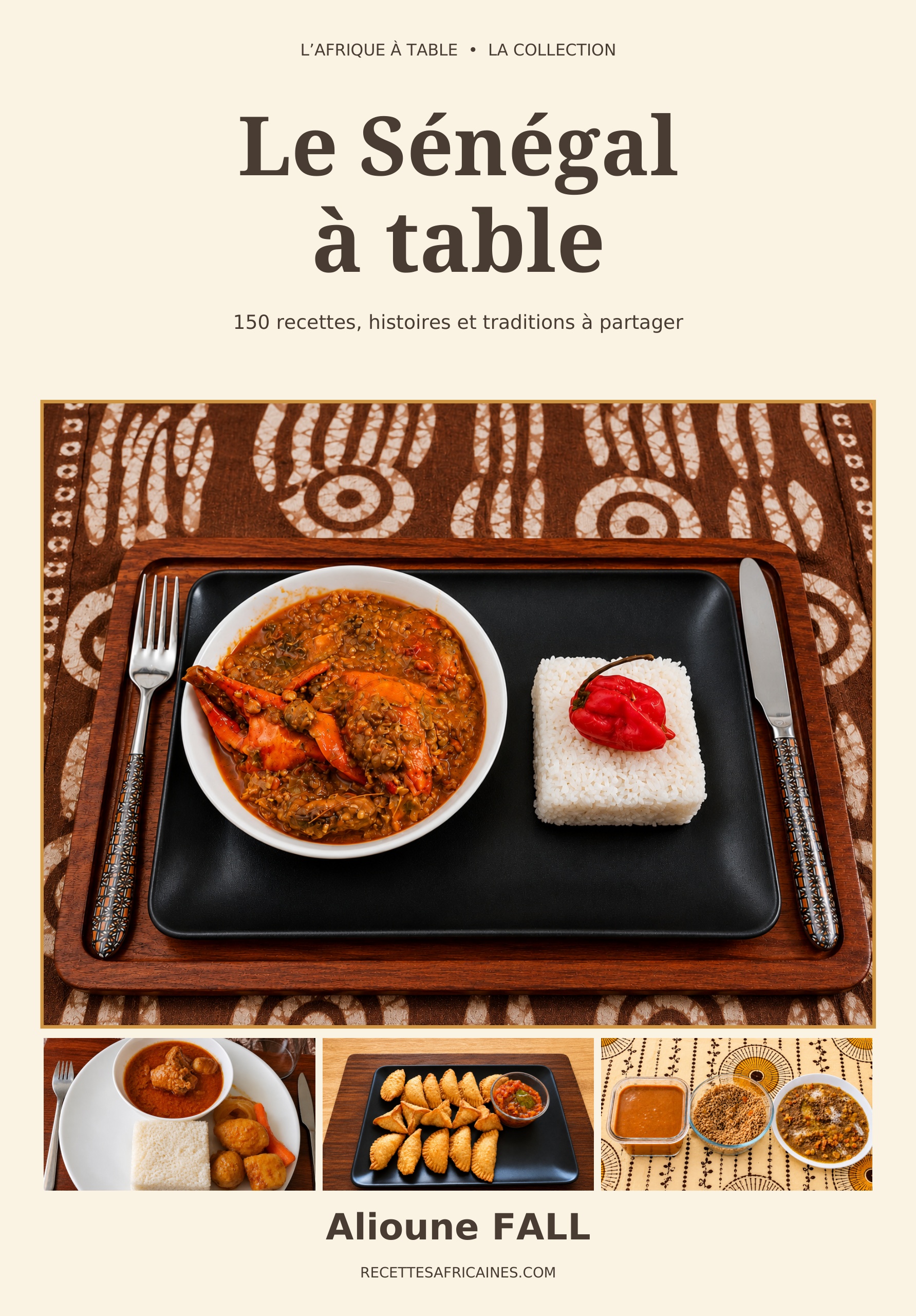
Explore Senegalese cooking with Le Sénégal à table, my collection of 150 recipes, stories and traditions to share. This book is in French, by Alioune FALL.
In the kitchen : Jollof Rice
Recipes from the site to put your knowledge into practice:
Discover these cuisines at a restaurant
Explore our restaurant and caterer directories. Choose your destination and check the establishment’s menu to confirm which dishes are offered and available.
Continue exploring
Enjoy discovering ingredients and African cuisines? Join our newsletter. The illustrated PDF 10 sauces africaines incontournables is in French and is offered after confirming a subscription to the French or bilingual edition.