Guinea fowl
Africa
Understanding : Guinea fowl
Introduction
Guinea fowl, with its stocky silhouette, speckled plumage, and firm flesh, holds a special place in the lands, villages, and kitchens of the African continent. Present in the wild in many sub-Saharan regions, domesticated since antiquity for its food and social utility, it symbolizes both the continuity of the link between humans and nature, cultural resistance, and rural innovation. In the markets of Abidjan, Bobo-Dioulasso, Bamako, Cotonou, or Dakar, guinea fowl stands, alive or plucked, as a marker of celebration, culinary art, and food independence. From family tables to grand festivities, from urban snacks to exported gastronomy, it contributes to the vitality, creativity, and memory of African cuisine.
Where to find it
Look for the exact food-grade form required by the recipe at markets and specialist shops. Check the product name, ingredients, condition and storage instructions.
Explore further: Cooking tips · Food hygiene and safety advice.
History and uses
1. Origin, history, and spread of guinea fowl in Africa
1.1. An African bird par excellence The common guinea fowl (Numida meleagris) is native to sub-Saharan Africa. It was domesticated very early, first in West and Central Africa, then spread to North Africa from the Pharaonic era (paintings of guinea fowl in ancient Egyptian tombs) and beyond to Greece, Rome, Europe, and the Near East during antiquity. A symbolic animal of Africa, guinea fowl continues to exist in the wild in the savannas, plains, and open forests of West, Central, and Southern Africa, from the Sahel to the edges of the equatorial forest. 1.2. Spread and place in African rural life • Domestication: The main countries of domestication and breeding are Burkina Faso, Mali, Guinea, Senegal, Benin, Niger, Togo, Nigeria, Côte d'Ivoire, Cameroon, Ghana, Chad. • Guinea fowl has also adapted well to the Maghreb (where it was reintroduced in the 1960s-80s), Central and East Africa, Madagascar, and as far as South Africa. • Trade: It circulates in cross-border trade, rural markets, the network of fairs and cities, often transported alive, a guarantee of freshness and prestige.
2. Biological specificities, breeding, and economy
2.1. Portrait and biology • Medium size (1 to 1.5 kg adult), pearly grey plumage with white spots, bare head, horny casque, very loud cry (village alarm). • Rustic species, very resistant to diseases, tolerates heat, harsh conditions, undemanding. • Raised both “free-range” and semi-free: it feeds on insects, seeds, worms, waste, scratches the ground. • Seasonal reproductive cycle (laying in the rainy season, difficult to brood in captivity, hence sometimes substituted by chickens or artificial incubation). 2.2. Family and semi-industrial breeding • Traditional breeding: guinea fowl is part of every rural family's livestock, it roams freely, returning in the evening. Women, children, and the elderly generally take care of feeding, monitoring, and egg collection. • “Improved” village breeding: enclosures, supplementary feeding with cereals, corn, cassava, management of broods. • Semi-industrial production: More recent, seen in Ghana, Nigeria, Côte d'Ivoire, Burkina Faso, to supply hotels, restaurants, and urban export. 2.3. Economy, autonomy, and production chains • Rural currency of exchange: the sale of live guinea fowl generates direct income for rural women and youth, pays for schooling, healthcare, provides dowry or gifts during ceremonies. • Sector: wholesale markets, small local slaughterhouses, catering, export to the Maghreb and the African diaspora in Europe. • Local added value: growing demand drives processing (cured meats, charcuterie, confit preserves, ready-to-cook dishes, guinea fowl eggs sold as a delicacy).
3. Place and uses in African cuisine
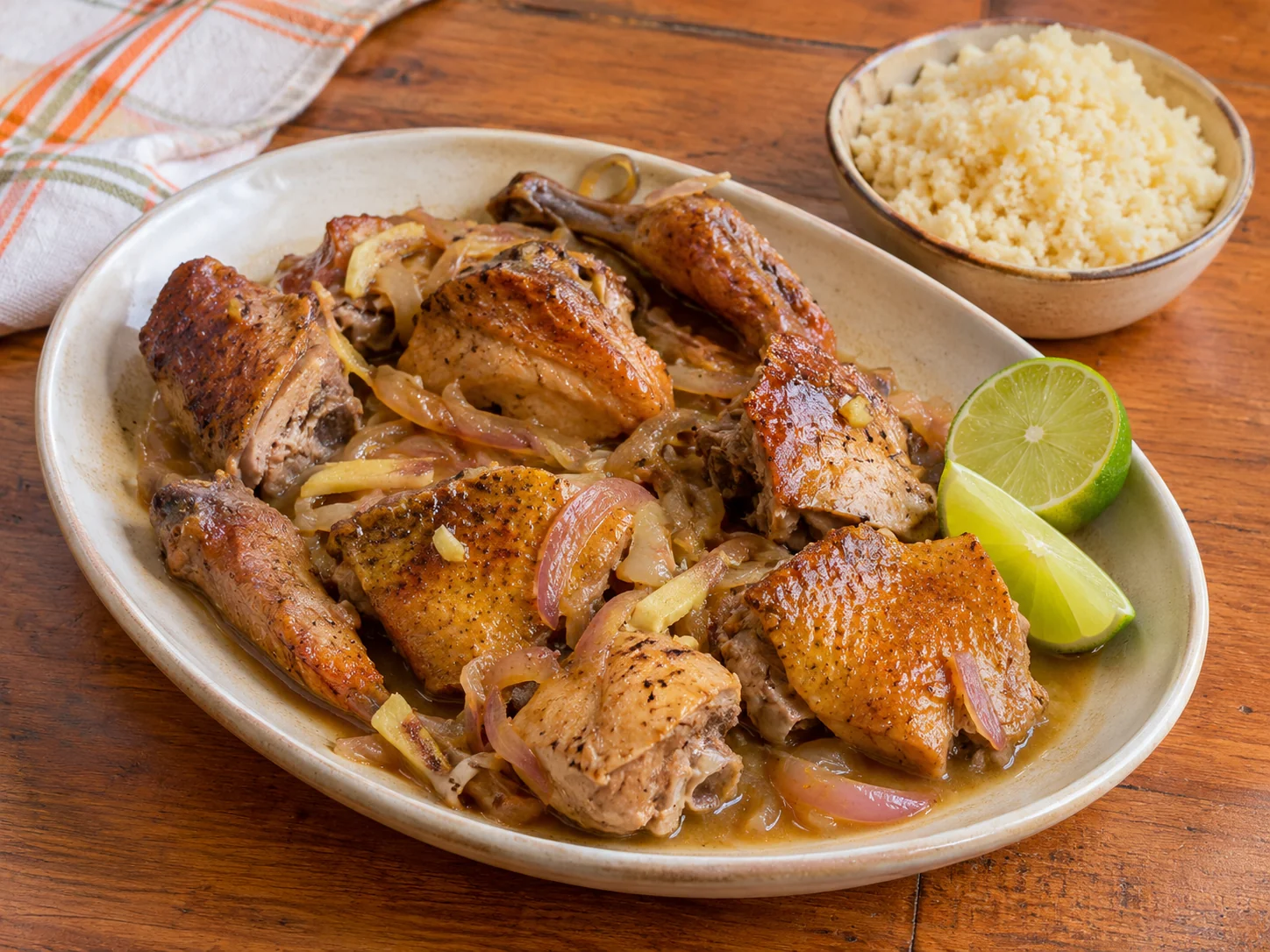
3.1. A choice, festive, and identity-defining dish • Festivities and ceremonies: roasted or sauced guinea fowl takes pride of place during religious holidays (Tabaski, Christmas, Ramadan), weddings, baptisms, funerals, and returns from travel. • Considered a superior dish to chicken, reserved for honored guests, a symbol of economic success and generosity. • Sahel proverb: “It is the guinea fowl that keeps the household together.” 3.2. Cutting, gastronomic particularity • Flesh firmer and tastier than chicken, lean, rich in protein, low in fat, with a “taste of the terroir”. • Sometimes considered “longer to cook”, requires marinating or slow cooking (to tenderize and release its aroma). 3.3. Preparations and flagship recipes a) Roasted or braised guinea fowl • Popular classic: guinea fowl cut, marinated in garlic, onion, chili, mustard, lemon, African spices, then grilled over a wood fire or roasted in the oven. • Accompaniments: plantain, attiéké (steamed cassava semolina), cassava, fried yam, rice, braised vegetables, chili sauce or “yaka yassa” (Senegalese caramelized onions). b) Guinea fowl in sauce or stew • Guinea fowl with groundnut/peanut sauce (mafé): guinea fowl pieces simmered in a sauce of peanut paste, palm oil, leafy vegetables, tomato. • Kedjenou de pintade (Ivorian dish where guinea fowl is stewed with vegetables, aromatics in a closed jar or pot). • Guinea fowl and local vegetable stew: recipe from Togo, Benin, Nigeria, Guinea. c) Guinea fowl with couscous and tagine • Maghrebi variant: stuffed guinea fowl, cooked with raisins, almonds, onions, sweet spices, served with festive couscous. • Guinea fowl tagine with olives, preserved lemon (modern in the Maghreb diaspora). d) Stuffings and innovations • Guinea fowl stuffed with minced meat, dried fruits, liver, an urban festive dish, high-end Ivorian, Senegalese, Moroccan cuisine. • Smoked, confit guinea fowl, in charcuterie, for appetizers or high-end sandwiches. e) Street food and snacking • Grilled guinea fowl sold by the portion in the markets of Lomé, Cotonou, Bobo, Niamey, Abidjan, Douala.
In my books

Continue exploring the continent’s cuisines with Africa at the Table — 54 countries, 54 iconic dishes, by Alioune FALL. This book is in English.
Explore further
4. Nutritional and health aspects
• Lean and digestible protein: suitable for children, pregnant women, the elderly, convalescents. • Rich in vitamins B3, B6, B12, iron, zinc, phosphorus, selenium, unsaturated fatty acids. • Less cholesterol than most meats; promotes satiety, recovery after exertion, child growth. • Often prescribed as a remission broth (“guinea fowl broth”) in folk medicine.
5. Social, cultural, symbolic dimension
5.1. Prosperity, hospitality, rites, and transmission • Bird of wealth, respect for elders, to whom a live guinea fowl is offered for important visits. • Included in dowry payments, gifts during funerals, repayment of social debts, and initiation ceremonies. • Proverbs ("He who raises guinea fowl does not die of hunger", "The guinea fowl does not sing for nothing in the village"). 5.2. Religious rites and magic • Used in Vodoun sacrifices, protection ceremonies, rites of passage (birth, circumcision, funerals). • Guinea fowl eggshells as decorated talismans among the Fulani, Bambara, Yoruba. 5.3. Cultural transmission • Art of cutting, long cooking, marinating: secrets passed from mother to daughter, learning within the family. • Tales, songs, painting, weaving with the effigy of the guinea fowl, symbolizing elegance and mystery in African art.
6. Modernity, challenges, and innovation
6.1. Economic sector, agricultural issues • Growing urban demand, rise of semi-industrialization (access to good food, embryonic “guinea fowl label” sector). • Challenges: mastering reproduction, disease management, access to seeds and markets, adaptation to climate change. • Promotion of local processing, fight against competition from imported industrial chicken. 6.2. Contemporary gastronomy • Pan-African chefs integrate guinea fowl into competitions, events, tasting menus, gourmet brunches (South Africa, Paris, London, Dakar, Abidjan), where it rivals duck, coquelet (young rooster), and noble Western poultry. • New generation street food: bowls, tacos, burgers, sandwiches with guinea fowl confit. 6.3. Nutrition, equity, and eco-agriculture • Promotion in nutritional programs (schools, dispensaries, NGOs), awareness of animal and human dietary balance in rural areas. • Encouragement of the “sustainable guinea fowl farming” sector, women's empowerment, fight against precariousness.
Conclusion Guinea fowl is much more than just poultry in African cuisine: it embodies the literature of the land, the memory of women, domestic creativity, the strength of rurality, and the ambition of modernity. Present in family pots, grand celebrations, street food, and haute cuisine, it inspires solidity, generosity, and resilience. Preserving, developing, and transmitting the culture of guinea fowl means supporting an authentic, sustainable, social, and festive food path for 21st-century Africa.
In the kitchen : Guinea fowl
Recipes from the site to put your knowledge into practice:
Discover these cuisines at a restaurant
Explore our restaurant and caterer directories. Choose your destination and check the establishment’s menu to confirm which dishes are offered and available.
Continue exploring
Enjoy discovering ingredients and African cuisines? Join our newsletter. The illustrated PDF 10 sauces africaines incontournables is in French and is offered after confirming a subscription to the French or bilingual edition.