Pigeon
North Africa, Middle East
Understanding : Pigeon
Introduction
Pigeon, a bird of modest size but carrying a great symbolic and gastronomic weight, occupies both a discreet and refined place in African cuisine. Unlike chicken or guinea fowl, pigeon is not always synonymous with everyday life, but it expresses the art of the table, peasant inventiveness, the prestige of celebrations, and often, the memory of cultural cross-pollination. Its red, fine, fragrant flesh, with deep aromas, destines it as much for popular traditional dishes as for the creations of modern African haute cuisine. From the Egyptian Nile to the imperial palaces of Morocco, from Sahelian markets to the rituals of Sub-Saharan Africa, pigeon evokes the continent's history, agricultural practices, urban and village life, and the fusion between Arab-Berber, Sub-Saharan, European, and Levantine heritages. Let's delve into the epic of this bird, a symbol of peace and fertility, and explore its multiple culinary and cultural facets in Africa.
Where to find it
Look for the exact food-grade form required by the recipe at markets and specialist shops. Check the product name, ingredients, condition and storage instructions.
Explore further: Cooking tips · Food hygiene and safety advice.
History and uses
1. History, spread, and symbolism of pigeon in Africa
1.1. Origins and first domestication The domestic pigeon (Columba livia domestica) descends from the wild rock dove, widely distributed in North Africa, the Middle East, the Mediterranean, and through the Nile valleys, since prehistoric times. Ancient Egypt was one of the first centers of its domestication: monumental dovecotes already existed 4,000 years ago, and necropolises are full of frescoes and clay models depicting pigeon breeding. The Romans, then the Arabs, spread pigeon culture throughout Morocco, Algeria, Tunisia, and as far as Senegal, Niger, Mali, Ethiopia, and further along the east coast and in some Sub-Saharan regions. 1.2. Symbols and social roles • Symbol of peace, fidelity, love: widely used in African poetry and iconography from the Maghreb to West Africa. • Ritual and funerary offering: pigeons were sacrificed during agricultural rites, births, marriages, funerals, as messengers to the afterlife or as guarantors of life's renewal. • Messenger and news bearer: used, in the Maghreb and Egypt, until the 20th century as homing pigeons to transmit messages during great famines, wars, revolts, or tribal relations.
2. Pigeon farming in Africa
2.1. Rural practices • Collective or family dovecotes: constructions made of banco (a mixture of clay, sand, and straw), wattle and daub, clay, sometimes straw bales, housing dozens or even hundreds of breeding pairs. • Natural and semi-natural cycle: most pigeons feed freely (grains, seeds, waste, small insects), returning to the dovecote every evening for safety. • Complementarity: breeding often carried out alongside poultry (chickens, guinea fowl, ducks) for food and economic diversity. • Sustainable production: few veterinary cares required, heat resistance, adaptation to poor rural environments, low food requirements. 2.2. Urbanization and modernization • Urban or recreational dovecotes: in Moroccan and Egyptian medinas, growth of sport and ornamental breeding (e.g., "rejja" type, homing pigeons). • Commercial breeding (rarer, but expanding) for supplying hotels, restaurants, caterers, high-end markets in African metropolises (Casablanca, Cairo, Tunis, Rabat, Marrakech, Abidjan, Dakar, Cape Town). 2.3. Economy, barter, and social value • Eggs and squabs (young pigeons) provide a vital source of animal protein for rural households. • In local markets, live pigeon is a currency of exchange, often used for paying social debts, resolving conflicts, or as a dowry during marriages. • Ritual presentations: during Maghrebi Ramadan, Coptic funerals, Bambara, Vodoun, Fulani initiations.
3. Nutritional value
• Lean red meat: rich in protein (21 g/100 g), low in fat, high in heme iron (bioavailable), vitamins B3, B6, B12, zinc, phosphorus. • Moderate cholesterol, balanced distribution between saturated and unsaturated fatty acids. • Very digestible meat, ideal for infants, convalescents, anemic individuals, pregnant women, or people concerned about healthy eating.
4. Regional culinary uses
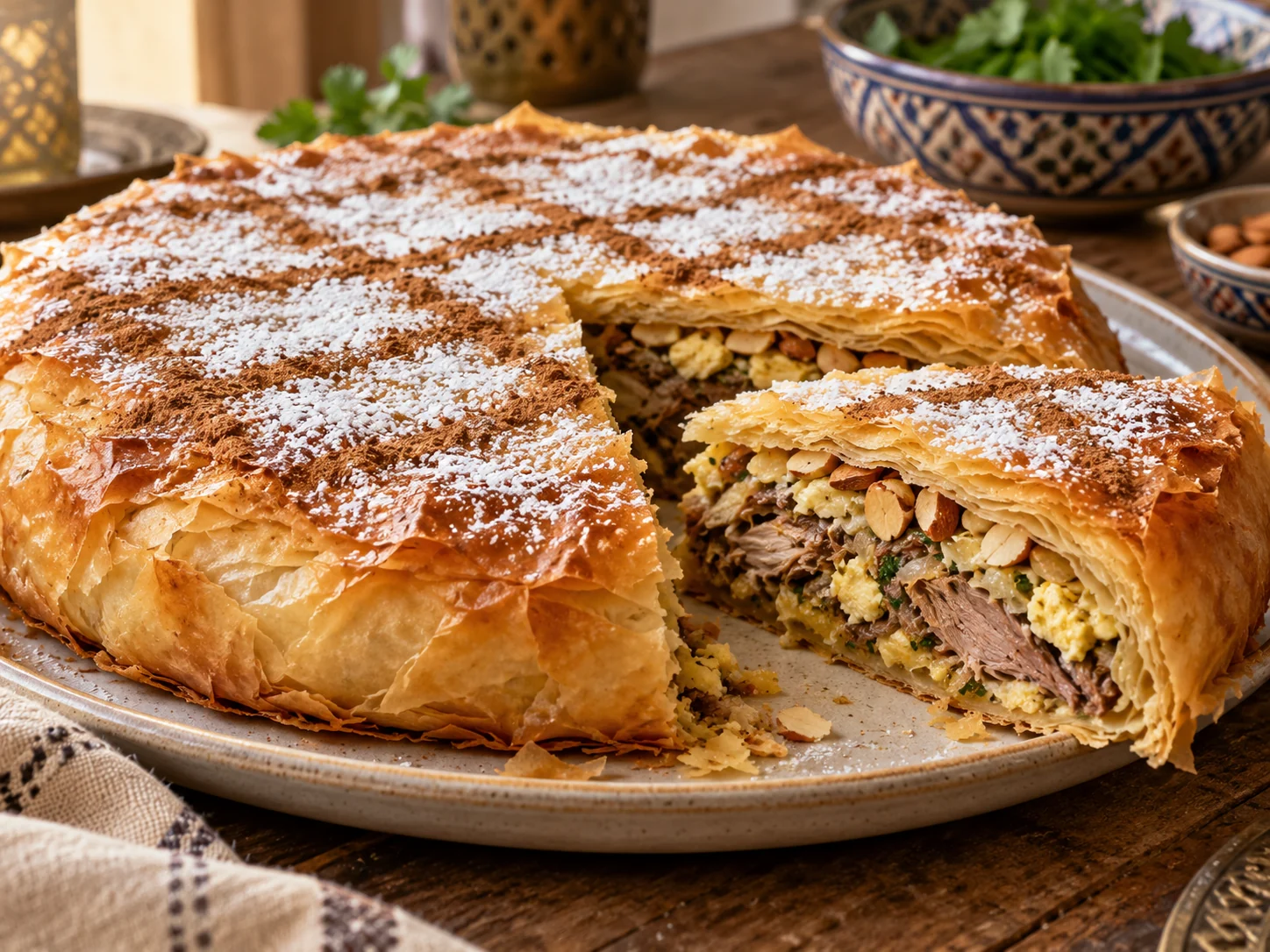
4.1. Egypt and Sudan • Hamaa mashi (stuffed pigeon): emblem of Egyptian refinement. Pigeon gutted, stuffed with rice (or freekeh), liver, offal, spices (cumin, cinnamon, coriander), stewed or boiled, then lightly grilled or oven-browned. Accompanies large family meals, weddings, religious holidays, or Ramadan meals. • Pigeon broth: clarified broth, flavored with mint or coriander, sometimes thickened with vermicelli, used as a popular medicine or as a tradition during Ramadan. 4.2. Maghreb (Morocco, Algeria, Tunisia) • Pastilla with pigeon: masterpiece of Moroccan cuisine, typical of celebrations or Ramadan. Brick pastry sheets filled with candied pigeon meat, toasted almonds, hard-boiled eggs, parsley, cinnamon, icing sugar – a refined sweet and savory dish, a wedding or ceremonial dish par excellence. • Pigeon tagine: pigeon simmered with onion, dates, prunes, mild spices, coriander, preserved lemon, green olives – often during harvest festivals or Eid. • Grills, fricassees, pigeon couscous (rarer), often accompanied by chickpeas, root vegetables, carrots, and turnips. 4.3. West Africa • Stews and broths: pigeon cooked slowly in tomato sauce, onion, garlic, chili, rice, fonio, yam, or millet, served during celebrations, funerals, or initiations. • Pigeon porridge: decoction for malnourished or sick children, a specialty in Mali, Burkina, Senegal (advocates of “natural medicine”). • Alternative protein source in rural areas where livestock is scarce or sacred. 4.4. Central and Southern Africa • South African potjiekos (a traditional Afrikaner stew cooked in a three-legged cast-iron pot over an open fire): a communal stew in which pigeon is sometimes added to enhance the flavor, with local vegetables, beans, tubers. • Skewers, grilled “bush pigeon” during popular festivals in countries such as Congo, Central African Republic. • Charcoal grilling: meat picked by hand, often shared by several people, as a gesture of conviviality. 4.5. East Africa and Islands • Pigeon rice: Swahili and Tanzanian specialty. Rice flavored with cloves, cinnamon, cooked in pigeon broth, whole poultry served with spicy sauces. • Ethiopian injera (a sourdough-risen flatbread) accompanied by pigeon in sauce (“doro wot” traditionally with chicken, sometimes revisited with pigeon). 4.6. Diaspora and modern fusion • Gourmet snacking: mini-pastillas, pigeon spring rolls, salads mixing shredded squab, mango, coriander, yassa sauce (a spicy, caramelized onion sauce), “Afro-Latino” pita or tacos with pigeon meat. • Urban cuisine: new wave African chefs revisit low-temperature cooking, ballotine, croquettes, ravioli, burgers, or pigeon croquettes, one of the darlings of “African bistronomy”.
In my books

Continue exploring the continent’s cuisines with Africa at the Table — 54 countries, 54 iconic dishes, by Alioune FALL. This book is in English.
Explore further
5. Cultural and symbolic dimensions
5.1. Place in rituals and crafts • Pigeon eggs (smaller than chicken eggs, but considered aphrodisiac or fortifying) served to convalescents, pregnant women, during traditional festivals. • Breeding passed down from mothers to daughters or fathers to sons, a marker of status, preparing the way for family maturity (“he who keeps a dovecote controls his house”). • Ritual gifts: pigeon offered to the imam, the village chief, as an element of peace negotiation or conflict resolution. 5.2. Beliefs, proverbs, and poetry • “When the pigeon lands on your roof, peace will come to your home” (Hausa saying). • Bird of “return” or “ancestral visit” in different traditions. • Love song, ode to fertility, to fidelity (“pigeon returning to the nest every evening”) celebrated in Fulani, Bamoun, Tuareg, Swahili poetry. 5.3. Associative crafts • Engraved or decorated eggshells in Namibia, RSA, Mali. • Pigeon feathers used in ritual headdresses and amulets, symbols of spiritual elevation.
6. Modernity, challenges, and perspectives
6.1. Agricultural sector and challenges • Pressures of urbanization: reduction of space for dovecotes, loss of living heritage in urban areas. • Valorization of local meat: thanks to short supply chains, demand is growing for guinea fowl, quail, pigeon – perceived as more “organic”, more authentic than industrial poultry. • Innovations: research into high-yield strains, adaptation of traditional recipes to modern catering, rise of the semi-industrial sector (Maghreb, Egypt, Southern Africa), organic certification, etc. 6.2. Nutrition, fight against malnutrition • Promotion as an alternative protein in food policies to diversify protein intake beyond more expensive livestock meat. • Education in mixed farming: training for women, youth, fight against rural poverty, revitalization of community dovecotes. 6.3. Gastronomy and diaspora • Afro chefs and diaspora: success of pastilla, croquettes, or stuffed pigeon in African restaurants in Paris, New York, London, Johannesburg. • Foodies and social media: highlighting a “return to terroir”, videos and workshops on inventive cutting and cooking of African pigeon.
Conclusion Pigeon is much more than a simple bird in African cuisine: it is at once a living memory, an exceptional ingredient, a symbol of peace and elegance, a festive food, and a weapon against precariousness. Whether at the family table, in a wedding feast, at a chef's stand, or in the starred creations of the diaspora, it testifies to Africa's ability to maintain, reinvent, and share the richness of its culinary heritage. Preserving, transmitting, and modernizing pigeon means extending tradition, ensuring food sovereignty, strengthening solidarity, and celebrating the continent's creative freedom.
In the kitchen : Pigeon
Recipes from the site to put your knowledge into practice:
Discover these cuisines at a restaurant
Explore our restaurant and caterer directories. Choose your destination and check the establishment’s menu to confirm which dishes are offered and available.
Continue exploring
Enjoy discovering ingredients and African cuisines? Join our newsletter. The illustrated PDF 10 sauces africaines incontournables is in French and is offered after confirming a subscription to the French or bilingual edition.