Duck
Asia, Egypt
Understanding : Duck
INTRODUCTION
Duck, long marginalized among African poultry in favor of chicken or guinea fowl, occupies a unique place, combining rural tradition, gastronomic prestige, and a link between African, Eastern, European, and Asian heritages. Present in village farmyards as well as on festive tables, duck meat is appreciated for its strong flavor, rich texture, and its ability to enhance sauces and regional recipes. It symbolizes success, conviviality, but also the resilience of many rural families in the face of contemporary economic and health challenges. From the Nile Valley to the Maghreb, from the Nigerian plains to the Malagasy lakes, from Ivorian markets to urban gastronomy in South Africa, duck weaves a discreet adventure, revealing the diversity, creativity, and evolution of African cuisine yesterday and today.
Where to find it
Look for the exact food-grade form required by the recipe at markets and specialist shops. Check the product name, ingredients, condition and storage instructions.
Explore further: Cooking tips · Food hygiene and safety advice.
History and uses
1. ORIGIN, SPREAD, AND DUCK FARMING IN AFRICA
1.1. Species, introduction, and acclimatization African domestic duck (Anas platyrhynchos domesticus, sometimes Cairina moschata for Muscovy duck) originated from birds imported from Asia and Egypt since antiquity. It has been present on the continent for several centuries, initially near rivers, lakes, and swamps where indigenous populations hunted and raised wild or semi-domestic ducks. Duck farming has particularly developed: • in Egypt (where the “Nilotic duck” documented since the New Kingdom is still found); • in the Maghreb (Morocco, Algeria, Tunisia), thanks to proximity to Spain, France, Italy, and Ottoman influence; • in lacustrine regions: Niger, Nigeria (around Lake Chad), Cameroon, shores of the DRC, Southern Africa, Madagascar; • in intertropical farmyards, where it mixes with guinea fowl, chicken, goose, and sometimes turkey. 1.2. Farming techniques • Traditional mixed farming: animals raised semi-freely, sharing the family yard with chickens, guinea fowl, goats or sheep, benefiting from the proximity of water points. • Natural feeding: food scraps, local cereals (corn, rice, millet), fresh herbs, worms, snails, West African rice farmers using ducks to control slugs and insects in crops. • Aquaculture farming: in West Africa (Nigeria, Benin, Ivory Coast), ducks raised on the periphery of ponds, providing natural fertilizer and feeding on aquatic parasites. 1.3. Social dimension and rural economy Duck is rarely farmed intensively, with the exception of a few farms focused on foie gras, magret, or exceptional export (South Africa, Morocco, Egypt, Mauritius). • Modest source of regular income (average egg-laying of 60 to 80 eggs per year). • Barter animal, savings tool for rural women, dowry or ceremonial currency, “future preparation” investment for children. • Sale of live, young, or ready-to-cook ducks, meat, and eggs at local markets.
2. Place and uses of duck in African cuisine
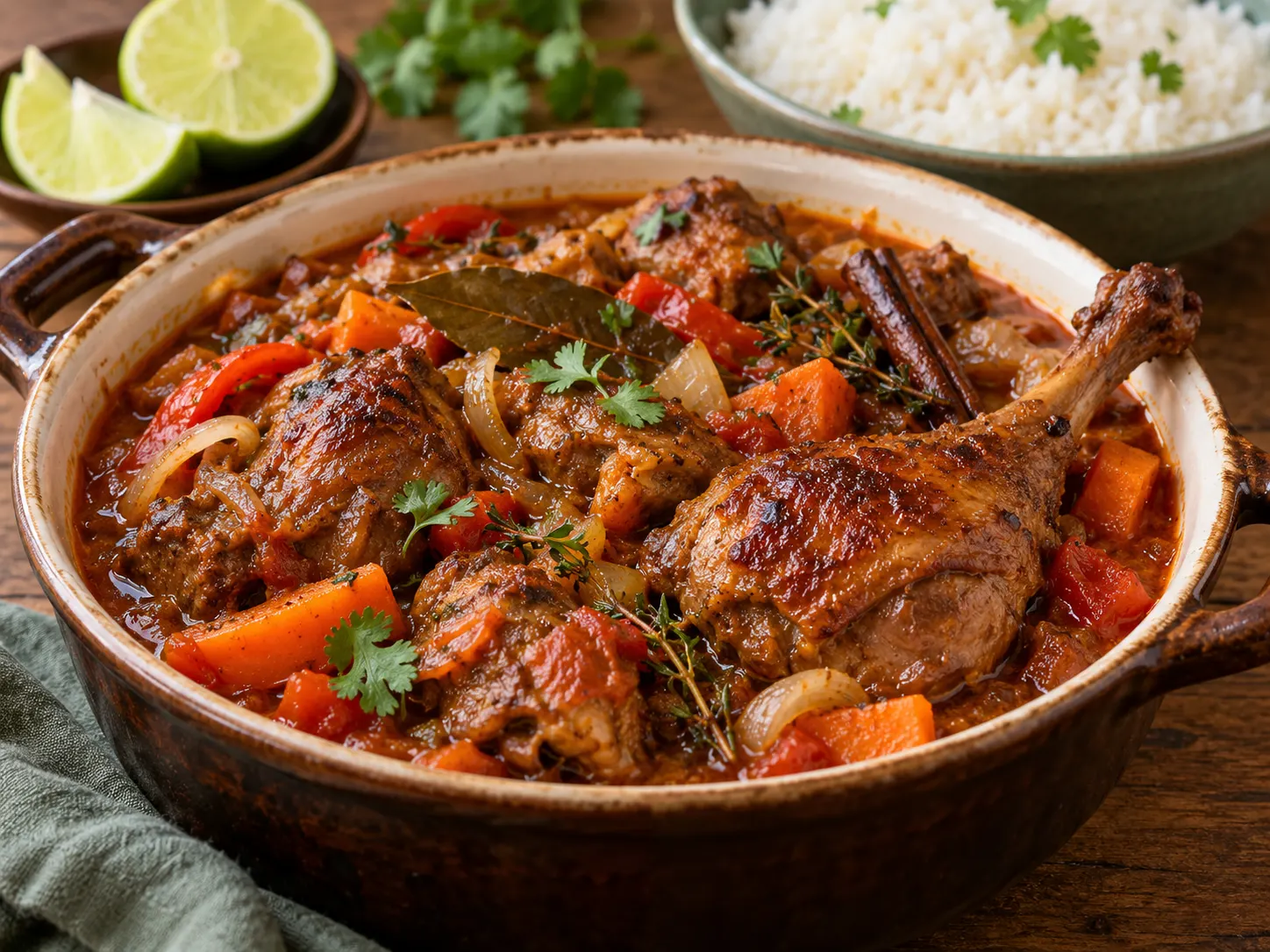
2.1. Duck in family and cultural meals Duck is in many African countries: • Synonymous with special occasions (religious holidays, weddings, returns from the village, academic or professional success, important funerals). • Offered to an honored guest or shared at reconciliation banquets, alliances, political celebrations, or harvest festivals. 2.2. Regional culinary uses a) North Africa and Maghreb • Duck with olives and preserved lemon: a slow-cooked dish where duck pieces marinate in a mixture of spices (ras el hanout, cumin, coriander, turmeric), slowly cooked with green or black olives, preserved lemon wedges, caramelized onion, served in a tagine or with fine couscous. • Duck tagine with apricots, almonds, honey: a sweet and savory combination, a festive dish in Morocco, especially during Ramadan, New Year, or happy events. • Duck pastilla: an urban variation of the famous pigeon pastilla, where confit duck meat replaces pigeon, seasoned with cinnamon, coriander, almond, egg, wrapped in brick pastry. b) Egypt • Fattah with duck: whole duck cooked in an aromatic broth with bay leaf, onion, cinnamon, then browned in the oven, sliced, served on a bed of rice and pita bread soaked in sauce and vinegar, sometimes with a spicy tomato sauce with cumin. • Roasted or stuffed duck: with bulgur, gizzards or liver, specialties of large Coptic tables, wedding banquets or harvest festivals. • Duck broth: renowned for its restorative properties and richness after Lent or during recovery. c) West Africa (especially Nigeria, Benin, Ghana, Mali) • Duck in tomato-chili sauce: duck pieces slow-cooked in a sauce of onion, garlic, tomato, ginger, chili, spices, served with rice, attiéké (steamed grated cassava), corn or yam paste, pounded yam. • Groundnut sauce or peanut sauce: firm-fleshed duck that retains its flavor, paired with peanut butter, or “palm kernel” sauce. • Spicy grilled duck (“urban grill-bar”, night markets): duck marinated, seasoned with chili, lemon, herbs, grilled over charcoal, served in maquis (open-air restaurants) or cabarets, on skewers, mandatory on certain beaches or during concerts. d) Central and Southern Africa • Smoked duck: meat preserved in smoke, used in soups, leafy greens, stews, and broths, a rural specialty of Cameroon, Gabon, southern DRC. • South African Potjiekos: in this traditional stew, duck, if available, is combined with vegetables, potato, carrot, spices, cooked over a wood fire. • Duck with moambe: a variation of the famous chicken, meat simmered in a sauce of peanut paste and palm nuts, a festive dish in DRC, Angola. e) Madagascar and Indian Ocean • Lacquer duck (Reunion, Asian, and French influence): lacquered or confit duck with pineapple, soy sauce, honey, citrus zest, sold at funfairs, in urban markets. • Saka saka (cassava leaves cooked with palm oil) with duck: leafy vegetables, cassava, smoked duck, chili, a rural Malagasy preparation. • Vanilla duck: an emblematic dish, where duck breast or thigh gently simmers with local vanilla, honey, small vegetables, for refined or gourmet dinners. 2.3. Urban gastronomy and modernity Duck is now found on the tables of African gourmet restaurants, in confit, grilled magret, citrus fillet, rillettes, or foie gras revisited with black garlic, mango, baobab, or hibiscus. • Evolves into fusion dishes: magret burger, African tacos, royal couscous, high-end bistronomy tapas and appetizers. • Used in event catering, trendy brunches, fine charcuterie (terrines, pâtés).
In my books

Continue exploring the continent’s cuisines with Africa at the Table — 54 countries, 54 iconic dishes, by Alioune FALL. This book is in English.
Explore further
3. Nutritional value and health
• High protein value: 27 to 29 g/100 g of cooked meat, many essential amino acids. • Rich in vitamin B, iron, zinc, phosphorus, selenium: tonic effect, recovery after exertion, highly recommended for children, adolescents, pregnant women, athletes, the elderly. • Fatter than chicken or guinea fowl (especially for Muscovy duck and fatty duck), but predominantly unsaturated fatty acids, equivalent to olive oil for part of the “duck fat”. • Highly prized duck egg: larger than chicken egg, deep yellow yolk, rich in protein, vitamins, and flavor.
4. Cultural and symbolic dimensions
• Bird of fertility, offering during dowries, births, funerals in the Sahel, Central Africa, Madagascar. • Symbol of union, family and agricultural success, generational transition: “He who offers a duck will transmit peace and prosperity.” • Proverbs: “The duck watches over its own with patience”, “The duck knows all the secrets of the pond”, “Prepare the duck for the guest, he will become your brother”. • Transmission: cutting, cooking, stuffing, the art of marinating passed down from mother to daughter, from father to son, during large family meals.
5. Challenges, sectors, and perspectives
• Undervalued farming: lack of technical support, little research on local duck, few semi-industrial sectors to meet growing urban and export demand. • Health problems: avian flu, management of epizootics, market hygiene, limited training for small producers. • Ecological role: natural pest control for rice, fertilizer, diversification of food farms. • Premiumization: potential for an “African duck” label, local processing, organic valorization, inclusion in new African gastronomy. • Culinary innovation: chefs, food trucks, street food, and fine dining establishments reinvent duck: local sauces, mango-duck pairing, hibiscus, nigella, Asian inspiration, and Afrofusion.
Conclusion Duck, despite its relative discretion compared to chicken, possesses a singular depth and a persistent presence in the agricultural, culinary, and festive landscapes of Africa. It connects rural and urban worlds, tradition and modernity, sobriety and celebration, regional diversity and pan-African creativity. Its flavorful meat, multiple uses, its symbolism of fertility and conviviality, but also the jobs and economic prospects it offers, make duck a treasure to be transmitted and innovated in African cuisine today and tomorrow. Preserving, valuing, and celebrating duck in Africa means nourishing the continent's gastronomic diversity, strengthening food security, encouraging culinary freedom, and paying tribute to the peasant intelligence of its peoples.
In the kitchen : Duck
Recipes from the site to put your knowledge into practice:
Discover these cuisines at a restaurant
Explore our restaurant and caterer directories. Choose your destination and check the establishment’s menu to confirm which dishes are offered and available.
Continue exploring
Enjoy discovering ingredients and African cuisines? Join our newsletter. The illustrated PDF 10 sauces africaines incontournables is in French and is offered after confirming a subscription to the French or bilingual edition.