Ostrich
African Continent
Understanding : Ostrich
Introduction
Here is the ostrich (Struthio camelus), the largest, heaviest, and probably most fascinating bird in the African animal kingdom. A witness to prehistory, a companion to human evolution since its beginnings, a totem of the savannas and deserts, a symbol of abundance as well as collective pride, the ostrich also holds a special place in Africa's culinary, agricultural, festive, and symbolic history. Since always, the ostrich has intrigued and nourished. Formerly hunted in the wild for its meat, eggs, feathers, and leather, today raised on specialized farms or reintroduced into preserved territories, it seduces with its fine, dietary, and original meat. In popular consciousness as well as at modern banquets, it embodies the genius of adaptation, the ability to value all resources, and the dialogue between ancestral traditions and contemporary African innovations.
Where to find it
Look for the exact food-grade form required by the recipe at markets and specialist shops. Check the product name, ingredients, condition and storage instructions.
Explore further: Cooking tips · Food hygiene and safety advice.
History and uses
1. Origins, history, and cultural importance of the ostrich in Africa
1.1. The ostrich in African nature and myths • Distribution: The ostrich is native to Africa. It was found in almost all non-forested areas of the continent, from the Sahara to the South African savanna, including the Sahel, the Horn of Africa, East Africa, the Maghreb, and as far as the Egyptian Nile. • Symbol of power and majesty: Mentioned in Egyptian frescoes, in Fulani or savanna tales, the ostrich embodies strength, vigilance, speed, and vitality. It is also sometimes perceived as a protective totem for villages or ethnic groups. • Social and artistic emblem: Ostrich feathers have been used since prehistory as ornaments, currency, sacred attributes in rituals, and symbols of power (kings, queens, religious leaders). • Eggshell: used as a cup, water container, instrument, or ornamental object in San or Tuareg art. 1.2. History of hunting, gathering, and farming • Traditional hunting: Practiced by the peoples of the Sahel, Southern Africa, the Sahara (Tuaregs, Fulani, Khoisan...) for meat, eggs, and skin. • Domestication and farming: Since the late 19th century (initially for fashion feathers in South Africa), then for meat and derived products in the 20th and 21st centuries, ostrich farming has developed professionally in Morocco, Southern Africa (South Africa, Namibia, Botswana), Egypt, and more emergently in East Africa.
2. Ostrich farming and economy today
2.1. Farming systems • Extensive farming (South Africa, Namibia): ostriches evolving in large parks, natural pastures, fed with grasses, tubers, vegetables, and sometimes compound feeds. • Family farms (Morocco, Egypt, Kenya): small farms focused on meat, leather, ostrich eggs (controlled pastures, selected breeding). • Nature reserves: reintroduction of ostriches into many parks, sometimes cohabiting with other farm animals (zebus, antelopes…), participating in ecotourism. 2.2. Production, market, and employment • South Africa: world leader in the production of ostrich meat, leather, feathers, and eggs, ahead of Namibia and Botswana. • Export: fine meat and derived products exported to Europe, the Middle East, and sometimes Asia. Ostrich leather (bags, shoes, belts, high-end leather goods) is highly prized. • Job creation: workforce in management, processing, marketing, tanning, catering, crafts. 2.3. Economic and agro-ecological challenges • Total valorization: meat (muscle, offal), eggs, feathers, leather, fat for cosmetics. • Sustainable farming: low water and feed consumption per kilo of meat produced (ecological advantage over beef or lamb). • Adaptation to climate change: resistance to high temperatures, drought tolerance.
3. Nutritional value and health benefits
• Lean red meat: 22 g protein/100 g, less than 2% fat, lower in cholesterol than beef or lamb, rich in heme iron (better for anemia), phosphorus, zinc, B vitamins, unsaturated fatty acids. • Ostrich egg: up to 2 kg, equivalent to 24 chicken eggs, very rich in protein, vitamins A, D, E, B12, but a higher fat content. • High digestibility: suitable for children, pregnant women, athletes, the elderly, convalescents, or hypercholesterolemic individuals. • Absence of common beef/pork/chicken allergens: a viable alternative for food allergies.
4. Place of the ostrich in African cuisine
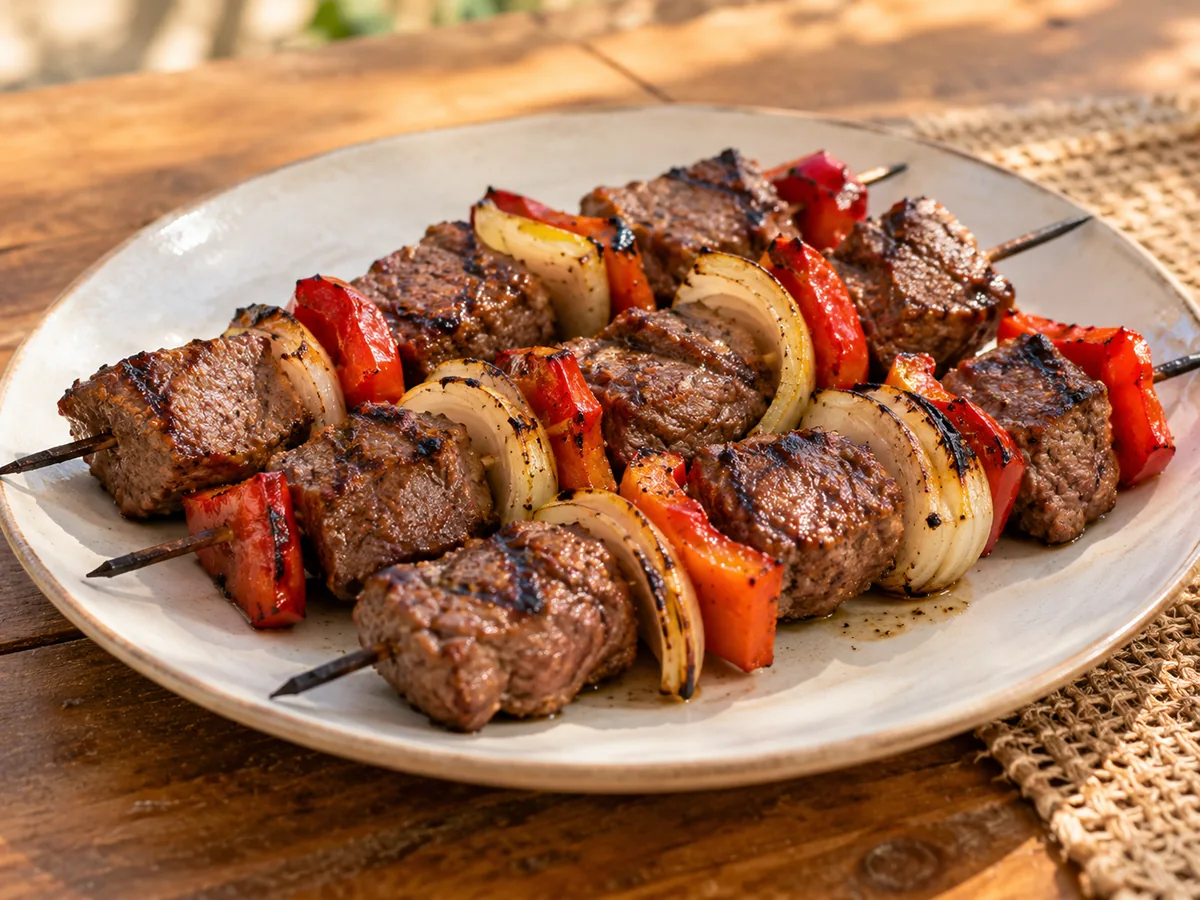
4.1. Tradition, celebration, and symbolism • Prestige and sharing dish: meat served during celebrations, weddings, rites of passage (initiation, healing, funerals, harvest end), often at the heart of large rural or urban tables. • Ostrich egg: object of fascination, sometimes used to prepare shared giant omelets, a solidarity dish during feasts, works of art for decoration, containers for fermented drinks or sauces. 4.2. Regional culinary recipes and uses a) Southern Africa and South Africa • Grilled ostrich steak or fillet: quick cooking to maintain tenderness, simple seasonings (salt, pepper, South African herbs, wine or local spice marinades). • Ostrich biltong (a form of dried, cured meat): dried, salted, spiced meat, consumed as a snack or during gatherings. • Potjiekos (a traditional South African stew cooked in a three-legged cast-iron pot): collective stew where ostrich meat is combined with potatoes, onions, carrots, herbs, and sometimes local beer. • Ostrich “boerewors” (a type of South African sausage) sausages: mixture of ostrich, spices, sometimes a hint of beef or lamb. b) North Africa and Morocco • Skewers or méchoui (a whole spit-roasted lamb or, in this case, ostrich): marinated ostrich fillet cubes, grilled over low heat, served with spices, semolina, harissa. • Tagines: meat simmered with raisins, apricots, almonds, cinnamon, ginger. • Broths, soups: sometimes on religious occasions, family celebrations, or wedding banquets. c) East Africa (Kenya, Tanzania, Uganda) • Nyama choma (grilled meat, a popular dish in East Africa): grilled meat where ostrich, like zebu, chicken, or goat, is cooked over coals, served with chilies, vegetables, plantain, or ugali (a type of cornmeal porridge). • Samosas and kebabs: minced ostrich meat in spicy fillings, fried. d) Central Africa, Madagascar, and islands • Ostrich stir-fries: pieces stir-fried Malagasy style, tomato sauce, ginger, onions; festive or hotel stews. • Ostrich sausage and terrines: recent development for high-end hotels/restaurants. 4.3. Contemporary cuisine and innovation • Urban gastronomy: African chefs, Michelin-starred or new wave, revisit tartare, carpaccio, burgers, ballotine, ostrich in couscous or curry style, pairings with mango, pepper, baobab, ginger, or bissap (hibiscus). • Giant ostrich egg omelet: attraction at culinary festivals, schools, fundraisers for associations. 4.4. Integration into the diaspora and “fusion food” • South African, Maghrebi, Egyptian diaspora: inclusion of ostrich in brunches, barbecues, festive meals, Afro-European or Afro-Asian catering. • Valorization by “health food”: in steaks, thinly sliced, in wraps, salads, “bistronomy” sandwiches.
In my books

Continue exploring the continent’s cuisines with Africa at the Table — 54 countries, 54 iconic dishes, by Alioune FALL. This book is in English.
Explore further
5. Social, cultural, and ritual dimensions
• Symbol of fertility, abundance, and status: feathers on the headdresses of kings, emissaries, Dan, Fulani, Zulu, initiation ceremonies. • Wish egg: breaking an ostrich egg during a wedding or at the end of the harvest is a sign of collective blessing. • Use of the shell: beads, necklaces, water buckets, musical instruments, ornaments, craft objects sold in artisan markets in Namibia, Botswana, Morocco. • Family transmissions: special cuts and cooking methods passed down from tribal chiefs to young cooks, herd management, natural knowledge related to bird observation and tracking.
6. Challenges and perspectives
6.1. Agricultural issues • High cost of initial farming, breeding stock, veterinary management, conservation of wild vs. domestic species. • Threats of poaching, ecological pressure in certain areas (Sahara, Sahel), need for equitable and sustainable management. • Training and transmission: revival of “ostrich knowledge” among younger generations, technical support, support for the private sector. 6.2. Gastronomic and tourist perspectives • Rise of short supply chains and local processing: organic farming, oil distillation, luxury crafts. • Ecotourism: educational farms, visits, tastings, show cooking around the ostrich. • Health/tradition crossroads: modernization of uses for nutrition, community health, functional food. 6.3. Heritage valorization and African pride • Symbol of resilience and national pride: heritage promotion at festivals, culinary competitions, “made in Africa” export. • Innovation and respect: integration into author's gastronomy, fight for biodiversity preservation, support for local job creation.
Conclusion The ostrich is much more than a giant bird or a relic of the African past. A food of celebration and prestige, a totemic animal and a source of innovation, it connects rural tradition, immemorial heritage, and the continent's new agricultural, gastronomic, and economic ambitions. In every giant egg broken in a circle, every steak served at the table, in every bead, feather, or refined leather, the ostrich invites Africa to combine audacity, creativity, sustainability, and pleasure. Preserving, transmitting, and valorizing the ostrich sector means guaranteeing African cuisine a future where excellence, health, diversity, and identity walk hand in hand, somewhere between the savanna, the market, the feast, and the world.
In the kitchen : Ostrich
Recipes from the site to put your knowledge into practice:
Discover these cuisines at a restaurant
Explore our restaurant and caterer directories. Choose your destination and check the establishment’s menu to confirm which dishes are offered and available.
Continue exploring
Enjoy discovering ingredients and African cuisines? Join our newsletter. The illustrated PDF 10 sauces africaines incontournables is in French and is offered after confirming a subscription to the French or bilingual edition.