Omelette
Universal, Continental Africa
Understanding : Omelette
Introduction
The omelette—a universal dish born from the combination of beaten eggs cooked in a pan—seems to belong to all continents, to all cultures. Its simplicity hides infinite diversity, a modularity that embraces tastes, available ingredients, and lifestyles. In Africa, the omelette, far from being a mere copy of the European or Mediterranean model, has become a staple in the diet as a classic breakfast, street snack, economical family meal, or trendy brunch, traversing and reinventing habits, local traditions, and seasons. More than just an “egg dish,” the African omelette dialogues with local vegetables, meats, herbs, cereals, cheeses, spices, sauces, and becomes a culinary marker of African agility, of the ability to magnify the little, to share, to celebrate resources, and to innovate from the boundaries of need and desire. Discover here the saga of the omelette on the African continent: history, symbolism, regional expressions, transmission, nutrition, evolution, and future.
Where to find it
Look for the exact food-grade form required by the recipe at markets and specialist shops. Check the product name, ingredients, condition and storage instructions.
Explore further: Cooking tips · Food hygiene and safety advice.
History and uses
1. History, roots, and spread of the omelette in Africa
1.1. Origin of the omelette The origins of the omelette are ancient: eating beaten and cooked eggs dates back to antiquity. Pharaonic Egypt knew the mixture of eggs, milk, and honey in cooking, ancient Persia prefigured the “kuku” (a thick herb omelette). Arabs, then European conquerors, colonists, and globalization would spread this cooking method and give it its multiple faces. 1.2. Introduction to Africa From the Maghreb to Sahelian Africa, from Madagascar to the Swahili coasts, the influences are multiple: Berber, Jewish, Arab, French, Portuguese, Indian, Malagasy. The African omelette becomes the compromise between speed, “morning food,” market cuisine, and improvised festive dish, moving from the rural home to the urban canteen. Whether it is called omelette, “azegoug” (Berberie), “bazin” (Libya, Tunisia), “egg roll” (Anglophone), “market omelette,” “chapati omelet” (Kenya, Uganda), or simply “beaten eggs,” it penetrates all of Africa, adapting to geographical and cultural diversity.
2. Techniques and ingredients of the African omelette
2.1. Eggs and raw materials • Chicken egg: largely predominant, produced in village as well as industrial farms, easy to store and transport. • Guinea fowl, duck, quail, ostrich egg: used occasionally depending on the region, availability, and celebration (particularly in the Sahel, Maghreb, Madagascar). • Basic seasoning: salt, pepper, sometimes milk or cream for creaminess, butter or peanut/palm kernel/olive oil for cooking. 2.2. Garnishes and infinite pairings • Vegetables: onion (often essential), fresh or dried tomato, bell pepper, chili, garlic, African spinach, jute mallow (corète), “brèdes” (leafy greens), grated cassava, eggplant, sweet potato, carrot, mushroom. • Meats/fish: leftover chicken, sliced beef, corned beef, merguez, canned sardines in oil, dried fish (“kabako” in Guinea), shrimp, ham. • Herbs/spices: parsley, coriander, mint, basil, chives, moringa, pepper, curry powder, nutmeg, cumin, ginger, turmeric. • Other specificities: grated or local cheese (wagashi (a type of cheese) in Benin, fresh cheese, imported cheddar…), cold cuts, diced potatoes or yams, peas, cooked beans, grated moringa, leftover compacted soup or curry. 2.3. Cooking techniques • High-heat pan: individual dish, flipped or not ("flat omelette" or "soufflé omelette"). • Large pot/claypot: cooked for several people, thick omelette like a “frittata,” covered with embers or baked in an oven/wood fire. • Steaming: light omelette from the Maghreb, inside a closed tagine. • Rolled, folded, “samosa”: omelette in a “roulade,” stuffed then cut, slipped into bread, a “tapalapa” (a type of bread), a wrap, or a chapati (East Africa).
3. Regional expression and diversity of forms
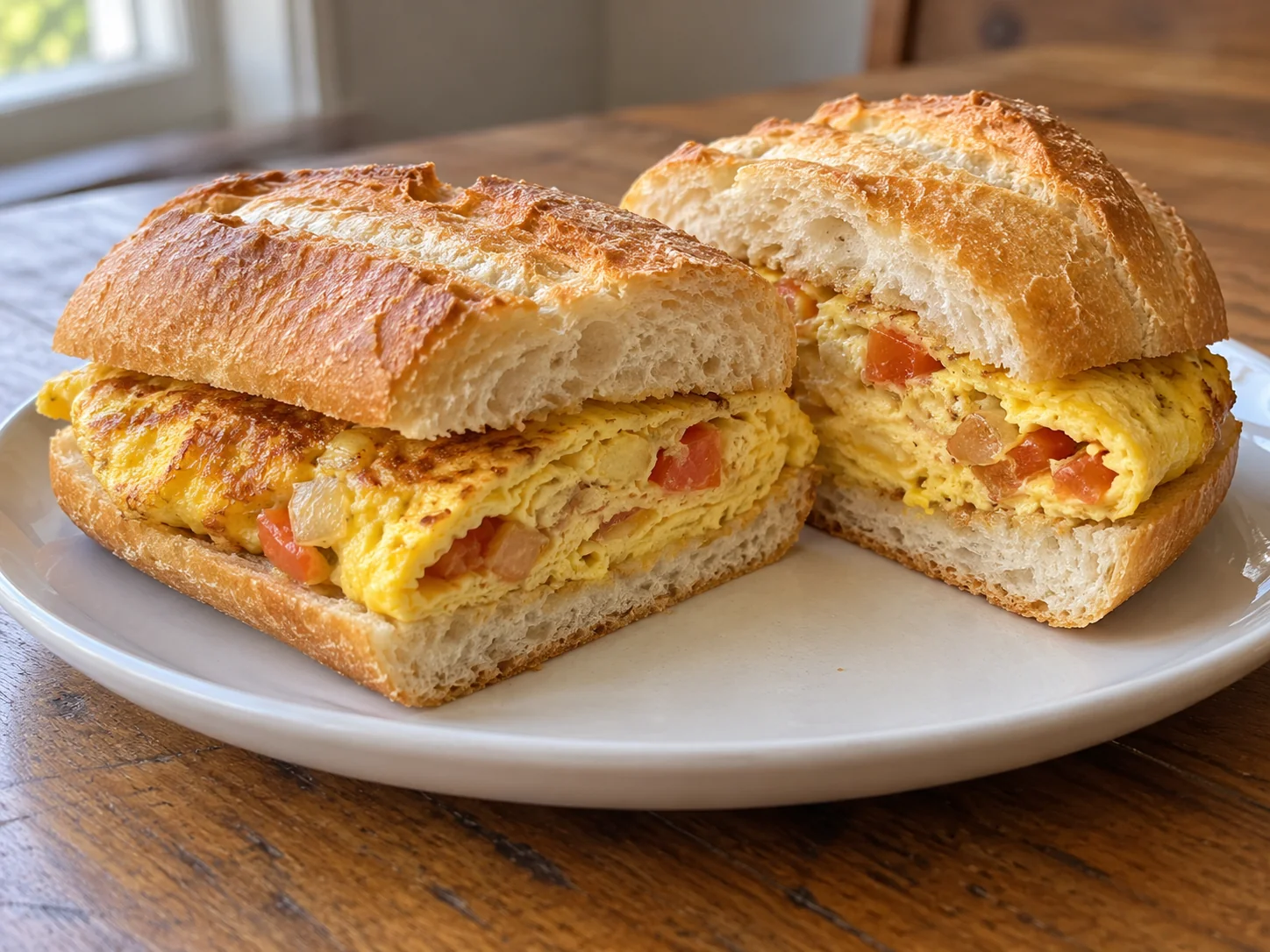
3.1. North Africa and the Maghreb a) “Berber Omelette,” “Matloua,” “Méchouia” • Tomato, onion, garlic, chili, olive oil: often seasoned with cumin or ras-el-hanout. • “Méchouia”: pan-fried grilled vegetables, tomatoes, and peppers garnished with beaten egg, sometimes with merguez, garlic, coriander. • “Azegoug” or “bazin”: thick omelette with wild herbs or from the Atlas peaks, served with homemade bread. b) Egg Tagine • The omelette is not always cooked flat: eggs are “broken” into a pan-fried mixture of vegetables/tomatoes/meat/poultry thighs or fish (egg tagine, Tunisian shakshuka), cooked in a small earthenware pot. • In Morocco, omelette with dried meat (“khlii”), or with parsley, coriander, garlic, and cumin ("mrouzia"). 3.2. West Africa a) “Market Omelette” or “Omelette-Sandwich” • Beaten eggs, onion, tomato, fresh chili, sometimes a little corned beef or sardine, pan-fried in oil, served hot in a crispy baguette, local butter, sometimes melted cheese for the urban version. • Popular in Abidjan, Bamako, Ouagadougou, Cotonou, Lomé, Dakar, a great breakfast classic. • Vendors/stalls famous for their “omelette of the day,” sometimes with added spinach leaves, a portion of potato, or mayonnaise. b) Rustic, rural, or festive omelette • Beaten eggs enriched with vegetables, cooked/fried meat, dried fish, cassava or yam, chili, basil. • Especially for large family gatherings or during harvest returns, quick field lunches. 3.3. Central and Southern Africa • “Ndolé” omelette: Cameroonian variant with bitter leaves (ndolé (a bitter leaf vegetable)), sliced chicken or shrimp, on a bed of omelette. • Puffed omelette: in Angola, Namibia, DRC, eggs garnished with wild mushrooms, palm hearts, smoked meat, plantain. • Botswana/Namibia: thick omelette (frittata) cooked in a cast-iron pot, seasonal vegetables, and sometimes game meat. 3.4. East Africa, Horn, and Indian Ocean a) “Chapati Omelet,” “Rolex,” “Egg Roll” • A specialty of the streets of Uganda, Kenya, Tanzania, Rwanda, the omelette fills a chapati (wheat flour flatbread), garnished with onion, tomato, chili, sometimes bell pepper or minced meat. “Rolex” comes from “roll eggs.” • Popular snacks, favored by students, boda-boda (motorcycle taxi) drivers, and busy urban dwellers. b) Blend of Indian influences • "Masala omelette": beaten eggs with coriander, chili, curry, turmeric. • Seychelles, Mauritius, Madagascar: omelette with smoked or dried fish, pineapple, shrimp, and Creole spices.
In my books

Continue exploring the continent’s cuisines with Africa at the Table — 54 countries, 54 iconic dishes, by Alioune FALL. This book is in English.
Explore further
4. Social, economic, and symbolic role
4.1. Nourish, satisfy, gather • Dish of solidarity: a handful of eggs (often shared among children, neighbors, visitors), a few vegetables, nourish an entire family or community circle. • Worker's breakfast: in the city or at the market, the omelette satisfies, gives energy and strength before going to the field, to construction, to the market. • Student and “bachelor” dish: prepared quickly, inexpensive, flexible according to fridge leftovers or market bag contents. 4.2. Celebration, hospitality, rite of passage • Improved recipe for family events, meeting guests, Sunday brunch, religious holidays (Eid morning, Christmas, Ramadan eves). • Sign of attention from in-laws (“I made you a festive omelette”), symbol of welcome and generosity. • “He who shares an omelette will never lack friends” (Ivorian saying). 4.3. Knowledge transmission and learning • First recipe taught to children, a step towards autonomy. • Art of beating, seasoning, cooking without burning, flipping without breaking, dosing oil, sensing the “just right” cooking. • Central place in NGO workshops, training projects for young women/men in street or domestic cooking. 4.4. Local economic system • Centrality of the trade of eggs, condiments, vegetables in markets. • Driven by families of small farmers, market gardeners, street vendors who live from the continuous flow of morning omelettes, “egg sandwiches,” omelette portions for lunch breaks or evening snacks.
5. Nutritional value and health benefits
• High intake of complete proteins, high bioavailability (eggs). • Source of vitamins (B2, B9, B12, A, D), minerals (zinc, iron, selenium…), antioxidants (lutein…), essential amino acids. • Benefits depending on the garnish: fiber and micronutrients from vegetables, trace of unsaturated fats from peanut oil, omega 3 in eggs from free-range hens. • Quick and assimilable energy: optimal dish for child development, recovery for pregnant women, the sick, athletes, and seniors.
6. Contemporary creativity and gastronomic modernity
6.1. Street-food and fusion • Rolex, egg sandwich, omelette burger: explosion of food trucks, “healthy” kiosks, revisited omelettes (rare herbs, organic vegetables, local cheese, duck breast…). • Omelette-pizza, omelette-sushi, North African wraps: integration of global models. 6.2. Gastro-bistronomy and innovation • Panafrican chefs magnify omelettes with moringa, black truffle, ginger, “brèdes” (leafy greens), eggplant caviar, or fine savanna herbs. • Inclusion in star hotel brunches, diplomatic events, private parties, cooking shows, school competitions. 6.3. Place in sustainable food and food sovereignty • Inexpensive dish, anti-waste, valuing “second-hand” food (leftover vegetables, meats, fish, rice, sweet potato… recycled as garnish). • Central in all emergency food policies, school menus, crisis rations.
7. Challenges, perception, and perspectives
7.1. Stereotypes and valorization • Sometimes unfairly associated with “poverty” or basic food; challenge to give the omelette its rightful place in refined menus. • Rise of a “organic, local eggs” culture, fight against overconsumption of industrial imported or low-quality eggs. 7.2. Place in public health • Strongly recommended in the fight against malnutrition: its place in food education campaigns, in dispensaries, in rural schools. • Attention to cooking: encourage low-heat cooking, varied consumption to avoid excess lipids or burnt oil.
Conclusion The African omelette is a mirror dish: humble, quick, supportive, and malleable, it carries the memory of local traditions and cities, the talent of the informal economy, the strength of family transmission, and the audacity of modern creativity. A “poor man's dish” that has become a universal delight, a reflection of a nourishing, inventive, and generous Africa, it is limited only by imagination. Preserving, transmitting, and reinventing the omelette in all its forms is to celebrate a convivial, conscious, gourmet Africa, open to diversity and the future.
In the kitchen : Omelette
Recipes from the site to put your knowledge into practice:
Discover these cuisines at a restaurant
Explore our restaurant and caterer directories. Choose your destination and check the establishment’s menu to confirm which dishes are offered and available.
Continue exploring
Enjoy discovering ingredients and African cuisines? Join our newsletter. The illustrated PDF 10 sauces africaines incontournables is in French and is offered after confirming a subscription to the French or bilingual edition.