Oxtail
Africa
Understanding : Oxtail
Introduction
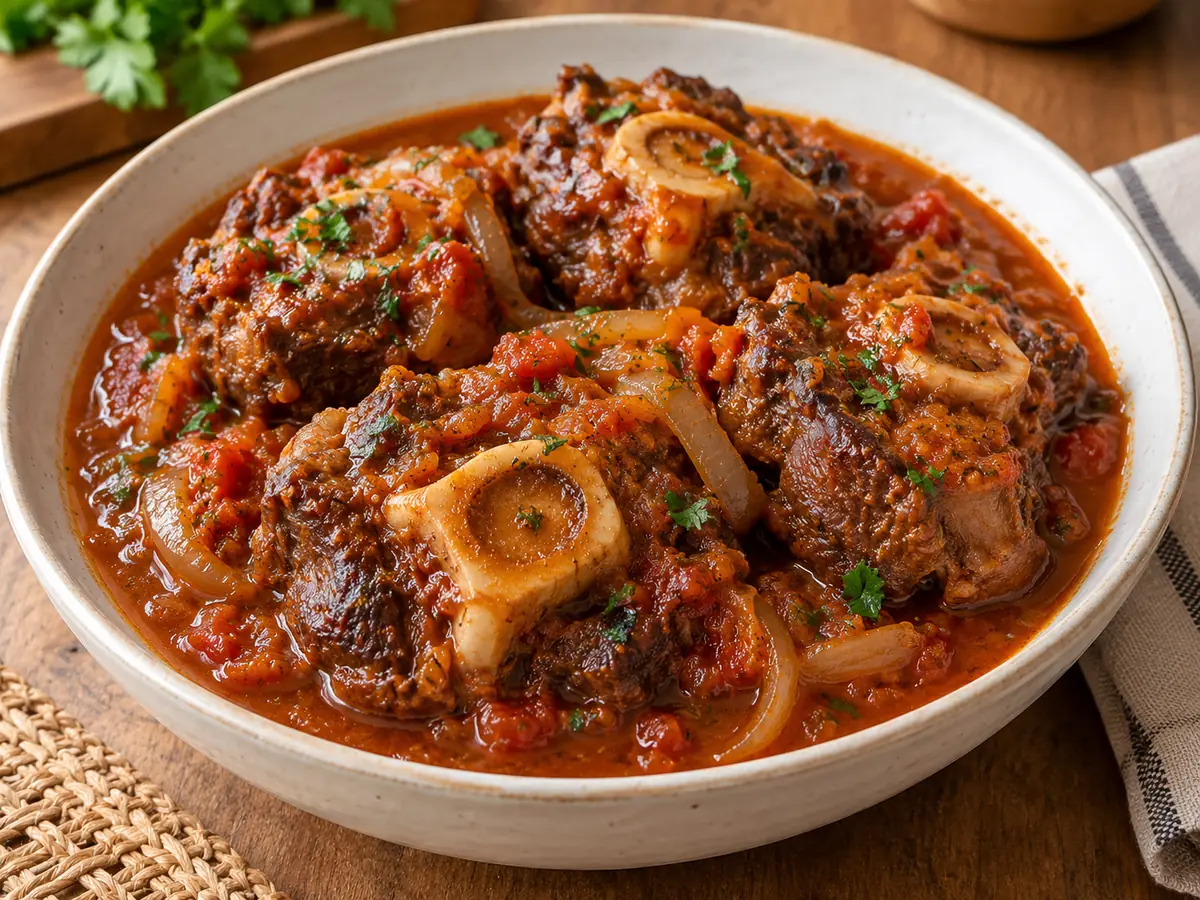
Oxtail is one of the most iconic pieces of African gastronomy. Long considered a "secondary cut" like offal, oxtail has consistently demonstrated the ingenuity and resilience of African peoples in the face of limited resources, while rising, through the magic of fire and time, to the rank of a festive, deeply appreciated dish. From Abidjan to Bamako, from Dakar to Cape Town, from Casablanca to Kinshasa, oxtail, through its variations, symbolizes the alliance of economy, sharing, and gourmet delight. In the invigorating broth of markets, mothers' "soups," and "maquis" (street food stalls) grills, oxtail embodies not only a part of food tradition but also a collective memory of know-how, transmission, celebration, and care. Today, it also rises to the level of modern African cuisine, integrated into the menus of the greatest restaurants and reinterpreted by the "fusion" generation.
Where to find it
Look for the exact food-grade form required by the recipe at markets and specialist shops. Check the product name, ingredients, condition and storage instructions.
Explore further: Cooking tips · Food hygiene and safety advice.
History and uses
1. Origin, history, and symbolism of oxtail
1.1. A "modest" cut that became a festive dish Historically, oxtail, like other undervalued parts (tripe, feet, snout…), was the preserve of the common people, of the "small market," or even intended for women, children, initiates, or sacrificed in rituals. It was systematically recovered during collective slaughter, sacred rituals (Tabaski, funerals, birth celebrations), or village ceremonies. Cooking an oxtail means surviving, feeding the whole family. But the slowness of cooking, the aroma of the broth, the tenderness that emerges from it make this piece a "queen of the terroir," synonymous with hospitality, exceptional moments, and conviviality. In Africa, it transforms little into much. 1.2. Rich symbolism In many African communities, the ox's tail carries a sacred charge: • An instrument of power and blessing among the Fulani, chiefs and marabouts wave the dry tail ("fly whisk") during ceremonies. • Symbol of fertility and abundance. • Metaphor for patience, transformation ("You have to wait for the tail to taste the best meat"). • Offering during weddings, funerals, or to appease ancestors.
2. Nutritional value and health benefits
2.1. Composition • High-quality animal proteins. • Rich in collagen, natural gelatin. • Important source of minerals: calcium, phosphorus, magnesium, potassium, zinc, iron. • B vitamins (B12, niacin, riboflavin). • Low fat content but presence of essential fatty acids during slow cooking. • Provides satiety for a modest price per kilo compared to prime cuts of meat. 2.2. Benefits • Recommended during convalescence and pregnancy: promotes tissue repair, joint health thanks to gelatin. • Broth used as a fortifier and restorative (especially for children, the elderly, athletes, breastfeeding mothers). • Natural aid to digestion, "premium" anti-fatigue effect during periods of fasting or illness. • In folk medicine, oxtail broth is a traditional remedy to "restore strength," and it is said to "glue the bones together."
3. Traditional culinary uses
3.1. Basic preparations Oxtail is distinguished by long cooking, which releases its marrow, tenderizes its connective tissues, and gives character to the broth. Usual steps:
- Cleaning and blanching (sometimes with lemon, salt, quick boil in water to remove impurities)
- Cutting into sections of 3-5 cm.
- Long cooking: generally simmered in water, with aromatics, vegetables, often more than 2 hours to extract the ideal taste and texture. 3.2. Varieties of African recipes a) Broths, soups, and potages • Oxtail broth: a great urban and rural classic, enjoyed in the early morning (anti-hangover, stimulant), or as a meal-soup for any time of day. • Spicy soup from Abidjan: flavored with black pepper, piment kata (a type of chili pepper), garlic, ginger, sometimes with a little tomato, celery, or local basil (“djounblé”, “clou d’Afrique”). • “Supu kon” from Nigeria: concentrated broth with green vegetables, yam, sometimes noodles or rice grains, semolina, all enriched with pieces of tail. • Oxtail and plantain broth: a specialty of Congo, Cameroon, and DRC, oxtail combined with plantain, vegetables, and green leaves. • Extension to North African and Maghreb soups, in harira and festive couscous. b) Stews, sauces, and simmered dishes • Oxtail in tomato-chili sauce: served with rice, attiéké (steamed cassava couscous), “fonio” (a type of grain) or pounded yam. • Kedjenou (a type of stew) of oxtail: Côte d’Ivoire, cooked in a sealed jar with eggplant, chili, onion. • Mafé (peanut stew) of oxtail: peanut butter, tomato, root vegetables. • African leaf sauce (ndolé, saka-saka, téké): oxtail to flavor, thicken, and densify the dish. • Oxtail curry or spiced oxtail: Indian inspiration influenced via the East Coast (Tanzania, Madagascar, Mauritius). c) Grills and festive street food • Braised or grilled oxtail: very popular in Ivorian “maquis” (Abidjan), meat bars ("dibiterie", "chiccos" in Senegal), in the evening around the fire, served whole or cut. • Oxtail skewers: pre-cooked, marinated pieces, threaded on skewers then quickly grilled. 3.3. Contemporary cuisine and innovations • Oxtail terrine or parmentier: meeting with Franco-African and urban cuisine, brought up to date by bistronomic chefs. • Used as a garnish for pasta, in revisited couscous, or in ravioli and samosas. • “Smoked oxtail carpaccio”: modern use in refined appetizers, trendy festive banquets, urban food trucks.
In my books

Continue exploring the continent’s cuisines with Africa at the Table — 54 countries, 54 iconic dishes, by Alioune FALL. This book is in English.
Explore further
4. Social, symbolic, and festive place of oxtail
4.1. Sharing and conviviality • Reunion meals: oxtail is often chosen to treat many guests with little meat, because the broth is abundant, creamy, and there is "something to gnaw on." • Synonymous with a "small party" that brings people together, makes them talk and laugh: everyone gathers to taste, to "suck" the bones, to share the marrow. • Fraternity dishes: served at "modest" weddings, funerals, "refeeding ceremonies" post-COVID or post-labor. 4.2. Transmission and learning • The quintessential "grandmother's recipe," knowledge passed down from generation to generation. • The secret of cleaning offal, dosing chili, cooking time, the "ladle of oil" added at the end, belong to female oral culture and family expertise. • First learning for neighborhood cooks and butchers. 4.3. Status, rites, and beliefs • Symbol of patience, endurance, and rewarded waiting: the "best" taste requires respect and slowness. • Consumed at times of transition: births, marriages, returns, healings, to "rebuild" strength. • Among some peoples, oxtail occupies the place of "chief's share," a figure of command and the transfer of power.
5. Economic value and role in food sovereignty
5.1. Accessibility and circular economy • The tail, cheaper than "noble" cuts: allows the whole family to enjoy a tasty meal with little. • Total valorization of the animal, waste reduction, demonstration of ancestral African "happy sobriety." 5.2. Local sector and employment • Major activity in slaughterhouses, butcher shops, markets: washing, cutting, smoking, packaging. • Daily sales in urban and rural markets, a dynamic sector valued by street food and "bistronomic" restaurants. 5.3. Export and diaspora • Recipes and cuts exported to African diasporas in Europe, America, China – growing demand for local products with a strong soul and taste.
6. Modernity, gastronomic renewal, and creativity
• African chefs reinvent oxtail by associating it with unexpected products: fresh ginger, dried fruits, forgotten vegetables, "fusion" sauces (bissap, mango, curry…). • Use in culinary competitions, taste festivals, solidarity workshops ("anti-waste cooking"), and cooking shows. • Rise of urban African "concept stores" promoting this type of cut in modern dishes, African brunches, chic food trucks.
7. Health challenges and perspectives
7.1. Health management and awareness • Absolute necessity of hygiene: cleaning, prolonged cooking to avoid risks (bacteria, parasites). • Education around preservation, especially in hot weather (bush markets). • Evolution of distribution channels: improvement of transport, slaughterhouses, cold chain to ensure public health. 7.2. Perspectives + Modernization • Promotion in food sovereignty policy, valorization of "locavore." • Integration into school menus, hospital menus, collective catering, food NGOs. • Valorization of local produce and African "homemade."
Conclusion Oxtail is more than food: it embodies the memory of sharing, the art of long time, the magic of African fire, and the science of collective taste. From the cooking pot to the maquis, from the rural hut to the urban food court, it celebrates inclusion, conviviality, creativity, heritage, and the future. Preserving, transmitting, and modernizing oxtail cuisine means inscribing all of Africa in the living circle of gourmet delight, resilience, and shared pleasure.
In the kitchen : Oxtail
Recipes from the site to put your knowledge into practice:
Discover these cuisines at a restaurant
Explore our restaurant and caterer directories. Choose your destination and check the establishment’s menu to confirm which dishes are offered and available.
Continue exploring
Enjoy discovering ingredients and African cuisines? Join our newsletter. The illustrated PDF 10 sauces africaines incontournables is in French and is offered after confirming a subscription to the French or bilingual edition.