Turkey
Central and North America
Understanding : Turkey
INTRODUCTION
Turkey (Meleagris gallopavo), long an emblematic bird of the New World, is now firmly rooted in African diet, symbolism, and feasts. While for many it evokes European Christmases or American Thanksgivings, over the decades it has found its place in village farmyards, urban markets, during major celebrations, and in the creativity of African cuisines. From the rural pot to the city banquet, turkey tells us the story of agricultural modernity, cultural diversity, and the culinary inventiveness of a continent in perpetual motion.
Where to find it
Look for the exact food-grade form required by the recipe at markets and specialist shops. Check the product name, ingredients, condition and storage instructions.
Explore further: Cooking tips · Food hygiene and safety advice.
History and uses
1. ORIGIN AND SPREAD OF TURKEY ON THE AFRICAN CONTINENT
1.1. Origins and arrival in Africa Turkey originated in Central and North America, domesticated in antiquity by the Aztecs and Mexican peoples. It crossed the Atlantic with the Spanish in the 16th century and, via maritime routes, reached the Mediterranean basin, arriving in the Maghreb and the Middle East long before becoming widely established in sub-Saharan Africa in the 19th–20th centuries. Initially raised as a curiosity or prestige animal by notables, turkey became democratized in villages, progressively integrating family farmyards in the Sahel, savannas, Ethiopian plateaus, coastal regions of Central and West Africa, as well as in more modern farms in Southern Africa. 1.2. An Afro-compatible adaptation Hardy, the “African” turkey has little to envy its European or North American cousins: it adapts to the climate, feeds on local cereals, herbs, and scraps, and finds in rural parks and semi-open environments the ideal setting for its extensive or semi-intensive farming.
2. TURKEY FARMING AND ECONOMY IN AFRICA
2.1. Farming techniques and typology • Traditional family farming: bird raised in freedom or semi-freedom, sharing the farmyard with chickens, guinea fowl, ducks; women's empowerment; adaptation to drought, diseases, but moderate yield (4-10 eggs per clutch, 1-2 clutches/year). • Semi-intensive / modern farming: larger enclosures (peri-urban cooperatives, commercial farms), enriched feed, organized health monitoring (vitamins, preventive antibiotics), hybridization of fast-growing breeds. 2.2. Economic role and sector • Rural and urban markets: live or plucked turkey is traded in “large markets” (Dakar, Bamako, Abidjan, Lagos, Accra, Douala, Cotonou, Conakry…), with seasonal peaks approaching holidays (Christmas, New Year, Tabaski, Easter). • Supplementary income: sale of turkeys, eggs, poults essential to the household economy; “living” savings quickly convertible into money, a medium of exchange between families or neighbors. • Growing industrial processing: modern slaughterhouses (South Africa, Morocco, Nigeria, Egypt), cutting, processed products (sausage, ham, stuffing), regional export or for the African diaspora in Europe.
3. NUTRITIONAL VALUE OF TURKEY MEAT
• Lean protein: 22–29 g/100g, comparable to or higher than classic poultry. • Low in fat and cholesterol: 2–8g/100g (depending on cut and cooking), well suited for the diet of diabetics, seniors, athletes, pregnant women. • Rich in B vitamins (B3, B5, B6, B12), zinc, selenium, iron, phosphorus. • Excellent digestibility. • Less allergenic and more digestible than some red meats. • Recommended for anemia prevention, ideal supplement in infant nutrition and convalescence.
4. CULINARY USES AND REGIONAL DIVERSITY
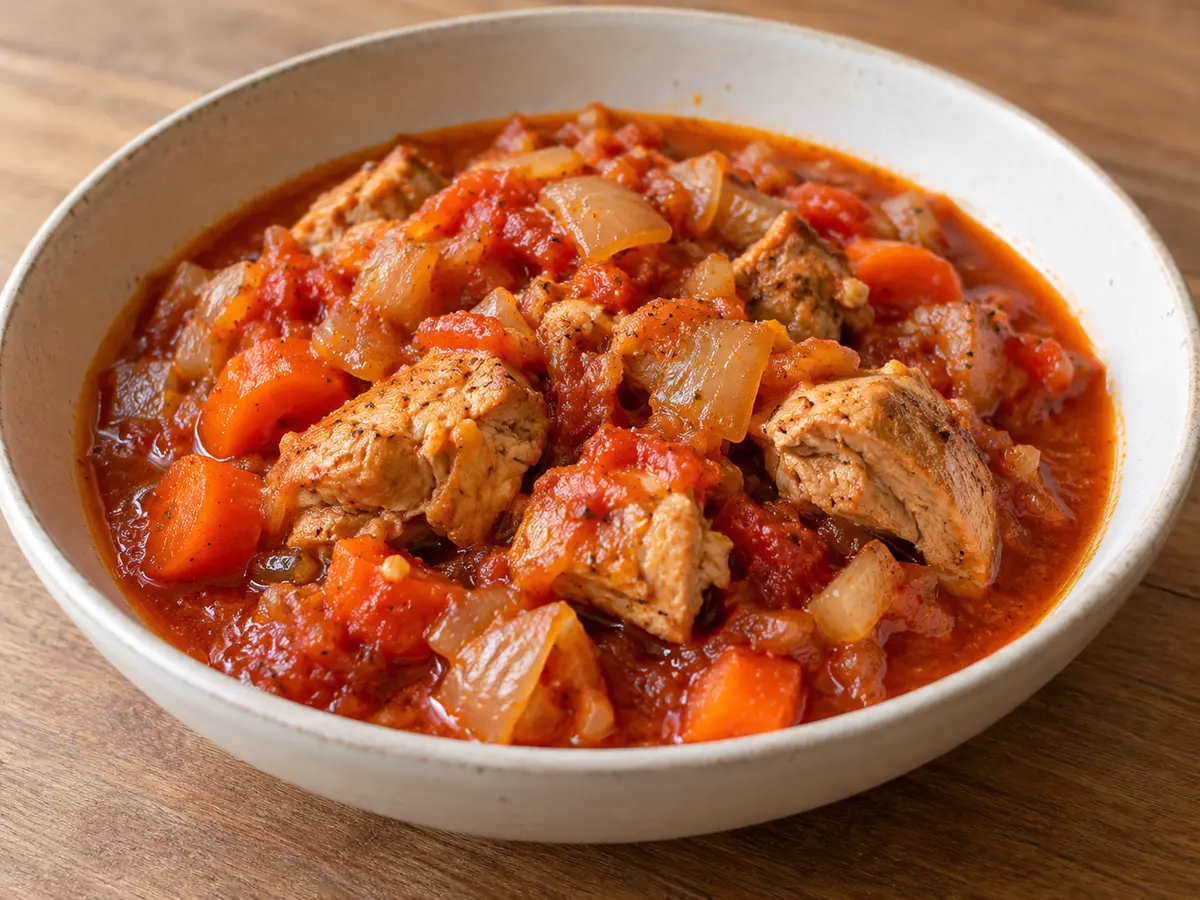
4.1. Turkey, queen of celebrations and large gatherings • Star dish of African Christmas: across the continent, roasted (or fried) turkey has become the quintessential symbol of family Christmas and New Year meals, weddings, birthdays, and major ceremonies. • Roasted, braised, or stuffed: served whole, carved at the family table, flavored with garlic, herbs, ginger, lemon, chili, local spices (Penja pepper, Maghreb blend, cloves, nutmeg), topped with tomato sauce or cooked in its own juices. • Accompaniments: riz gras (rice cooked in meat broth), attiéké (steamed fermented cassava semolina), pounded yam, fries or alloco (fried plantain), Senegalese couscous, cooked or raw vegetable salad, fonio, “tapalapa” bread or baguette. 4.2. Soups, stews, and broths • Turkey broth: used for recovery after flu/fatigue/childbirth, often served to elders or convalescents in Fulani, Bambara, Yoruba, Hausa families. • Turkey in tomato sauce or seed sauce: meat simmered with tomato puree and spices, or sauce based on palm nuts (palm kernel) or peanuts. • Vegetable/turkey stew: turkey slow-cooked with hominy vegetables, carrots, onions, cabbage, squash, sweet potatoes, often to feed a large number of people. 4.3. Street food and fast food • Turkey skewers: “suya” (Nigeria), “chichinga” (Ghana), “dibi” (Senegal, Ivory Coast), marinated in chili, garlic, ginger, herbs, grilled over charcoal and served with onion, green chili, “maga” (Maggi sauce). • Fried turkey: breaded pieces or wings, sold in urban maquis (informal restaurants), fast-food outlets, served with cassava/attieke/alloco/fries. • Sandwiches, burgers, and wraps: turkey cutlets or strips integrated into “African-style” burgers, “street brunch” wraps, revisited tacos. 4.4. Gastronomy, bistronomy, and fusion cuisine • African stuffed turkey: stuffing based on spiced rice, local vegetables, dried fruits (dates, raisins), sometimes liver, merguez (spicy lamb sausage), hard-boiled eggs. • Tagines and couscous with turkey: Maghreb, lighter version, combination of winter vegetables, chickpeas, mild spices. • Trendy salads and tapas: shredded turkey, peanut or sesame oil vinaigrette, mild chili, fresh herbs, mango. • Modernization: African chefs revisiting turkey: confit, low-temperature cooking, fusion with hibiscus, baobab, ginger, plantain, yassa “poultry”.
In my books

Continue exploring the continent’s cuisines with Africa at the Table — 54 countries, 54 iconic dishes, by Alioune FALL. This book is in English.
Explore further
5. SYMBOLISM AND SOCIAL ROLES OF TURKEY
5.1. Sign of prosperity, hospitality, and celebration • Offering a turkey to a guest, at a wedding, birth, or reconciliation is a highly respected and regarded act. • In some ethnic groups, turkey or its eggs serve as a “gift” or social “dedication” during key life events. 5.2. Transmission, learning, rituals • Preparing turkey: a “rite” of passage for the young wife, an essential family skill for festive meals. • Transmission of secrets of marinade, carving, stuffing, cooking. • Turkey offered or sacrificed during religious or spiritual ceremonies. 5.3. Women, empowerment, and entrepreneurship • Women remain at the center of the turkey sector, from chick to cutting board: farming, sales, cooking, catering, street food. • Rural cooperatives and “poultry” credits dedicated to economic recovery, education, and food security.
6. HEALTH CHALLENGES, SECTORS, AND PROSPECTS
6.1. Health management • Infectious diseases (avian flu, influenza, salmonellosis), predators (dogs, raptors, snakes), high chick mortality without adequate vaccination, unbalanced diet. • With the rise of modern sectors, improvement in hygiene, slaughterhouses, refrigerated transport, better traceability. 6.2. Short supply chains and sustainability • Valorization of the local sector: hardy breeds, “farm-to-table” supply chains, quality labels. • Importance of self-produced feed, compost from droppings for market gardens. 6.3. Integration into food sovereignty • Growing focus on poultry (less costly and polluting than beef/sheep meat) in national food security strategies. • Turkey and processed products as a nutritional solution for school canteens, emergency food, humanitarian circuits, and NGOs.
CONCLUSION African turkey reflects the continent: resilient, warm, innovative, and festive. Initially an exotic bird, it has taken root in the rural and urban landscape, conquered weddings, festive tables, and street food, inspiring both tradition and modernity. Nourishing, transmitting, and valuing turkey in African cuisine means not only strengthening food security and culinary creativity but also supporting the family economy, women's empowerment, and rural dynamism. Turkey, in Africa, is no longer just a festive dish: it is the ally of daily meals and the gourmet promise of a continental gastronomy open to the future.
In the kitchen : Turkey
Recipes from the site to put your knowledge into practice:
Discover these cuisines at a restaurant
Explore our restaurant and caterer directories. Choose your destination and check the establishment’s menu to confirm which dishes are offered and available.
Continue exploring
Enjoy discovering ingredients and African cuisines? Join our newsletter. The illustrated PDF 10 sauces africaines incontournables is in French and is offered after confirming a subscription to the French or bilingual edition.