Tripe
Africa
Understanding : Tripe
Introduction
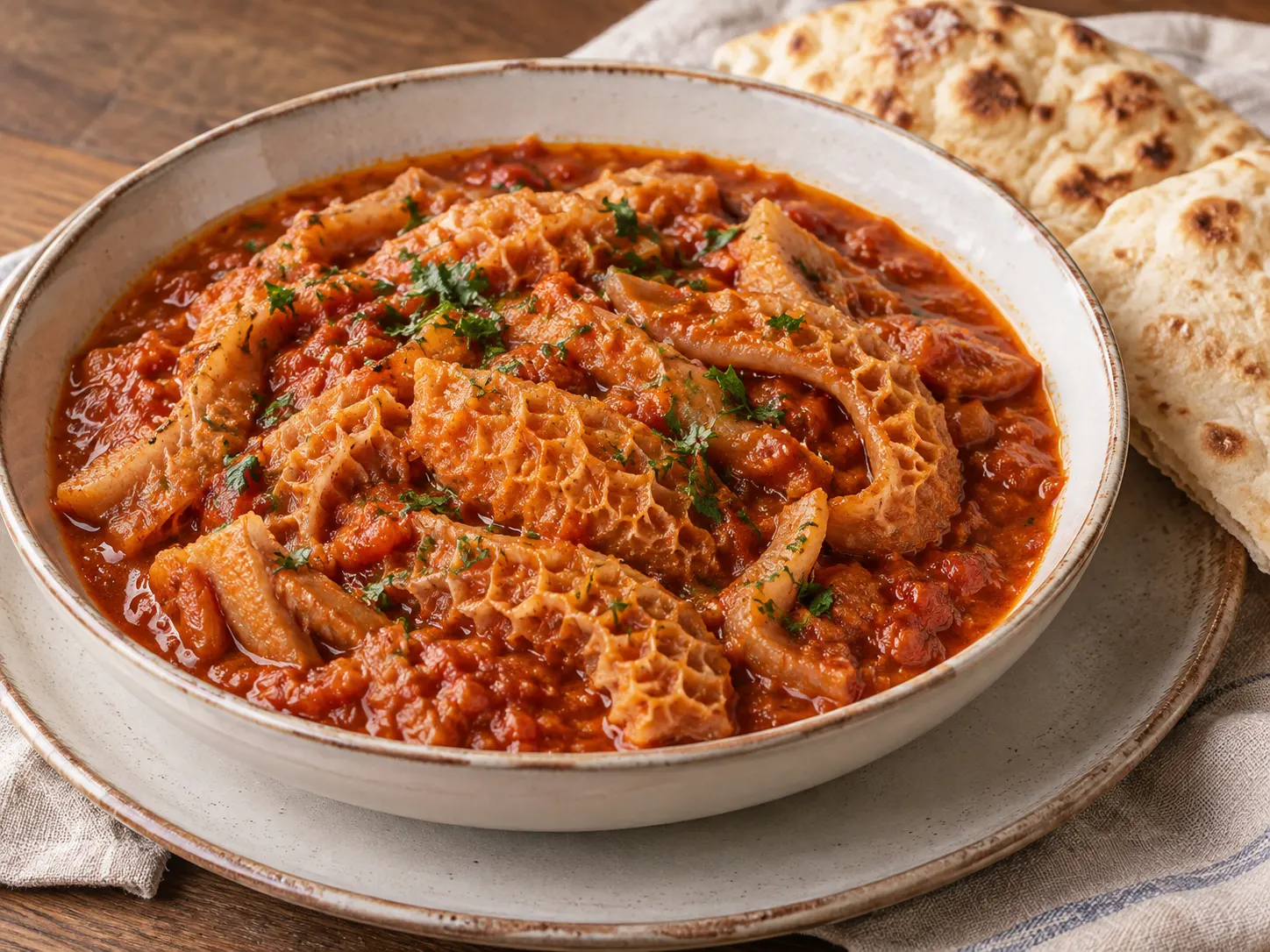
Tripe, the muscular walls of the stomach and sometimes the intestines of ruminants, constitutes much more than a mere secondary food in African cuisine. It embodies a centuries-old tradition of economy, creativity, and conviviality where every part of the animal is valued and magnified. While in many Western societies, tripe consumption has sometimes suffered from a “poor man’s food” status, in Africa, it symbolizes sharing, generosity, popular celebration, and mastery of family and community know-how. From Dakar to Douala, Abidjan to Bamako, Casablanca to Antananarivo, tripe tells a thousand and one stories of cooking pots, markets, festivities, and solidarity.
Where to find it
Look for the exact food-grade form required by the recipe at markets and specialist shops. Check the product name, ingredients, condition and storage instructions.
Explore further: Cooking tips · Food hygiene and safety advice.
History and uses
1. History, status, and symbolism of tripe in Africa
1.1. The roots of total valorization In African agro-pastoral history, wasting any part of a sacrificed animal is unthinkable. Since time immemorial, livestock has held a central place: wealth, a sign of autonomy, matrimonial dowry, a tool for survival and family or community prestige. At slaughter, tradition – be it Fulani, Zulu, Bambara, Soninke, Tuareg, or Swahili – attaches paramount importance to the distribution and valorization of all parts of the animal. Tripe represents, in this context, a gastronomic and symbolic reward, often consumed together, by hand, from the communal pot. 1.2. Ritual place and social status Tripe takes its place in rituals, sometimes reserved for initiates, elders, or offered in homage to ancestors during sacrifices. Its preparation and consumption are an act of transmission: celebrating family events, forging alliances, marking religious festivals (Tabaski, circumcision, baptism, funerals). Sharing a pot of tripe is thus imbued with a dimension of fraternity and hospitality.
2. Types of tripe and regional diversity
2.1. What is meant by “tripe”? The term “tripe” includes, according to regional traditions: • the rumen (paunch), • the omasum (omasum, “leaf” due to its lamellar appearance), • the reticulum (reticulum, or “honeycomb”), • the abomasum (abomasum, fourth stomach), • but also sometimes the intestines, feet, head, or tail. Beef, mutton, goat, sometimes pork (in authorized areas and cultures), or even camel in certain regions of the Sahel or North Africa. 2.2. Regional specificities In “couscous”, “ndolé” or “mafé”, each region has its preferences: beef tripe in the Maghreb, mutton in the Sahel, goat in the savannah, zebu in Madagascar and East Africa. Textures, cuts, and tastes vary depending on the type of rumen used, the cleaning method, or the cooking stage.
3. Preparation techniques, gestures, and know-how
3.1. Cleaning and blanching Preparing tripe is an art in itself. First, meticulous washing (several waters, sometimes with ash, lemon, vinegar, or salt), which removes impurities and odors, then blanching (immersion in boiling water, often renewed). All of this mobilizes female know-how or that of artisan butchers, transmitted orally. In African urban markets, tripe washers form a micro-economy from which many families derive part of their income. 3.2. Cutting, cooking, and seasoning Tripe is cut according to its use: pieces for soup, strips or cubes for stews, large sheets for stuffing. Tripe often requires a long initial cooking to tenderize and remove any bitterness, then a final cooking in sauce or grilled. Condiments accompany this work: garlic, ginger, onion, celery, chives, basil, chili, nutmeg, pepper, local leaves (djounblé, African bay leaf, moringa…), local spices, palm oil, shea butter, tomato, peanut paste.
4. Culinary uses of tripe in African cuisine
4.1. West Africa • Mafé tripe: emblematic dish of Mali, Senegal, Guinea, Ivory Coast. Tripe simmered for a long time in tomato and peanut paste sauce, garnished with sweet potatoes or root vegetables. • Kpanman (Togo), Yassa tripe (Senegal): tripe marinated in lemon, onions, mustard, grilled or simmered. • Tripe with tomato-chili sauce: popular in Benin, Ghana, Nigeria, served with rice, yam, attiéké, or fufu. • Early morning “soups”: spicy tripe-based soups, known to “restore strength”, sold around markets, stations, workshops… 4.2. Central and Anglo-African Africa • Ndolé tripe (Cameroon, Gabon): tripe simmered with bitter ndolé leaves, shrimp, peanuts; a festive or reception dish. • Tripe with moambe: DRC, Angola. Tripe simmered in a palm nut sauce, accompanied by plantain or chikwangue (cassava). • Chikanda (Zambia, Malawi): a festival specialty, based on tripe and pounded tubers. 4.3. Maghreb and North Africa • Kercha/douara (Morocco, Algeria, Tunisia): spicy tripe stew, sometimes with chickpeas, beans, cumin, coriander, consumed during Ramadan, Eid, or offered as alms. • Tanjia marrakchia: tripe, feet, sheep's head cooked for a long time in a jar with spices. • Couscous for special occasions: with beef/tripe, often associated with the sheep festival (Eid al-Adha). 4.4. East Africa and Indian Ocean • Tripe stews and soups (Uganda, Kenya, Tanzania): cut tripe, simmered with spices, served with posho (corn flour), matoke, or rice. • Saka-saka with tripe: in Madagascar, tripe cooked in cassava leaves, tomato sauce, green chili. • Curries or skewers: Indo-Reunion influences, tripe sautéed or baked, spiced and seasoned.
In my books

Continue exploring the continent’s cuisines with Africa at the Table — 54 countries, 54 iconic dishes, by Alioune FALL. This book is in English.
Explore further
5. Place of tripe in society and popular life
5.1. Meals of sharing and reunion • Tripe is synonymous with large tables, sharing, and events: baptisms, funerals, family celebrations, Muslim holidays, the return of a loved one. • Large shared pot, where everyone helps themselves by hand or with a ladle, a symbol of inclusive fraternity. • They embody the ability to “multiply food”: inexpensive, their generous cooking satisfies large families or entire teams. 5.2. Transmission, learning, and rituals • Washing, cutting, and cooking tripe is often a young person's first autonomous culinary learning, marking entry into adult and family life. • Several communities reserve the first tasting of tripe for initiation rituals or symbolic passages (circumcision, marriage…). 5.3. Economic activation • “Tripe vendors” – artisans, washers, market sellers – form their own sector, creating jobs and a network of mutual aid. • Tripe, sold alone or mixed with other offal, is the food of the “maquis” (popular restaurant), the “gargote” (eatery), a pillar of African street food. • They give meaning back to the neighborhood market, while contributing to the fight against food waste.
6. Nutritional value and health benefits
• Rich in high-quality animal protein. • Major sources of heme iron, zinc, copper, B vitamins (B12, B6). • Collagen, gelatin: benefits for joint health, digestion, growth, regeneration after illness, pregnancy, breastfeeding. • Low fat intake (after cleaning, degreasing), but naturally present cholesterol levels (moderation for people at cardiovascular risk). • Tripe broth renowned as a fortifier, “anti-anemia”, recommended for children, pregnant women, the elderly, convalescents, or athletes.
7. Modernity and gastronomic creation
7.1. Tripe in the 21st century • Rediscovered by young chefs, included in bistronomy, African brunches, tapas, reinvented as burgers, spring rolls, ravioli, pizza. • Anti-waste emblem, valued in popular workshops, NGO nutrition programs, culinary shows, and international competitions. • Popular with the African diaspora (Europe, Americas, Gulf), sought after as a connection to memories, childhood, family. 7.2. Challenges, hygiene, and acceptability • Modernization of cleaning practices, compliance with sanitary standards (avoid parasites, infections). • Education against “poor man’s food” prejudices and concern to disseminate nutritional quality to the general public. • Promotion of local sectors, sustainable farming, food sovereignty, and inclusive cuisine.
Conclusion Tripe represents African wisdom of “nothing is to be wasted”, the pleasure of deep taste and new textures, the consciousness of sharing, and the genius of a cuisine that sublimates its constraints. Deeply rooted in tradition, it opens up to innovation, health, and celebration. Preserving, transmitting, and reinventing tripe cuisine ensures the vitality of African culinary heritage, nourishes conviviality, solidarity, and the continent's gourmet future.
In the kitchen : Tripe
Recipes from the site to put your knowledge into practice:
Discover these cuisines at a restaurant
Explore our restaurant and caterer directories. Choose your destination and check the establishment’s menu to confirm which dishes are offered and available.
Continue exploring
Enjoy discovering ingredients and African cuisines? Join our newsletter. The illustrated PDF 10 sauces africaines incontournables is in French and is offered after confirming a subscription to the French or bilingual edition.