Gizzards
Africa
Understanding : Gizzards
Introduction
In the rich African culinary repertoire, gizzards hold a unique place, at the crossroads of local produce, popular economy, urban conviviality, and gastronomic imagination. An appreciated part of poultry (especially chicken, guinea fowl, duck, turkey — sometimes pigeon), this tough offal is part of the gourmet memory of millions of African households, in the family pot, on the “maquis” (street food stall) grill, in the night snack bar, or trendy street food. Alongside livers, hearts, and necks, gizzards have long materialized the genius of recovery, the festivity of sharing, and the art of enchanting modest pieces. They tell the story of Africa that embraces its roots, magnifies the least to make the most of it, and draws on its traditions to constantly innovate in the present.
Where to find it
Look for the exact food-grade form required by the recipe at markets and specialist shops. Check the product name, ingredients, condition and storage instructions.
Explore further: Cooking tips · Food hygiene and safety advice.
History and uses
1. What is a gizzard? Anatomy and singularity
The gizzard is a muscular organ that is part of the digestive system of birds. In chickens or guinea fowl, it has a dense, fibrous, and elastic texture because it is used to grind swallowed seeds, grains, or small pebbles, thus aiding digestion in the absence of teeth. Oval in appearance, it is made up of powerful muscular layers, covered with an indigestible membrane (which is removed during preparation). Gizzards are distinguished by: • Their firmness: they require appropriate cooking to make them tender. • Their sustained flavor: intense and “clean” taste that seduces lovers of “authentic” cuisine. • Their low cost: more affordable than fillets or thighs, they feed large tables without ruining the hostess.
2. History and culture of gizzard in Africa
2.1. Traditional heritage Since ancient times, every “useless” part has been valued. African societies historically refuse waste: everything is eaten, everything is integrated into celebrations or daily life. The gizzard, a fleshy organ of poultry, occupies a prominent place, both in the collective pot for special occasions and as a “little extra” for a child or elder. Offering or reserving a gizzard was – and remains – a mark of attention: it is sometimes reserved for the host, mother, or patriarch during festive meals or ritual slaughter. 2.2. Evolution with modernity With urbanization, the industrialization of livestock farming, and the emergence of street food, gizzards have become a flagship food of maquis (street food stalls), night grills, school snacks, but also Sunday family feasts or popular celebrations.
3. Preparation and culinary techniques
3.1. Cleaning and cooking Cleaning gizzards requires method and patience: • The thick, yellowish membrane surrounding them is removed. • They are washed thoroughly (sometimes with lemon, salt, vinegar) to remove odor or traces of fat. • A first cooking in water is preferred, to tenderize and degrease them (hence the famous “boiled gizzard”). 3.2. Transformations and cuts • Sliced into strips or diced for frying; • Whole for skewers (“chichinga”, “suya”, “dibi” African); • Shredded or finely cut for stews, pizzas, stuffings. 3.3. Cooking methods • Boiled (with aromatics) then sautéed or fried (for tender inside and crispy outside); • Marinated (ginger, garlic, chili, lemon) then grilled over coals or in a pan; • In sauce (tomato, onion, chili, local spices, Maggi cube, etc.).
4. Uses and regional variations
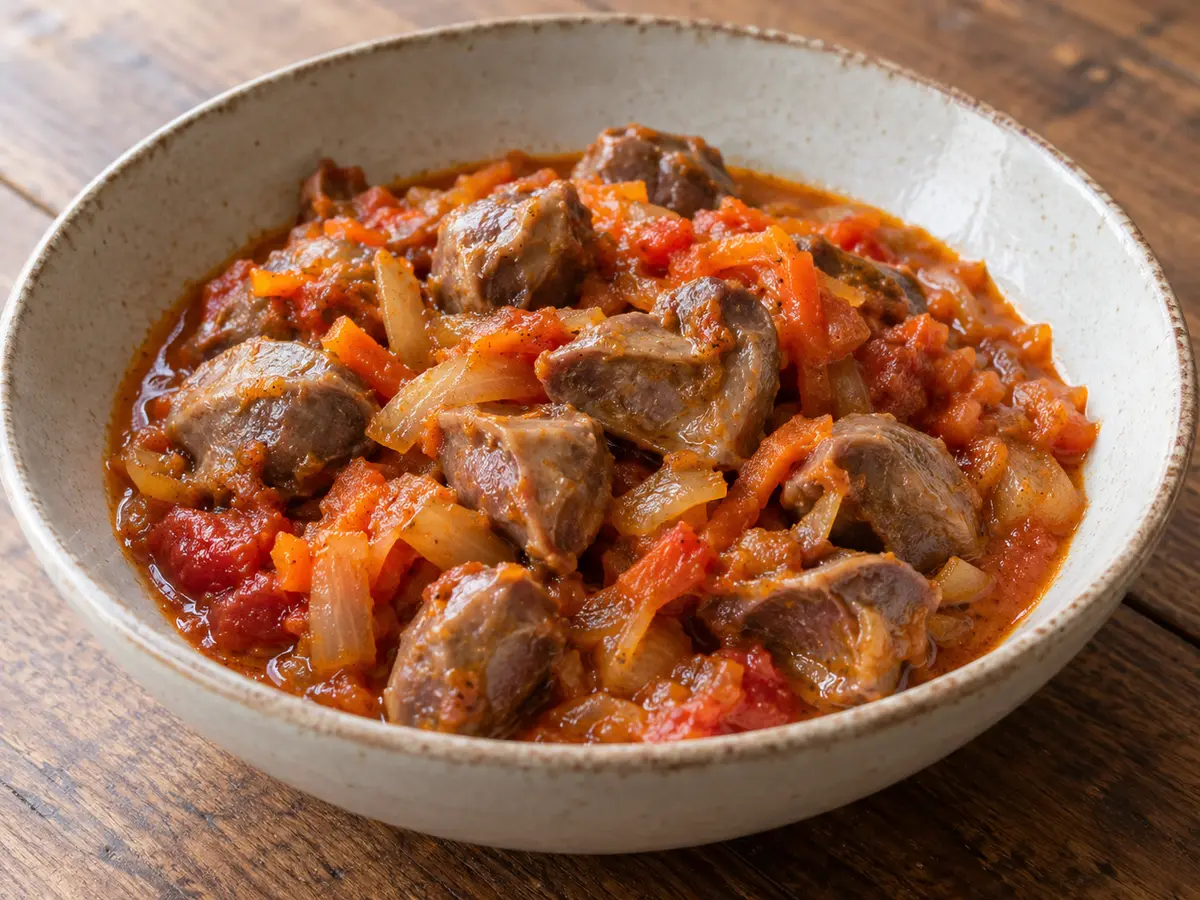
4.1. West Africa • Sautéed or fried gizzards (“braised gizzards”): eaten as a snack or accompaniment to rice, attiéké (steamed cassava couscous), fried plantain, or served in taverns (“maquis”) with salad and spicy chili sauce. • “Chichinga/suya/dibi” skewers (Benin, Togo, Ghana, Nigeria, Ivory Coast, Burkina Faso, Senegal): spiced gizzards, threaded on sticks, grilled over charcoal, attracting waves of nocturnal customers. • “Gizzard tomato sauce”: simmered, served with pasta, rice, yam, “fonio” (a type of grain). In large markets and urban areas, “fried gizzard” or “gizzard fritters”, sometimes called “grilled gizzard”, are sold by the cut, often accompanied by a local drink or beer. 4.2. Central Africa • Gizzard with ndolé (a dish made with bitter leaves): Cameroonian (or Gabonese) version, gizzards mixed with a sauce of bitter leaves, peanuts, meat, or shrimp. • Stews: gizzards added to tomato onion sauce, or peanut sauce. • Breakfast, brunch, or snack: specialty of snack bars in Douala, Libreville, Brazzaville, sautéed gizzards served on bread or accompanied by bananas. 4.3. East and Swahili Africa • Gizzard-pilau: in the fragrant rice of Kenya, Uganda, Tanzania, Zanzibar; gizzards diced, cooked with spices, sometimes coconut and turmeric. • Chapati with Gizzard: rolled chapati filled with sautéed gizzard and vegetables. • Mandazi (fried dough) stuffed with gizzards: festive version of this popular doughnut. 4.4. Maghreb and North Africa • Tagine of gizzards (“douara” Moroccan, “terda” Tunisian): gizzards simmered for a long time with onion, tomato, chickpeas, sweet spices, garnished with herbs. • Omelets and bricks (fried pastry): stuffing of candied gizzards for bricks, tortillas, Ramadan pancakes, family evenings. • Broth or harira (soup): sometimes enriched with small pieces of gizzard during religious holidays or Ramadan. 4.5. Madagascar and islands • Tomato sauce gizzard stew; • “Brèdes” (local leafy greens) with gizzards; • Pizza or bread topped with sautéed gizzard; • Gizzard skewers in the markets of Tana and Toamasina.
In my books

Continue exploring the continent’s cuisines with Africa at the Table — 54 countries, 54 iconic dishes, by Alioune FALL. This book is in English.
Explore further
5. Social, economic, and symbolic role
5.1. Conviviality and celebrations Gizzards represent: • The dish of welcome, of instant friendship (offered to guests at the maquis); • Attention to the “privileged” of a family or group of friends; • Reunions, vigils, street solidarity. 5.2. Economic access They allow every budget, even modest, to enjoy the “meaty” flavor and a warm dish. • Gizzards are sold by portion, by weight — accessibility for students, workers, large families. • Development of local sectors (slaughterhouses, markets, small farms), numerous opportunities for small jobs and empowerment (women, youth, street vendors). 5.3. Transmission and learning Within families, learning to cook “the good gizzard” is a tradition: • Knowing how to remove the membrane, • Mastering frying, seasoning, • Successfully achieving cooking that “doesn't stick but remains tender” is a sign of ascension to adulthood, or culinary expertise.
6. Nutritional dimension
• Rich in animal protein (18g/100g), iron, zinc, phosphorus, selenium. • Source of B vitamins (B3, B6, B12), low in fat if the fat is removed. • Collagen and connective tissues beneficial for joint health and growth. • Digestible, satiating, ideal in infant, sports, maternal, or senior diets (consumed moderately for those who need to monitor their cholesterol).
7. Treasure of street food and gastronomic modernity
7.1. Urban explosion and trendy revival • The gizzard embodies chic African “street-snacking”, appearing in food trucks, urban brunches, “Afro” tapas, bistronomic menus. • Creative recipes: “bissap (hibiscus) sauce gizzards”, “gizzard burger”, “mango glazed gizzard”, “gizzard millefeuille”. 7.2. Diaspora and internationalization • Demanded in the diaspora (Paris, London, Brussels, NYC…) for convivial moments, childhood memories, festive flavors. • Rush to “country restaurants” offering the famous “gizzard fritters” or “gizzard chichinga”. 7.3. Food sovereignty and fight against waste • Inexpensive product, valuing the entire animal, • Fight against the exclusivity of “noble” cuts, integration into popular, school, hospital, humanitarian menus. • Highlighted by food NGOs, anti-waste workshops, culinary competitions.
8. Challenges, hygiene, and perspectives
• Health control: thorough washing, complete cooking, education of vendors and consumers. • Professional training to ensure hygiene in markets and fast food. • Acceptability issues: sometimes underestimated, wrongly perceived as “poor man's food”.
Conclusion African gizzards are anything but a “small part”: they symbolize an asserted pleasure, the mastery of popular gestures, the creativity of urban and festive cuisine, the solidarity of tables, the value of sharing, and the vitality of transmission. On the plate or on the brazier, in the heart of the family or the city, they also embody Africa's pride in magnifying, through culinary intelligence, everything that nature offers. Preserving, transmitting, and modernizing this daily jewel is to guarantee African cuisine an extra taste, spirit, and conviviality.
In the kitchen : Gizzards
Recipes from the site to put your knowledge into practice:
Discover these cuisines at a restaurant
Explore our restaurant and caterer directories. Choose your destination and check the establishment’s menu to confirm which dishes are offered and available.
Continue exploring
Enjoy discovering ingredients and African cuisines? Join our newsletter. The illustrated PDF 10 sauces africaines incontournables is in French and is offered after confirming a subscription to the French or bilingual edition.