Date
Northeast Africa, Middle East
Understanding : Date
INTRODUCTION
Among Africa's gastronomic treasures, the date (Phoenix dactylifera) stands out as a millennia-old food, both humble and precious, whose symbolic strength and nutritional value transcend mere gustatory pleasure. Fruit of the date palm, the desert's king tree, the date irrigates the history, spirituality, economy, diet, medicine, and imagination of North Africa, the Sahara, the Sahel, but also, more recently, sub-Saharan regions and the global African diaspora. This fruit embodies the vitality, sustenance, and hospitality of African peoples facing harsh climates, and has become a structuring element of agricultural practices, religious rites, festive cuisine, contemporary street food, and even agri-food innovation laboratories. Around the date, over the centuries, a deep culture of sharing, conviviality, endurance, and the ability to magnify local resources has been woven.
Where to find it
Look for the exact food-grade form required by the recipe at markets and specialist shops. Check the product name, ingredients, condition and storage instructions.
Explore further: Cooking tips · Food hygiene and safety advice.
Search Amazon.fr — affiliate link →
Check availability and delivery on Amazon.fr. Compare ingredients, packaging and sellers.
As an Amazon Associate I earn from qualifying purchases.
History and uses
1. HISTORY, ORIGIN, AND SPREAD OF THE DATE IN AFRICA
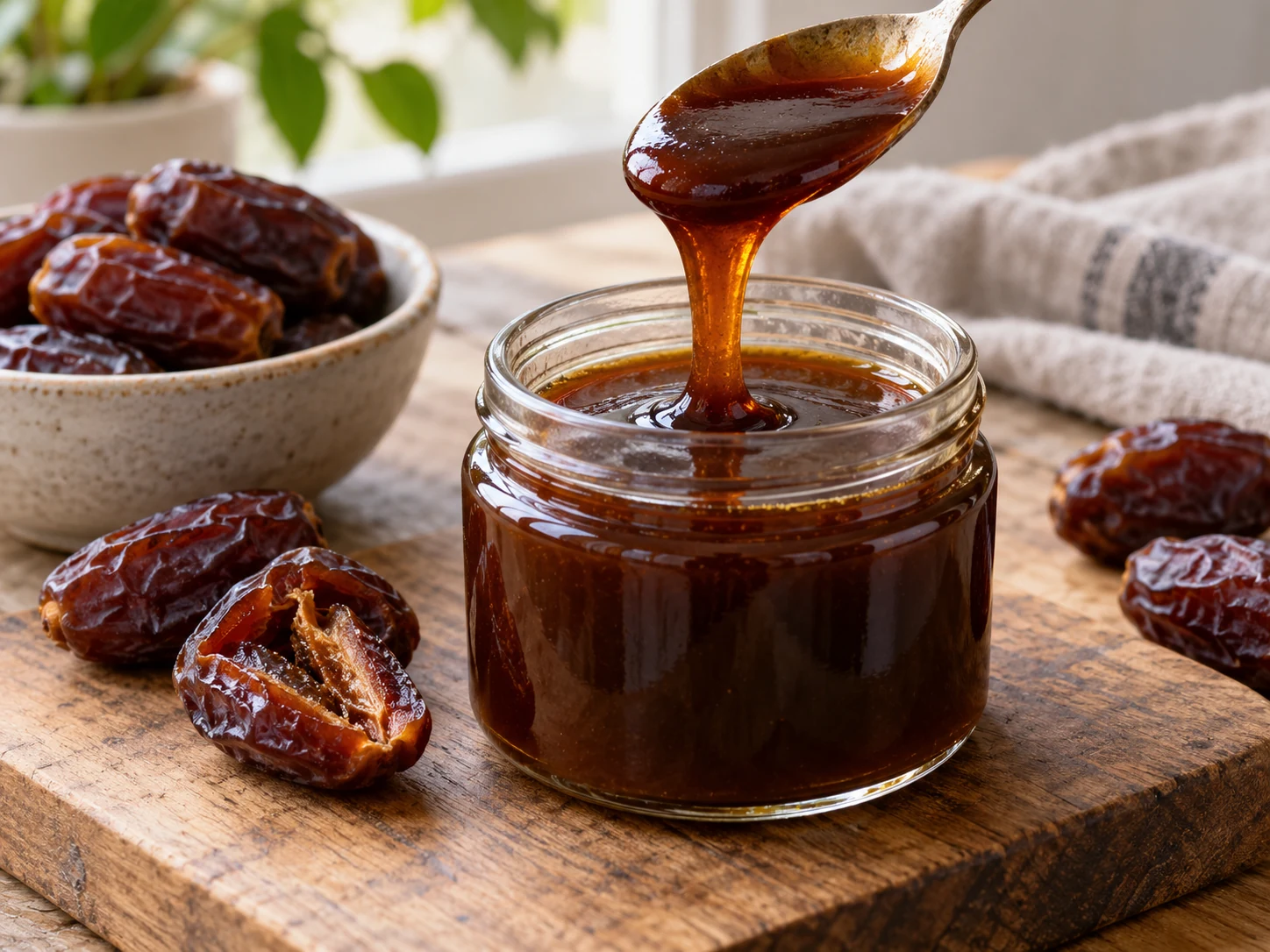
1.1. Cradle of the date palm The date palm originated in the Middle East and Northeast Africa, likely domesticated in the Persian Gulf region at least 6000 years ago. Through trade routes, conquests, and population migration, it first spread across ancient Egypt (pharaonic offering, emblem of fertility), then throughout the Maghreb, Sahara, and Sahel thanks to Berber, Tuareg, Arab, Jewish migrations, and the spread of Islam from the 7th-8th century. Throughout history, the date palm structured oasis and Saharan habitats, pushed the boundaries of subsistence agriculture into the most hostile environments, and became a vital axis of the “salt and gold routes” (Sahara, Sudan, Hausaland). Egypt, Algeria, Tunisia, Morocco, Libya, Mauritania, Mali, Niger, Chad, Senegal, Sudan are today the main African date kingdoms. 1.2. Continental expansion and hybridization With modernity and the spread of agricultural techniques, date cultivation spread to other regions from the 20th century: oases of Southern Africa (Namibia), Ethiopian valleys, Kenyan coastlines, irrigated areas of Nigeria, Malagasy initiatives, and even to cities of the European and American diaspora. The date now circulates in dried or fresh form in all African markets, it inspires the local agri-food industry (syrup, jam, energy bars, natural sugar…), and has become established in urban African eating habits and pan-African diaspora restaurants.
2. BOTANY, VARIETIES, AND TERROIRS OF AFRICA
2.1. The date palm and its ecosystem The date palm is a palm tree that can reach over 20 meters, whose pioneering roots, drought resistance, differentiated sexual flowering (male and female plants), and longevity (up to 150 years) symbolize stability, continuity, and protection. It shapes its environment: cultivation in oases (“ghout”), source of shade and microclimate for cereals, vegetables, and orchards, protection against desertification thanks to its deep roots. 2.2. African varieties and date typologies The African market lists dozens of specific varieties: • Deglet Nour (Algeria, Tunisia, Libya): blonde, translucent, soft date, appreciated for its delicacy (described as the “queen of all dates”). • Medjool (Morocco, Algeria): very large, fleshy, caramelized, melting. • Allig, Ghars, Kenta, Fard, Boufeggous, Majhoul, Khalas: dates that are more or less dry, brown, amber, firm or soft, each adapted to a specific terroir and culinary use. • Wild or sterile dates (Mauritania, Niger, Mali, Chad): smaller fruits, with thick skin, used in the production of powder, flour, or drinks. • “Gazelle”, “barhi”, “zahidi”, “mirra” dates: less known varieties, resulting from Berber, Sahelian, and Saharan cross-breeding. • “Grated” or “broken” dates, “stuffed dates” (Egypt, Maghreb): semi-artisanal preparations: dates passed through a grater, pitted, dried, stuffed with almond, walnut, fig or orange paste.
3. NUTRITIONAL VALUE AND HEALTH BENEFITS
3.1. Nutritional composition The date is a natural “superfood”: • Carbohydrates (65–75%) mainly in the form of natural sugars (glucose, fructose, sucrose). • Soluble and insoluble fibers: digestibility, satiety, prebiotic effect. • Minerals: potassium, magnesium, iron, copper, sodium, phosphorus, calcium. • Vitamins: B1, B2, B3, B5, B6, B9, vitamins A and K. • Rich in polyphenols (natural antioxidants). • Proteins (~2%), low lipids. • Low glycemic index compared to equivalent processed bars or products. 3.2. Health benefits • Quick source of energy for fasters, children, workers, pregnant women, athletes. • Prevention of anemia, osteoporosis, muscle cramps. • Beneficial role in digestion (fibers), satiety, transit regulation (mild laxative). • Natural antioxidants limiting cellular aging. • Probiotic role in the gut microbiota. • Halal/perfect food for fasting (in Islam: breaking the fast with a date is a Sunnah). • Gluten-free, lactose-free, low allergenicity.
4. CULINARY USES OF DATES IN AFRICA
4.1. Fresh, dried, and street food consumption • To eat whole: snack break in the street, at the market, after leaving the mosque, on the road or at home. • On a hospitality platter: dates offered with mint tea, fresh water, Tuareg coffee, during visits, receptions, meetings, or negotiations. • Stalls in African markets and “souks”: golden mounds, palettes of varieties offered retail, alongside nuts, dried fruits, raw sugar. 4.2. “Ramadan Dates”: breaking the fast Throughout North Africa, the Sahel, and even Madagascar among Muslims, the date is the quintessential food to begin “iftar” (breaking the fast). It is known to facilitate rehydration, boost energy, and respect prophetic tradition. • Accompanied by a glass of water, fermented milk, porridge, bissap, or “sobo” (a South Saharan drink). • Used in the preparation of harira (Moroccan soup), pastries, date milk. 4.3. Pastries, desserts, and festive cuisine • Oriental cakes: makrout, baklava, gazelle horns, dates stuffed with almond paste, bradjs, ghriba, tcharak, roz bil tamr. • Date bread and flatbread: Kabyle flatbread, “black desert bread” enriched with dates, Algerian “kesra”, Moroccan “meloui”, Mauritanian “stuffed bread”. • Date compote, jam, syrup: spreads, hot drinks, base for children's breakfasts or “snacks”. • Fruits in couscous and tagines: dates added to festive couscous, lamb or chicken tagines, sweet and savory dishes emblematic of the Maghreb and Sahara. • Date drink (“alahou”, “lagmi” in Mauritania and Tunisia): fermentation of dates for a refreshing drink, even used as a “mild desert beer”. • Cooked dates for sauces and stews: mixed with tomato, onion, spices, used in urban Malian, Sahelian, Sudanese cuisine, and even in Ivorian festive dishes. 4.4. Urban revival: bars, snacks, energy balls • Nougat, cereal bars, energy balls with dates, almonds, cashews, sesame, moringa, sold in major cities (Casablanca, Abidjan, Dakar, Cairo, Tunis, Lagos). • Gourmet bites for trendy brunches and hotel buffets, often as a healthy dessert or fitness break.
In my books

Continue exploring the continent’s cuisines with Africa at the Table — 54 countries, 54 iconic dishes, by Alioune FALL. This book is in English.
Explore further
5. SOCIO-ECONOMIC, SYMBOLIC, AND TRANSMISSION DIMENSION
5.1. Pillar of oasis and Sahelian economies • In Algeria, Tunisia, Morocco, Mauritania, Egypt: date cultivation and sale structure the life and economy of thousands of villages, families, and cooperatives. • Direct source of income for producers (men and women), collective activity during harvests (autumn), local trade, and international export. • Rural micro-entrepreneurship, transmission of family gardens, creation of dedicated markets (“date festivals”, regional fairs, quality competitions…). 5.2. Role in food security and resilience • Feeds families, workers, travelers during periods of scarcity or crisis (leather bag or basket of dates, security for the Bedouin, shepherd, caravaneer). • “Reserve” food in case of locust invasion, drought, or conflict. • Integration into the fight against child malnutrition (in the form of date porridge). 5.3. Symbolism and spirituality • In Islam, the date is a fruit of Paradise, mentioned in the Quran, the Sunnah; symbol of life, generosity, fertility. • Used during Ramadan, Eid, weddings, funerals. • Offered as zakat (charity), dowry, or hospitality gift. 5.4. Transmission and oral culture • The secrets of the palm tree (grafting, care, pollination) are passed down from generation to generation in oasis families, by women and elders. • Children learn to pick, dry, sort, lay palm fronds, prepare syrup, stuff dates. • The date is the subject of tales, proverbs (“He who has bread and dates fears neither the night nor the desert”), songs, ritual trials (initiation, “first harvest” trial, etc.).
6. MODERNITY, CHALLENGES, AND INNOVATION AROUND THE AFRICAN DATE
6.1. Sector and market • Conservation problem (often soft date, fragile in storage: modernization of dryers, packaging, transport). • International competition (Middle East, California, Gulf countries), need for quality certifications, marketing innovation, structuring of farmer sectors. • Potential for increased processing (syrup, confectionery, date flour, juice, vinegar, sugar-free cakes…). 6.2. Place in African gastronomic modernity • Valuation by young chefs and culinary creators: light tagines, date truffles, healthy bread, vinaigrettes, sweet and sour sauces, date milkshakes. • Collaboration with “healthy”, vegan, gluten-free cuisine, therapeutic nutrition. • New culinary media (Instagram, YouTube, Afrofood blogs) promoting traditional and innovative recipes. 6.3. Ecological and public health perspectives • Contribution to agro-Saharan ecology: fight against erosion, dune stabilization, desert reforestation. • Key axis for adaptation to climate change: sustainable growth, low water requirement. • Recommended in campaigns against malnutrition, anemia, integration into school menus, hospitals, food NGOs. • Rise of women's processing cooperatives (jam, bars, syrup, soap, cosmetics…).
CONCLUSION The date is much more than a fruit: it weaves the memory, survival, celebration, spirituality, and dream of an entire Africa. It embodies the continent's ability to adapt, to innovate based on tradition, to turn constraint into a resource, the desert into a home, and sharing into wealth. Preserving, valuing, and transmitting the culture of the date means offering Africa a food of balance, dignity, pleasure, and hope. Between past and future, oasis and city, cooking pot and modern pastry, the date remains the African pearl par excellence, a symbol of hospitality, resistance, and culinary renewal — brilliant, nourishing, and deeply rooted.
In the kitchen : Date
Recipes from the site to put your knowledge into practice:
Discover these cuisines at a restaurant
Explore our restaurant and caterer directories. Choose your destination and check the establishment’s menu to confirm which dishes are offered and available.
Continue exploring
Enjoy discovering ingredients and African cuisines? Join our newsletter. The illustrated PDF 10 sauces africaines incontournables is in French and is offered after confirming a subscription to the French or bilingual edition.