Kuli-kuli
Northern Nigeria, Niger, Ghana, and Benin
Understanding : Kuli-kuli
INTRODUCTION
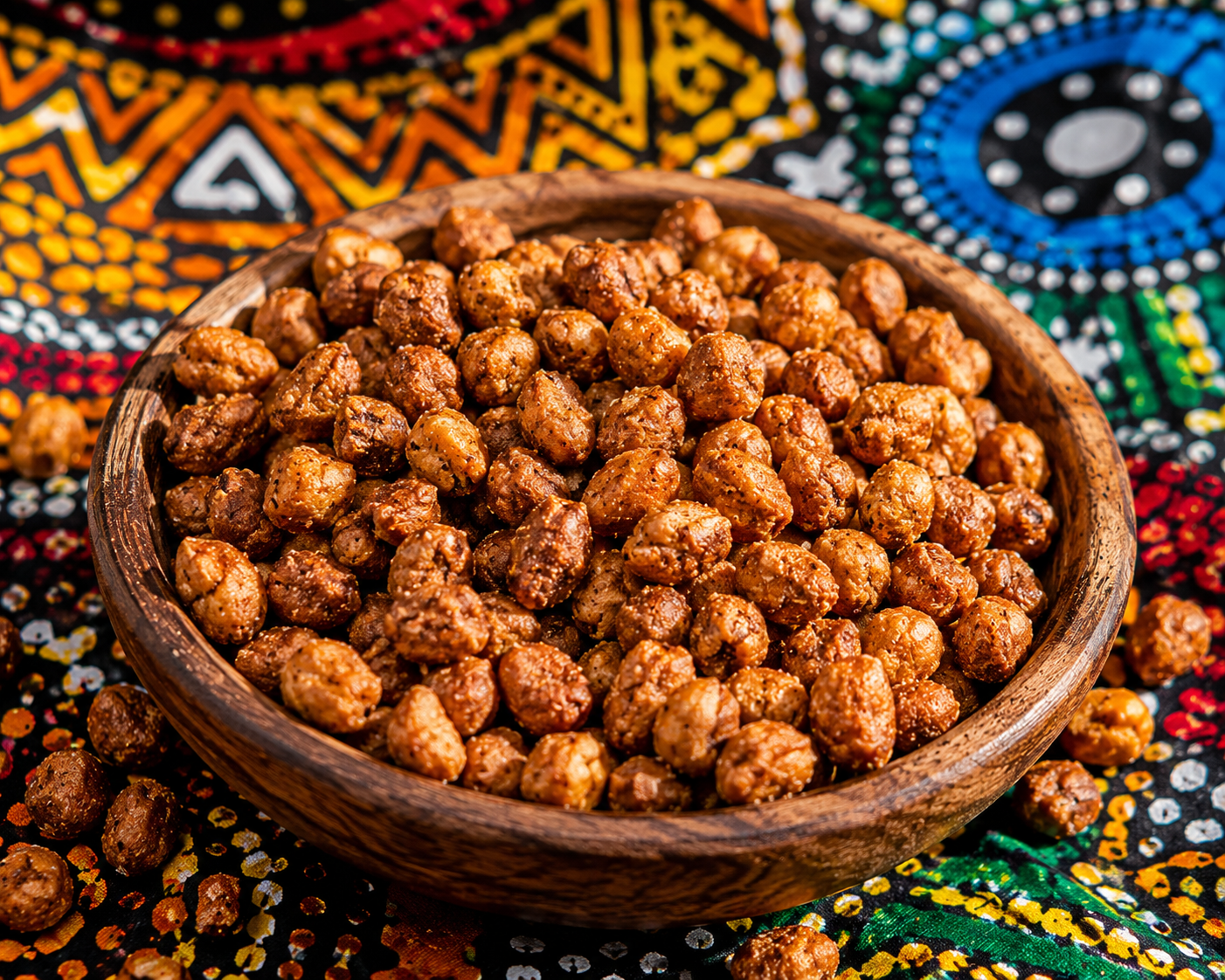
Among the emblematic snacks and local products that shape the collective memory of West Africa, kuli-kuli holds a special place. Behind its apparent simplicity – small sticks, patties, balls, or golden and crispy rings made from peanuts – lies a rich history, ancient know-how, a vibrant economy, a shared identity, and innovative potential. A true product of African rurality, kuli-kuli tells the story of women's audacity, the strength of the informal economy, and the generosity and conviviality of West African cuisine. From the village courtyard to the urban snack, from the “children's table” to the market festival, from breakfast to a travel gift, it reflects the ingenuity and adaptability of a continent in motion.
Prepare this speciality
Choose a detailed recipe, adjust the portions and prepare your ingredients before starting. Our cooking tips and food safety advice complement the steps described in the recipes.
Explore further: Cooking tips · Food hygiene and safety advice.
History and uses
1. HISTORY AND ORIGINS
1.1. Birth and spread Kuli-kuli took root in the cradle of peanut cultivation: Northern Nigeria, Niger, Ghana, and Benin. The Hausa, Djerma, Gourounsi, and many other ethnic groups claim its invention. The historical context is one of predominantly subsistence agriculture, where peanuts, introduced in the 18th century, became a food, economic, and social pillar. Women, masters of processing, extract not only oil from peanuts but also the “residual paste,” which they press, season, and transform to create kuli-kuli. In the 19th and 20th centuries, the snack spread along all roads in Benin, Togo, Burkina Faso, Nigeria, Côte d'Ivoire, Mali, southern Niger, and into the streets of Lomé, Accra, Cotonou, Ouagadougou, and Nigerian megacities. 1.2. Kuli-kuli and West Side Africa Kuli-kuli is an integral part of markets, ceremonies, and school or urban lunchboxes. It is associated with savanna peanut cultivation, hospitality rituals, the art of sharing, the “childhood pantry,” but also with the food independence of rural women.
2. MANUFACTURING TECHNIQUES AND REGIONAL VARIATIONS
2.1. Basic ingredients The greatness of kuli-kuli lies in its simplicity. The essential ingredients are: • Raw, unsalted peanuts • Water for grinding • Optional spices: salt, pepper, chili, garlic, ginger, sometimes bouillon powder • Peanut oil (obtained during the process) 2.2. Preparation method Traditional kuli-kuli follows several key steps:
- Roasting peanuts, then grinding (often with a mortar or mill).
- Extracting the milk (oil and water) by kneading the fine paste in a cloth to separate as much oil as possible (which is kept for later use).
- Seasoning the de-oiled paste with spices and salt – the paste thus becomes moldable.
- Shaping: the paste obtained is shaped by hand into rings, sticks, pebbles, balls, spirals, or elongated forms.
- Double frying in the recovered peanut oil: the first frying precooks and dries, the second immerses the formed pieces for a crispy and golden result.
- Draining then cooling. It has a long shelf life, allowing kuli-kuli to travel and be sold over long distances. 2.3. Regional variations and creativity • Nigeria: “kuli-kuli stick,” spirals, discs, “groundnut cake,” sometimes with added black pepper, seasoning cube powder, ginger. • Ghana: “nkatie cake” (sometimes softer), also sold as bars. • Benin / Togo: mini balls or patties, firmer texture, often saltier or spicier. • Burkina Faso: kuli-kuli is integrated into “children's porridge,” sold by hawkers in the form of small pebbles. • Côte d'Ivoire, Mali: used as a topping for attiéké, riz gras, or as a snack on beaches and markets.
3. NUTRITIONAL AND HEALTH VALUE
3.1. Essential contributions Kuli-kuli, although fried, remains a dense and valuable food: • Plant proteins: peanuts are one of the best protein sources in the plant world. • Good fats (unsaturated fatty acids), with less oil in the final product as it is extracted for frying. • Minerals: magnesium, phosphorus, potassium, iron, zinc. • Vitamins: E (antioxidant), B1, B3, B6. • Fibers. It is an energetic snack highly appreciated by children, physical laborers, athletes, and an economic alternative to meat or dried fish. 3.2. Preservation, food safety, and hygiene • Long shelf life (several weeks/months if kept dry). • Protein intake during the lean season (period of scarcity between two harvests). • Crucial role during migrations, travels, markets: sold in packaged portions (sachet, leaf, box). • Health challenges: risks associated with poor quality oil, excessive frying, or the use of non-food products (in oil or packaging), requiring necessary awareness.
In my books

Continue exploring the continent’s cuisines with Africa at the Table — 54 countries, 54 iconic dishes, by Alioune FALL. This book is in English.
Explore further
4. ECONOMIC AND SOCIAL ROLE
4.1. Empowerment and female entrepreneurship Kuli-kuli belongs to the culture of rural female independence: • Made in homes, groups, cooperatives; main income for many women and girls, especially in northern villages. • Markets allow them to acquire financial autonomy, family respect, and the ability to send children to school or buy small animals. • The kuli-kuli production process also leads to the parallel production of peanut oil, another source of income. 4.2. Short circuit, informal economy, and exchanges • Kuli-kuli distribution networks are 90% informal: local markets, street vendors, bus stations, schools, village festivals. • It travels in the sub-region via bus routes, bush taxis, and traveler's baskets (e.g., Nigeria-Côte d'Ivoire, Benin-Burkina Faso…). • Used as symbolic exchange currency or gift during ceremonies (births, funerals, children returning to the village).
5. KULI-KULI: DIVERSITY OF USES IN AFRICAN CUISINE
5.1. Snack and street food • Consumed plain as a crispy snack, sometimes dipped in porridge, tea, or sucked by children during school breaks. • Appetizer: in African bars, kuli-kuli accompanies beer, bissap, ginger juice. • Breakfast: crumbled into millet or corn porridge (“koko” in Ghana, “pap” in Nigeria). 5.2. Culinary ingredient or condiment • Topping or “crumble” on attiéké, salads, rice, foutou, or sauces. • Inclusion in modern recipes: breading for fish or chicken, crumble on vegetables or sweet and savory desserts. • Sauce for “miyan kuka” in Nigeria (baobab soup): kuli-kuli is ground into powder and used as a base or protein supplement. • Granular sauce: in Ghana, Niger, Benin; crushed kuli-kuli, mixed with chili-tomato-onion to accompany yam, attiéké, or cassava. 5.3. Modernity and innovations • Transformation into energy bars, inclusion in granolas, biscuits, muffins. • African burgers and fast food: kuli-kuli crumble on vegan burgers or fried chicken. • Afro-fusion chefs: kuli-kuli crème brûlée, kuli-kuli praline panna cotta, gnocchi with kuli-kuli shards.
6. KULI-KULI AND CULTURAL IDENTITY
6.1. Symbol of West African identity • It embodies the simplicity, solidarity, resourcefulness, and creativity of rural cuisine. • A childhood memory for an entire generation, a marker of the “homeland.” 6.2. Rites, celebration, and transmission • Shared during religious festivals (Tabaski, Ramadan, Christmas), baptisms, funerals as “sharing food” to be distributed to children. • Learning generational know-how: children, mothers, and grandmothers gather to pound, roll, and shape together. • Used in African proverbs: “He who has the salt of kuli-kuli fears no hunger,” “In the market, friendship is bought with kuli-kuli.”
7. CHALLENGES AND PERSPECTIVES
7.1. Health, mutation, and added value • Issues related to hygiene, used frying oil, and non-food plastic packaging require increased awareness and support for innovative transformation (ecological packaging, quality oil, controlled cooking). • Nutritional enhancement: inclusion in school programs, fight against malnutrition, search for “organic” certification, and export to the diaspora. 7.2. Economic modernization • Organization of women producers into cooperatives or micro-enterprises; integration into urban “gastro” circuits, African e-commerce platforms, traveler's luggage. 7.3. Diaspora and global gastronomy • Rediscovery in African fast-food restaurants in Europe, America, or the Gulf. • Use in fusion street food and pan-African gastronomy internationally.
CONCLUSION Kuli-kuli is much more than a West African snack: it reveals the history of a continent in search of autonomy, creativity, and resilience. It concentrates the memory of the gesture, the dignity of work, the tenderness of sharing, and the power of transmission. Emblem of rurality, pillar of the informal economy, catalyst of conviviality, it carries within it the promise of an inventive, supportive, and forward-looking cuisine. Preserving and innovating around kuli-kuli means cultivating the gourmet and optimistic soul of Africa today and tomorrow.
In the kitchen : Kuli-kuli
Recipes from the site to put your knowledge into practice:
Discover these cuisines at a restaurant
Explore our restaurant and caterer directories. Choose your destination and check the establishment’s menu to confirm which dishes are offered and available.
Continue exploring
Enjoy discovering ingredients and African cuisines? Join our newsletter. The illustrated PDF 10 sauces africaines incontournables is in French and is offered after confirming a subscription to the French or bilingual edition.