Tô
African Continent
Understanding : Tô
INTRODUCTION
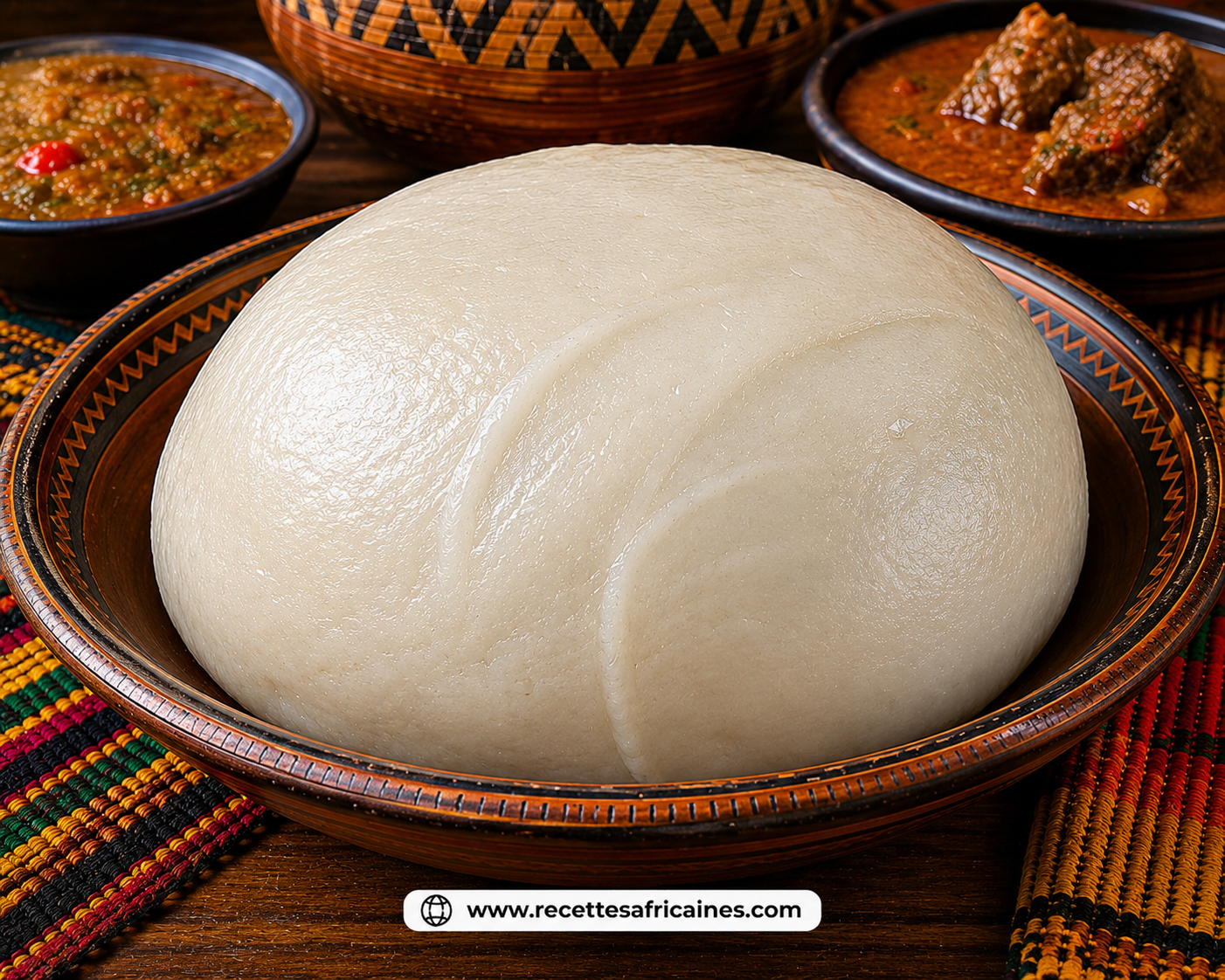
At the heart of African cuisine, tô holds a place as fundamental as it is inspiring. A basic and universal dish, rooted from Senegal to Madagascar, from the Sahel to Southern Africa, tô (sometimes spelled “toh”, “sagabo” in Burkina Faso, “tuwo” in Nigeria, “sadza” in Zimbabwe, “ugali” in East Africa, “nsima” in Malawi and Zambia, “pap” in South Africa) embodies the simplicity, ingenuity, and conviviality of the continent. It is not just a thick porridge: it is identity food, the memory of the community, a melting pot of culinary heritage passed down from generation to generation. Resolutely popular and affordable, it is the faithful companion to sauces, soups, stews, and meats that enhance it—and it comes in infinite variations depending on the region, the type of flour, and lifestyles. An overview of this food monument, a mirror of nourishing and contemporary Africa.
Where to find it
Look for the exact food-grade form required by the recipe at markets and specialist shops. Check the product name, ingredients, condition and storage instructions.
Explore further: Cooking tips · Food hygiene and safety advice.
History and uses
1. ORIGINS AND EXPANSION OF TÔ
1.1. Ancestral roots and geographical spread Tô is deeply rooted in African agriculture. Born from the early development of millet, sorghum, then corn and cassava with colonial waves, it is built around the local cereal or tuber—Zea mays (corn), millet, sorghum, fonio, cassava, yam, sometimes rice or sweet potato flour. This thick porridge cooked in water (sometimes enriched with peanut or potato flour) became universal with the domestication of grasses, from the central Sahara to the Nile valleys, from the Ethiopian highlands to the deltas of Central and Southern Africa, then adapted to the introduction of corn from the 16th century. 1.2. The same gesture, a thousand variations “Tô” is shaped, named, and celebrated differently across the continent: • Sagabo, tô: Burkina Faso, Mali, northern Ghana, Benin. • Tuwo, tuwo shinkafa/masara: northern Nigeria, Niger (rice/corn). • Fufu/foufou: Benin, Ivory Coast, Ghana, Liberia, Togo, Cameroon (yam, cassava, plantain). • Banku, kenkey, eba, amala, gari: Ghana, Nigeria (fermented corn or processed cassava). • Sadza: Zimbabwe, Zambia (corn). • Nsima, ugali: Malawi, Mozambique, Tanzania, Kenya, Uganda (corn). • Pap, mealie pap: South Africa, Lesotho, Swaziland (white corn). • Mieliepap, putu: South Africa. Each version bears the mark of its land: local ingredient, texture, sauce accompaniment, and even serving ritual.
2. INGREDIENTS, UTENSILS, AND PREPARATION TECHNIQUES
2.1. Choice of flours: agricultural richness and local identity The base of tô is a flour or semolina obtained by milling, pounding, or grinding: • Millet (pearl millet or finger millet, “nyo” in Mali, “souna” in Niger/Burkina) • Sorghum (“golo” in Mali, “ka” in Burkina) • Corn (white or yellow) • Cassava (gari, flour or attiéké (a type of fermented cassava couscous) depending on the region) • Yams, plantain, sweet potato (fufu or Ivorian/Ghanaian variants) • Rice (rare, Nigerian or Fulani specialties) Each ingredient extends a terroir, an agricultural cycle, seasons of rain and drought. 2.2. Utensils and technical gestures • Deep pot or thick-bottomed saucepan, traditionally cast iron or aluminum, sometimes earthenware pot. • Stirring stick (long wooden spatula or rigid “special tô” whisk, “couscous stick”). • Calabash or wooden plate for serving, plating, and cutting. • Hand dipped in cold water to shape balls or cups. The preparation of tô is an exercise in strength and dexterity. Flour must be gradually poured into boiling water, then stirred vigorously to avoid lumps (the “ball” must be homogeneous, smooth, without a raw taste). 2.3. Key steps • Bring water to a boil (sometimes with a little salt or local leaves). • Pour in the flour little by little, stirring constantly, until thickened. • Simmer, sometimes cover for a few minutes to “cook through”. • Stir vigorously until a semi-elastic consistency that does not stick to the fingers, then shape into “balls”, “patties”, “pyramids” or “mounds”.
3. TÔ AS A SHARED MEAL: SOCIAL PLACE, RITES AND RITUALS
3.1. Everyday and festive dish Tô is synonymous with daily life: it accompanies almost all lunches and dinners in countless rural African families. From abundant days to lean seasons, it remains accessible, invigorating, and filling. It is also the soul of celebration: weddings, baptisms, funerals, religious holidays (Tabaski, Ramadan, Easter…), offerings to ancestors or relatives, a rite of hospitality for visitors. 3.2. Symbolism of living together • Eating from the same dish: tô is traditionally shared around a large plate, in the courtyard or hut, each person taking a portion “by hand”, shaping their mound to dip in the central sauce. • Intergenerational transmission: learning to make tô is a rite of passage for girls and boys. The mother or grandmother explains the consistency, the finesse of the gesture, the secret of the sauce. • Equality, solidarity: tô is the dish of food democracy. It varies according to means, feeds many, knows neither waste nor privilege.
In my books

Continue exploring the continent’s cuisines with Africa at the Table — 54 countries, 54 iconic dishes, by Alioune FALL. This book is in English.
Explore further
4. ACCOMPANIMENTS AND DIVERSITY OF SAUCES
4.1. Sauces and organoleptic pairings Tô is designed to enhance the sauce. Each region, each family, each season offers its variation: • Leaf sauce: amaranth leaves (bété, djambou), baobab (lalo), roselle (“Guinea sorrel”), cassava (saka-saka, pondu), sweet potato leaf, sticky okra (“sticky sauce” or “leaf sauce”). • Peanut sauce: peanut paste (mafé, tigadèguèna), tomato-onion sauce. • Okra sauce or sticky sauce. • Dried/smoked fish sauce, crab, bushmeat, beef, mutton, chicken, snails. • Seed sauce: palm kernel, palm nut, coconut in the center/east. A good tô is judged by its sauce: it must be abundant, fragrant, sufficiently seasoned, nourishing, allowing the tô to “carry” it. 4.2. Festive and innovative associations In some contexts, tô is accompanied by skewers (“chichinga” or “dibi”), hard-boiled egg, grilled fish, grilled vegetables, or even avocado, local cheeses or “dja sauce” (caramelized spicy onion, Benin/Togo).
5. NUTRITIONAL AND HEALTH PLACE
5.1. Essential contributions Tô provides: • Complex carbohydrates: long-lasting energy, essential for workers, children, physical activity. • Fiber: if the flour is whole or “semi-whole” (traditional tô, better assimilated). • Vitamins and minerals: related to the original composition of the cereal/tuber. • Proteins: especially through the accompanying sauce (peanut, bean, fish, meat, leafy vegetable rich in iron, calcium, vitamins A, B, C, E). • Satiety: well-dosed, tô nourishes for a long time, an ideal composition for hunger resistance. 5.2. Food for childhood, motherhood and longevity Tô is suitable for children from diversification (soft tô, well cooked, green sauce, few spices), recommended for pregnant women (iron richness of leaf sauces), for the elderly (digestible, low fat, adaptable).
6. ECONOMY, ENTREPRENEURSHIP AND MODERNITY
6.1. Local sector and short circuits Tô is a pillar of local agricultural development: • Valorization of locally produced cereals/tubers (millet, corn, sorghum, cassava). • Creation of local jobs (producers, processors, market vendors, street food vendors or urban “tô cabarets”). • Specialization in cities: each neighborhood, each market has “its” famous vendor, its sauce secrets, its popular queue. 6.2. Innovation and urban gastronomy • Introduction of tô in urban brunches, modern food courts, Afro-fusion events and trendy restaurants for young customers. • Nutritious hybrids: tô enriched with sweet potato, composite flour (millet-corn-soy), sesame topping, sunflower, natural peanut butter, local cheese. • Commercialization of pre-cooked or ready-to-cook flour for the diaspora, fast-paced life, expatriation.
7. SYMBOLISM, TRANSMISSION AND RESILIENCE
7.1. Ritual and spiritual food • Ornaments in traditional ceremonies (offerings to ancestors, mask exit dances, village new year celebrations). • Support for education in patience and solidarity (one dish, several generations, a story to tell). 7.2. Resilience, food sovereignty and future • In the face of crises (cereal shortage, drought, rural exodus), tô remains the abundant dish, possible at any time, inexpensive and adaptable. • Symbol of “consuming local”, refusal of global standardization, proof that innovation is born from tradition.
CONCLUSION Tô is not just a simple accompaniment: it is the backbone of African cuisine, the anchor point of ancestral savoir-vivre, the memory of an education in taste, the promise of a shared meal. Rooted in hundreds of terroirs, magnified by inventive sauces, carried by the hands of women and mothers, street chefs or apprentices, it crosses centuries and borders. Preserving and valuing tô means guaranteeing the joyful, generous and resilient vitality of nourishing Africa and its future-oriented ways of life.
In the kitchen : Tô
Recipes from the site to put your knowledge into practice:
Discover these cuisines at a restaurant
Explore our restaurant and caterer directories. Choose your destination and check the establishment’s menu to confirm which dishes are offered and available.
Continue exploring
Enjoy discovering ingredients and African cuisines? Join our newsletter. The illustrated PDF 10 sauces africaines incontournables is in French and is offered after confirming a subscription to the French or bilingual edition.