Bouye
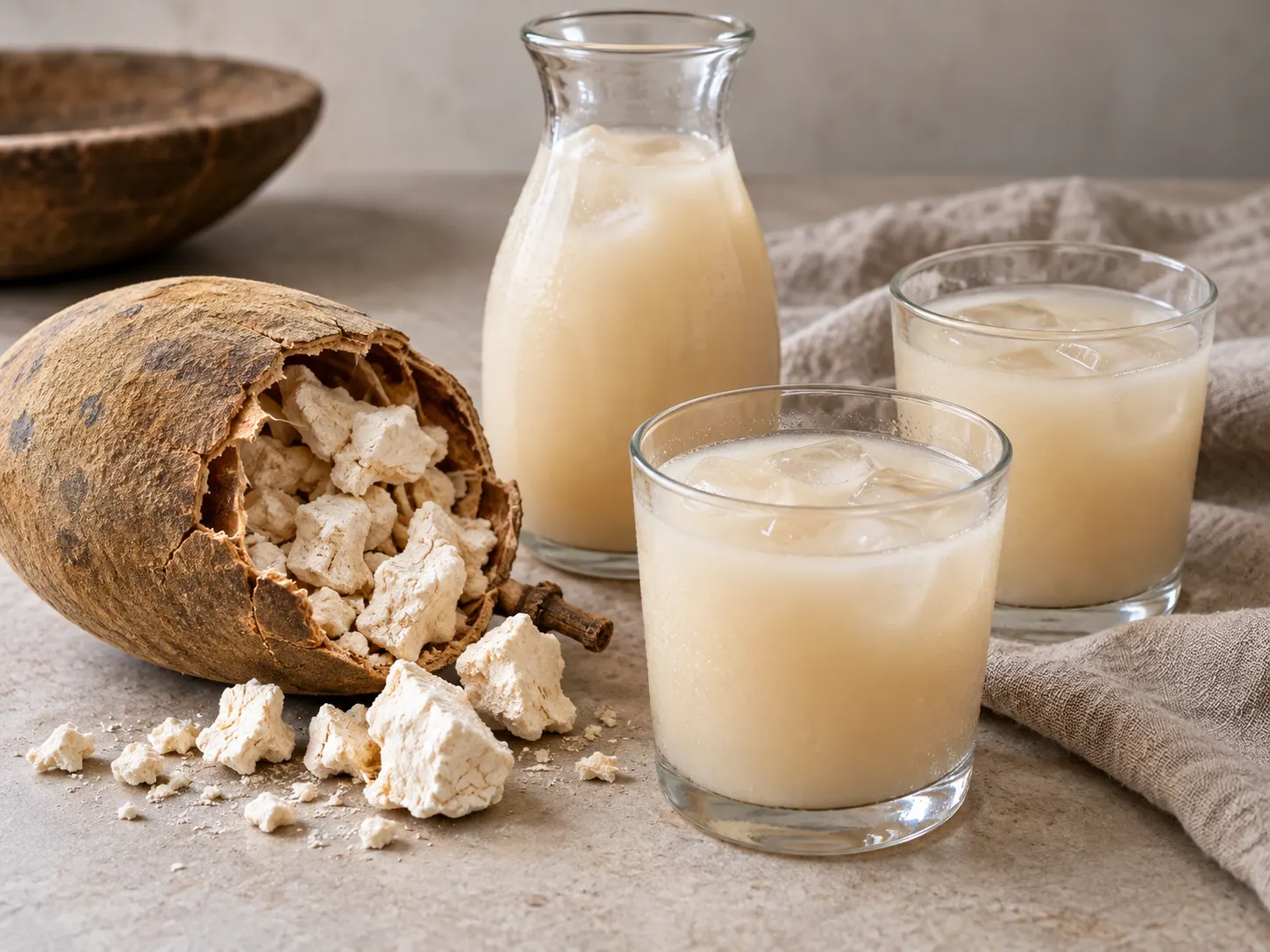
Sub-Saharan Africa
Understanding : Bouye
INTRODUCTION
Bouye, also known as "monkey bread," is the fruit of the baobab tree (Adansonia digitata), one of the most iconic and revered trees in sub-Saharan Africa. Nicknamed the "tree of life," the baobab embodies the generosity, resilience, and wisdom of African nature. Bouye is not just a resource from a majestic tree: it is the central ingredient in refreshing drinks, confectionery, traditional remedies, a symbol of hospitality and culinary imagination. A bold blend of rusticity and subtle taste, bouye has spanned generations and regions, from Senegal to the Sahel, from East Africa to Madagascar, now gracing the world's finest tables and modern food industry. Let's dive into the world of bouye, at the crossroads of agro-ecology, well-being, fair trade, and African memory.
Where to find it
Look for the exact food-grade form required by the recipe at markets and specialist shops. Check the product name, ingredients, condition and storage instructions.
Explore further: Cooking tips · Food hygiene and safety advice.
Search Amazon.fr — affiliate link →
Check availability and delivery on Amazon.fr. Compare ingredients, packaging and sellers.
As an Amazon Associate I earn from qualifying purchases.
History and uses
1. BOTANICAL AND GEOGRAPHICAL ORIGIN
1.1. The Sacred Baobab Tree The baobab is a central figure in African landscapes; it can reach up to 25 m in height, its enormous trunk stores thousands of liters of water, and its fibrous bark resists bushfires, drought, and erosion. Longevity, adaptation, monumental character: the baobab fuels multiple legends, offering shade, shelter, materials, and numerous subsistence products. 1.2. The Fruit — “bouye” Bouye grows as large, oblong pods hanging from branches, covered with a thin, velvety bark, hard as wood. Inside, the white, floury pulp surrounds numerous shiny black seeds. This pulp is sought after for its tangy flavor, nutritional richness, and versatility. 1.3. Distribution The baobab is native to sub-Saharan Africa: Senegal, Mali, Burkina Faso, Guinea, Niger, northern Ghana, Nigeria, Chad, Sudan, Kenya, Tanzania, Zambia, Zimbabwe, Malawi, Madagascar. It is particularly ubiquitous in the Sudano-Sahelian and Sahelian zones, often planted around villages, wells, and in family courtyards.
2. HISTORY AND TRADITIONS SURROUNDING BOUYE
2.1. Rural Memory and Symbolism • The baobab and its fruit are the subject of tales, myths, and proverbs: a tree planted by the gods, a symbol of longevity and resilience, it serves as a marker of identity for many peoples (Wolof, Fulani, Mandingo, etc.). • In many societies, monkey bread is the first wild fruit given to children to taste; it is offered during rites of passage, used in welcoming, initiation, or healing ceremonies. 2.2. Role in Food Security • During the dry season, bouye pulp becomes the main treat for children, a source of energy for shepherds, and a food supplement during lean periods. • Women and children harvest, shell, prepare, and sell the fruit in markets, perpetuating know-how and maintaining solidarity networks.
3. PLACE IN AFRICAN CUISINE
3.1. Direct Consumption and Traditional Drinks • Bouye drink (baobab juice): the crumbled white pulp is rehydrated in water, stirred, then filtered to extract a milky, tangy, refreshing drink, very popular from Senegal to Bamako. • Sugar, vanilla, sometimes orange blossom, condensed milk or powdered milk are added for the festive version, serving as a fresh “cocktail” during ceremonies (baptisms, weddings, religious holidays, Ramadan). • This drink is sold in all markets by “goorgorlu” (street vendors), in schools, and bus stations. 3.2. Confectionery, Desserts, and Snacks • Bouye candies and “caramels”: the pulp mixed with sugar (sometimes ginger), compacted and dried, is sold in small pieces or molded into balls. • Mixed snacks: it is combined with peanuts, sesame, grated coconut, or toasted cereals. • Sorbets and ice creams: increasingly present in urban bakeries and ice cream parlors, “natural” sorbets, frozen yogurts, or artisanal bouye ice creams. • Cakes, tarts, compotes: the blended pulp can be incorporated into modern pastries (cake, flan, crepe, pancake), or serve as a base for innovative, low-sugar, fiber-rich compotes. 3.3. Sauces and Savory Cuisine • Sticky sauce: in some regions (northern Benin, Nigeria, Mali), bouye powder is cooked with water, a hint of palm or peanut oil, to accompany tô, rice, or millet dumplings (waké). • Inclusion in porridges: the powder enriches millet, corn, or rice porridges for children's breakfast (combating malnutrition). 3.4. Modern Innovations • Baobab concentrate or extract (fiber, “superfood”) used in pastry, smoothies, energy bars, sauces for urban African and international gastronomy. • Export to Europe, Asia, and America in the form of powders, juices, infused in detox or fitness drinks, jams, etc.
In my books

Continue exploring the continent’s cuisines with Africa at the Table — 54 countries, 54 iconic dishes, by Alioune FALL. This book is in English.
Explore further
4. NUTRITIONAL VALUE AND HEALTH BENEFITS
4.1. Exceptional Richness • Vitamin C: up to 3 to 10 times more than oranges (100 to 500 mg/100g depending on maturity), making it the champion of indigenous fruits. • High amounts of calcium, potassium, magnesium, iron, zinc. • Fiber: the pulp contains 40 to 50% soluble and insoluble fiber, excellent for digestion and transit. • Amino acids, antioxidants, prebiotics: contributes to the microbiota, reduces the glycemic index of meals, supports growth and immunity. • Low in fast sugars, almost no fat. 4.2. Medicinal and Domestic Virtues • Used against diarrhea, fever, thirst, as a cough syrup, or as a dressing for oral inflammations. • Roasted seeds serve as a coffee substitute, seed oil for the skin. • In some regions, the leaf is used in sauce, dried and powdered (lalo). 4.3. Role in Public Health • Primary nutritional solutions, especially for young children, pregnant women, and breastfeeding mothers. • Many African NGOs (especially in West Africa) have promoted bouye consumption to combat scurvy, malnutrition, and anemia.
5. SOCIAL, ECONOMIC, AND ENVIRONMENTAL DIMENSIONS
5.1. Rural Sectors and Family Economy • Harvesting, preparation, and sale: a major activity for rural women, a direct source of added income, independent of the classic agricultural system. • Urban market: the baobab juice sector has exploded in Senegal, Mali, and Burkina, transforming family networks into modern micro-enterprises or cooperatives. • Crafts: the emptied fruit serves as a bowl, ladle, jewelry or condiment box, transport box (see “calabash”). 5.2. Sustainable Agriculture • The baobab requires no irrigation or fertilizer, it resists drought, protects crops, enriches soils with its fallen leaves, shelters birds, bees, insects, and microfauna. • Its sustainable exploitation encourages the preservation of local biodiversity and traditional knowledge. 5.3. Internationalization – Export and Fair Trade • Bouye is considered a “superfruit” in Europe, a growth factor for many cooperatives in Burkina, Senegal, Kenya. • “Organic,” “fair trade,” “sustainable supply chain” certifications contribute to generating economic development (despite the need to control pressure on trees and preserve local food chains).
6. CULTURAL AND SYMBOLIC DIMENSIONS
6.1. Spirituality and Transmission • The baobab often shelters founding spirits of the village, is the subject of sacrifices, vigils, or initiatory tales under its branches; the fruit is a “scent of childhood.” • Bouye is offered to travelers, guests, during harvest returns, for Ramadan, for Eid, or at baptisms. 6.2. Proverbs and Folklore Many sayings highlight its nourishing power (“He who eats bouye fears no exhaustion,” “The baobab does not age, its fruit is new every year”), or the strength of its tree (“Only the tree of the people feeds the people”). 6.3. Modernity and Gastronomy • Used by great African chefs for its ability to enhance, acidify, or lighten modern dishes: sauces for grilled fish, vinaigrettes, creative desserts. • Presence in “hipster” cocktails, contemporary African brunches, and “biogourmand” festivals.
CONCLUSION Bouye, the fruit of the baobab, is a treasure of African cuisine, a source of inspiration and vitality for centuries. Its versatility, nutritional benefits, ecological robustness, and high symbolic value make it a pillar of living African heritage. From the refreshing drink sold on a street corner in Dakar to the creative dessert in a Lagos restaurant, from grandmother's remedy to the exported “superfood” ingredient, bouye embodies Africa's ability to reconcile roots and innovations, health and pleasure, memory and future. Preserving and transmitting the culture of bouye means showcasing an African jewel, a symbol of resilience and natural excellence serving present and future generations.
Practical notes and Senegalese terminology
Bouye refers to the baobab fruit and, in cooking, especially its tart pulp. Lalo notably comes from the leaves: it has a different function and cannot replace bouye in ngalakh. Mix the pulp gradually with liquid, then strain out fibres and seed fragments if necessary. Always distinguish plain powder from a mixture that is already sweetened.
In the kitchen : Bouye
Recipes from the site to put your knowledge into practice:
Discover these cuisines at a restaurant
Explore our restaurant and caterer directories. Choose your destination and check the establishment’s menu to confirm which dishes are offered and available.
Continue exploring
Enjoy discovering ingredients and African cuisines? Join our newsletter. The illustrated PDF 10 sauces africaines incontournables is in French and is offered after confirming a subscription to the French or bilingual edition.