Fataya
Senegal
Understanding : Fataya
INTRODUCTION
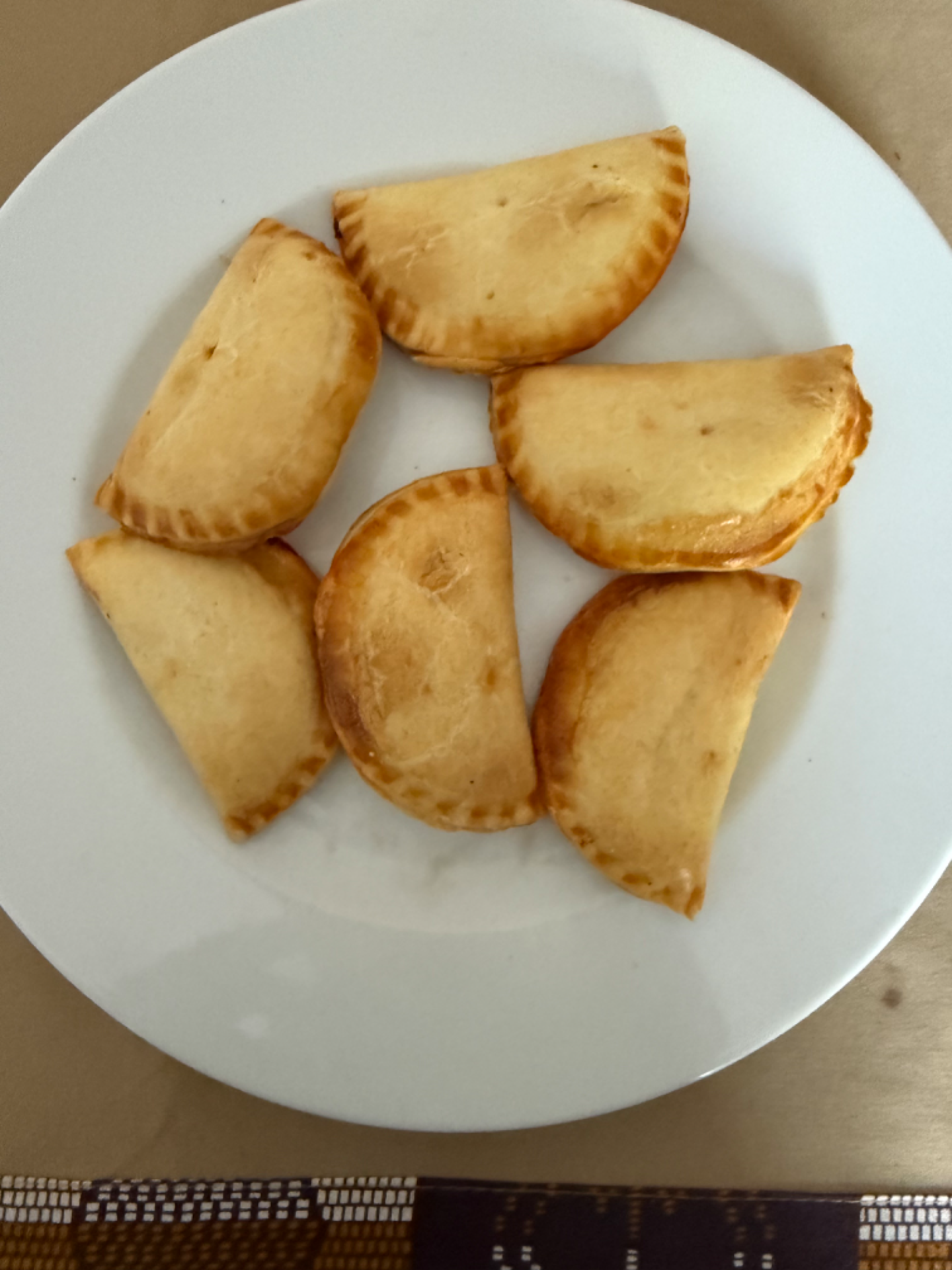
In Dakar, as in all major cities in Senegal and on the West African coast, it's impossible not to come across the essential fataya (a small fried pastry, similar to an empanada) at the turn of a street, on a beach, in front of a mosque, or leaving a high school. This small fried pastry, a cousin of the pastel (a similar fried pastry) by its origin but different in its filling and dough, is an integral part of urban daily life, convivial moments with friends, student breaks, and family Sunday brunches. The strength of fataya lies in its ability to embody modernity, dynamism, popular creativity, but also the memory and cultural blending of African cuisine. Behind its crispy and golden exterior, this savory fritter conveys stories of migration, intercultural exchanges, economic resistance, and urban pride.
Prepare this speciality
Choose a detailed recipe, adjust the portions and prepare your ingredients before starting. Our cooking tips and food safety advice complement the steps described in the recipes.
Explore further: Cooking tips · Food hygiene and safety advice.
History and uses
1. HISTORY, ORIGINS AND SPREAD
1.1. Roots of fataya: from the Maghreb to the Senegalese style The word “fataya” probably finds its origins in the contraction and adaptation of “pâté” (French) or “fatayer” (Arabic, Levant/Fez/Tripoli: “small stuffed pastry”). But, as often in West Africa, the dish becomes new, creolized as soon as it migrates. While pastel, its cousin, is older and of Luso-Cape Verdean influence (inspired by Portuguese empanadas), fataya truly appeared as such in Senegal in the 1960s–1970s, a period of urban explosion, the emergence of new middle classes, and a mix of French, Maghrebi, Lebanese, and African influences. 1.2. Urbanization and globalization The post-independence phase and Dakar's demographic growth saw the expansion of street food. The need for “on-the-go,” inexpensive, nutritious foods, capable of pleasing both adults and children, gave fataya dazzling success. Quickly, it crossed Senegalese borders, riding on the diaspora: in Mauritania, Mali, Gambia, Guinea, Ivory Coast, Morocco (where it is sometimes called “faitaya,” “fataya,” “fathaya”…), it is enriched with borrowings from pizza, samosa, pie, pastel, or even calzone.
2. INGREDIENTS AND DESIGN OF FATAYA
2.1. The dough Fataya is distinguished by its thin but robust dough, which must remain soft inside, crispy outside: • White wheat flour (type 55/65) • Salt, possibly a pinch of sugar • Egg for elasticity and binder (not always) • Baking powder or baker's yeast (for a slightly airy dough) • Warm water or milk (flexible texture) • Sometimes a drizzle of oil or melted butter The dough must be well kneaded, then rested for at least 30 minutes, to develop its extensibility and allow shaping without cracking. 2.2. The filling The great Senegalese classic: • Flaked tuna (canned or fresh, plain or in oil) • Finely chopped onions • Parsley, chopped cilantro, garlic • Concentrated or fresh tomato • Salt, pepper, chili, bay leaf • Possibly fine vermicelli cut short (for a popular "Italian" version) • To bind: grated hard-boiled egg, breadcrumbs, grated cheese, or a spoonful of mayonnaise Variations: - Minced meat (beef, chicken, lamb), seasoned African style • Spicy tomato sauce (charmoula), sometimes pre-cooked • Scrambled egg, vegetables (spinach, grated carrot, potato, peas) • Increasingly: “fataya pizza” (ham, tomato sauce, olives, Emmental) or “fataya merguez” The filling must remain compact, not too moist, so as not to soak the dough during cooking. 2.3. Frying or baking Vegetable oil (peanut, sunflower) is heated to 170–180°C. The fataya are immersed for a few minutes until a golden and airy crust is obtained. Baked versions can also be found for a healthier option.
3. DETAILED PREPARATION: CHEF'S SECRETS FOR SUCCESSFUL FATAYA
- Prepare and season the filling: cook the onions, add the tomato, aromatics, reduce and incorporate the chosen protein (tuna, meat, vegetables). Let cool.
- Knead the dough: until soft and non-sticky, divide it, form into balls and let rest (covered with film).
- Roll out the dough: spread it as thinly as possible (3-4 mm), cut with a cookie cutter or glass.
- Fill: place a spoonful of filling, fold (half-moon, rectangle, triangle), seal the edges with a finger/tongs or fork.
- Cook: fry for 2-5 min depending on size, until the color is uniform. Drain on absorbent paper.
- Serve: hot, with the famous tomato-chili sauce (“dja/dia”) or a lemon mayonnaise. Chef's tips: • Add a pinch of yeast for more lightness (but don't overdo it, at the risk of cracking). • Ensure good draining after frying to keep it crispy and avoid any greasy sensation. • For the cheesy variant, incorporate the grated cheese directly into the hot filling; it will melt in the center when tasted.
In my books
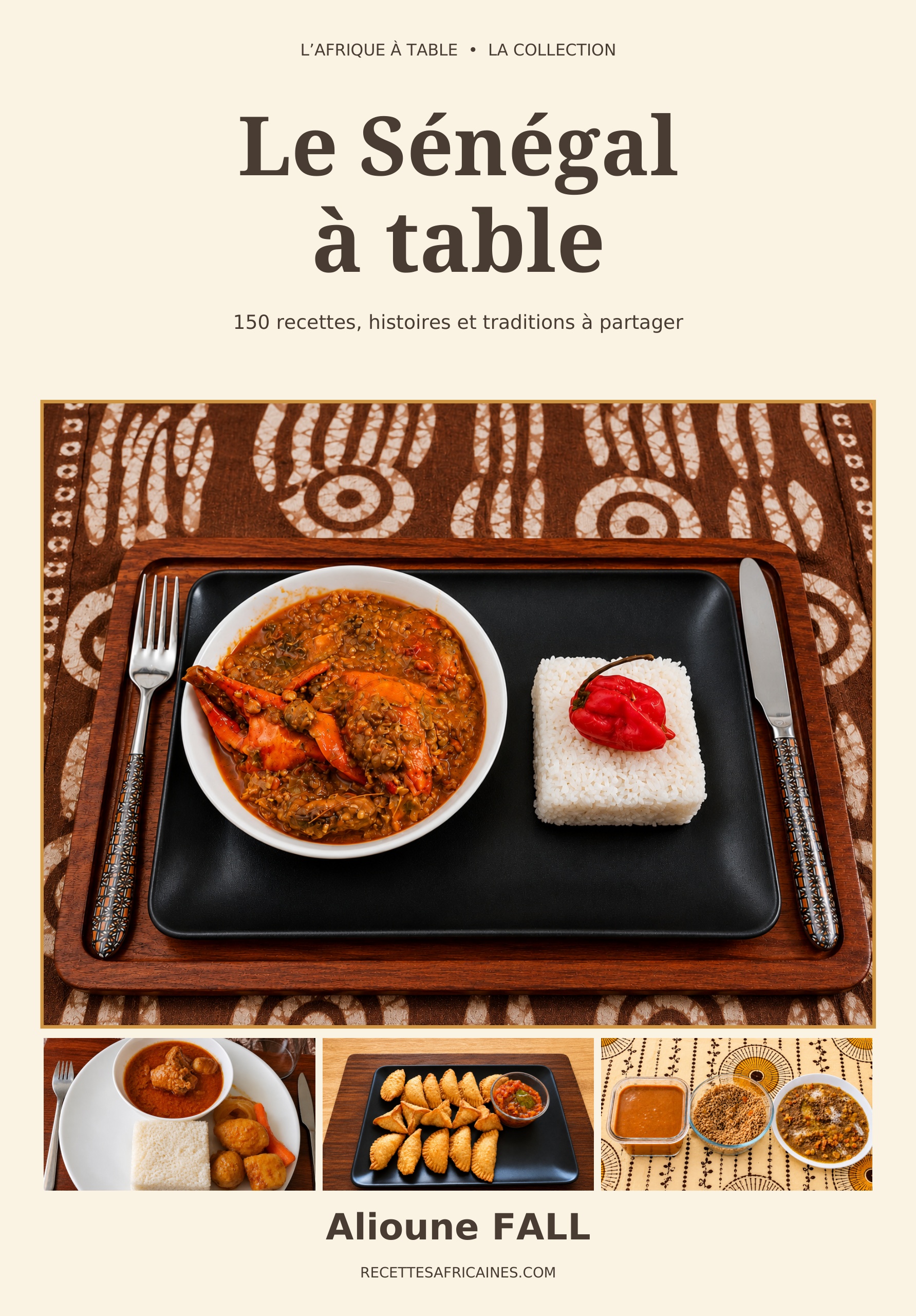
Explore Senegalese cooking with Le Sénégal à table, my collection of 150 recipes, stories and traditions to share. This book is in French, by Alioune FALL.
Explore further
4. DAILY AND FESTIVE PLACE
4.1. Street food and snacking Fataya reigns in Senegalese kiosks, shacks, and small “restaurants”: • “On-the-go” breakfast with a glass of café touba (a spiced coffee) or ataya (a type of green tea). • Lunch break for middle and high school students. • Convivial setting for card games, political debates, TV or sports evenings, returns from the beach. It is bought in plastic bags, kraft paper, sometimes accompanied by an iced “bissap” (hibiscus drink) or fresh ginger, and a generous spoonful of spicy red sauce. 4.2. Festive meals and ceremonies • Essential for picnics, children's birthdays, ceremonies (baptisms, weddings, urban funerals) • Faithful friend of “Ndogu” (breaking the fast) during Ramadan • Living heritage in diaspora celebrations (“fataya party” evenings in Paris, New York, Montreal…)
5. ECONOMIC DIMENSION AND EMPOWERMENT
• For thousands of women, young people, and modest families, making and selling fataya provides a regular income, sometimes the main source of livelihood. • Low cost price, quick batch preparation, strong attractiveness, and renewal of taste thanks to the proposed variations. • Rise of the “fataya business”: food trucks, Afro-snacking shops, event caterers riding on “trendy foods.”
6. REGIONAL VARIATIONS AND GLOBAL INFLUENCES
6.1. Casamance or Bissau-Guinean fataya • The filling features local products: smoked fish, green vegetables, a hint of local sorrel leaves, crushed rice or millet. 6.2. Maghrebi or Lebanese fataya • Integrated into Ramadan by Senegalese Arab families, the filling opens up to minced lamb, fresh cilantro, cumin, paprika, chickpeas, split peas. 6.3. Afro-fusion • “Fataya burger,” “fataya pizza,” ricotta-spinach or chicken-cashew fataya, sweet potato vegetarian version, lentil vegan version. • Indian inspiration (samosa), West Indian (spicy pineapple sauce, mild curry).
7. NUTRITION, DIETETICS AND CONTEMPORARY CULTURE
7.1. Contributions Fataya offers a combined intake: • Carbohydrates (dough) • Animal or vegetable proteins (filling) • Lipids (frying oil) • Fiber, vitamins, and minerals (vegetables and herbs in the filling) But like all fried fritters, to be consumed in moderation in a balanced diet: prefer oven baking, integrate varied vegetables, limit salt. 7.2. Health, sharing and inclusion dimension • Often shared, fataya is a pretext for conviviality, for community mutual aid (group preparation). • On a social level, it offers young people codes and benchmarks, being the meal of emancipation (being able to buy one's fataya "by oneself" marks a stage).
8. SYMBOLS, TRANSMISSION AND “FATAYA CULTURE”
• Transmission: preparing fataya is the first “recipe from the elders,” a gesture of sharing between mother-daughter, mother-son, among friends. • Urban identity: fataya carries the colors of modern Dakar, young, open, creative, cosmopolitan, combining Senegalese pride and adaptation to globalization. • Popular culture: songs, local cinema scenes (“everyone eats fataya in Senegalese series!”), social networks (Instagram, TikTok): challenge of the “most beautiful fataya,” “the best sauce.”
CONCLUSION Fataya is not just a fritter: it is proof that a modest dish can become an icon, a vector of integration, creativity, empowerment, and collective joy. At the crossroads of Arab, European, and African influences, it embodies the audacity of the Dakar metropolis and African diasporas. Let's preserve and promote fataya, a mirror of the popular genius of African cuisine: accessible, evolving, unifying, and infinitely delicious.
In the kitchen : Fataya
Recipes from the site to put your knowledge into practice:
Discover these cuisines at a restaurant
Explore our restaurant and caterer directories. Choose your destination and check the establishment’s menu to confirm which dishes are offered and available.
Continue exploring
Enjoy discovering ingredients and African cuisines? Join our newsletter. The illustrated PDF 10 sauces africaines incontournables is in French and is offered after confirming a subscription to the French or bilingual edition.