Samosa
Central Asia
Understanding : Samosa
INTRODUCTION
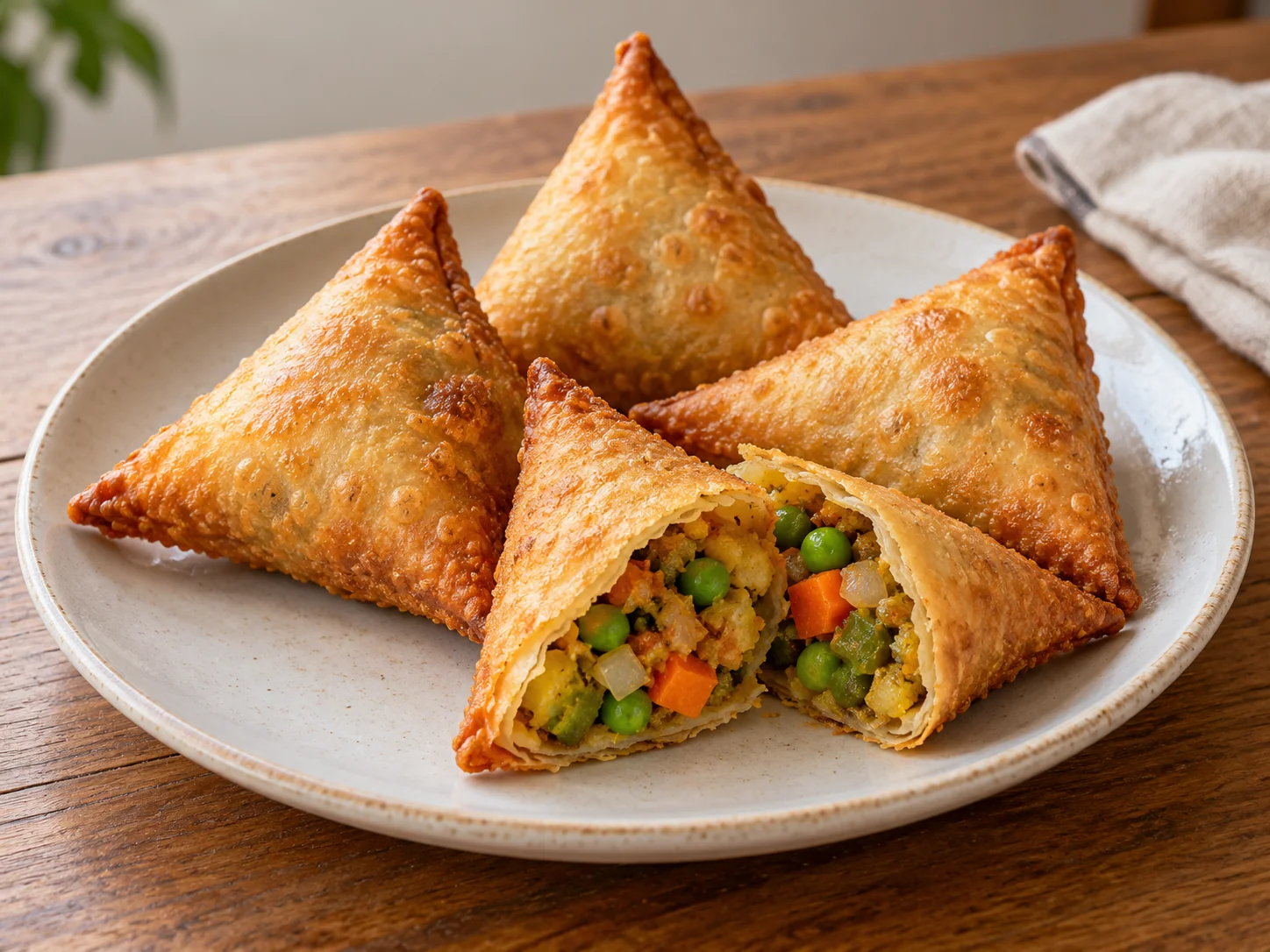
The samosa, sometimes spelled “samoussa,” holds a special place in the gastronomy of many African countries, particularly on the continent's eastern coast, the Indian Ocean, but also in the major cities and markets of the Maghreb and West Africa. This dish, recognizable by its triangular shape and golden, crispy crust, is more than just a snack: it represents a symbol of conviviality, cultural blending, and culinary adaptability. This text offers an in-depth exploration of the samosa, from its origins to its unique place in African cuisine.
Prepare this speciality
Choose a detailed recipe, adjust the portions and prepare your ingredients before starting. Our cooking tips and food safety advice complement the steps described in the recipes.
Explore further: Cooking tips · Food hygiene and safety advice.
History and uses
I. ORIGINS AND HISTORICAL JOURNEY OF THE SAMOSA
The samosa traces its origins to Central Asia – notably Persia, where it was known as sambusa or sanbusaj – before being introduced to India, South Asia, and, through trade routes, throughout the Indian Ocean. Over the centuries, the samosa adapted to the local tastes, products, and techniques of the regions it traversed. Its arrival in Africa is linked to exchanges between India, the Arabian Peninsula, and the East African coast, particularly Zanzibar, the Comoros, and Madagascar, where the Indian and Muslim diaspora largely contributed to its rise. Over time, the samosa blended into the culinary traditions specific to different regions of the continent, becoming a staple of markets, religious and family celebrations, and street food stalls. It was enriched with local ingredients, acquiring new identities everywhere while retaining its fundamental principle: a flavorful filling wrapped in a thin dough, fried until crispy and golden.
II. DETAILED DESCRIPTION OF THE SAMOSA
- Appearance and structure The samosa is generally triangular in shape, although it can sometimes be found in other forms such as a semicircle (especially in certain African regions). Its small size, convenient for eating with fingers, and its neat presentation make it a popular snack for aperitifs, buffets, or on-the-go meals. The dough: This is a key element of the samosa. It is traditionally made from wheat flour, water, oil, a pinch of salt, and sometimes a little sugar. The dough must be pliable, thin, and strong enough to hold the filling without tearing during frying. In some African variations, the dough can be brick pastry, filo pastry, or even mixtures of local flours (cassava, millet, corn, depending on the region and available resources). The filling: The samosa is incredibly diverse, adapting to local products and dietary restrictions. In Africa, minced meat (beef, chicken, lamb) is frequently used, seasoned with onions, garlic, ginger, coriander, chili, and sometimes small vegetables (potatoes, peas, carrots). On the coast, in the Indian Ocean islands, and in Madagascar, fish, crab, shrimp, or a vegetarian filling (spiced potatoes, lentils) are often found. The whole is subtly flavored with various spices: turmeric, cumin, pepper, cinnamon, cardamom, nutmeg, depending on inspiration and family traditions.
- Preparation method The success of a samosa relies on meticulous preparation. The dough is first kneaded, then rolled out thinly and cut into strips, circles, or squares depending on the desired shape. The filling is prepared separately, simmered for a long time to develop all its flavors and to lose all moisture (which prevents it from soaking the dough during frying). The folding is a skill. A small portion of filling is placed on the dough, then folded to obtain the famous triangle (or half-moon). The edges are often sealed with a mixture of water and flour to close the samosa. Finally, they are plunged into hot oil and fried until golden and crispy.
- Texture and flavor A well-made samosa offers a unique sensory experience: crispy on the outside, it conceals a fragrant, soft, often slightly spicy, and richly flavored interior. This texture-color duality is one of its major assets. When tasted, the contrast between the golden surface and the savory filling explodes in the mouth, instantly bringing satisfaction and pleasure.
In my books

Continue exploring the continent’s cuisines with Africa at the Table — 54 countries, 54 iconic dishes, by Alioune FALL. This book is in English.
Explore further
III. PLACE OF THE SAMOSA IN AFRICAN CUISINE
- Symbol of cultural blending and culinary adaptability The samosa is a perfect example of the cultural melting pot at work on the African continent. Although of foreign origin, it has been adopted and adapted by a multitude of African peoples who have made its recipe their own and integrated it into their daily cuisine. Everywhere it has traveled, it has been imbued with products, spices, techniques, and references specific to each region.
- A street food staple and festive occasion must-have In the streets of Dakar, Mombasa, Lagos, Moroni, or Antananarivo, the samosa is ubiquitous. It is sold hot, ready to eat, at market stalls, street corners, or during special events such as Ramadan, Eid, weddings, or family celebrations. It is among the appetizers served at aperitifs, or even as an accompaniment during tea-time in some communities. In East Africa, the Indian Ocean islands, and Madagascar, the samosa is a central element of “street food.” It fosters conviviality; several are shared over tea or coffee with friends, colleagues, or family. Its portability, high nutritional value, and affordability contribute to its adoption across the continent.
- Regional variations and innovations Thanks to the diversity of cultures and local products, the African samosa has a multitude of variations. In Kenya, beef and spices play a key role; in Madagascar, fish-based fillings are found; in the Comoros, samosas are sometimes vegetarian or enhanced with seafood. In the markets of the Maghreb, samosas and bricks coexist, offering fillings based on fresh herbs, eggs, and cheese. Modern variations of the samosa also benefit from the abundance of African products: cassava, sweet potato, yam, chickpeas, etc. Moreover, it is not uncommon to find sweet versions, with banana, coconut, or candied fruits, for special occasions.
- Transmission and identity Through the preparation of samosas, families transmit knowledge, gestures, and recipes. It is a moment of sociability, often collective, where generations gather to fold and fry these golden triangles together. This culinary know-how carries identity, memory, and now belongs to the culinary heritage of many African countries.
CONCLUSION
The samosa is an emblematic dish of African culinary heritage, a true testament to the cultural blend that characterizes the continent. It combines simple ingredients and ancestral techniques with local inventiveness and the blending of peoples. More than just food, it embodies diversity, transmission, and conviviality. Present from bustling streets to family tables, crossing borders and generations, the samosa remains a jewel of African cuisine, always evolving, always reinvented, always shared.
ENJOY YOUR MEAL!
© Photo credit: recettesafricaines.com. All rights reserved.
In the kitchen : Samosa
Recipes from the site to put your knowledge into practice:
Discover these cuisines at a restaurant
Explore our restaurant and caterer directories. Choose your destination and check the establishment’s menu to confirm which dishes are offered and available.
Continue exploring
Enjoy discovering ingredients and African cuisines? Join our newsletter. The illustrated PDF 10 sauces africaines incontournables is in French and is offered after confirming a subscription to the French or bilingual edition.