Sugarcane
Southeast Asia, New Guinea
Understanding : Sugarcane
Introduction
Sugarcane, a tropical plant with a robust stem, is one of the pillars of global food civilization and a precious heritage for many peoples. Associated with the idea of sweetness, conviviality, and vitality, it occupies an essential place in the daily lives of millions of Africans. Whether it's chewed as is, juiced, cooked in recipes, or made into a festive emblem, sugarcane is not limited to industrial sugar production. It carries a whole range of traditional and culinary uses, as diverse as they are flavorful. This seemingly simple plant reveals a deep history, remarkable nutritional qualities, strong cultural symbolism, and culinary potential undergoing a renaissance on the African continent.
Where to find it
Look for the exact food-grade form required by the recipe at markets and specialist shops. Check the product name, ingredients, condition and storage instructions.
Explore further: Cooking tips · Food hygiene and safety advice.
History and uses
I. ORIGIN AND HISTORY OF SUGARCANE IN AFRICA
Sugarcane (Saccharum officinarum), originating from Southeast Asia and New Guinea, has been known to humanity for over 10,000 years. Its spread to Africa occurred very early in antiquity: it was introduced through Arab maritime trade, then by Indian merchants, and later by colonizers. As early as the 9th century, sugarcane was cultivated in Egypt, East Africa, and soon across the entire eastern coast of the continent, reaching the Indian Ocean islands (Madagascar, Zanzibar, Comoros). Over the centuries, its cultivation spread to West Africa, driven by Portuguese, English, and French colonization, particularly to supply refineries in the Caribbean, Europe, and North America. But beyond the grand history of industrial sugar, sugarcane has been integrated into daily African life since pre-colonial times in various popular forms: food, refreshing drinks, traditional medicines, festive or agricultural rituals, symbols of fertility and prosperity.
II. BOTANICAL DESCRIPTION, AFRICAN VARIETIES, AND CULTIVATION
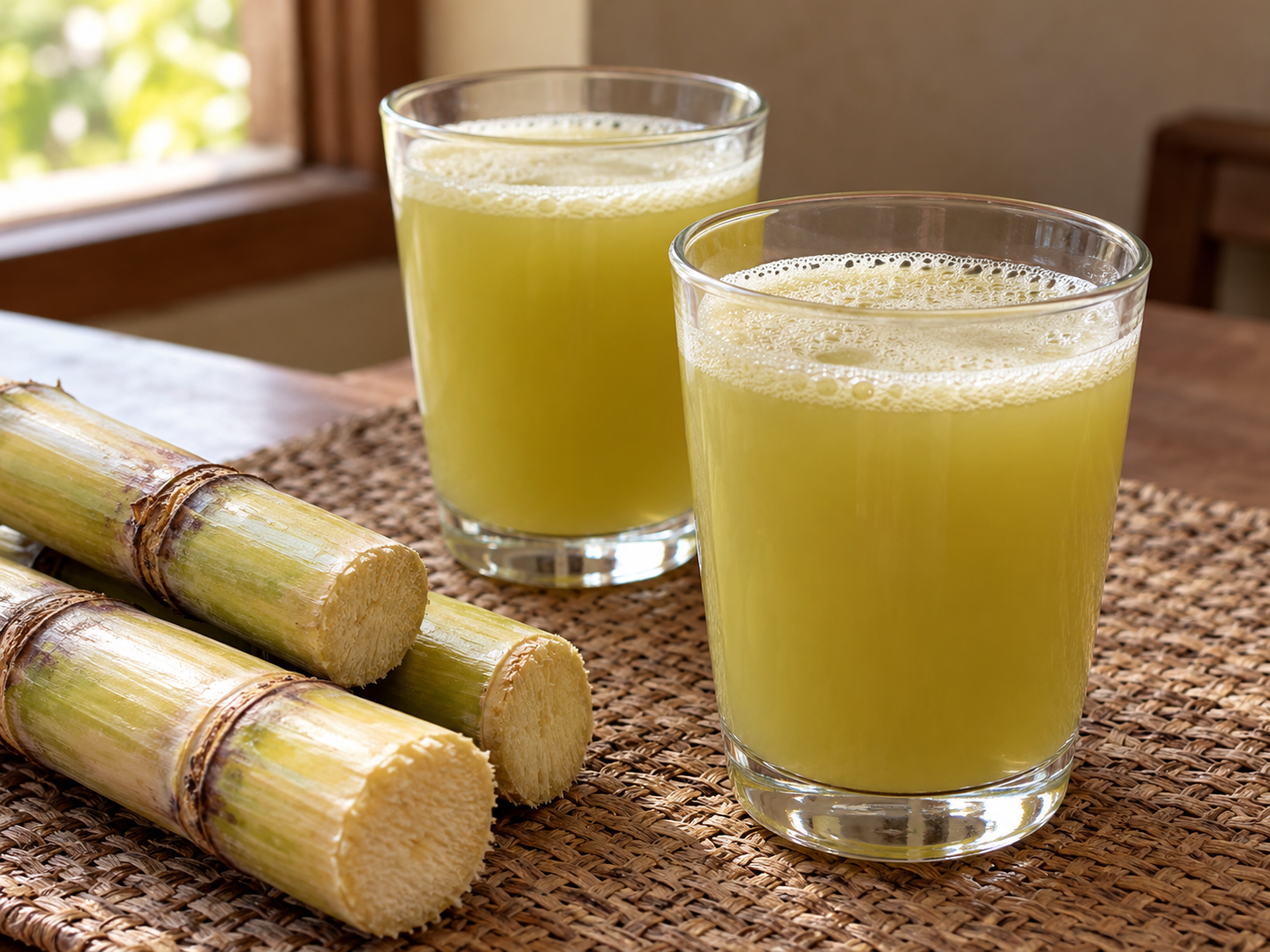
Sugarcane is a giant grass plant that can reach up to six meters in height. It grows in clumps, forming erect cylindrical stems, segmented with nodes, covered with a smooth, thick skin, varying from deep green to purple or yellow depending on the variety and maturity. Each stem is filled with a soft, spongy tissue engorged with sweet juice: the cane sap. Once ripe, sugarcane has a sweet taste, a vegetal fragrance, and a crunchy consistency designed to release the precious nectar when chewed or pressed. Varieties cultivated in Africa: • Traditional local varieties, sometimes rustic, with low yields but more fragrant and drought-resistant, are still present in sub-Saharan and equatorial rural areas. • Hybrid varieties, introduced in the 20th century during the “sugar revolution,” provide the raw material for industrial sugar factories in Egypt, Morocco, South Africa, Mozambique, Mauritius, Reunion, Cameroon, Nigeria, or Ivory Coast. Sugarcane cultivation requires warmth, abundant humidity, deep and well-drained soils. Its harvest occurs after 12 to 18 months; it is still often done by hand in village plots, with a machete, then the canes are peeled, cut, and packaged for sale.
III. SENSORY AND NUTRITIONAL DESCRIPTION
Appearance and Tasting • Visually, sugarcane appears as long stalks, with a diameter ranging from 2 to 6 cm, in green, yellow, or purplish colors. • Once peeled with a knife or machete, it reveals a pearly white or light yellow, juicy, fibrous interior. • In the mouth, cane provides a unique experience: it must be chewed to extract its sweet juice, then the fibers are discarded. • Cane juice, clarified or not, is golden in color, slightly cloudy, with an intense vegetal aroma. Nutritional Value • Cane juice is composed of over 70% water, 12 to 15% natural sugars (mainly sucrose), minerals (calcium, magnesium, potassium), vitamin C, amino acids, small amounts of polysaccharides, and antioxidant polyphenols. • Rich in natural sugars and low in fat, cane provides quick energy. • Undigested fibers aid digestion. • Its caloric intake remains moderate compared to industrial sugary drinks.
IV. USES AND PLACE OF SUGARCANE IN AFRICAN CUISINE
- Raw Consumption The primary use of sugarcane, still very widespread in rural and urban Africa, is to consume it fresh: • Children and adults buy peeled cane sections from street vendors or stalls. • It is cut into short pieces, peeled with a machete, bitten into, chewed to release the juice, then spat out. • This festive and convivial gesture evokes a connection to the land, childhood, carefree living, but also solidarity (cane is shared with family or friends). In many villages, sugarcane thus accompanies breaks in the fields, village festivals, walks, allowing people to hydrate and energize themselves during agricultural work.
- Fresh Cane Juice In all major African cities (Abidjan, Dakar, Lagos, Nairobi, Kinshasa, Douala, Antananarivo…), the sale of fresh cane juice in markets is a daily spectacle. The juice, extracted using grinders or presses (sometimes very artisanal), is served instantly or with a few ice cubes, sometimes flavored with lemon, ginger, or mint. This sweet, fragrant, thirst-quenching drink is immensely popular: • It hydrates, revitalizes, and provides a feeling of satiety. • It is known for its restorative properties after physical exertion (heavy work, long walks). • Its freshness makes it popular during hot weather, during Ramadan, or at festivals.
- Role in Cuisine and Tradition Although sugarcane in Africa is not the basis for elaborate desserts as in some Asian cuisines, it is used in many preparations and applications: • In some regions, it is used to naturally sweeten preparations: porridges for children, compotes, jams, traditional drinks (bissap (a hibiscus-based drink), tamarind, tamarind juice), without resorting to refined sugar. • It is incorporated into certain cooking: pieces of sugarcane inserted into meat stews (especially pork or poultry) to provide a sweet and caramelized flavor, or in cassava cooking to reduce bitterness. • In the production of artisanal rum (especially in Madagascar, Mauritius, Comoros, Reunion, and countries on the east coast), cane is the basis for fermentation. • Some rural sweets involve pieces of cane boiled with tubers (yam, sweet potato) or fresh fruits in compotes shared at festivals.
- Medicinal and Symbolic Dimension Sugarcane lends itself to traditional uses: • Folk medicine: the juice is prescribed for fatigue, hypertension, fever, dehydration, or dry cough. It is included in certain herbal teas made from grasses or medicinal plants. • Rituals and offerings: in some cultures, cane accompanies offerings during agricultural festivals, funerals, fertility rituals, and weddings. • Symbol: Cane symbolizes sweetness, wealth, abundance, and the desire for prosperity. Offering cane is a wish for happiness, during family reunions, the return of a traveler, or after a harvest.
In my books

Continue exploring the continent’s cuisines with Africa at the Table — 54 countries, 54 iconic dishes, by Alioune FALL. This book is in English.
Explore further
V. SUGARCANE IN CONTEMPORARY AFRICAN SOCIETY
- Festivals and Collective Habits The tasting of sugarcane is often associated with celebration and conviviality: • During major rural ceremonies such as weddings, baptisms, funerals, cane is distributed to guests, to punctuate the day, fill gaps, and share abundance. • Outside schools or on beaches, cane is a popular, healthy treat, accessible to the greatest number, less expensive than sodas or industrial candies. • In rural areas, it remains a currency of exchange and hospitality.
- Trade and Economy • Thousands of small African farmers partially live from sugarcane cultivation. • The trade of fresh cane, cane juice, and derived artisanal products provides work for many young people and women in urban areas. • The sugar industry, meanwhile, is a major part of the Ivorian, Mauritian, Malagasy, or South African economy, but artisanal production remains a vibrant reality elsewhere on the continent.
- Contemporary Challenges and Culinary Renaissance • Faced with the rise of diseases linked to overconsumption of refined sugar, many African chefs and nutritionists are rehabilitating sugarcane in its natural form: less refined, richer in micronutrients, and with a moderate glycemic index if consumed raw. • Cocktails, fresh juices, meat skewers marinated with cane, cane ice creams, and natural pastries are proudly reintroduced in urban bistros, hotels, and organic markets of major African cities.
VI. NUTRITIONAL AND DIETARY BENEFITS
• Quick and healthy energy boost: perfect for compensating for energy loss during agricultural, sports activities, or in hot weather. • Rich in natural antioxidants: unrefined cane juice contains protective polyphenols and vitamin C. • Source of minerals: potassium, calcium, magnesium, essential for water and nerve balance. • Hydration: chewing cane and its juice are powerful allies against dehydration. • Fibers: promote digestion, cleanse the mouth, reduce sugary snacking between meals. • Moderate glycemic index (if unrefined or mixed with other nutritional fibers). Caution: Like any sugary product, consume in moderation in case of confirmed diabetes, but it remains much less harmful than chemical sweets.
CONCLUSION
Sugarcane in Africa is not reduced to an ingredient for industry or export. It is celebration, memory, social bond, shared sweetness, ancestral heritage, and a symbol of prosperity. From the countryside to the city, from the street to the market, it embodies a way of life, nourishing body and soul and opening up an infinity of traditional or new culinary creations. In its thick fibers, it is all the vitality and poetry of the African continent that can be chewed, drunk, and dreamed of.
In the kitchen : Sugarcane
Recipes from the site to put your knowledge into practice:
Discover these cuisines at a restaurant
Explore our restaurant and caterer directories. Choose your destination and check the establishment’s menu to confirm which dishes are offered and available.
Continue exploring
Enjoy discovering ingredients and African cuisines? Join our newsletter. The illustrated PDF 10 sauces africaines incontournables is in French and is offered after confirming a subscription to the French or bilingual edition.