Squash
Africa, America
Understanding : Squash
INTRODUCTION
Among the diversity of vegetables grown and consumed across Africa, squash holds a place that is both discreet and essential. Present in various varieties and names (pumpkin, gourd, winter squash, edible calabash, butternut squash, zucchini…), squash is intimately linked to traditional agricultural practices, daily diet, and popular festivities across the continent. Rich in history, uses, and benefits, squash remains a versatile, nourishing, and inspiring food, crossing generations and regional borders.
Where to find it
Look for the exact food-grade form required by the recipe at markets and specialist shops. Check the product name, ingredients, condition and storage instructions.
Explore further: Cooking tips · Food hygiene and safety advice.
History and uses
I. ORIGIN, HISTORY AND BOTANY
- Origin and spread Squash, from the Cucurbitaceae family, includes several genera and species, the most common in Africa being Cucurbita maxima (pumpkin), Cucurbita moschata (butternut squash), Lagenaria siceraria (edible calabash), and Cucurbita pepo (zucchini, pumpkin). While some squashes were introduced from America after the Great Discoveries, the calabash (Lagenaria) is ancestral in Africa and played a crucial role in daily life long before colonization. Very early on, squash found its place in African subsistence agriculture thanks to its resistance, ease of cultivation, productivity, and long shelf life. The African climate, from humid equatorial zones to dry savannas, is favorable to it; it grows in many family gardens, on the edges of corn, yam, cassava, or millet fields, and sometimes even as an intercrop.
- Diversity of African varieties African squash is not limited to a single type. We find: • Butternut squash (Cucurbita moschata): elongated fruits with beige or green skin, orange flesh. • African pumpkin (Cucurbita maxima): large squash with thick skin, usually bright orange. • Edible calabash (Lagenaria siceraria): used both as food and as a utensil once dried. • Zucchini (local or imported varieties). • Local pumpkin (sometimes called “watermelon” in some regions, although different from actual watermelon). • African eggplant (solanum, sometimes called “bitter squash” in various countries). • Leaves and young shoots (ugu, ewedu, etc.) of certain squashes consumed as leafy vegetables. The astonishing diversity of African squashes testifies to their adaptability and their importance for the food security of farming families.
II. SENSORY AND NUTRITIONAL DESCRIPTION
- Appearance and characteristics Squash displays a great morphological variety: spherical, elongated, ribbed or smooth, small or voluminous. Its thick skin is tinged with green, yellow, orange, or cream depending on the variety. Inside, the flesh, compact or fibrous, displays colors from pale yellow to deep orange. The numerous white or beige seeds are gathered in the central cavity and are often edible. Squash has a tender texture after cooking, melting, slightly sweet, sometimes flavored with nutty or musky notes. Young shoots and leaves offer a velvety texture, a slight bitterness, and a herbaceous freshness.
- Nutritional value Squash is an excellent health food: • Rich in water (90%), it hydrates and lightens digestive respiration. • Low in calories (20-30 kcal/100g), ideal for everyone and especially for diets. • Excellent source of beta-carotene (provitamin A), responsible for the orange color: valuable for eye health and immunity. • Presence of vitamins B, C, and E, antioxidant and protective. • Good fiber content, beneficial for digestion and the prevention of metabolic diseases. • Seeds rich in protein, quality lipids, zinc, and magnesium; consumed grilled, dried, as a paste (djansang), or used as a binder in sauces (especially egusi or pumpkin seed sauce in West and Central Africa).
III. PLACE OF SQUASH IN AFRICAN CUISINE
- Use of different parts of the squash The specificity of African squash lies in the valorization of all or part of the plant: • The ripe fruit is used in soup, puree, sauce, boiled with other tubers, stuffed, or sautéed. • Leaves and young shoots: very common in Nigeria, Ghana, Cameroon (ugu (fluted pumpkin leaves), kontomire (cocoyam leaves)), they are chopped and cooked in spicy stews, broths, thick sauces, or simply sautéed in palm oil. • Seeds: toasted as a snack, ground to bind and enrich sauces, or processed into a puree to prepare the famous “pistachio sauce” (or egusi sauce). • Skin or rind: sometimes used as a container, especially for traditional soups or drinks, or transformed into utensils once the calabash is dried.
- Flagship recipes featuring squash a) Squash soup In many regions, squash soup, prepared with tomato, onion, local spices, serves as a light and comforting evening meal. It can be enhanced with coconut milk, chili, dried shrimp, or fresh herbs. b) Seed/pumpkin seed sauce (egusi) In Nigeria, Benin, Cameroon, Togo, Ghana, egusi sauce (sauce with ground pumpkin seeds) is an institution. Mixed with leafy vegetables, dried fish, meat, or simply with palm oil and onion, egusi accompanies fufu, cassava, yam, or rice. c) Squash as a side dish Steamed or boiled, then pureed and seasoned, squash often replaces potato or cassava. It is included in red sauces, African couscous, or Senegalese thieboudienne, where it brings its softness and sweet note. d) Leaves and shoots in stew In Ghana, “kontomire” (cocoyam leaves) is prepared as a green sauce, chopped, seasoned with dried fish, onion, and palm oil. In Nigeria, “ugu soup” (fluted pumpkin leaf soup) is consumed throughout the southeast of the country. e) Roasted seeds Roasted pumpkin seeds are sold on the street as a crunchy, delicious, and nutritious snack, appreciated by young and old.
In my books

Continue exploring the continent’s cuisines with Africa at the Table — 54 countries, 54 iconic dishes, by Alioune FALL. This book is in English.
Explore further
IV. SOCIAL, ECONOMIC AND CULTURAL ROLE OF SQUASH IN AFRICA
- Symbol of honor and sharing The presence of squash in feasts (weddings, funerals, births, agricultural festivals) symbolizes abundance, fertility, and hospitality. In several regions, offering a tureen full of pumpkin or an egusi sauce to guests is a strong act that celebrates the harvest season, success, and family unity.
- Essential source of food security Due to its productivity, drought resistance, and ability to be stored for a long time (sometimes several months in a clay cellar or in the shade), squash plays a decisive role in managing the lean season (period of scarcity between two harvests). It ensures a vital stock of food, whether in the form of whole fruits or dried seeds.
- Economic value and autonomy Sold fresh in markets, processed into paste or roasted seeds, exchanged for other goods, squash provides supplementary income for thousands of rural women. Its cultivation requires few inputs and fits perfectly into compound gardens and African agroecology.
- Cultural and symbolic use In many African societies, the calabash (dried gourd) is sacred. It is used to prepare and drink the chief's beverage, to carry offerings, to transport holy water or liquors during religious ceremonies and rites of passage. In some regions, the first harvested squash is offered to ancestors or used in initiation rituals.
V. TIPS, CREATIVITY AND INNOVATIONS
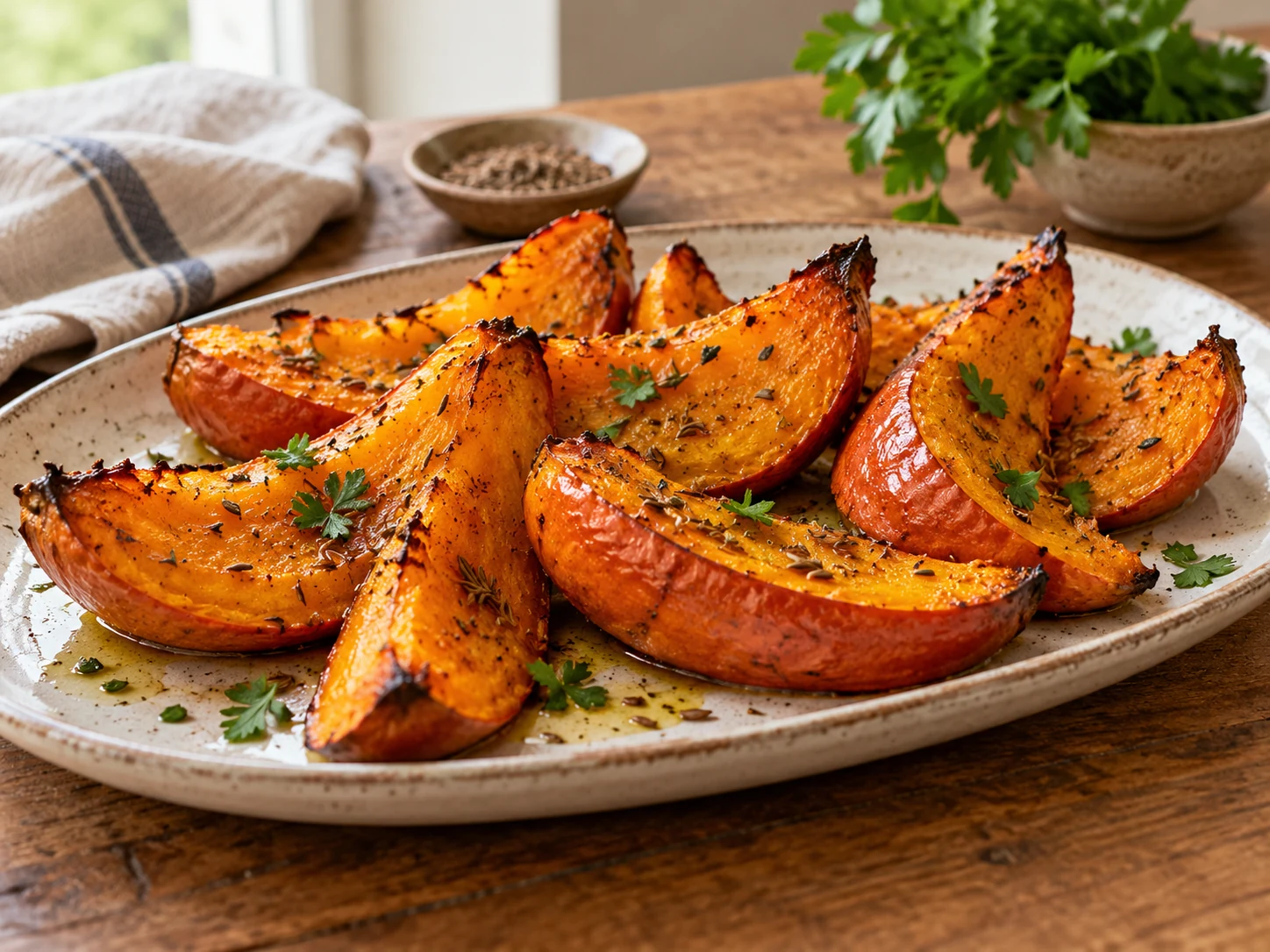
• Squash gently releases its aroma if roasted before being mixed into dishes; try it grilled, then pureed in tomato sauce. • Add pumpkin seeds to infant porridge to increase its protein, iron, and good fatty acid content. • Fresh leaves can be blanched, chopped, and stored frozen or dried for dry months. • Grated squash lends itself to the creation of savory pancakes, gratins, or even desserts: try pumpkin fritters with orange or cinnamon for celebrations! • Substitute cooked squash for sweet potato in puree; it will be lighter and more colorful.
VI. NUTRITIONAL BENEFITS
• Eye health and immunity (provitamin A, important for preventing childhood blindness). • Satiating and digestive effect due to fiber and mineral richness. • Prevention of chronic diseases (antioxidants, low caloric density, absence of cholesterol). • Seeds beneficial for male health (zinc, magnesium, prevention of prostatic disorders). • Contribution of various vitamins (B1, B2, B3, C, E) and essential minerals (potassium, magnesium, calcium).
CONCLUSION
Squash, omnipresent and modest, is part of the soul of African cuisine. It embodies the richness of the land, the sustainability of ancestral agricultural practices, culinary creativity, and conviviality. Through its dual nature – food and utensil, flesh and leaf, seed and calabash – it has offered African peoples a reserve of dietary, gastronomic, and symbolic solutions. Whether in spicy sauce, shared soup, ritual offering, or children's snack, squash continues to bring health, flavor, and harmony to African homes, asserting its unique place in the continent's food heritage.
In the kitchen : Squash
Recipes from the site to put your knowledge into practice:
Discover these cuisines at a restaurant
Explore our restaurant and caterer directories. Choose your destination and check the establishment’s menu to confirm which dishes are offered and available.
Continue exploring
Enjoy discovering ingredients and African cuisines? Join our newsletter. The illustrated PDF 10 sauces africaines incontournables is in French and is offered after confirming a subscription to the French or bilingual edition.