Tamarillo
Andes mountain range
Understanding : Tamarillo
INTRODUCTION
The tamarillo, often called "tree tomato," is a fruit still unknown to a part of the general African public, but its influence is steadily growing in the continent's gastronomy. It is a fruit of convergence: between the South American Andes, tropical biodiversity, Southern culinary traditions, and Africa opening up to new flavors. Its vibrant colors, complex fragrance, juicy flesh with refined acidity make it an ingredient for both popular cuisine and gastronomic innovation, especially in the mountainous, equatorial, and insular regions of Africa. Behind the tamarillo lies a whole history of plant migrations, agrarian adaptations, taste fusions, and the revalorization of local resources. Let's dive into the exceptional world of this fruit, from its Andean roots to its integration into modern African cuisines.
Where to find it
Look for the exact food-grade form required by the recipe at markets and specialist shops. Check the product name, ingredients, condition and storage instructions.
Explore further: Cooking tips · Food hygiene and safety advice.
History and uses
I. ORIGINS AND BOTANY OF THE TAMARILLO
- American origin and global spread The tamarillo, Solanum betaceum, belongs to the large and diverse Solanaceae family, like the tomato, eggplant, potato, and bell pepper. Originally from the Andes mountain range (regions of Peru, Ecuador, Bolivia, and northern Chile), it has been cultivated for several centuries by Amerindian populations for its taste qualities, its resistance at high altitudes, and its nutritional value. Introduced to Africa in the 20th century, first in the Eastern colonies (Kenya, Tanzania, Malawi, Zimbabwe) and Madagascar, then in the Great Lakes region, on the high plateaus, and in some Southern African countries, the tamarillo has adapted to favorable agroecological niches. It is now found in Cameroon (especially on Mount Cameroon), Rwanda, Ethiopia, in the west of South Africa, on the Indian Ocean islands (Reunion, Mauritius, Madagascar), and even in West Africa in experimental gardens.
- Botanical description The tamarillo is a shrub or small tree that can reach 2 to 6 meters in height, with an upright habit, a tender trunk, and large cordate, downy, and fragrant leaves. The inflorescence produces small white or pinkish flowers, sometimes fragrant. The fruit – oval or ovoid, 5 to 10 cm long – hangs from long peduncles. There are different varieties: red fruits (the most common in Africa), orange, yellow, or dark purple. The skin of the tamarillo is thin, smooth, shiny; its flesh, juicy, colored (orange to ruby red) depending on the species, contains several edible black seeds, surrounded by an acidic mucilage. The flavor: a subtle balance between the acidity of tomato, the sweetness of passion fruit, and the bitterness of tamarind or guava. The fragrance, mixed with floral and fruity notes, evolves according to maturity and terroir.
II. CULTIVATION SYSTEMS, ECOLOGY AND ECONOMY
- African growing conditions The tamarillo adapts well to warm temperate zones and moderate mountain elevations (1,000 to 2,000 m altitude). It appreciates humidity, a temperature of 14 to 25°C, rich, well-drained, low-calcium soils. It tolerates drought but fears intense cold. Its rapid growth, generous production (from the 2nd year), and pest resistance make it an ideal candidate for African family farming, in polyculture, in coffee, avocado, or banana fields.
- Economic value Even if its market remains modest on a continental scale, the tamarillo is experiencing commercial enthusiasm in urban centers of East Africa, in tourist markets in Madagascar, Reunion, in hotels, and at agricultural fairs. It is also becoming a supplementary crop for small producers diversifying their production for the local market or for export (Europe, Middle East).
III. SENSORY DESCRIPTION: APPEARANCE, TASTE, FRAGRANCE
- Appearance and tasting The tamarillo displays a shiny, taut skin, which changes from green to yellow, brick red, or dark purple depending on the variety. The cut reveals two distinct zones: the central flesh, juicy, almost transparent, and the peripheral pulp, dense, often more colored, retaining most of the seeds. On the palate, the first sensation is one of strong acidity, followed by a rise in sweetness, then bitterness, depending on the fruit's ripeness. There is a subtle blend of tomato, redcurrant, persimmon, or even rhubarb and passion fruit, highlighting its qualities for savory or sweet (or even sweet and savory) uses. The flesh, melting, is not mealy. The seeds are safe to eat, although some remove them for aesthetics or sweetness.
IV. CULINARY USES OF TAMARILLO IN AFRICA
- Fresh consumption The simplest way is to cut the fruit in half, spoon in hand, and extract the flesh. Some prefer to peel the skin – slightly bitter – before slicing it. In Madagascar or Kenya, fresh tamarillo is found at the start of the school year, sold by street vendors or in exotic fruit baskets. Children like to sprinkle it with sugar, salt, or even mild chili.
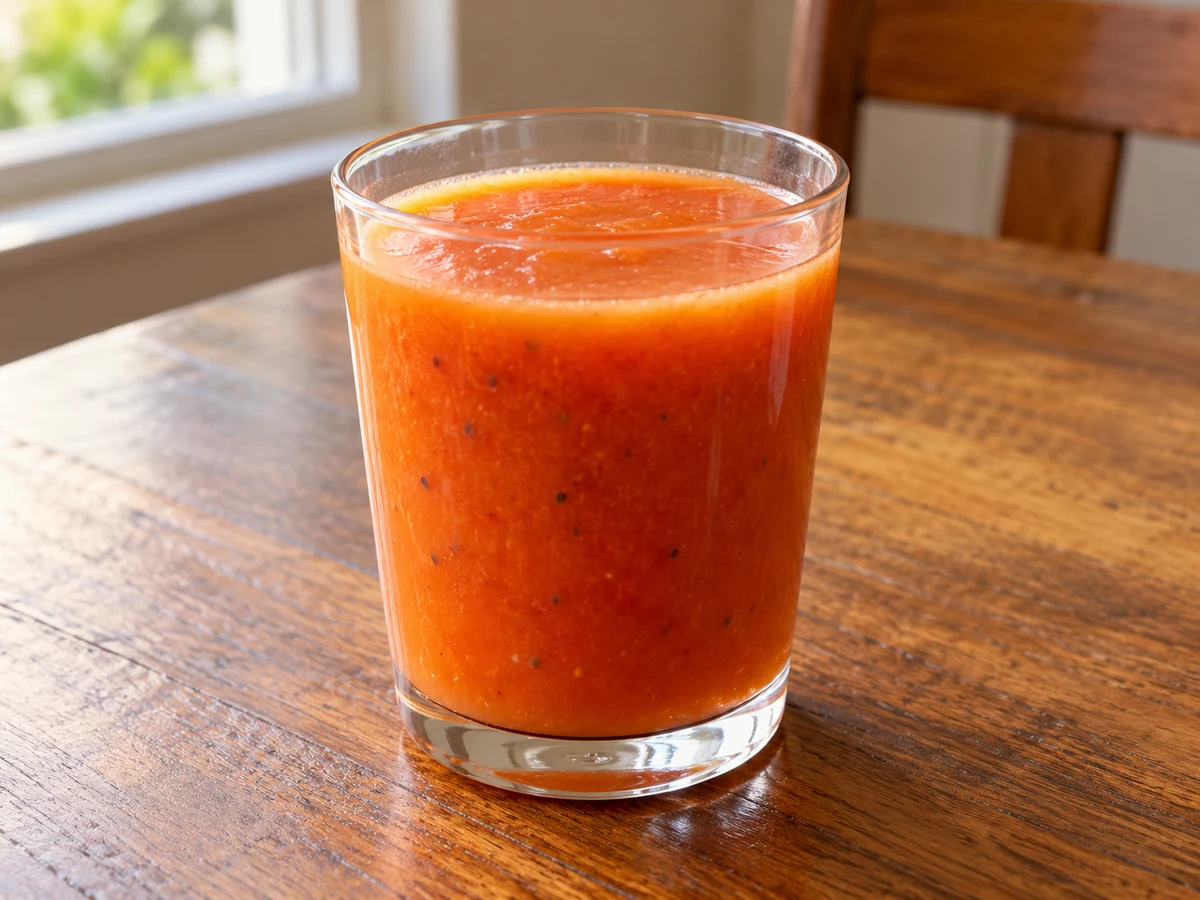
- Juices, smoothies and cocktails Its water content and atypical flavor favor its transformation into juice (by blending/filtering), alone or combined with lemon, orange, pineapple, or guava: it is a rustic and sparkling, refreshing drink, often served chilled in the markets of Bujumbura, Yaoundé, or Antananarivo. In innovative restaurants (for example in Nairobi, Dar es-Salaam, Antsirabe, Reunion), it is used in cocktails: tamarillo, passion fruit, lime and mint, or in vitamin-rich smoothies, appreciated for accompanying brunches, urban after-work events, or "detox" menus.
- Salads and starters Cut into cubes or wedges, tamarillo enhances: • Tropical fruit salads (mango, papaya, pineapple, melon, pomegranate). • Savory salads: mixed with avocado, red onion, fresh tomatoes, bell pepper, sometimes cheese, shrimp, or grilled chicken. • Accompaniment for grilled fish, shellfish, or fragrant rice, to temper fat and add a touch of acidity.
- Hot, candied or cooked Chefs in South Africa or the Indian Ocean roast tamarillo in a pan or oven (with honey, lemon, vanilla, or cinnamon) to obtain an express condiment, a sweet and sour chutney, or an accompaniment for white meats, roasted lamb, or game. It can be made into jam (often combined with ginger) or compote for breakfast or desserts.
- Pastries and ice creams Tamarillo is now finding its place in hotel pastries: fruit tarts, vanilla/tamarillo cheesecake, light mousse garnished with tamarillo coulis or marinated carpaccio (sugar, lemon). There are also, in Reunion and Madagascar, fine ice creams based on tamarillo, plain or combined with cinnamon, hibiscus, or yogurt.
- Sauces and chutneys In East and Southern Africa, tamarillo is used in sweet and sour sauces, chutneys (simmered then spiced with onion, garlic, ginger, chili), which enhance grilled dishes, curries, or rice dishes. Its ability to bind with spices makes it a choice ingredient for fusion creations, very popular in "new African cuisine."
In my books

Continue exploring the continent’s cuisines with Africa at the Table — 54 countries, 54 iconic dishes, by Alioune FALL. This book is in English.
Explore further
V. SOCIAL, CULTURAL AND FESTIVE PLACE
- Everyday and seasonal fruit The tamarillo is not (yet) a major festive fruit in Africa; its harvest remains seasonal (rather between April and October depending on altitude and latitude), but it accompanies family life, the return from school, winter snacks, summer snacks in the shade of orchards. In mountainous areas and islands, it is offered to wish good health, academic success, or during family visits. For some, it is the gift of rainy days, a miracle fruit from the heights, associated with vigor and color.
- Gastronomy and modern valorization Over the years, the revalorization of local products has led the tamarillo to become a "star" of modern gourmet cuisine: it appears in restaurant menus, cooking competitions, agricultural innovation festivals, where young chefs offer tamarillo carpaccios, original sauces, desserts, and vitamin-rich drinks.
VI. NUTRITIONAL BENEFITS
• Rich in water (75 to 85%), low in calories (less than 40 kcal/100g). • Good source of vitamin C (15 to 30 mg/100g), vitamin A (provitamin) and carotenoids. • Significant contributions of vitamin B6, iron, potassium, phosphorus. • Natural antioxidants: flavonoids, polyphenols, lycopene (which gives it its red color, protective effect on cardiovascular health). • Soft fibers: good for digestion, satiety management, prevention of diabetes, cholesterol, certain cancers. • Diuretic effects: traditionally recommended to facilitate renal elimination. Regular consumption would help strengthen immune defenses, maintain good vision, improve general tone, and aid recovery after illness or physical exertion.
VII. MEDICINAL AND TRADITIONAL ROLES
In traditional medicine in Madagascar, Latin America, and the African mountains, tamarillo is credited with virtues: • Relief of stomach aches, • Liver detoxification, • Lowering blood pressure, • Stimulating appetite in neurasthenic children, • Soothing fever or stress. Leaves, crushed and applied as a poultice, are said to be used to treat minor wounds or stings.
VIII. ECOLOGY, SUSTAINABLE AGRICULTURE & TRANSMISSION
• Tamarillo often grows in agroforestry, associating coffee, avocado, banana, sweet potato, tea. • Its cultivation promotes biodiversity, attracts pollinators, and enriches soils through the fall of mineral-rich leaves. • Its propagation by sowing or cuttings makes it a pillar of small-scale agriculture, particularly for food self-sufficiency. The transmission of knowledge about tamarillo is increasingly done through rural schools, agricultural programs, agroecological training, and today through the dynamics of African gastronomy social networks.
CONCLUSION
Long an exotic fruit, the tamarillo, or tree tomato, is now rooted in African heritage: an everyday fruit, an actor in agricultural diversity, a pleasure of culinary discovery. It illustrates the ingenuity of African societies in opening up, assimilating, and sublimating plants from elsewhere, to adapt them to their tastes, uses, and terroirs. Refreshing, tonic, subtly complex, the tamarillo embodies the future of healthy, bohemian, colorful food, at the crossroads of worlds, always in dialogue between tradition and innovation.
In the kitchen : Tamarillo
Recipes from the site to put your knowledge into practice:
Discover these cuisines at a restaurant
Explore our restaurant and caterer directories. Choose your destination and check the establishment’s menu to confirm which dishes are offered and available.
Continue exploring
Enjoy discovering ingredients and African cuisines? Join our newsletter. The illustrated PDF 10 sauces africaines incontournables is in French and is offered after confirming a subscription to the French or bilingual edition.