Soursop
South America
Understanding : Soursop
INTRODUCTION
Among the treasures of tropical African biodiversity, the soursop reigns majestically in village markets, family courtyards, at the heart of celebrations, and in the secrets of traditional pharmacopoeias. Also known by its English name “soursop,” Spanish “guanábana,” sometimes called graviola, this imposing fruit, bristling with soft spines, with white flesh, combines inimitable flavors of strawberry, citrus, banana, and milk, in a combination that is both refreshing and dense. Originally from South America, soursop is now integrated into many African regions: West Africa, Central Africa, Madagascar, Indian Ocean islands where its taste, texture, and medicinal properties fascinate children as much as scientists, cooks, and healers.
Where to find it
Look for the exact food-grade form required by the recipe at markets and specialist shops. Check the product name, ingredients, condition and storage instructions.
Explore further: Cooking tips · Food hygiene and safety advice.
History and uses
I. ORIGIN, SPREAD, AND BOTANY
- American Origin and Migration to Africa Annona muricata, the scientific name for soursop, is a fruit tree of the Annonaceae family, native to the warm forests of South America (Venezuela, Colombia, Brazil, Mexico, Caribbean). Indigenous peoples have harvested this wild fruit with remarkable nutritional and medicinal properties for millennia. The first transatlantic exchanges and Portuguese and Spanish colonization led to the rapid spread of the soursop tree in the 17th and 18th centuries, first on the African coasts of Guinea, Sierra Leone, then in Central Africa, Madagascar, the Mascarene Islands (Mauritius, Reunion, Seychelles), and later on the coasts of Tanzania, Kenya, and in certain forest refuges in Southern Africa.
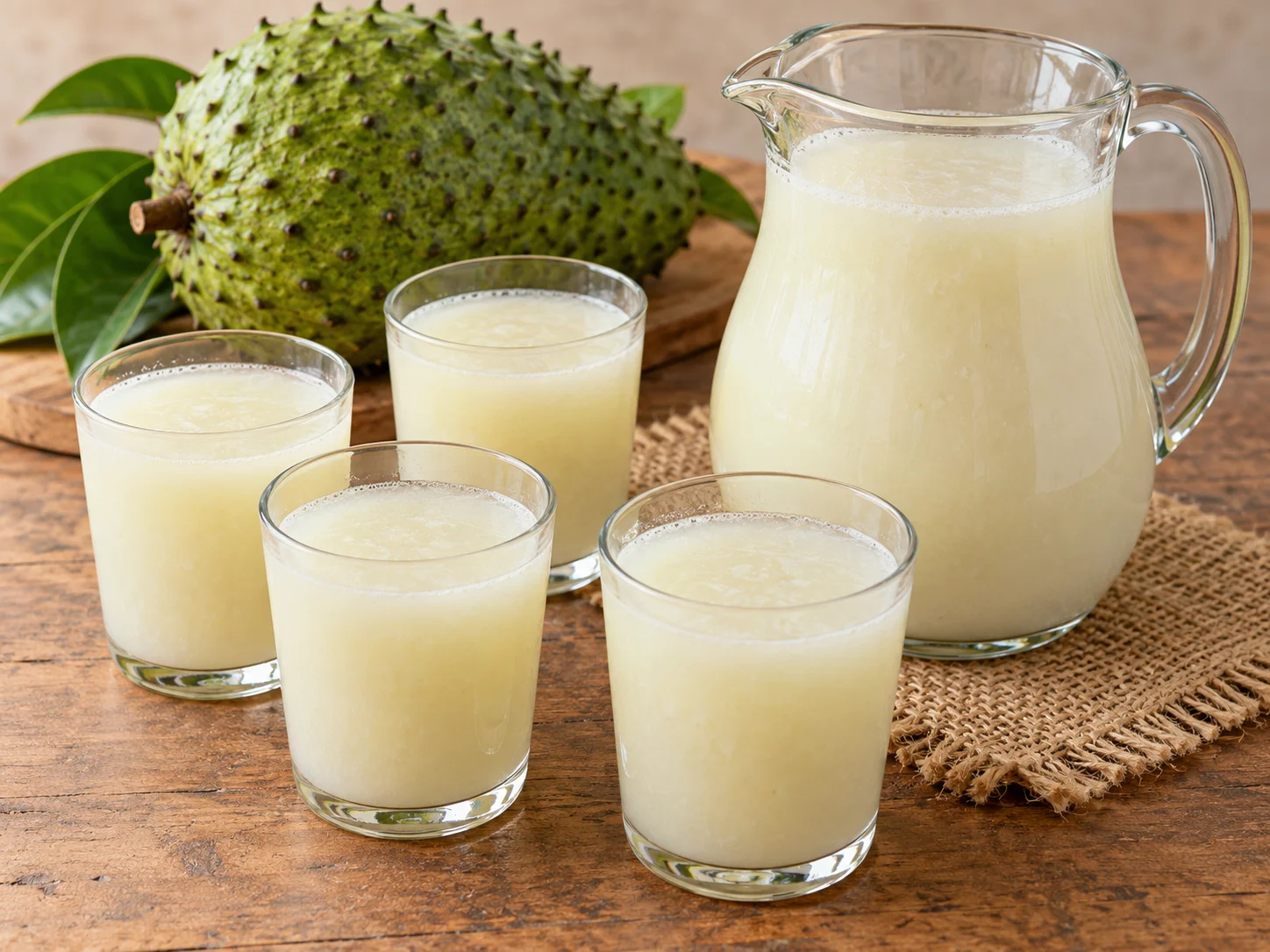
- Botanical Description The soursop tree is an evergreen tree with shiny, leathery, oval, and fragrant leaves. It can reach 8 to 12 meters in open fields but often remains more modest in home orchards. It thrives in tropical climates with high humidity, sunny exposures, and light, acidic to neutral soils. The soursop fruit is a voluminous oval, measuring 15 to 30 cm long, and can weigh from 1 to 5 kg. Its rough green skin is covered with soft, short spines. When ripe, it softens and browns slightly on the bumps. The internal flesh, white, fibrous, juicy, and fragrant, contains numerous oblong black seeds, indigestible but easy to remove when eating.
II. HISTORY, STATUS, AND SYMBOLISM IN AFRICA
- Progressive Adoption Initially introduced into ornamental gardens, Christian missions, and colonial plantations, soursop was quickly adopted by African populations for its ability to thrive without care, produce large nourishing fruits, and resist moderate drought. The tree's resilience, the energetic value of its flesh, and its ease of multiplication by seed have made it essential to village and peri-urban ecosystems.
- Fruit of Celebration, Hospitality, and Kinship In many countries, soursop symbolizes generosity, celebration, and the welcoming of strangers or visiting family – a rare fruit offered on special occasions, when children return to the village, or during religious celebrations (Easter, baptisms, Tabaski, weddings). The fruit sometimes plays a central role in folk tales, expressing patience (it takes more than 3 months to ripen), fertility (through its abundance of seeds), and prosperity (a large fruit, shared).
III. SENSORY DESCRIPTION AND CULINARY USES
- Appearance and Tasting Upon opening, soursop immediately captivates with its immaculate white, creamy, pearly flesh, divided into fibrous segments, very juicy. The aroma is explosive: sweet-tart, floral, evoking a blend of wild strawberry, tart pineapple, lychee, banana, and fresh milk, all enhanced by a delicate citrusy acidity. The fruit is extremely soft when perfectly ripe, yet retains a fibrous structure that distinguishes it from custard apple (Annona squamosa) or cherimoya.
- Use in African Cuisine a. Fresh, with a spoon The most common use is to open the fruit, remove the seeds, and eat the flesh with a spoon, as is, for breakfast or as a snack, often fresh, during periods of intense heat. b. Juices, Nectars, and Drinks Soursop is one of the “great juices” in African markets. It is crushed, filtered, lightly sweetened, and sometimes mixed with fresh milk (cow or coconut), lemon, vanilla, or cinnamon. This thick, slightly frothy juice is sovereign for brunches, banquets, accompanying fritters, sandwich bread, gari (a granular flour from cassava), tapioca, or rice pudding. In Benin, Cameroon, Ivory Coast, and Madagascar, soursop juice is sold by street vendors, in neighborhood shops, on beaches, or in all hotels during the hot season. c. Salads, Sorbets, Ice Creams, Cocktails Soursop flesh often enhances fruit salads (with papaya, pineapple, mango, pomegranate…), verrines, and ice cream sundaes. It is also transformed into artisanal sorbet or ice cream, combined with passion fruit, vanilla, or coconut. In contemporary African mixology, the pulpy nectar is used to create non-alcoholic cocktails (mocktails) or alcoholic ones (punches, infused rums, tropical spritzes). d. Desserts and Pastries The pulp, crushed or passed through a chinois (fine-mesh sieve), serves as a base for airy mousses, tarts, fruit charlottes, and pairs with coconut to stuff crepes or accompany plantain fritters. Some innovative chefs incorporate it into flans, panna cotta, cassava puddings, or steamed cakes. e. Savory Dishes and Fusion Creations More rarely, soursop is used in sweet and sour sauces, paired with grilled chicken, shrimp, or braised fish, particularly in the Creole cuisines of Madagascar, Comoros, and Seychelles.
In my books

Continue exploring the continent’s cuisines with Africa at the Table — 54 countries, 54 iconic dishes, by Alioune FALL. This book is in English.
Explore further
IV. SOCIAL, CULTURAL, AND CULTIC PLACE OF SOURSOP
- Symbol of Sharing and Protection Because it is often shared, soursop becomes the fruit of conviviality and solidarity, especially during times of scarcity where it represents a valuable caloric intake (simple carbohydrates and fiber). Its large size makes it a food to share, a gesture of hospitality, or even prestige during celebrations. In some villages, offering a soursop to a traveler is synonymous with respect, integration, or recognition of a moral debt.
- Role in Transmission and Food Autonomy The tree is frequently planted at the birth of a child, at the edge of a field or family orchard. It ensures production over several decades, symbolizing durability, patience, and generational continuity. Its annual harvest punctuates household life, marking the passage of time and the connection to the land.
V. NUTRITIONAL AND MEDICINAL BENEFITS
- Nutritional Assets • Rich in water (80 to 85%), hydrating, perfect for the often hot and dry African climate. • Low caloric intake (65-70 kcal/100g) despite its sweetness, as it is low in lipids. • Natural carbohydrates (mainly fructose and glucose), for quick energy supply. • Vitamin C, B1, B2, and folic acid: for the immune system, recovery, growth. • Essential minerals: potassium, magnesium, calcium, phosphorus, iron. • Natural antioxidants: Acetogenins, polyphenols that protect cells from aging. • Dietary fiber: satiating effect, good for digestion and transit regulation.
- Medicinal Properties Soursop is at the heart of traditional African medicine: • Leaves: in decoction (herbal tea) against sleep disorders, anxiety, spasms, moderate fevers. • Crushed seeds: used locally against lice and certain skin parasites, but with caution, as toxic in high doses. • Bark and roots: used in the preparation of depurative herbal teas, against hypertension and muscle pain. Science is now interested in its antitumor and antidiabetic compounds, although, outside traditional use, these effects must be supervised.
VI. AGRICULTURAL, ECONOMIC, AND ENVIRONMENTAL ROLES
• The soursop tree, a robust tree, integrates perfectly into agroforestry and family farming systems: it stabilizes soils and enriches biodiversity. • Its cultivation allows for food autonomy, diversification of income (sale of fruits, juices, ice creams), and valorization of local and tourist markets. • It promotes food security during the dry season or during cereal or vegetable shortages.
VII. Contemporary Gastronomy and Innovations
Soursop is featured in urban brunches, fine pastries, revisited street food (artisanal ice creams, stuffed crepes, milkshakes popular in cafes in Libreville, Lomé, Conakry, Antananarivo…). It is found on restaurant menus designed for an international clientele, concerned with “healthy” food, “superfruits,” and African naturalness. Women's cooperatives or young entrepreneurs are developing sectors for 100% soursop juice, jams, exported sorbets, or energy bars.
CONCLUSION
Soursop, a noble fruit of adaptation, care, sharing, and celebration, embodies the resilience and generosity of African heritage. It traverses the continent's history, from the routes of the Atlantic slave trade to the rediscovery of local flavors, from bush markets to the modernity of urban cafes. Deeply rooted in daily life and imagination, it symbolizes the alliance between nature, culture, social connection, and gastronomic creativity. Its rehabilitation in contemporary African cuisine invites us to value diversity, health, and autonomy for all, celebrating at each tasting the living richness of Africa.
ENJOY YOUR MEAL! © Photo credit: recettesafricaines.com. All rights reserved.
In the kitchen : Soursop
Recipes from the site to put your knowledge into practice:
Discover these cuisines at a restaurant
Explore our restaurant and caterer directories. Choose your destination and check the establishment’s menu to confirm which dishes are offered and available.
Continue exploring
Enjoy discovering ingredients and African cuisines? Join our newsletter. The illustrated PDF 10 sauces africaines incontournables is in French and is offered after confirming a subscription to the French or bilingual edition.