Taro (dashine)
Tropical Asia
Understanding : Taro (dashine)
INTRODUCTION
At the heart of African markets, fields, and culinary traditions, taro – also known as dashine, macabo, colocase, cocoyam, edo, or kontomire (for its leaves in Ghana) – is a venerable root vegetable, present in Africa for millennia. Cultivated and consumed across the continent, from the Cape Verde islands to the mangroves of Cameroon, from the equatorial forests of Congo to the high plateaus of Madagascar, and even in Egypt and Sudan, it embodies the resilience, creativity, and conviviality of African cultures. While cassava and yam may sometimes be better known to travelers, taro remains one of the pillars of food security and African culinary identity. Its white or purplish flesh, tender after cooking, its large edible leaves, its nutritional contributions, and its multiple uses make this thick-skinned tuber a true “superfood” and a symbol of attachment to the land and history of the continent.
Prepare this speciality
Choose a detailed recipe, adjust the portions and prepare your ingredients before starting. Our cooking tips and food safety advice complement the steps described in the recipes.
Explore further: Cooking tips · Food hygiene and safety advice.
History and uses
ORIGINS AND DIVERSITY OF TARO IN AFRICA
An ancestral lineage Scientific name: Colocasia esculenta (family Araceae). Originally from tropical Asia, taro was introduced very early to Egypt, the Mediterranean basin, and then to sub-Saharan Africa. The expansion of trade routes and African agricultural know-how allowed it to adapt perfectly to the different ecological zones of the continent, even developing adapted local varieties. The word “dashine” (or dasheen) is mainly used in Anglophone Africa (Nigeria, Ghana, Sierra Leone, Cameroon, Equatorial Guinea, etc.); in Central Africa and Francophone Cameroon, it is called “macabo” or “taro,” elsewhere “edo” or “koko.” These linguistic variations also reflect the rich varietal diversity of African taro (Macabo blanc, Macabo rouge, Colocasia and Xanthosoma spp.), which is distinguished by tuber size, flesh color, drought resistance, or flavor subtlety.
BOTANY AND LIFE CYCLE
Taro is a semi-aquatic herbaceous plant that can reach 1.50 to 2 m in height. Its large, sagittate leaves, sometimes called "elephant ears," trap rainwater and shelter the base of the tuber, called a corm. This, depending on the variety, can weigh from a few hundred grams up to 3 kilograms. It also produces secondary tubers ("daughters"). The taro cultivation cycle is long: 8 to 12 months from planting to harvest, which explains its precious (sometimes festive) character in certain traditions. It is adapted to both humid areas (rice paddies, swamps, riverbanks, rainforests) and subtropical hills (Madagascar).
PLACE AND VALUE OF TARO IN AFRICAN CULTURE
Pillar of rural and urban diets Taro/dashine is cultivated throughout sub-Saharan Africa, mainly by small farmers (women, village associations), often in polyculture with plantain, cassava, but also coffee, cocoa, or rice in forest areas. It protects the soil against erosion and offers unparalleled food security because it tolerates drought better than cassava. It is celebrated in Cameroon, Nigeria, Guinea, Ghana, Benin, Ivory Coast, Republic of Congo, DR Congo, Gabon, Madagascar, etc. It is found in Morocco (where it is known as “karassa” and eaten in tajine) and even in Egypt, where its history dates back to the Pharaohs! Its robustness and high yields make it crucial for securing food stocks, especially during lean seasons when other crops may fail (drought, locust invasion, cassava diseases…). Ritual and festive symbol In many cultures, taro is a symbol of abundance, motherhood, and continuity. It is essential during important ceremonies, such as weddings, baptisms, funerals, or religious festivals; in Cameroon, macabo-based dishes are served during the “ngondo,” in Bamiléké chiefdoms, or during large family gatherings. Offering taro is offering prosperity and hospitality.
NUTRITIONAL VALUE OF TARO
Taro is considered a superfood in tradition and validated today by science: • Rich in complex carbohydrates: 25-35 g/100 g, satiating effect, slowly digested (better glycemic index than yam or potato) • Good source of dietary fiber: 3-5 g/100 g: promotes digestion • Vitamins B6, C, E: beneficial for immunity, nervous system, vitality • Minerals: potassium (600 mg/100 g), magnesium, phosphorus, zinc, calcium, iron • Proteins: 1-2 g/100 g • Low in fat (<0.5 g/100 g), cholesterol-free, vegan, gluten-free • Antioxidants and protective polyphenols Its major asset: taro starch is better tolerated than that of potato or cassava, even by sensitive people (young children, elderly), provided it is well cooked and raw tubers are not consumed due to potentially irritating oxalate crystals. Taro leaves (“kontomire” in Ghana): even richer in vitamins A (beta-carotene), C, K, calcium, and iron than the tuber; used as highly prized leafy greens (like spinach or cassava leaves).
In my books

Continue exploring the continent’s cuisines with Africa at the Table — 54 countries, 54 iconic dishes, by Alioune FALL. This book is in English.
Explore further
TRADITIONAL AND MODERN CULINARY USES
Basic preparation Cooking is essential to neutralize oxalate: peel the tubers (with gloves, as the skin or sap can irritate the skin), cut them into pieces, then boil, steam, roast, or even pound them depending on the region. Cooked taro becomes tender, creamy; it pairs well with rich sauces as well as clear broths. Most common consumption methods:
- Boiled, steamed, or grilled: eaten hot or cold, alone or with spicy sauce.
- Pounded (fufu de taro, macabo bâton): pounded tubers, formed into balls; consumed with peanut/spinach sauce, or cassava leaf, pumpkin seed sauce.
- Grated and fried: taro fritters (popular in Cameroon, Congo, Madagascar).
- In stews and sauces: it is used to thicken soups, red or peanut sauces, fish broths.
- Cooked leaves in sauce: essential in palaver sauce / spinach stew (Ghana, Nigeria), kontomire sauce (Ghana), matsoua (Congo).
TRADITIONAL AFRICAN DISHES BASED ON TARO
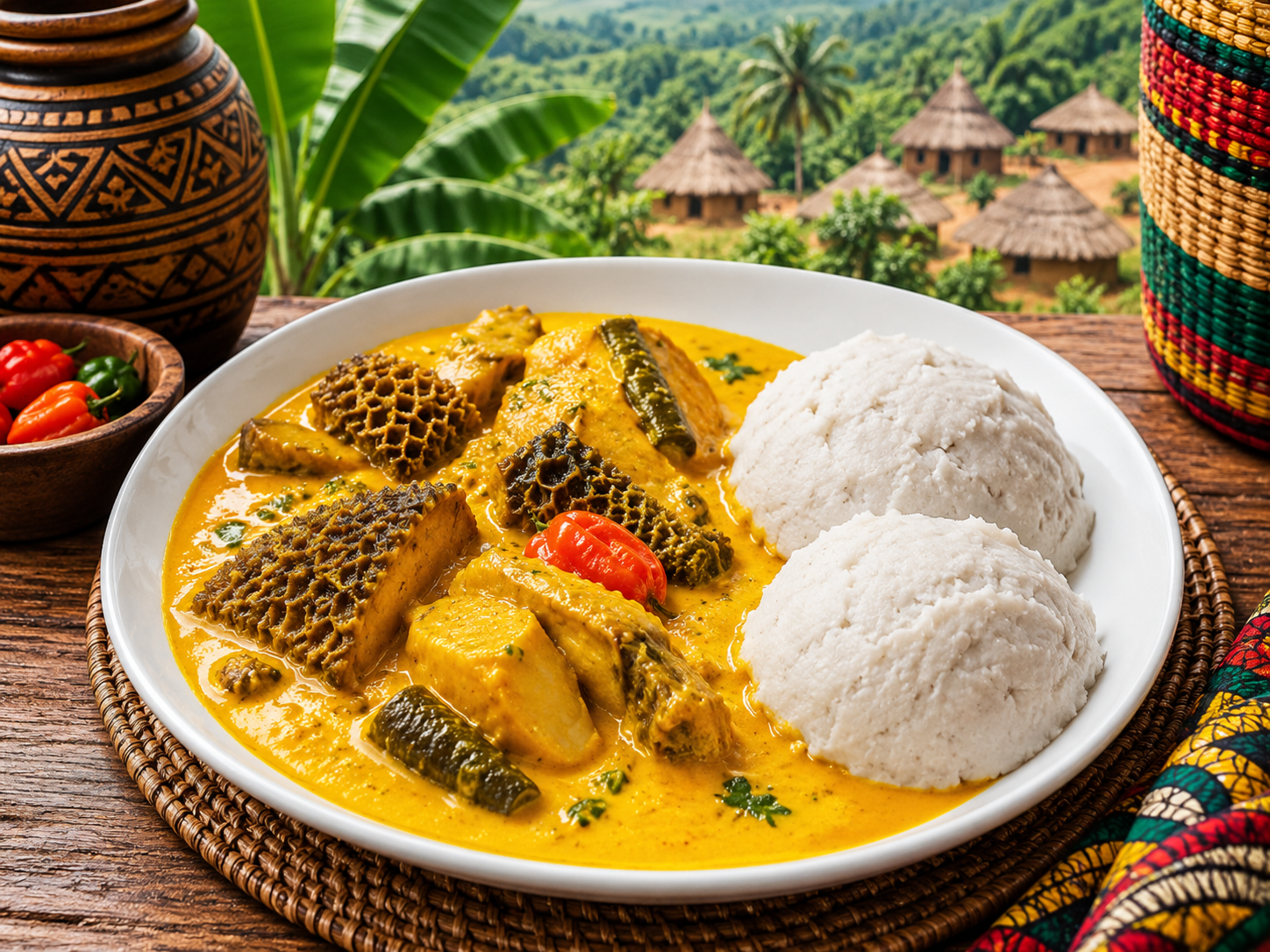
Cameroon: “Macabo sauce jaune” combines pounded (or braised) taro with a thick sauce of peanuts, dried tomatoes, smoked fish or meat, flavored with leafy greens and chili. Ghana: “Kontomire stew” is a thick sauce of taro leaves, tomatoes, palm oil, fish or meat, eaten with banku or eba. Nigeria: “Cocoyam soup,” a staple of the Igbo, thickens yam soups with taro, or is cooked as “onugbu soup” (with vernonia leaves). Guinea / Sierra Leone: “Fouti” — taro puree — is prized, sometimes enriched with cassava leaves or peanuts. Madagascar: “Ravitoto sy henakisoa” is a stew of pounded taro leaves and pork. Taro “cari” with fish and coconut milk are also served. Republic of Congo / Gabon: Taro fritters; in rural areas, taro is also dried for consumption during the dry season.
URBAN CUISINE AND INNOVATIONS
The arrival of taro on the international market and in innovative African kitchens leads to new uses: • Taro fries: a healthy alternative to potatoes. • Modern purees: combined with local herbs, olive oil, lime. • Baked, gratinéed taro: modern version for brunches, hotel receptions. • Soups and veloutés: mild bases, spiced with chili, ideal for children. • Desserts and pastries: cakes, puddings, sweet fritters like taro moelleux. Agri-food now uses taro to make flours, instant powders for children, crispy snacks, or gluten-free flour substitutes.
ECONOMIC AND SOCIAL ROLE
• Farmer empowerment: profitable crop, valued in local markets and sometimes exported (French, West Indian, Asian diaspora). • Sustainability and food security: taro requires few inputs, protects soils, enhances poor lands, and diversifies diets. • Women's sector: in many regions, women handle planting, harvesting, processing, and selling taro, which supports their economic autonomy. • Festivals and rituals: taro, a staple of the menu during celebrations, contributes to the economy of the festivities (weddings, baptisms, initiation ceremonies, funerals).
CHALLENGES AND FUTURE OF TARO IN AFRICA
• Threat of diseases (leaf blight, taro virus): active agronomic research for resistance. • Processing and preservation: development of preservation techniques (drying, grating, fermentation) to limit post-harvest losses. • Urban recognition: raising awareness among younger generations about the value and culinary versatility of taro in the face of competition from rice or bread.
CONCLUSION
Taro, dashine, macabo: here is a truly central food in African history and modernity. A nourishing root, an instrument of survival, a culinary pride, and a health asset, it embodies the diversity, creativity, and resilience of the continent. Present in all major events and in the daily lives of both rural and urban regions, it is both a memory of the past and a promise of a sustainable, healthy, and flavorful future for African cuisines.
Serve, share, innovate — taro dashine is the taste of deep Africa, rooted in the earth and open to the world.
ENJOY YOUR MEAL! © Photo credit: recettesafricaines.com. All rights reserved.
In the kitchen : Taro (dashine)
Recipes from the site to put your knowledge into practice:
Discover these cuisines at a restaurant
Explore our restaurant and caterer directories. Choose your destination and check the establishment’s menu to confirm which dishes are offered and available.
Continue exploring
Enjoy discovering ingredients and African cuisines? Join our newsletter. The illustrated PDF 10 sauces africaines incontournables is in French and is offered after confirming a subscription to the French or bilingual edition.