Gari
West Africa
Understanding : Gari
INTRODUCTION
Gari (a granular flour from cassava) is one of the most emblematic foods in African cuisine, particularly in West Africa, where it holds a central place in the daily diet of millions of people. It is a cassava-derived product, obtained after processing, fermentation, pressing, grating, sieving, and cooking over fire or in a pan, depending on local methods. Gari is simple, economical, versatile, and deeply rooted in the eating habits of several African peoples. Its presence in African cuisine is not limited to a simple accompanying role: it is a staple food, a survival product, an ingredient for culinary creativity, a symbol of practicality, and, in some contexts, an element of collective memory. To understand gari, one must first understand cassava. Cassava is a tropical root widely spread in Africa, introduced from the Americas, but now so well integrated that it has become one of the pillars of many African cuisines. Its strength lies in its ability to grow well in sometimes poor soils, resist certain harsh climatic conditions, and provide a significant food yield. Gari was born from this relationship between cassava and African food needs: to preserve, transport, cook quickly, and nourish at a lower cost.
WHAT IS GARI?
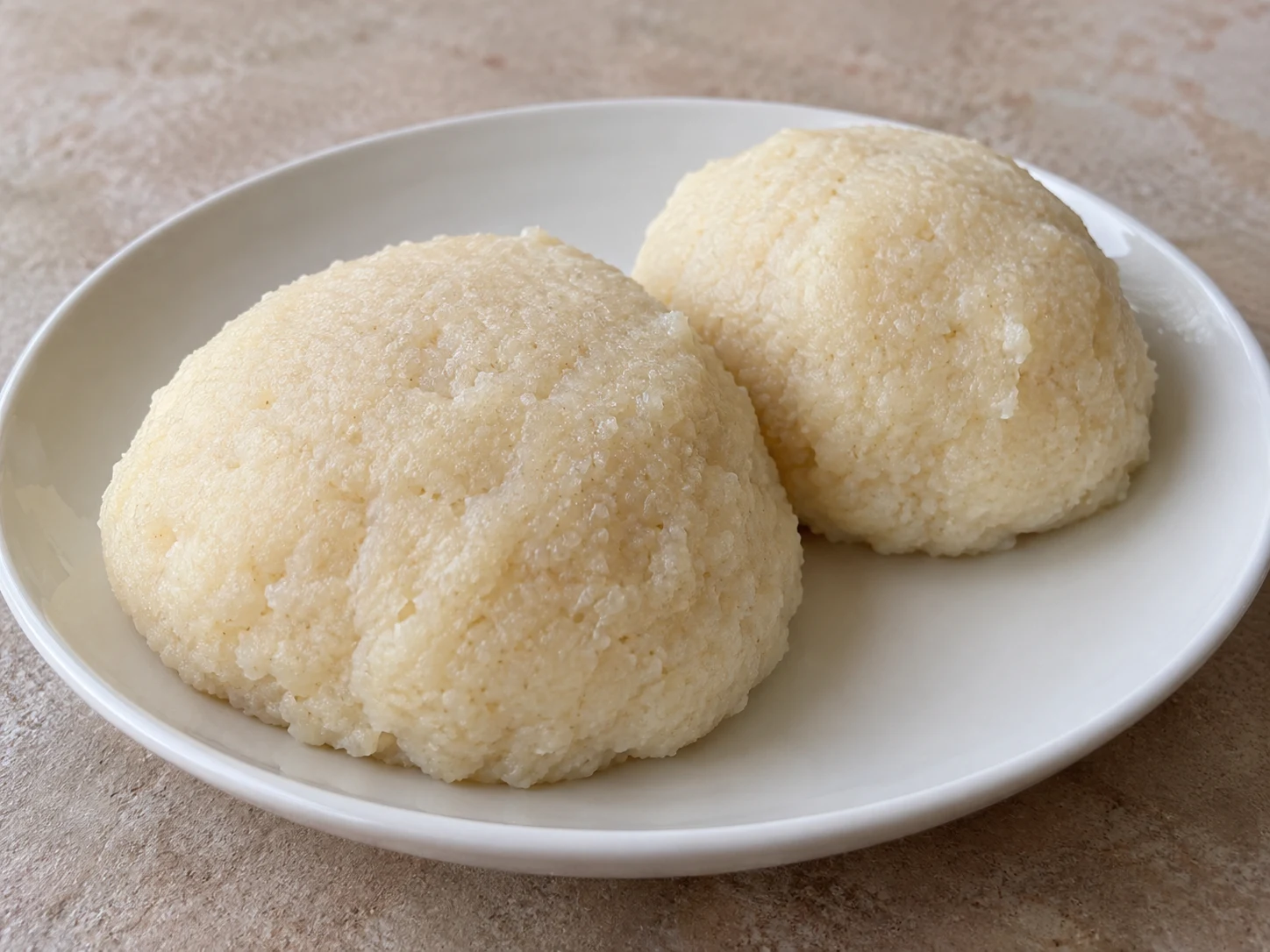
Gari is a semolina or granules of fermented cassava, lightly grilled or roasted. It comes in fine, medium, or coarser grains, white, cream, or slightly yellow in color depending on whether or not it contains palm oil. Its texture is dry, crunchy when raw, but it becomes tender, swollen, or pasty when prepared with water, milk, soup, or sauce. The taste of gari can vary according to regions and manufacturing methods: • slightly acidic due to fermentation, • neutral or mild, • sometimes richer if palm kernel or palm oil is added, • sometimes with a roasted note. This gustatory simplicity is one of the reasons for its success: gari can be eaten alone, but it also adapts to a multitude of accompaniments.
THE PLACE OF GARI IN AFRICAN CUISINE
Gari holds an essential place in several African cuisines, particularly in Nigeria, Benin, Togo, Ghana, Ivory Coast, Liberia, Sierra Leone, and other countries where cassava is a major food. It is appreciated because it is: • quick to prepare, • inexpensive, • easy to store, • transportable, • and filling. In many households, it serves as food relief, a morning meal, a quick meal, or a base for more elaborate dishes. It is an everyday food, but also a food for circumstances. When there is no time for long cooking, gari offers a simple and effective solution. When one wants to feed several people with limited means, it remains an important option. And when one wants to rediscover the taste of childhood or home, it naturally returns to the plate.
DIFFERENT WAYS TO CONSUME GARI
One of gari's great strengths is its versatility. In West Africa, there are several ways to consume it.
- Gari with water, sugar, and peanuts This is one of the most well-known forms. Gari is mixed with water, sugar, sometimes milk, sometimes roasted peanuts. This simple preparation is very popular as a snack or quick meal. It is nutritious and very easy to make.
- Gari soakings In some countries, gari is soaked in cold water with sugar, milk, or peanuts. This is a very common way to eat it, especially among young people and in urban areas.
- Gari as an accompaniment to sauces Gari can also be eaten with sauces, especially vegetable, fish, meat, or bean sauces. It absorbs liquids and gives a pleasant consistency to the meal.
- Eba and other gari pastes Gari can be transformed into a firm paste when poured into hot water. This creates a ball or compact mass that accompanies soups and sauces. This is a very common form in Nigerian cuisine and other regions.
- Fried gari or used in modern recipes Today, some chefs and cooks are reinventing gari in contemporary recipes: croquettes, breads, biscuits, breadings, or desserts.
TEXTURE AND SENSATIONS
Gari has a very distinct sensory identity. Dry, it is granular and slightly crunchy. Soaked in water or mixed with a sauce, it becomes soft and swells. This texture transformation is at the heart of its culinary interest. It is both a dry reserve food and a moist meal food. Its slightly acidic taste, resulting from cassava fermentation, distinguishes it from other cereals or starches. This discreet acidity brings depth and helps balance very fatty or spicy sauces.
GARI AND FOOD SECURITY
Gari plays a major role in food security in Africa. Because it can be stored for a long time and prepared quickly, it helps meet situations where time, fuel, means, or resources are limited. It allows families to be fed, to cope with periods of scarcity, and to offer a stable food solution. In both rural and urban areas, it is often considered a reliable food. Its processing from cassava also reduces certain risks associated with raw consumption of the tuber, which requires correct treatment to be consumed safely.
GARI IN THE INFORMAL ECONOMY
Gari is also an important economic product. Its production, sale, and distribution involve many people, often women, in markets and small businesses. It is sold: • in bags, • in sachets, • in bulk, • or already prepared in ready-to-eat portions. It is one of those foods that structure the popular economy. Its often accessible price makes it a highly demanded product. It circulates easily between producers, processors, wholesalers, retailers, and consumers.
REGIONAL DIVERSITY
Even though gari is very widespread in West Africa, it is not identical everywhere. Differences relate to: • the fineness of the grains, • the degree of fermentation, • the amount of roasting, • the addition of palm oil, • the color, • and culinary uses. In some regions, a drier white gari is preferred. In others, a yellow gari, richer and more fragrant, is appreciated. Some communities consider it an everyday food, others as a product linked to tradition or urban speed.
NUTRITIONAL VALUE
Gari is essentially a source of carbohydrates, therefore energy. It provides: • calories, • a feeling of satiety, • a stable food base, • and a little fiber depending on its preparation. If consumed alone, it remains relatively poor in protein and micronutrients, which explains why it is often combined with peanuts, milk, beans, fish, or various sauces. Thus, gari becomes a food support that must be supplemented to provide a balanced meal.
GARI AND CULTURAL MEMORY
Gari also holds an important emotional place. For many people, it evokes school, childhood, quick meals, simple breakfasts, travels, markets, and home. It is a food of memory. Its simplicity hides a strong emotional charge. In some families, preparing gari is a daily gesture passed down from generation to generation. It is part of African domestic know-how, of this cuisine that knows how to do a lot with little.
GARI IN MODERN AND URBAN CUISINES
In African cities, gari adapts. It can be sold ready-made, mixed with other ingredients, or used in more modern recipes. Younger generations sometimes appreciate it as a snack, a quick meal, or a base for culinary experimentation. It also appears in restaurants that value local products. This adaptability shows that gari is not a food of the past. It continues to evolve with contemporary lifestyles.
CONCLUSION
Gari is a fundamental food in African cuisine. Derived from cassava, it is economical, practical, nutritious, and versatile. It is consumed in multiple ways, adapts to tastes and contexts, and plays an important role in daily diet as well as in cultural memory. Its place in African cuisine is immense because it meets very concrete needs while carrying a strong social and food identity. Gari is therefore much more than cassava semolina: it is a discreet but essential pillar of African cuisine, a staple food, a symbol of creativity, and a marker of daily life.
ENJOY YOUR MEAL!
© Photo credit: recettesafricaines.com. All rights reserved.
Where to find it
Look for the exact food-grade form required by the recipe at markets and specialist shops. Check the product name, ingredients, condition and storage instructions.
Explore further: Cooking tips · Food hygiene and safety advice.
Search Amazon.fr — affiliate link →
Check availability and delivery on Amazon.fr. Compare ingredients, packaging and sellers.
As an Amazon Associate I earn from qualifying purchases.
In my books

Continue exploring the continent’s cuisines with Africa at the Table — 54 countries, 54 iconic dishes, by Alioune FALL. This book is in English.
In the kitchen : Gari
Recipes from the site to put your knowledge into practice:
Discover these cuisines at a restaurant
Explore our restaurant and caterer directories. Choose your destination and check the establishment’s menu to confirm which dishes are offered and available.
Continue exploring
Enjoy discovering ingredients and African cuisines? Join our newsletter. The illustrated PDF 10 sauces africaines incontournables is in French and is offered after confirming a subscription to the French or bilingual edition.