Ngalakh
Senegal
Understanding : Ngalakh
INTRODUCTION
Ngalakh is an emblematic preparation of Senegalese cuisine and, more broadly, of West African food culture. It is a dish or a dessert-drink based on millet, peanut, and often bouye (baobab fruit pulp) — depending on recipes and regions. Highly appreciated for its richness, flavor, and symbolic value, ngalakh holds a special place in African food because it stands at the crossroads of daily food, festive cuisine, and religious tradition. It is prepared, shared, distributed, and consumed in contexts where conviviality, memory, and identity play a central role. To speak of ngalakh is to speak of a dish that is not limited to its taste. It is to speak of a preparation that tells the story of African ingredients, domestic know-how, cultural exchanges, and how certain recipes become markers of belonging. Ngalakh is not only loved for its sweetness and texture; it is also deeply associated with specific moments in the social and religious calendar, particularly in Senegal, where it is often prepared during important celebrations.
WHAT IS NGALAKH?
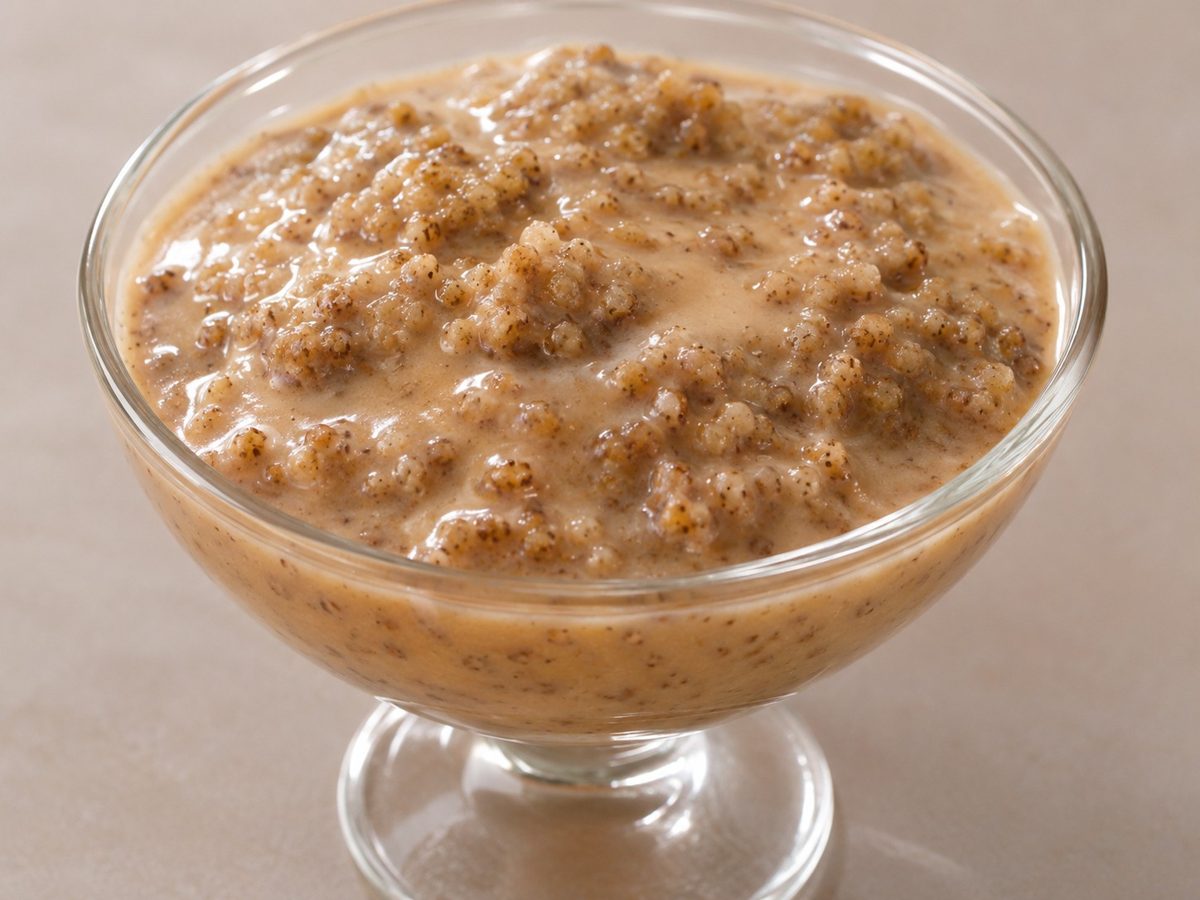
Ngalakh is a traditional preparation based on millet paste or millet couscous, mixed with a peanut cream, bouye, sugar, sometimes milk, vanilla, or other flavorings. The consistency can be thick, semi-liquid, or firmer depending on habits. It is a nourishing, sweet, and very fragrant preparation that can be served as a dessert, a snack, or a ceremonial dish. Its particularity lies in the combination of three major elements of West African cuisine: millet, an ancient and essential cereal, peanut, a major ingredient in many African cuisines, and bouye or monkey bread (baobab fruit pulp), which provides a gentle acidity and a unique flavor. This combination results in a nutritionally dense and culturally rich food.
NGALAKH INGREDIENTS
Millet Millet is a very important cereal in West Africa. Cultivated for centuries in Sahelian zones, it is appreciated for its drought resistance and its nourishing value. In ngalakh, it provides the body of the preparation. It can be used in the form of couscous, paste, or cooked semolina. Its presence recalls the central role of local cereals in African food. Peanut Peanut, or groundnut, is another African culinary pillar. It is used for sauces, butters, pastes, and desserts. In ngalakh, peanut cream gives a creamy texture, a rich taste, and a high energy value. It binds the other ingredients and provides a sensation of roundness in the mouth. Bouye Bouye (baobab fruit pulp) is the dried pulp of the baobab fruit. Widely used in West Africa, it is appreciated for its tangy taste and its richness in fiber and micronutrients. In ngalakh, it brings a fresh, slightly fruity, and balancing note. It contrasts with the sweetness of sugar and the fat of the peanut. Sugar and flavorings Sugar sweetens the whole, while milk, vanilla, or orange blossom can sometimes complete the recipe. Depending on the family, raisins, nutmeg, or other personal touches can also be added.
ORIGINS AND CULTURAL ANCHORAGE
Ngalakh is particularly associated with Senegal, where it holds an important place in religious and family traditions. It is often prepared during the celebration of Korité, which marks the end of Ramadan in Muslim communities. On this occasion, it is distributed as a sign of sharing and generosity. But ngalakh goes beyond the sole religious sphere. It belongs to a broader set of African preparations where cereals are transformed into sweet, nourishing, and shareable dishes. Its cultural anchorage is strong because it brings together local products and practices of family transmission. Each household can have its version, its dosage, its method, and its secret.
TEXTURE, TASTE AND SENSORY EXPERIENCE
Ngalakh is distinguished by its harmony of textures. One finds: the suppleness of millet, the creaminess of peanut, the slight granularity of some semolinas, and sometimes the more liquid sweetness of cream or bouye. In the mouth, ngalakh offers a pleasant contrast between: sweetness, slight tartness, nuttiness, i.e., the taste of peanut, and the rustic character of millet. This sensory diversity makes it particularly appreciated. It can be consumed fresh, at room temperature, or sometimes slightly chilled in modern urban contexts.
AN IMPORTANT PLACE IN AFRICAN CUISINE
Ngalakh occupies a unique place in African cuisine because it demonstrates the ability of culinary traditions to transform simple ingredients into complex, festive, and symbolic preparations. In many African cuisines, cereals are not just savory accompaniments; they can also become bases for sweet or ceremonial preparations. Ngalakh is a perfect example of this. It also illustrates the African logic of the shared meal. It is not an individualized food, but a preparation often made in quantity, intended to be offered, distributed, or consumed by several people. This gives it a strong social dimension.
NGALAKH AND THE TRADITION OF SHARING
In Senegalese families, preparing ngalakh is often a collective act. Some people wash the millet, others prepare the peanut paste, still others mix the bouye and adjust the sugar. The preparation itself becomes an event. The sharing of ngalakh is as important as its making. This dish is often offered to neighbors, relatives, visitors, or community members. It symbolizes generosity, hospitality, and solidarity. In religious contexts, it is a strong marker of the link between faith, tradition, and living together.
NUTRITIONAL VALUE
Ngalakh is a very nourishing food. Thanks to millet and peanut, it provides: carbohydrates, lipids, vegetable proteins, fiber, and various micronutrients. Bouye also adds interesting elements, particularly fiber and a certain nutritional freshness. It is therefore an energetic, satiating dish suitable for important dietary needs. However, as it can be rich in sugar and peanut, it is often consumed in moderate portions, especially when served as a dessert or ceremonial dish.
REGIONAL AND FAMILY DIFFERENCES
Ngalakh is never exactly the same from one household to another. Differences may relate to: the type of millet used, the fineness of the semolina, the quantity of peanut, the proportion of bouye, the sugar content, and the final texture. Some versions are thicker and more rustic, others softer and almost creamy. Some families add more water to make it a thick drink, others serve it more compact. This diversity shows the vitality of the recipe.
A DISH BETWEEN DESSERT AND MEAL
Ngalakh is interesting because it falls between several categories. It can be: a dessert, a snack, a thick drink, or a ceremonial dish. This ambiguity is part of its identity. It does not always correspond to classic European culinary categories, which clearly shows that African cuisines have their own logics. Ngalakh belongs to a food tradition where the boundary between drink, dessert, and dish can be flexible.
NGALAKH IN MODERNITY
Today, ngalakh continues to evolve. It is found in urban households, in modernized ceremonies, and sometimes in restaurants or cultural events. Some present it in a more refined way, in verrines or individual containers, while others remain attached to the traditional large family basin. This modernization does not detract from its authenticity; it simply shows that ngalakh remains alive. It accompanies social changes while maintaining its roots in tradition.
CONCLUSION
Ngalakh is a major preparation in African cuisine, particularly Senegalese, which combines millet, peanut, and bouye in a composition that is at once nourishing, sweet, symbolic, and convivial. Its place in African cuisine is important because it embodies several essential dimensions: the use of local cereals, the valorization of local products, family transmission, community generosity, and celebration. More than a simple dish, ngalakh is a cultural marker. It tells an African way of cooking, sharing, and celebrating. It nourishes the body, but it also carries memory, social relationships, and the continuity of traditions.
ENJOY YOUR MEAL! © Photo credit: recettesafricaines.com (Lafia FALL). All rights reserved.
Practical notes and Senegalese terminology
In Senegal, ngalakh is particularly associated with sharing around Easter, notably between Christian families and neighbours of other faiths. Its sauce combines the richness of peanuts with the tartness of baobab pulp. Mix each ingredient with liquid separately before combining them to limit lumps; taste before sweetening. Always tell guests that the dish contains peanuts.
Prepare this speciality
Choose a detailed recipe, adjust the portions and prepare your ingredients before starting. Our cooking tips and food safety advice complement the steps described in the recipes.
Explore further: Cooking tips · Food hygiene and safety advice.
In my books
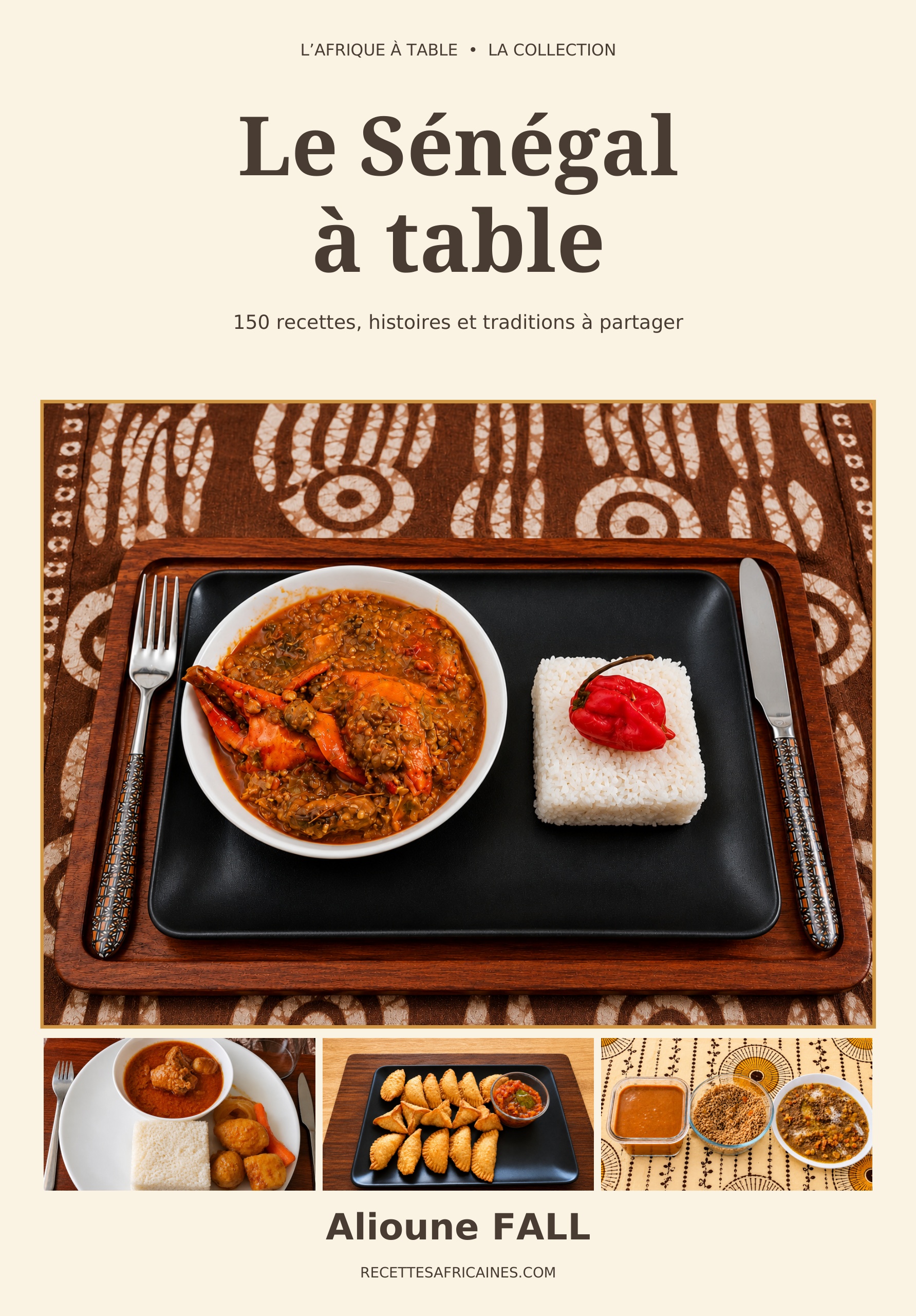
Explore Senegalese cooking with Le Sénégal à table, my collection of 150 recipes, stories and traditions to share. This book is in French, by Alioune FALL.
In the kitchen : Ngalakh
Recipes from the site to put your knowledge into practice:
Discover these cuisines at a restaurant
Explore our restaurant and caterer directories. Choose your destination and check the establishment’s menu to confirm which dishes are offered and available.
Continue exploring
Enjoy discovering ingredients and African cuisines? Join our newsletter. The illustrated PDF 10 sauces africaines incontournables is in French and is offered after confirming a subscription to the French or bilingual edition.