Suya
West Africa
Understanding : Suya
INTRODUCTION
Suya is much more than just a spicy skewer: it's a culinary emblem of West Africa, a street food deeply rooted in Nigerian culture and widely appreciated in several neighboring countries. Traditionally prepared with beef, chicken, lamb, or sometimes offal, it is generously coated with a spice blend made from roasted peanuts, chili, garlic, ginger, and other aromatics, then grilled at high temperature until it achieves a texture that is both tender inside and slightly smoky outside. If one seeks a detailed description of suya, one must understand its gastronomic, historical, social, and symbolic dimensions. Suya is not just food: it tells a story of the circulation of know-how, conviviality, regional identity, and African culinary creativity.
Prepare this speciality
Choose a detailed recipe, adjust the portions and prepare your ingredients before starting. Our cooking tips and food safety advice complement the steps described in the recipes.
Explore further: Cooking tips · Food hygiene and safety advice.
History and uses
WHAT IS SUYA?
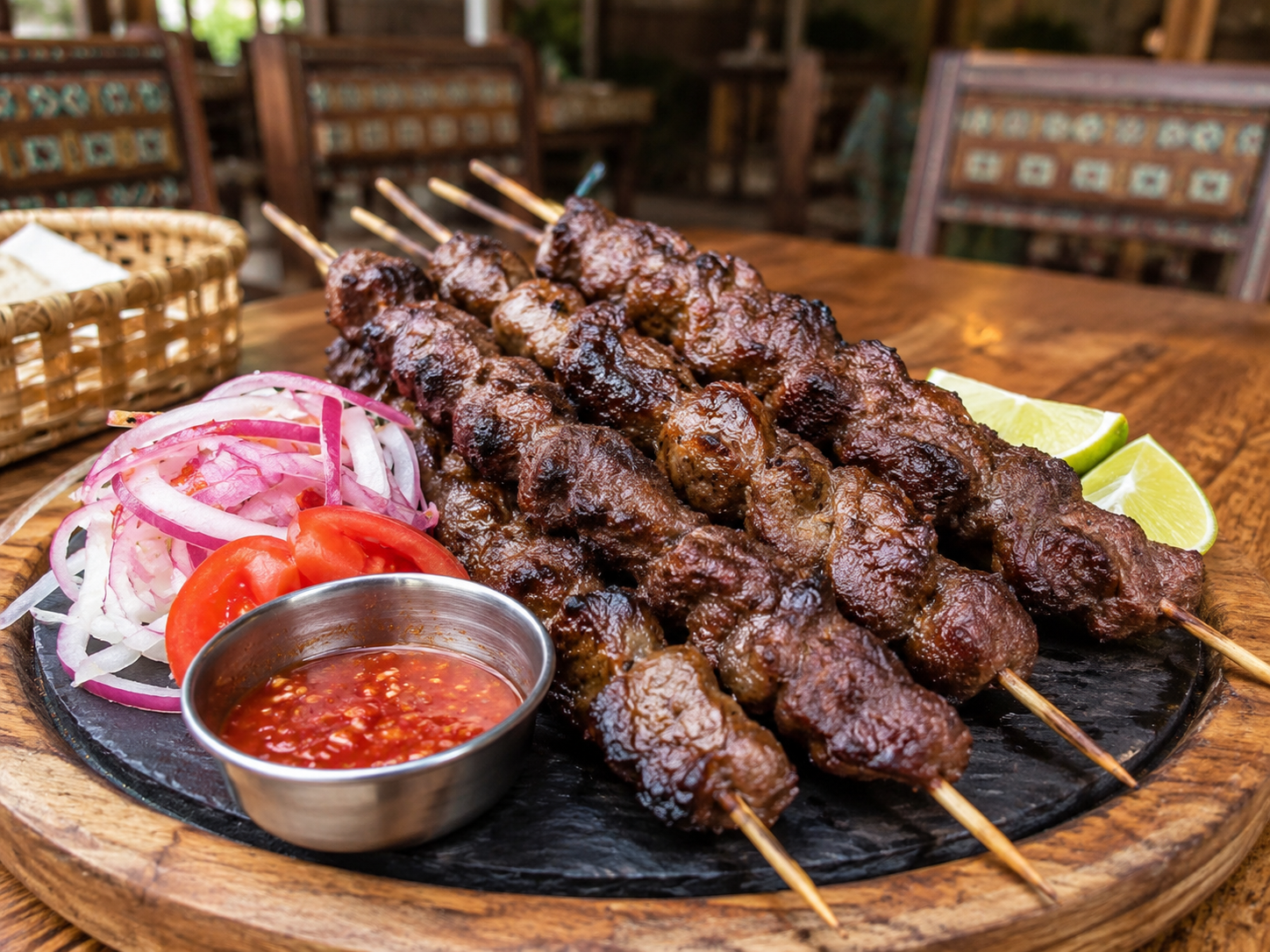
Suya is a traditional street food, very popular in Nigeria, but also known in Niger, Cameroon, Ghana, Senegal, and other regions of West Africa under local variations. It usually comes in the form of thin slices of marinated meat, skewered or arranged on a grill, sprinkled with a spice blend called yaji (a dry peanut-based spice mix). This blend is the soul of suya: it brings a flavor that is at once pungent, salty, slightly sweet, smoky, and deeply aromatic. Cooking is traditionally done over embers or a charcoal grill. This cooking method gives suya its characteristic aroma, with smoky notes that immediately evoke African street food. Often served with raw onion rings, cabbage, tomatoes, cucumber, or even bread, suya can be enjoyed as a snack, a main meal, or during convivial occasions.
THE ORIGIN OF SUYA AND ITS HISTORY
The history of suya is closely linked to the culinary traditions of the Hausa people and the culture of northern Nigeria. Suya is often believed to have first developed as an accessible street food, prepared by itinerant vendors and grill artisans. Originally, it was a simple and economical way to transform meat into a tasty, nutritious, and easy-to-sell preparation. Over time, suya transcended its regional roots to become a Nigerian national symbol. It then spread to other African countries, carried by migrations, trade, and the growing popularity of West African cuisine. Today, it is one of the most recognizable African dishes, often cited in searches related to Nigerian cuisine, African street food, and traditional African recipes.
THE INGREDIENTS OF SUYA
The success of suya relies on the balance of its ingredients. Although recipes vary by family and region, the base remains similar: • Meat: most often beef, but also chicken, lamb, or goat • Ground roasted peanuts: essential component of the spice blend • Chili powder: for heat and character • Paprika or cayenne pepper • Garlic powder • Ginger • Salt • Onion powder sometimes • Broth or seasoning cube in some modern versions • Oil to help spices adhere to the meat The peanut blend is particularly important. It gives suya a dry but coating texture, and a nutty flavor that distinguishes it from many other spicy African dishes. It is this element that makes suya a unique recipe in the vast landscape of African gastronomy.
TRADITIONAL SUYA PREPARATION
Suya preparation follows several steps. First, the meat is cut into thin slices or elongated pieces. This thin cut allows for quick and even cooking. Then, it is often lightly salted or marinated before being coated with the yaji spice blend. The meat is then placed on skewers or directly on a grill over hot embers. During cooking, it is turned and sometimes sprinkled with more spices. The goal is to achieve a well-caramelized and fragrant exterior, while keeping the meat juicy. Suya is often eaten immediately after cooking, when it is still hot. It is readily accompanied by raw onions, fresh tomatoes, extra chili, or a light sauce. In the streets of Lagos, Abuja, Kano, or Kaduna, it can be found in the late afternoon, evening, and until late at night. This also makes it an element of African culinary nightlife.
THE PLACE OF SUYA IN AFRICAN CUISINE
Suya holds a very important place in African cuisine, notably because it represents several dimensions at once: tradition, popular economy, culinary innovation, and conviviality. It is both a street food and an identity symbol.
- A pillar of African street food African street food is rich, varied, and deeply creative. Suya holds a prominent place because it is quick to prepare, easy to consume, and extremely tasty. In many African cities, it constitutes a popular evening meal for workers, students, and families. Its success shows that African cuisine is not limited to traditional family meals; it is also vibrant in urban spaces, on street corners, in markets, and near bus stations.
- A Nigerian and West African cultural marker Suya has become a true symbol of Nigerian culinary culture. It evokes sharing, celebration, gatherings with friends, and evening outings. In weddings, parties, community events, and reunions, it often appears as an essential option. From a broader perspective, it illustrates the excellence of West African cuisine, renowned for its powerful marinades, grilled dishes, spicy sauces, and intelligent use of spices. Suya demonstrates that African culinary traditions are capable of producing iconic, memorable, and universally appreciated recipes.
- A recipe that crosses borders Even though it is emblematic of Nigeria, suya has crossed borders. It is found in different forms in West Africa, sometimes with other names, other meats, or seasoning variations. This circulation testifies to regional cultural unity and the ability of African cuisine to adapt to local tastes.
- A prestigious dish in its simplicity Suya is interesting because it proves that a simple dish can become prestigious. It is not a complex recipe in the technical sense, but it requires know-how: choice of meat, dosage of spices, heat management, cooking timing. These details transform an ordinary preparation into a remarkable culinary experience.
In my books

Continue exploring the continent’s cuisines with Africa at the Table — 54 countries, 54 iconic dishes, by Alioune FALL. This book is in English.
Explore further
SUYA AND AFRICAN FLAVORS
Suya is an excellent gateway to understanding African flavors. It combines several very common elements in the continent's cuisine: • the smoky taste of grilled dishes, • the spiciness of chili, • the aromatic depth of spices, • the richness of peanuts, • the balance between simplicity and intensity. This combination reflects one of the great principles of African cuisine: transforming accessible ingredients into powerful-tasting dishes. Suya also shows the importance of wood-fired cooking, still very present in African culinary traditions.
MODERN SUYA VARIATIONS
With globalization and evolving eating habits, suya now has many variations. One can find: • Chicken suya • Beef suya • Lamb suya • Fish suya • Vegetarian suya in some modern adaptations • Suya burger, suya tacos, or suya wraps in fusion cuisine These modern versions show that suya is an adaptable recipe. It can fit into contemporary cuisine while retaining its African identity. This is also why it is increasingly sought after in keywords related to suya recipes, modern African cuisine, and popular African dishes.
NUTRITIONAL VALUE AND CULINARY INTEREST
Suya, depending on the meat used and the amount of oil or peanuts, can be a relatively protein-rich dish. It provides energy, essential amino acids, and nutrients from spices and peanuts. Of course, like many street foods, it should be consumed in a proper hygienic setting. But from a nutritional and culinary standpoint, it is a filling and very satisfying food. The interest of suya also lies in its intense flavor. One does not need a long list of ingredients to achieve a tasty result. This sobriety is typical of many traditional African recipes, where the quality of products and the mastery of spices take precedence over complexity.
WHY SUYA IS SO APPRECIATED
The success of suya can be explained by several factors:
- Its unique taste, at once spicy, smoky, and savory.
- Its simplicity of consumption, perfect for eating on the go.
- Its cultural roots, which give it strong emotional value.
- Its versatility, as it can be served alone or with accompaniments.
- Its strong African identity, which makes it a major representative of the continent's cuisine. For all these reasons, suya is more than a recipe: it is a living culinary heritage.
SUYA AND AFRICAN IDENTITY
In the culinary imagination, suya is often associated with hospitality, human warmth, and the pleasure of eating together. It also symbolizes African creativity in the face of available resources. Through it, we see how African peoples have managed to develop rich and distinctive dishes from simple ingredients. Suya therefore occupies a strategic place in promoting African cuisine globally. As more and more people become interested in authentic African recipes, traditional African dishes, and African gastronomy, suya becomes a natural ambassador for this diversity.
CONCLUSION
In summary, suya is an emblematic dish that embodies the soul of African cuisine, particularly that of West Africa. Its grilled meat, peanut-based spice blend, charcoal cooking, and convivial dimension make it an iconic recipe, rich in meaning and flavors. It is at once an African street food, a Nigerian heritage, a traditional recipe, and a modern culinary icon. Through its popularity, simplicity, and aromatic power, suya has earned a lasting place in African gastronomic heritage. It continues to inspire chefs, street vendors, families, and food lovers worldwide. If you are looking to discover the richness of African cuisine, suya is undoubtedly one of the best entry points: authentic, tasty, accessible, and deeply African.
ENJOY YOUR MEAL! © Photo credit: recettesafricaines.com. All rights reserved.
In the kitchen : Suya
Recipes from the site to put your knowledge into practice:
Discover these cuisines at a restaurant
Explore our restaurant and caterer directories. Choose your destination and check the establishment’s menu to confirm which dishes are offered and available.
Continue exploring
Enjoy discovering ingredients and African cuisines? Join our newsletter. The illustrated PDF 10 sauces africaines incontournables is in French and is offered after confirming a subscription to the French or bilingual edition.